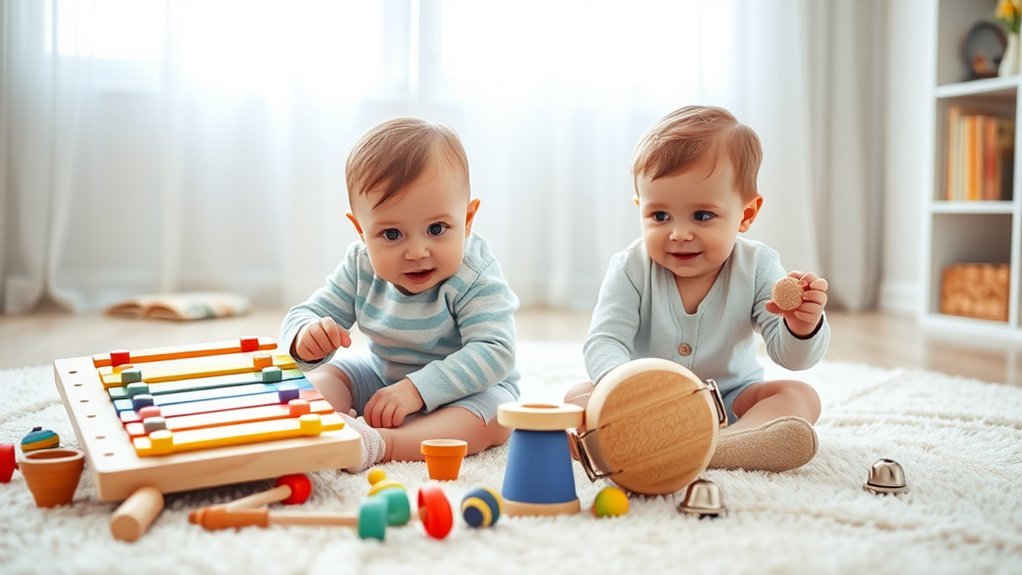
Sound-based cause and effect activities help your baby or toddler learn that their actions make things happen. You can shake rattles, bang pots and pans, tap homemade drums, make DIY sensory bottles, hide noisy toys, play peek-a-boo with squeakers, copy babbles, sing during bath time, and drop blocks to compare sounds. These playful games boost listening, motor skills, and confidence. With a few simple ideas, you’ll see how much more sound play can teach.
What Is Sound-Based Cause and Effect?
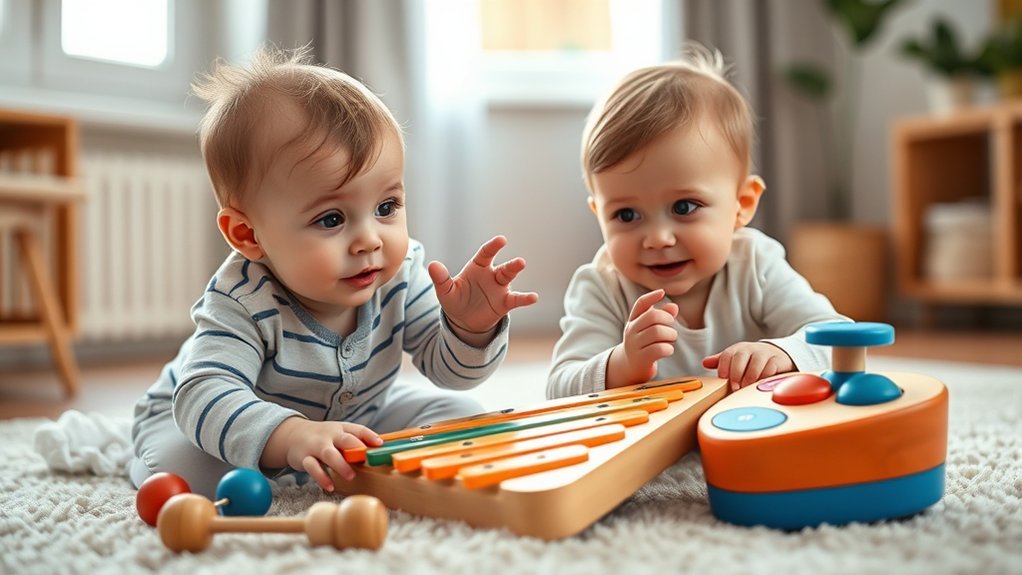
Sound-based cause and effect is when a baby or toddler discovers that their actions create sounds, like shaking a rattle, banging a spoon on a pot, or tapping a drum. You can think of it as a simple, joyful lesson: when you move, the world answers.
In sound-based play, your child explores how hitting, shaking, or tapping produces different noises. Using everyday objects such as pots and wooden spoons makes this easy and welcoming. Each repeat action helps your baby notice, “I did that.”
Over time, this cause and effect pattern feels familiar, and your child may try again with more confidence. The sounds can also vary in pitch, volume, and rhythm, giving your baby rich sensory input. Engaging in this type of play outdoors can further enhance their emotional and social skills through interactions with others.
Over time, the pattern feels familiar, and your child may explore again with growing confidence and curiosity.
This kind of play keeps learning hands-on, playful, and free from pressure. You’re not just entertaining your child; you’re giving them a small, powerful way to discover agency through sound.
Why Sound Play Helps Babies Learn
When your baby plays with sounds, they’re doing more than making noise—they’re learning. Through sound play, you help your baby build auditory skills by noticing, comparing, and locating different sounds. That awareness supports early communication, because your baby starts to hear patterns and respond with intention.
As your little one reaches, taps, or squeezes to create a sound, they practice motor control and learn cause and effect: “I do this, and something happens.” That discovery can feel powerful and freeing. Repeated sound experiences also make new noises feel familiar, which can support confidence and emotional security.
At the same time, your baby begins connecting sounds with meanings, laying groundwork for language. Simple sound play invites curiosity, independence, and joyful learning without pressure. Additionally, engaging in sound play fosters cognitive skills essential for overall growth and development.
Shake a Rattle and Make Noise
Shake a rattle near your baby and watch them discover how their own movement can create sound. When you shake a rattle, it makes a sound, and your baby begins linking action with result around four months. This simple play can help them make sense of cause and effect while building hand-eye coordination as they grasp and move the toy. Engaging in this activity lays groundwork for object permanence as your baby learns that their actions can influence the world around them.
| Moment | Baby’s Action | Your Support |
|---|---|---|
| First shake | Listens | Smile |
| Repeat | Tracks sound | Pause |
| Reach | Grasps | Encourage |
| Turn | Locates noise | Stay close |
| Play | Feels secure | Celebrate |
Keep the rhythm gentle and repeat it often. The familiar rattle sound can help your baby feel safe, calm, and ready to explore. As they turn toward the noise, they strengthen hearing and attention. Your responsive smiles and encouragement make the moment shared, freeing play from pressure and inviting joyful connection.
Bang Pots, Pans, and Spoons
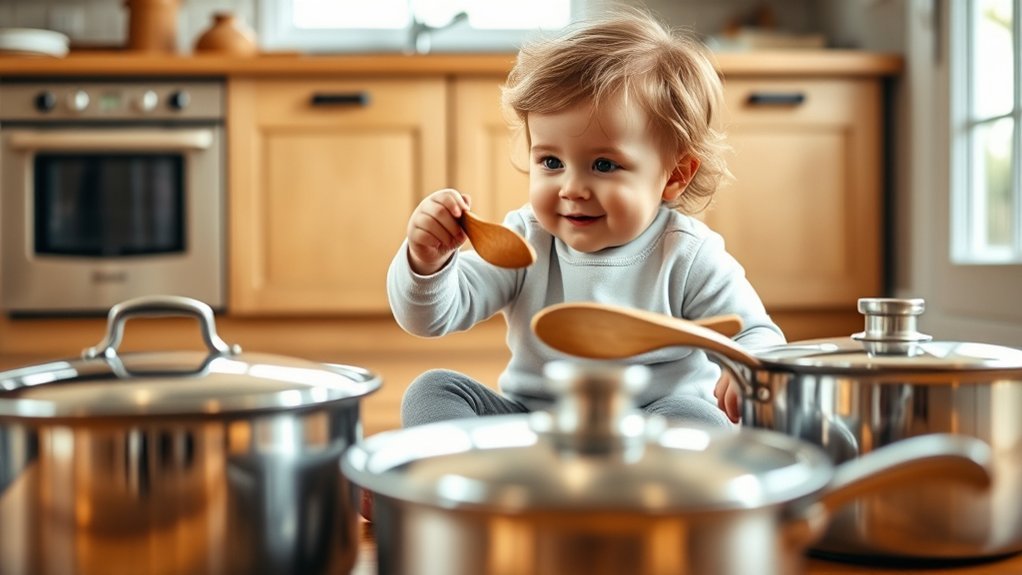
Turn a pot, pan, or spoon into a simple sound adventure for your baby or toddler. You can let them bang pots with a wooden spoon and hear how each strike brings a new response. Metal and plastic pieces give different tones, so your child learns to notice sound changes while building hand strength and coordination.
This easy play also teaches cause and effect: when they hit, they Make Noise, and that action feels exciting and clear. Stay close and supervise at all times, since small items can create choking risks. Choose sturdy, child-safe kitchen pieces, and keep the setup simple and free.
As your little one explores, you’re supporting curiosity, movement, and early listening skills. You’re also sharing a joyful, freeing moment of play that helps your child feel capable, heard, and connected while they discover their own power. Additionally, this activity can foster creativity and critical thinking as they experiment with different rhythms and sounds.
Tap Homemade Drums for Rhythm
Choose safe containers, like clean canisters with smooth edges, and let your child tap them with soft spoons or hands. You can show how the drum sounds change when you tap gently or more firmly, helping your child hear loud and soft. As you keep a steady beat together, you’ll build rhythm skills and make music play feel fun and reassuring. This activity also stimulates brain’s neural connections through interactive play, enhancing cognitive development.
Choosing Safe Containers
For safe homemade drums, you’ll want sturdy containers made from plastic or metal that can handle lots of tapping during playtime. When you’re choosing safe containers, look for sturdy materials with no sharp edges, loose pieces, or small parts. Pick a few sizes to invite different sounds and support easy exploration. Secure lids are best; remove any lid that can’t stay on tightly.
| Check | What to look for | Why it helps |
|---|---|---|
| Material | Plastic or metal | Lasts longer |
| Edges | Smooth, rounded | Reduces injury |
| Parts | No small pieces | Lowers choking risk |
| Size | Several options | Creates different sounds |
| Lid | Secure or removed | Prevents accidents |
Stay close and supervise so your child can drum freely, safely, and joyfully.
Exploring Loud And Soft
Once you’ve set out safe drums, you can invite your baby or toddler to explore loud and soft sounds by tapping with different amounts of force. This sound effect activity helps them hear how a gentle tap makes a soft sound, while a stronger tap creates a louder one.
You can use different canisters, like metal or plastic, to vary the sound and keep curiosity alive. Guide your child’s hand if needed, and let a stuffed animal “listen” too for playful engagement.
As they experiment, they build fine motor control, coordination, and early sound awareness. Stay close, name each effect, and celebrate each discovery.
Supervised play also gives you a warm moment of connection, support, and freedom to learn together.
Tapping For Rhythm
Tap homemade drums, like empty canisters, and invite your baby or toddler to explore rhythm through repeated, playful tapping. Use common items from home, and let your child feel how each strike changes the sound.
Try drums of different sizes so your little one hears higher, lower, louder, and softer tones. This kind of tapping for rhythm builds fine motor skills as tiny hands or simple mallets make contact again and again.
You’re also helping your child develop Understanding Cause and effect: when they tap, sound happens. Keep the activity supervised, but give plenty of room for free exploration.
With your encouragement, rhythm becomes a joyful, creative path to curiosity, timing, and early musical confidence.
Fill and Shake Sensory Bottles
You can fill clear sensory bottles with rice, beads, or water so your baby can see the contents and hear different sounds. Then you can shake them together and let your child listen, which helps build curiosity, cause-and-effect awareness, and fine motor skills. This type of play promotes critical thinking skills, allowing children to explore and understand their environment in a hands-on way. Always supervise play and choose safe materials that won’t create choking hazards.
Bottle Fill Materials
Try filling clear plastic sensory bottles with rice, beans, water, glitter, or tiny toys so babies can shake, watch, and listen to how each material makes a different sound and movement. You can offer one bottle at a time and let your child choose what feels right. Seal each bottle tightly, then place it in a cardboard box for easy storage and safe play. If you want to share ideas, add your email address to a family note.
| Fill | Meaning |
|---|---|
| Rice | Soft, steady sound |
| Beans | Stronger rattle |
| Water | Smooth motion |
| Glitter | Bright visual wonder |
This simple choice-making supports autonomy, curiosity, and early cause-and-effect learning. Use the bottles to notice patterns, and let your child lead the play.
Shake And Listen
You can make simple bottles that invite sensory exploration and help your baby notice cause and effect understanding in real time. When your child grasps, shakes, or tilts the bottle, they hear a sound they caused, which builds curiosity and confidence.
Clear, secure lids keep play safe, while bright pieces inside add visual tracking. You don’t need fancy toys to support growth; you can offer freedom, choice, and discovery with items you already have.
These bottles also strengthen fine motor skills as little hands practice holding, turning, and shaking with purpose.
Hide and Find Noisy Toys
Hide a rattle, squeaky toy, or other noisy favorite under a blanket or behind a pillow, then encourage your baby to listen and search for it. You’re helping your child build object permanence as they discover the noisy toys still exist when they can’t see them.
Hide a noisy favorite under a blanket and let your baby discover it’s still there.
As your baby turns toward the sound, they practice auditory tracking and learn to locate it from different directions. Offer a few different toys, like rattles and squeaky animals, so each sound gives a new clue and supports sensory exploration.
When your baby reaches, grasps, and pulls the toy free, they strengthen fine motor skills and hand-eye coordination. You can cheer, smile, and respond to their discovery, which deepens connection and communication. This simple game lets your baby lead the search, trust their senses, and enjoy a joyful, empowering learning moment, while also promoting sensory exploration crucial for their development.
Play Peek-a-Boo With Noisy Toys
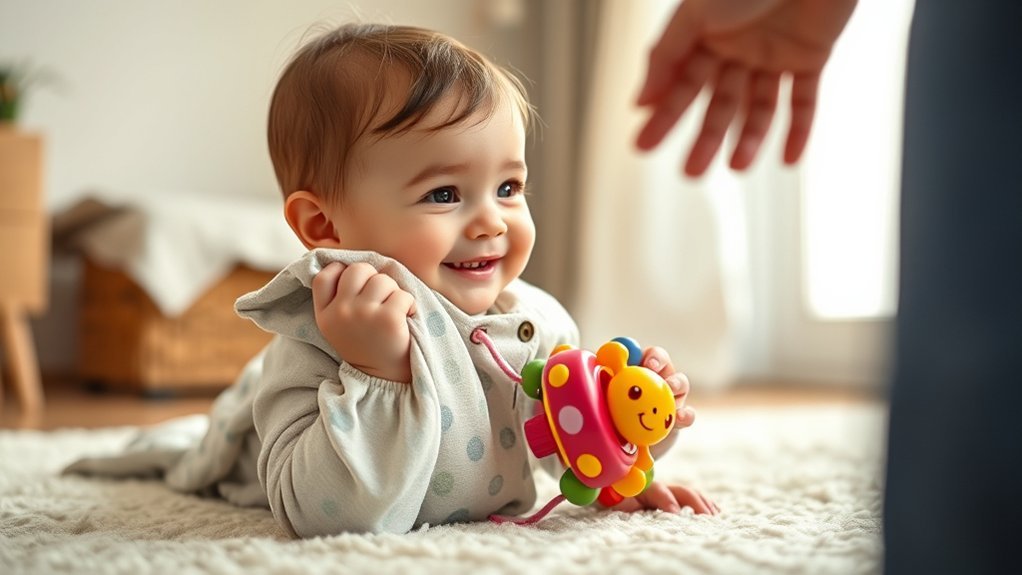
Try a simple noisy toy hide-and-seek game: hide a squeaky animal or rattle, then let your baby peek, listen, and find it. The sound helps your child connect what they hear with what they see, building object permanence and cause and effect. As you repeat the game, you’ll spark smiles, curiosity, and more back-and-forth play. This playful interaction not only enhances early language skills but also encourages recognition of non-verbal communication cues.
Noisy Toy Hide-and-Seek
You can hide noisy toys under a cloth, behind a cushion, or beside a box, then invite your baby to search. The sound gives a clear clue, so your little one may crawl, scoot, or reach toward it, supporting motor development.
As your baby discovers the toy, they learn cause and effect: searching leads to a fun sound payoff.
Try rattles, squeaky animals, or crinkly toys to keep the game fresh. This simple play also strengthens auditory skills as your baby tracks sounds from different spots.
Keep it gentle, joyful, and free of pressure, letting curiosity lead the way.
Peek, Listen, Repeat
Peek-a-boo gets even more exciting when you add a toy that makes a sound, because your baby can hear that it’s still there even before they see it. You hide it, reveal it, and let the sound guide their attention.
This simple peek-a-boo game supports object permanence and teaches cause and effect: your baby learns that movement, touch, and uncovering can change what they hear. Use different noisy toys to invite auditory exploration and help your little one track where the sound comes from.
The repetition matters, too, because it lets your baby anticipate the noise, stay engaged, and practice listening. When they laugh, coo, or reach for the toy, you’re building connection while they explore the world with confidence and joy.
Drop Blocks and Listen Closely
When you drop blocks from different heights, your baby can hear how each one makes a different sound, which helps build auditory discrimination and a sense of cause and effect.
For block dropping, hand your baby a soft block, then let them grasp, lift, and release it onto a safe surface. You’ll see fine motor muscles work as little fingers open and let go.
Keep your tone calm and encouraging so your child feels free to explore, notice, and repeat. This simple play invites curiosity about movement and sound, and it supports early cognitive growth as your baby begins linking action with response. Additionally, this activity reinforces object permanence as your child learns that objects can still exist even when they are out of sight.
Keep your tone calm and encouraging so your baby feels safe to explore, notice, and repeat.
Stay close and supervise, giving your child room to experiment without pressure. Each drop becomes a small discovery: I move, I hear, I learn.
That kind of joyful practice builds confidence while keeping play safe, sensory-rich, and meaningful for both of you.
Clap and Sing During Bathtime
Bathtime is a wonderful time to clap, sing, and explore sound together. You can turn warm water play into a joyful sound lesson by adding clapping and singing simple songs. Your baby hears your voice, feels the rhythm, and notices how each splash changes the auditory world around them.
When you clap along, you invite your child to copy you, which supports early language growth and builds auditory awareness. The steady beat also helps your baby start recognizing rhythm. Try familiar nursery rhymes, since repeating melodies can strengthen memory and make bathtime feel safe and fun.
As you move your hands and sing, your baby connects movement with sound, and that cause-and-effect link feels empowering. Clapping also gives little hands practice, supporting coordination and fine motor development.
Keep your tone warm and playful, and let your baby enjoy the freedom of making noise, listening closely, and joining in.
Sing Songs With Repeated Actions
You can sing repeated-action songs like “If You’re Happy and You Know It” to help your baby or toddler match words with simple movements.
As you clap, stomp, or pat along, you support rhythm, timing, and motor skills while making the song easier to join in on.
These familiar actions also build confidence and strengthen your bond during music time. Engaging in such activities can enhance emotional connection with your little one, fostering a joyful learning environment.
Repeated Action Songs
For toddlers, these songs offer a playful way to practice motor skills with clapping, pointing, or stomping. Repeating the same tune can soothe children, creating a familiar rhythm that supports routine and emotional security.
When you sing together, you deepen bonding, encourage communication, and make play feel shared, joyful, and free.
Move And Sing
You can use familiar tunes like “If You’re Happy and You Know It” to build rhythm and invite participation. Add hand gestures, scarves, or a small toy to make sound play more engaging and help your child stay focused.
These repeated motions support fine and gross motor skills while strengthening memory and early language learning.
When you sing together often, you create a calm, shared moment that supports emotional bonding and social growth.
Keep it playful, responsive, and free of pressure so your baby can explore movement, sound, and connection at their own pace.
Try Copycat Sounds and Babbling
Babbling back and forth with your baby is a simple way to build early language skills. You can make copycat sounds, wait, and then answer with a new sound, giving your baby a chance to join the exchange. This playful back-and-forth supports babbling, helps your child notice speech rhythm, and strengthens auditory skills as they listen, imitate, and adjust.
When you repeat a squeal, coo, or simple syllable, you show that sounds can travel both ways, creating a clear cause-and-effect link. Your baby learns that their voice matters, and that freedom to experiment builds confidence. Keep your tone warm and encouraging, and let your baby lead the pace.
You don’t need perfect words; you just need attention, presence, and a willingness to respond. Over time, these small sound games help your baby practice vocalization, sharpen listening, and grow more comfortable expressing themselves aloud.
Make a DIY Rattle for Baby Play
A simple DIY rattle can turn everyday sound play into a fun, hands-on activity for your baby. You can make DIY rattles from a clean plastic container filled with rice or beans, then seal it tightly so small parts stay inside.
Wrap the outside with colorful tape or stickers to add visual interest and invite your baby’s attention. When your baby shakes the rattle, they begin to link their movement with the sound they hear, which deepens auditory exploration.
This kind of play also supports sensory development by helping them track sounds and build hand-eye coordination. Keep the rattle within easy reach, and stay close while your baby plays, especially if the container shows wear or has loose edges.
With a few safe materials, you’re giving your baby a simple, empowering way to explore cause and effect through sound.
Use Simple Sound Games by Age
Once your baby enjoys simple sound play like a DIY rattle, you can build on that interest with age-appropriate sound games.
For 0-3 months, shake a rattle near each ear so your infant can track the sound and strengthen auditory recognition.
At 4-6 months, offer household items that make different noises, letting your baby compare tones and sharpen sound discrimination.
From 7-12 months, use a pretend phone for interactive play; you can model sounds, pauses, and “talking” back, which invites imitation and early speech.
For 13-24 months, bring in homemade drums or other instruments so your toddler can tap, explore rhythm, and enjoy movement with sound.
Repeat these sound games often. Repetition helps learning stick, builds confidence in auditory recognition, and deepens your connection.
You’re not following rigid rules—you’re opening space for curiosity, expression, and joyful discovery together.
Safe Sound Play Tips for Toddlers
For safe sound play, keep toddlers’ toys age-appropriate, sturdy, and free from small parts that could pose a choking hazard. You can nurture curiosity while protecting freedom by choosing sound-making toys that invite discovery without unnecessary risk.
- Supervise playtime closely, so you can join the fun, guide exploration, and respond fast if a toy becomes unsafe.
- Choose soft materials, like fabric shakers or foam instruments, to lower injury risk from hard edges and surfaces.
- Set up sound play in a designated area, where your toddler can focus, move freely, and avoid distractions or hazards.
- Check toys often for wear and tear, and replace damaged items before they break or create danger.
When you stay present and prepared, you give your toddler room to experiment with sound, build confidence, and enjoy joyful cause-and-effect learning in a safe, empowering way.
Frequently Asked Questions
How Long Should Sound Play Sessions Last?
You should keep sound play sessions short—about 5 to 10 minutes for babies, and 10 to 15 minutes for toddlers. Follow sound duration guidelines, attention span considerations, and developmental milestones, so you can stay responsive.
What if My Baby Ignores the Sounds?
If your baby ignores the sounds, that’s okay—like a flower turning toward sunlight, they’ll engage when ready. Try softer sounds, watch for sound sensitivity, and invite playful exploration to build auditory engagement without pressure.
Can Sound Play Help With Speech Development?
Yes, sound play can support your baby’s speech development by building sound recognition, auditory memory, and vocal imitation. You can sing, repeat sounds, and pause for responses, helping your child explore language with confidence.
How Do I Reduce Overwhelming Noise During Play?
You can lower noise by choosing Quiet play environments, using Gentle sound sources, and trying Sound sensitivity strategies. You’ll help your child feel safe by turning down volume, limiting toys, and offering calm breaks.
What Household Items Are Safest for Sound Activities?
You can use safe materials like wooden spoons, plastic containers, and fabric-filled shakers. You’ll support sound exploration with sturdy, washable items, and you’ll find creative uses for everyday objects that won’t overwhelm little ears.
Conclusion
Sound play gives your little one a fun way to learn cause and effect every day. When you shake, tap, babble, and copy sounds together, you’re building early skills, bonding, and sparking curiosity. Keep activities simple, safe, and age-appropriate so your child can explore with confidence. As the saying goes, “Little by little, a little becomes a lot.” Those tiny noises add up to big learning.
