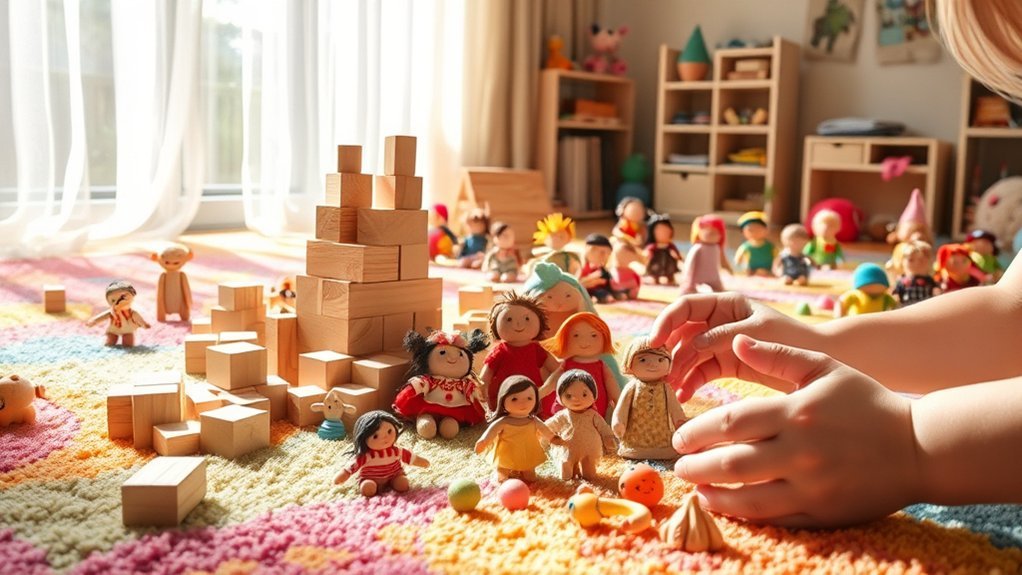
Open-ended toys can look too simple at first, which is why they often spark debate among parents and caregivers. Yet that simple design gives your child room to create, test ideas, and solve problems in many ways. This article separates common myths from practical facts, so you can choose toys that support richer, more flexible play.
Quick Answer
Open-ended toys give your child more than one way to play. Blocks, art supplies, fabric, clay, and natural items can support creativity, problem-solving, language, and social skills. They work best when you choose safe, age-appropriate materials and give your child freedom with light guidance.
Key Takeaways
- Open-ended toys let your child create many kinds of play from one simple material.
- These toys can support creativity, problem-solving, language, and social growth.
- Children of many ages can benefit when the toy matches their stage and safety needs.
- Your role works best when you observe, ask questions, and avoid taking over.
- Safe, durable, multi-use materials often give more long-term value than single-purpose toys.
What’s in This Article
- Understanding Open-Ended Toys
- Common Myths About Open-Ended Toys
- The Truth Behind Creativity and Imagination
- Open-Ended Toys and Cognitive Development
- Social Skills and Open-Ended Play
- The Role of Open-Ended Toys in Problem Solving
- Age Appropriateness of Open-Ended Toys
- Open-Ended Toys vs. Traditional Toys
- Parental Involvement in Open-Ended Play
- Tips for Choosing the Right Open-Ended Toys
- How to Introduce Open-Ended Toys at Home
- Frequently Asked Questions
- Conclusion
Understanding Open-Ended Toys
Open-ended toys invite creativity and imaginative play because they don’t tell your child what to do next.
These toys lack one fixed purpose, so your child can explore, invent, build, sort, pretend, and revise ideas. Blocks, art supplies, scarves, loose parts, and natural items all encourage experimentation.
This type of play can also support social skills. Your child may collaborate with others, negotiate roles, share materials, and explain ideas during play.
Open-ended toys also build a sense of agency. Your child gets to make choices, test ideas, and learn through hands-on exploration.
Common Myths About Open-Ended Toys
Many people assume open-ended toys lack value or structure. In practice, the child creates the structure through choice, imagination, and trial and error.
| Myth | Reality | Why It Matters |
|---|---|---|
| They’re just random objects | They encourage imaginative play | Your child can turn one object into many play ideas |
| Kids won’t know how to play | They support self-directed exploration | Your child learns to make choices and test ideas |
| They’re only for younger kids | Many ages benefit from open-ended play | Older children can use them for complex building, art, and pretend play |
| They’re too expensive | Many provide long-term value | A flexible toy can stay useful as your child grows |
| They’re not educational | They can support problem-solving skills | Your child practices planning, testing, adapting, and explaining ideas |
The Truth Behind Creativity and Imagination
Some people treat creativity as a bonus, but it plays a real role in child development. Imaginative play helps your child explore ideas, emotions, roles, and possible solutions.
Open-ended play can support divergent thinking, which means your child can think of more than one answer to a problem. That skill helps with art, storytelling, building, science, and everyday problem-solving.
Creative play also gives your child a safe way to process complex feelings and social moments. When your child acts out a scene or changes a plan, they practice flexible thinking.
Open-Ended Toys and Cognitive Development
When your child uses open-ended toys, they do more than stay busy. They make decisions, compare options, predict outcomes, and change plans.
Open-ended toys can turn simple play into practice for planning, testing, and problem-solving.
Blocks can help your child explore balance, size, shape, and structure. Art supplies can support planning, fine motor skills, and self-expression.
These toys also encourage independent thinking. Your child learns to work through challenges without a toy giving one fixed answer.
Pro tip: Offer fewer toys at once, so your child can focus more deeply on each material.
Social Skills and Open-Ended Play
Open-ended play gives your child many chances to practice social skills. Children often need to share space, explain ideas, take turns, and solve small conflicts.
These moments can help your child build communication, empathy, and cooperation. They also teach your child that other people may see the same material in a different way.
Collaborative Play Benefits
Collaborative play helps children interact and work toward shared goals. When children build a fort, create a pretend shop, or make a shared artwork, they need to plan together.
Your child learns to share ideas, listen to peers, and respect different viewpoints. This teamwork can strengthen social bonds and support cognitive growth.
Conflict Resolution Strategies
Open-ended play can create conflict, but that conflict can teach useful skills. If two children want the same block or scarf, they need to solve the problem.
You can guide them with simple questions like, “What could you both try?” or “How can each person get a turn?” These prompts help children practice negotiation, compromise, and empathy.
Communication Skill Development
Open-ended play gives children a reason to talk. They explain plans, describe pretend roles, ask for materials, and respond to other children’s ideas.
This back-and-forth can build vocabulary and listening skills. It can also help your child notice body language, facial expressions, and tone.
The Role of Open-Ended Toys in Problem Solving
Open-ended toys encourage your child to experiment, explore, and think creatively. Since the toy does not give one correct answer, your child must make choices.
For example, building with blocks asks your child to assess materials, test ideas, and adjust when a tower falls. That trial-and-error process can build patience and flexible thinking.
Group play can add another layer. Your child may need to explain a plan, hear another idea, and create a shared solution.
Age Appropriateness of Open-Ended Toys
Age appropriateness matters because the right toy should feel safe, engaging, and possible. A toy that suits your child’s stage can support better play and reduce frustration.
For infants, simple textures, safe shapes, and large objects can support sensory exploration. For toddlers, blocks, nesting cups, chunky crayons, and pretend-play props can invite early problem-solving.
Older children may enjoy more complex materials such as detailed building sets, clay, fabric, cardboard, and art tools. These options can support planning, design, storytelling, and collaboration.
Warning: Avoid small parts for children who still put objects in their mouths.
Open-Ended Toys vs. Traditional Toys
The choice between open-ended toys and traditional toys can shape your child’s play experience. Both can have value, but they often invite different kinds of play.
Open-ended toys, such as blocks and art supplies, encourage creativity, problem-solving, and critical thinking. They let your child explore ideas without strict rules.
Open-ended toys give your child room to create, adapt, and take ownership of play.
Traditional toys, such as puzzles, board games, or action figures, often guide play toward a specific goal or story. These toys can still teach skills, but they may offer less freedom than loose, flexible materials.
A balanced play space can include both types. Use open-ended toys when you want to support imagination, exploration, and child-led learning.
Parental Involvement in Open-Ended Play
Your involvement can make open-ended play richer, but your child still needs freedom. The goal is to support play, not control it.
You can observe, ask open-ended questions, and offer new materials when your child feels stuck. Try not to direct every step or fix every problem.
Benefits of Parental Engagement
When you join open-ended play, you can help your child stretch ideas and language. Your presence can encourage questions, storytelling, and problem-solving.
You can also model patience when plans fail. This helps your child build resilience and confidence.
Encouraging Creative Exploration
Open-ended play gives your child room to experiment and express ideas. You can support that by treating unusual creations as meaningful.
Instead of asking, “What is it supposed to be?” try asking, “Tell me about what you made.” This keeps the focus on your child’s thinking.
Balancing Guidance and Freedom
The best support often feels light. You can offer a prompt, then step back and let your child lead.
Ask questions such as, “What could you try next?” or “How can you make it stronger?” These questions guide thinking without taking over.
Tips for Choosing the Right Open-Ended Toys
Choose open-ended toys that match your child’s age, interests, and safety needs. Look for materials that feel sturdy, flexible, and easy to use in many ways.
Focus on toys that invite building, sorting, pretending, creating, and combining. A simple material often works better when your child can use it in more than one way.
Here’s a helpful comparison table:
| Criteria | What to Look For | Examples |
|---|---|---|
| Materials | Non-toxic and durable | Wood, fabric, natural fibers, cardboard |
| Age Appropriateness | Matches your child’s developmental stage | Large blocks for toddlers |
| Versatility | Supports more than one kind of play | Art supplies, building sets, scarves |
Choosing wisely can make playtime more useful and more enjoyable. Your child gains the most when the toy feels safe, flexible, and open to new ideas.
How to Introduce Open-Ended Toys at Home
You don’t need a large playroom to make open-ended play work. Start with a small set of flexible materials and give your child time to explore them.
- Place a few simple toys where your child can reach them.
- Rotate materials every few weeks to renew interest.
- Mix textures, such as wood, fabric, paper, and clay.
- Ask open-ended questions instead of giving instructions.
- Leave enough time for your child to repeat, revise, and extend play.
This approach keeps play simple and focused. It also helps your child see each material as a tool for many ideas.
Note: Household items can support open-ended play when they are clean, safe, and age appropriate.
Frequently Asked Questions
How Do Open-Ended Toys Differ From Structured Toys?
Open-ended toys support many possible uses, while structured toys usually guide your child toward one goal. Open-ended play gives your child more room to create, test, and change ideas.
Can Open-Ended Toys Be Used in Educational Settings?
Yes, teachers can use open-ended toys in classrooms, homeschool spaces, and therapy-style learning environments. These materials can support creativity, critical thinking, collaboration, and hands-on discovery.
What Materials Are Best for Open-Ended Toys?
Wood, fabric, cardboard, clay, paper, and other natural materials often work well. Choose materials that feel safe, sturdy, and easy for your child to combine in different ways.
How Can I Encourage My Child to Play With Open-Ended Toys?
Create a simple play space with a few flexible toys, then let your child explore. Join when invited, ask open-ended questions, and praise the thinking behind your child’s creations.
Are There Safety Concerns With Open-Ended Toys?
Yes, safety matters with any toy or loose material. Check for non-toxic materials, sharp edges, long cords, breakable parts, and choking hazards before play begins.
Conclusion
Open-ended toys matter because they give your child space to create, solve problems, and grow through play. Start with safe, simple materials that match your child’s age and interests. Then give your child time, freedom, and gentle support. With the right setup, playtime can become a steady source of confidence, curiosity, and learning.

