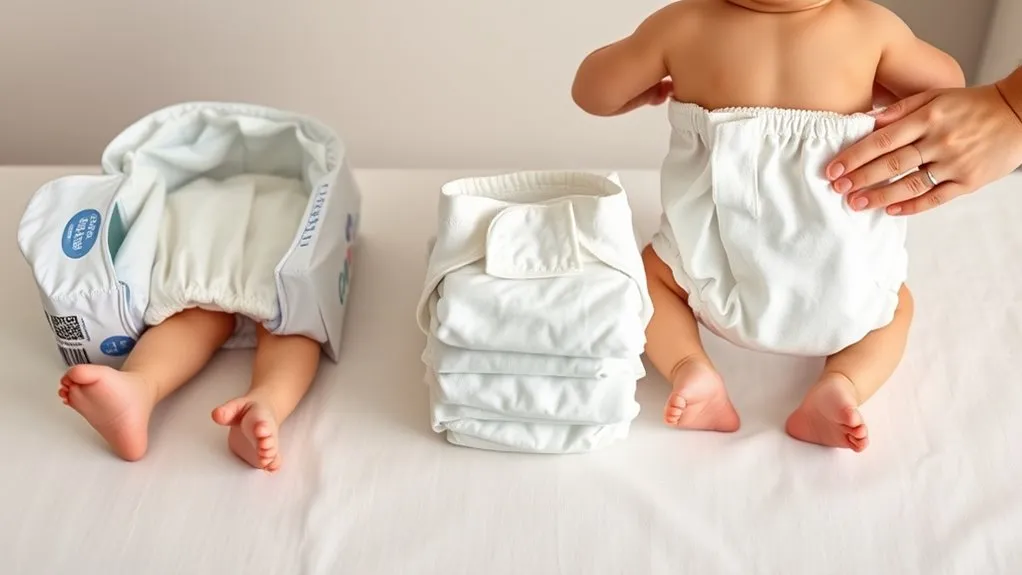
Diaper sizing can feel confusing because babies grow fast, and weight ranges often overlap. Pampers sizes use your baby’s weight as the main guide, but fit signs matter just as much. This guide shows you how to check the waistband, leg cuffs, tabs, leaks, and comfort signs so you can choose the right Pampers size with more confidence.
What’s in This Article
- How Pampers Diaper Sizes Work
- Pampers Diaper Size Chart by Weight
- When to Size Up Pampers Diapers
- How a Pampers Diaper Should Fit
- Signs a Pampers Diaper Is Too Small
- Signs a Pampers Diaper Is Too Big
- Pampers Diaper Types and Sizes
- How to Choose the Right Pampers Size
- Frequently Asked Questions
- Conclusion
Quick Answer
Pampers diaper sizes are based mostly on your baby’s weight, not age. Choose the weight range on the package, then check the fit at the waist, tabs, and leg cuffs. Size up if you notice red marks, leaks, blowouts, sagging, or tabs that no longer reach the center.
Key Takeaways
- Use your baby’s current weight as the first guide for Pampers sizing.
- Check the waistband with the two-finger test to avoid a tight fit.
- Keep the leg cuffs flared outward to help reduce leaks and blowouts.
- Size up when you see red marks, repeated leaks, or tabs that barely close.
- Recheck the fit often because babies can move through sizes quickly.
How Pampers Diaper Sizes Work
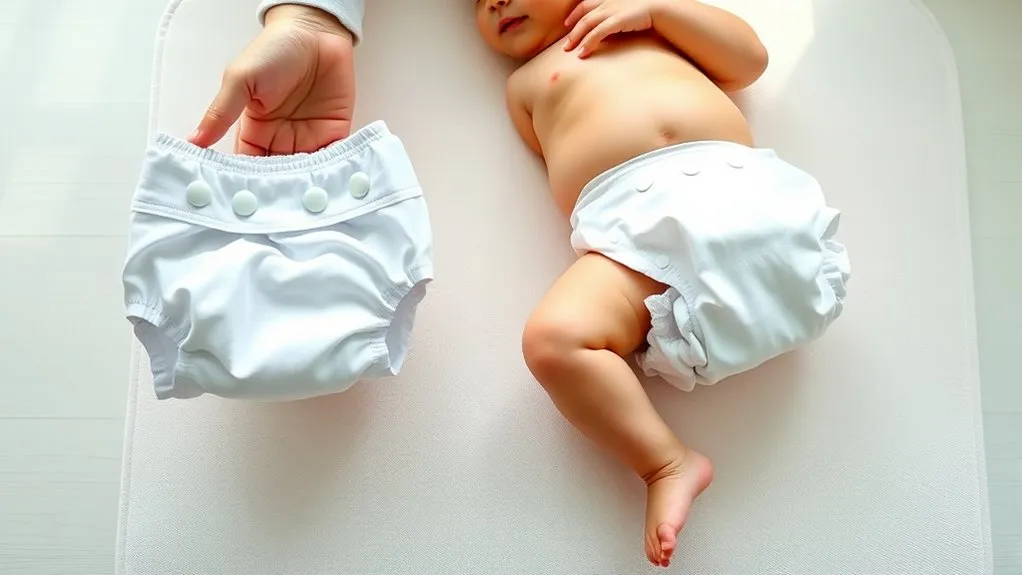
Pampers diaper sizes are based mainly on your baby’s weight, not age. Weight gives you a better starting point for a secure fit and steady leak protection.
Pampers diaper sizes use your baby’s weight as the main guide for fit, comfort, and leak control.
You choose a size by matching your baby’s current weight to the size range on the package. Then you confirm the fit by checking the waist, tabs, and leg cuffs.
A good fit helps the tabs close smoothly, keeps the leg cuffs close to the thighs, and reduces frequent leaks. It also helps protect your baby’s skin from rubbing and extra moisture.
If you notice red marks, gaps, or tabs that barely reach, your baby may need the next size. Use the two-finger test at the waist. You should slide two fingers under the waistband without strain.
Pampers offers different diaper lines, but the same basic rule applies. Start with weight, then use fit signs to choose the most comfortable size.
Pampers Diaper Size Chart by Weight
You can use the Pampers weight chart to match your baby with a size. Newborn diapers usually fit babies up to 10 pounds, while larger options and training pants cover heavier weight ranges.
Specialty choices like Swaddlers 360° and Cruisers 360° also use weight ranges. That helps you choose a diaper that fits your baby’s size, stage, and activity level.
If the diaper leaves marks, feels too snug, or leaks often, it’s time to size up. A size range gives you a starting point, but your baby’s comfort gives you the final answer.
Size Ranges by Weight
Pampers diaper sizes use weight ranges to help you choose a fit that supports comfort and leak control. These ranges can overlap, so your baby may fit more than one size on paper.
Use the diaper size chart to match weight ranges. Size 1 diapers fit 8 to 14 pounds, while Size 2 fits 10 to 22 pounds. Size 3 fits 16 to 28 pounds, Size 4 fits 15 to 34 pounds, and Size 5 fits 20 to 37 pounds.
If your baby falls between two sizes, look at the fit signs. A snug waistband, centered tabs, and flared leg cuffs can help reduce leaks and support healthy skin.
Note: Weight ranges can overlap, so choose the size that fits best on your baby’s body.
Move up when the current size leaves red marks, creates gaps, or causes frequent leaks. This simple approach helps you avoid guesswork at each growth stage.
Specialty Diaper Weight Guide
Beyond standard diaper sizes, specialty Pampers products also use weight ranges. These options can match your child’s age, stage, activity, or nighttime needs.
Use this baby size guide as a starting point. Preemie diapers fit up to 6 pounds, Newborn fits up to 10 pounds, Swaddlers 360° fits 16 to 37 pounds, and Cruisers 360° fits 16 to 41 pounds.
For older children, Ninjamas come in small/medium for 38 to 70 pounds and large for 64 to 95+ pounds. Easy Ups training pants cover 15 to 50 pounds across three sizes.
Splashers swim diapers fit 13 pounds and up. They support water play, but they do not replace regular diapers for daily absorbency.
Check diaper sizes against weight often. Then check the waistband, tabs, and leg cuffs to confirm a comfortable fit.
When to Size Up
As babies grow, diaper size should start with weight and end with fit. A size that still matches the weight range may feel too tight on your baby.
You should size up diapers when your baby’s weight nears the next range or when the diaper no longer fits well. Check for red marks, frequent leaks, diaper rash, or tabs that can’t meet the center.
A proper diaper lets you slide two fingers under the waistband without strain. You should also check that the leg cuffs sit around the thighs without digging in.
Size 1 suits 8 to 14 pounds, Size 2 covers 10 to 22 pounds, Size 3 fits 16 to 28 pounds, and Size 4 fits 15 to 34 pounds.
Keep checking your baby’s weight and watch for sagging, pulling, or overnight leaks. Those signs often tell you it’s time for a size change.
When to Size Up Pampers Diapers
You should size up Pampers diapers when you notice red marks on the waist or thighs. You should also move up when you see frequent leaks or blowouts.
These signs often mean the diaper feels too tight, sits too low, or lacks enough coverage. Check the tabs, too. They should reach the center of the waistband without pulling.
As your baby grows, monitor weight and comfort often. A prompt move to the right size can reduce rubbing, leaks, and extra changes.
Signs to Size Up
If your baby’s diaper leaves red marks on the waist or thighs, it may feel too snug. Tabs that no longer reach the marked areas also suggest a smaller fit.
A diaper that’s too small can cause discomfort and leaks. Trust the signs your baby’s body and clothing show you.
Look for these signs:
- Red marks on your baby’s waist or thighs
- Diaper tabs that miss the center markers
- Frequent leaks or blowouts
- A diaper that rides low or sags
- Discomfort, pulling, or fussing during changes
These cues show the diaper may not provide a proper fit. A bigger size can restore comfort, movement, and better leak protection.
Getting the Right Fit
Check whether the diaper tabs reach the center markers. If they don’t, your baby may need a larger size.
Use the two-finger test. Two fingers should slide comfortably under the waistband, without forcing the fit.
Frequent leaks or blowouts also show the right size may have changed. In any diaper size comparison, your baby’s weight still matters.
Pampers Size 1 fits 8 to 14 pounds, and Size 2 fits 10 to 22 pounds. Use those ranges with fit cues, not instead of them.
Trust these signs so you can size up with confidence. The right diaper should feel secure, soft, and easy for your baby to move in.
How a Pampers Diaper Should Fit
A properly fitting Pampers diaper should feel secure without feeling tight. You should fit two fingers comfortably between the waistband and your baby’s skin.
This fit helps your baby move freely while keeping the diaper snug enough for daily protection. Check that the tabs line up with the size marks on Pampers.
Use these fit checks during changes:
- The waistband should sit just below the belly button.
- The diaper should not ride up or sag.
- Leg cuffs should flare outward around the thighs.
- The back should cover your baby’s bottom well.
- Red marks mean you should adjust the fit or size.
When the diaper fits well, it stays in place without restricting movement. That helps your baby stay more comfortable through play, naps, and sleep.
Signs a Pampers Diaper Is Too Small
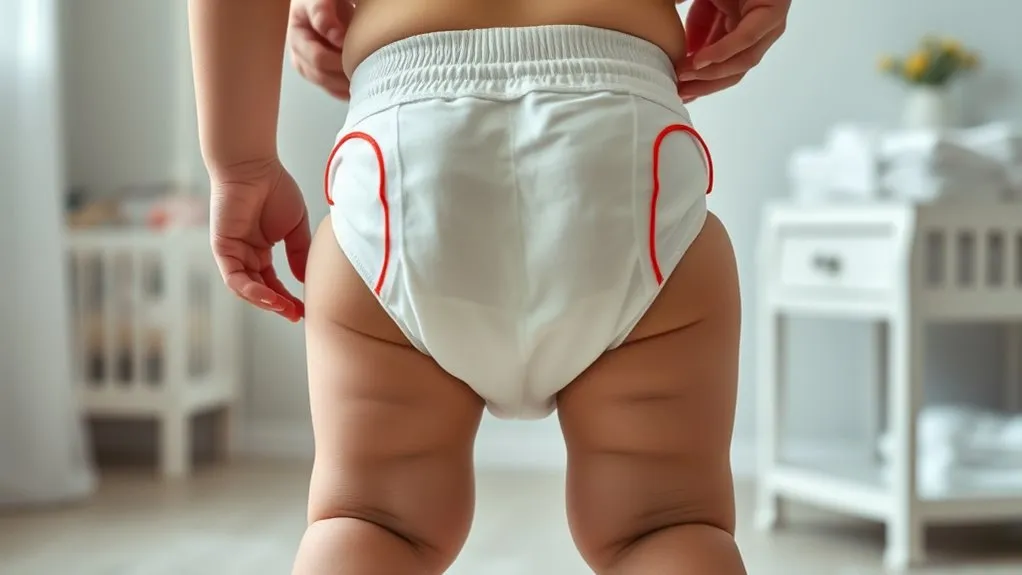
When a Pampers diaper is too small, you’ll often notice red marks on your baby’s waist or thighs. You may also see tabs that don’t reach the center of the waistband easily.
Frequent leaks and blowouts can also show the diaper does not give enough coverage. If the diaper rides low on the bottom, it can press into the waist and cause discomfort.
Your baby may also pull at the diaper during changes. That behavior can signal that the current size feels tight or restrictive.
| Sign | What you may notice | Action |
|---|---|---|
| Red marks | Marks on the waist or thighs | Size up |
| Tight tabs | Tabs won’t meet the center | Check the size range |
| Leaks | Frequent leaks or blowouts | Improve coverage |
| Low fit | Diaper rides low on the bottom | Move to a larger size |
Trust these signals. A better fit supports comfort, free movement, and reliable protection throughout the day.
Warning: If a rash looks severe, spreads, bleeds, or does not improve, contact your child’s doctor.
Signs a Pampers Diaper Is Too Big
If a Pampers diaper is too big, you’ll usually notice gaps around the legs. You may also see sagging, drooping, or tabs that overlap too much.
These signs mean the diaper sizes may not give your baby a secure fit. You may also see more leaks because the diaper can shift during movement.
Watch for these signs:
- Leg openings feel loose and leave gaps.
- The diaper sags instead of staying close.
- Diaper tabs do not meet the markers well.
- The waistband sits low and slips down.
- The diaper shifts during normal movement.
You can usually improve fit with a smaller size or a careful adjustment. A diaper that stays close to the body helps protect comfort and reduce leaks.
Pampers Diaper Types and Sizes
Once you know the signs of a poor fit, match your baby with the right Pampers type and size. Pampers offers diaper sizes from Newborn to Size 7, and its size chart by weight helps match fit with growth.
Swaddlers suit newborns and young infants, while Cruisers support active movers. Easy Ups work for toddlers in 2T-3T, 3T-4T, and 4T-5T.
If your baby needs extra mobility, 360° options can help the diaper move with their body. For water play, Splashers keep messes contained during swim time.
You can compare these diaper types by weight range, but your baby’s skin and clothing give better fit clues. Choosing the right style supports comfort, protects baby’s skin, and reduces constant adjustments.
When you understand diaper sizes, finding the right fit gets simpler and more secure.
How to Choose the Right Pampers Size
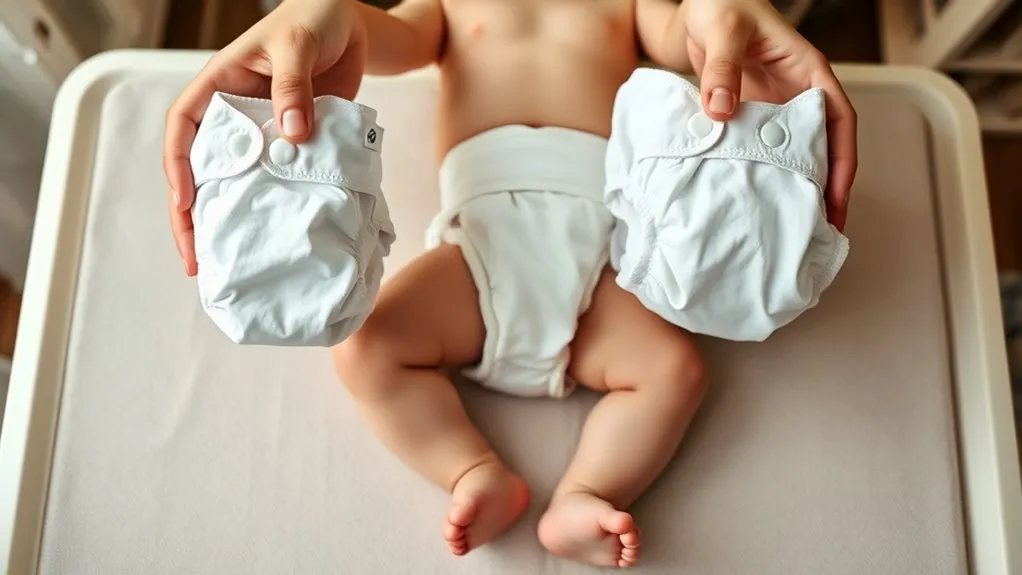
Choosing the right Pampers size starts with your baby’s weight. Pampers sizes fit specific ranges, such as Size 1 for 8 to 14 pounds and Size 2 for 10 to 22 pounds.
Use Pampers diaper sizes as a guide, then check the tabs for a snug, secure closure that does not pinch. Watch for signs of discomfort, including red marks, leaks, or pulling.
Use this quick process:
- Check your baby’s current weight first.
- Match that weight to the Pampers size range.
- Use the two-finger test at the waistband.
- Flare the leg cuffs outward after fastening.
- Recheck fit after growth spurts or frequent leaks.
Pro tip: Keep a small pack of the next size ready when your baby nears the upper weight range.
You’re not locked into one size. You can adjust quickly as your baby’s needs change.
When you choose well, you support healthy skin, reduce leaks, and give your baby freedom to move comfortably.
Frequently Asked Questions
How do I know when to upsize my baby’s diaper?
You should upsize when you see leaks, red marks, or tabs that no longer close near the center. Also check your baby’s weight range because growth can change the fit fast.
What signs show my baby needs a bigger Pampers size?
Your baby may need a bigger size if the diaper feels tight, leaves red marks, or causes frequent blowouts. A diaper that rides low on the bottom also needs a closer fit check.
When should you move from Size 4 to Size 5 diapers?
Move from Size 4 to Size 5 when your baby nears the next weight range or the diaper starts leaking often. You should also size up if the tabs pull tightly or the waistband leaves marks.
When should you switch from Size 2 to Size 3 diapers?
Switch from Size 2 to Size 3 when your baby nears the upper end of the Size 2 range. Leaks, tight tabs, and red marks can also mean your baby needs Size 3.
Can a Pampers diaper fit by weight but still feel wrong?
Yes. Weight ranges overlap, and babies have different body shapes. Use the weight chart first, then confirm the size with waist, tab, cuff, and leak checks.
Medical Disclaimer: This article is for informational purposes only and does not constitute professional medical advice. Always consult a qualified doctor before making decisions based on this information.
Conclusion
Choosing the right Pampers size helps you keep your baby dry, comfortable, and protected. Start with your baby’s weight, then check the waist, tabs, leg cuffs, and leak patterns.
If you notice red marks, sagging, or frequent leaks, size up or adjust the diaper fit. Recheck the fit often so you can stay ahead of growth changes and keep diaper changes easier.