
Clean the diaper area with warm water or fragrance-free wipes, then pat it completely dry. Use a pea-sized amount of diaper rash cream for small spots, or a thin, even layer over all red or irritated skin, including folds and creases. Don’t rub it in hard. Put on a fresh diaper right away. Reapply after each change, and use it at night too. If the rash worsens or lasts three days, you’ll want to know the next steps.
What Diaper Rash Cream Does
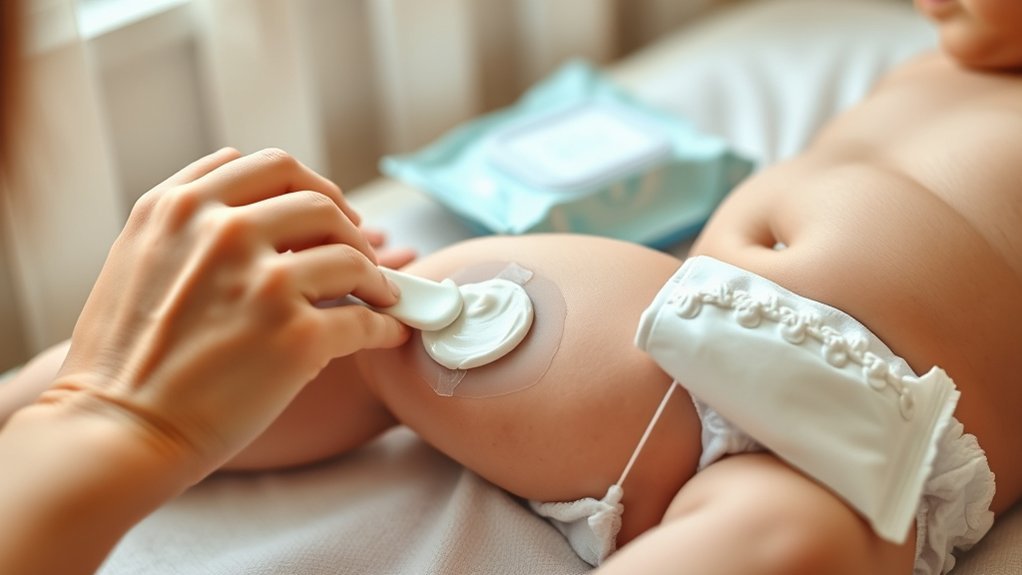
Diaper rash cream forms a protective barrier on your baby’s skin, shielding it from moisture and irritants that can lead to discomfort and inflammation.
You use diaper rash cream to reduce friction, calm irritated skin, and support skin recovery. Many formulas contain zinc oxide, which helps soothe and protect while it promotes healing.
Diaper rash cream helps reduce friction, soothe irritated skin, and support healing with protective ingredients like zinc oxide.
When you’re applying the cream, spread a thick, even layer so it can block moisture and stay in place during diaper wear. This protective barrier can help prevent diaper rash, especially during long stretches, like overnight, when skin faces more exposure.
For best results, place the cream on skin that’s clean and dry, because that lets the product work as intended.
Used regularly, diaper rash cream gives you a practical, reliable way to protect your baby’s comfort and preserve their skin’s natural resilience without adding extra stress.
Clean and Dry the Diaper Area
Start by gently cleansing the diaper area with warm water and fragrance-free wipes to remove any irritants.
Pat the skin dry with a soft cloth instead of rubbing, and pay close attention to skin folds and creases.
Make sure the area’s completely dry before you apply diaper rash cream, and let it air dry briefly if you can.
Gentle Cleansing First
Before you apply diaper rash cream, gently clean the diaper area with warm water and a mild, fragrance-free cleanser to remove urine or stool that may irritate the skin.
This gentle cleansing helps you start with clean skin and lowers the chance of ongoing irritation. If you need wipes, choose hypoallergenic wipes that are alcohol-free, especially for sensitive skin.
After cleansing, pat dry with a soft, clean towel so moisture doesn’t linger. Then let the skin air dry for a few moments before you apply diaper rash cream.
This small pause helps protect the skin barrier and supports comfort. Check the diaper area regularly for signs of irritation or rash, so you can respond early and keep care simple, steady, and effective.
Pat, Don’t Rub
After cleansing, pat the diaper area dry with a soft, clean cloth instead of rubbing, since rubbing can worsen irritation and discomfort.
You should gently clean with warm water and fragrance-free wipes, then pat, don’t rub, so your baby’s skin stays calm.
Make sure the diaper area is completely dry before you move on, especially in skin folds and creases where moisture can linger and trigger rash.
A clean, dry surface helps promote healing and gives diaper rash cream the best chance to work.
If you can, pause for a few moments after drying to reduce leftover moisture.
This simple routine supports comfort, protects delicate skin, and helps prevent diaper rash.
Then apply a thin layer of cream where needed, following your care plan.
Let Skin Air Dry
Once you’ve patted the area dry, let the skin air dry for a few minutes before applying diaper rash cream.
After you cleanse with warm water and fragrance-free wipes, check that the clean skin feels cool and dry. Use a gentle pat with a soft cloth, then allow area to air dry fully so moisture retention doesn’t build up.
Pay close attention to skin folds and creases, where dampness lingers and irritation starts. This brief pause helps you apply diaper cream to skin that’s ready, calm, and less vulnerable.
Frequent air drying during diaper changes can prevent diaper rash and promote skin health without adding extra steps. You’re not waiting for the sake of it; you’re creating a drier, safer surface that supports comfort and freedom for your baby.
How Much Diaper Rash Cream to Use?
Use a thin layer of diaper rash cream over the entire diaper area, including creases and folds, so the skin gets even protection without being coated too heavily. When you apply diaper rash cream, start with a pea-sized amount for a localized rash, then add a little more only if the irritated area is larger. Make sure the skin is clean and dry first; this helps the cream form a protective barrier on delicate skin. Avoid a thick layer, because excess product can hold moisture against the skin and may prevent irritation from healing. It’s also beneficial to keep the baby upright after application, similar to how spit-up management helps prevent discomfort.
| Area | Amount | Goal |
|---|---|---|
| Small spot | Pea-sized | Targeted coverage |
| Larger patch | Slightly more | Even protection |
| All folds | Thin layer | Moisture control |
You’re aiming for enough cream to shield, not smother. A proper amount lets skin breathe while still reducing friction. If the rash looks worse, reassess the amount you’re using.
How to Apply Diaper Rash Cream
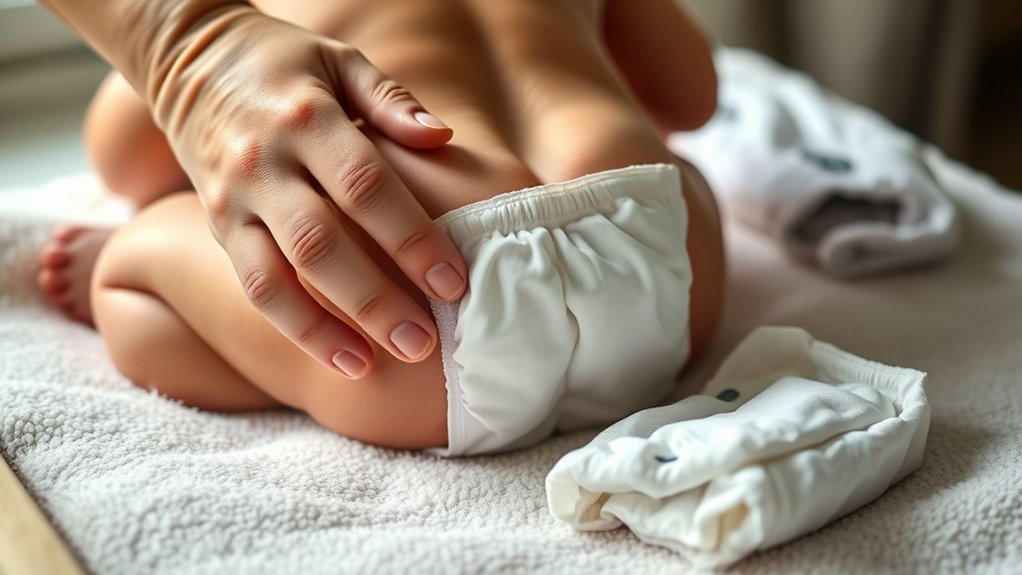
Start by gently cleaning the diaper area with warm water and a mild, fragrance-free cleanser, then pat the skin completely dry so you don’t trap moisture under the cream.
When you apply diaper rash cream, use a pea-sized amount first, then spread a thin layer over the affected areas and into skin folds. This helps create a protective barrier against moisture and friction.
If the signs of diaper rash cover a larger area, add a little more, but avoid piling on thick layers; overapplying can hold in dampness and slow healing.
After applying cream, let it absorb for a moment so the skin can breathe before you change a diaper.
Check the area each time you change a diaper and reapply as needed.
Wash your hands after you’re done to keep things clean.
Keep your approach calm and consistent; you’re supporting comfort, protection, and skin recovery without unnecessary fuss.
Apply Cream to All Irritated Skin
You should cover all areas of redness or irritation with a generous layer of cream, making sure no affected skin is left exposed.
Pay close attention to skin folds and creases, since these spots can hold moisture and need extra protection.
Reapply the cream after each diaper change to keep the barrier in place and support healing.
Cover All Affected Areas
Apply a pea-sized amount of diaper rash cream to all irritated skin, making sure to cover the buttocks, thighs, and any skin folds or creases.
Before you apply the cream, keep the affected area clean and dry so the product can work effectively.
Spread it gently instead of rubbing, so you create a protective barrier without adding discomfort. Use enough to fully cover every visible patch of redness, which can help soothe sensitive skin and support skin recovery.
Reapply cream at every diaper change until the rash clears, since ongoing coverage helps promote healing.
By treating all irritated skin consistently, you give the area steady protection and reduce friction.
If the rash worsens or doesn’t improve, check with a clinician for guidance.
Focus On Skin Folds
Pay close attention to skin folds, especially around the thighs and buttocks, where moisture can collect and irritation often hides. To calm diaper rash, apply cream to all irritated skin, including red areas tucked into skin folds. Use a thin layer, then gently spread it instead of rubbing, so you don’t worsen discomfort. This helps build a protective barrier and keeps the skin supported.
| Area | What to do |
|---|---|
| Thigh folds | Apply cream evenly |
| Buttocks creases | Cover red areas |
| Hidden wrinkles | Check for moisture |
During diaper changes, inspect these spots closely. If you see fresh irritation, reapplying cream can help maintain comfort and protection.
Reapply After Each Change
After every diaper change, reapply diaper rash cream to keep a steady barrier against moisture and irritation.
You should clean the area gently, then pat it completely dry before you apply the diaper rash cream again. Use enough at each change to cover all irritated skin, including folds and creases, so the protective barrier stays continuous.
This routine helps promote healing, eases discomfort, and can prevent rashes from worsening. Even when the skin looks healthy, keep reapplying during each change to guard against future irritation.
Consistency gives you more freedom from repeated flare-ups and keeps your baby’s skin protected. When you make reapply part of every change, you support comfort, recovery, and prevention with simple, reliable care.
Put on a Fresh Diaper
Slip on a fresh diaper once the cream has been applied and the skin is clean and dry. This step helps diaper rash cream protect the skin without trapping moisture or friction.
Choose a diaper that fits well: snug enough to stay in place, but not so tight that it presses on the rash. When you’re applying the new diaper, keep it secure and allow for air circulation at the waist and legs.
If you use cloth diapers, skip rubber pants during a rash so the skin can breathe. At every change, check for redness and keep the area clean.
- You may feel calmer when the fit is right.
- Your baby can move more freely with less rubbing.
- You’re helping the skin recover with each careful change.
Wash your hands thoroughly after finishing. If the rash persists, keep observing the skin closely and maintain this gentle routine.
When to Reapply Diaper Rash Cream
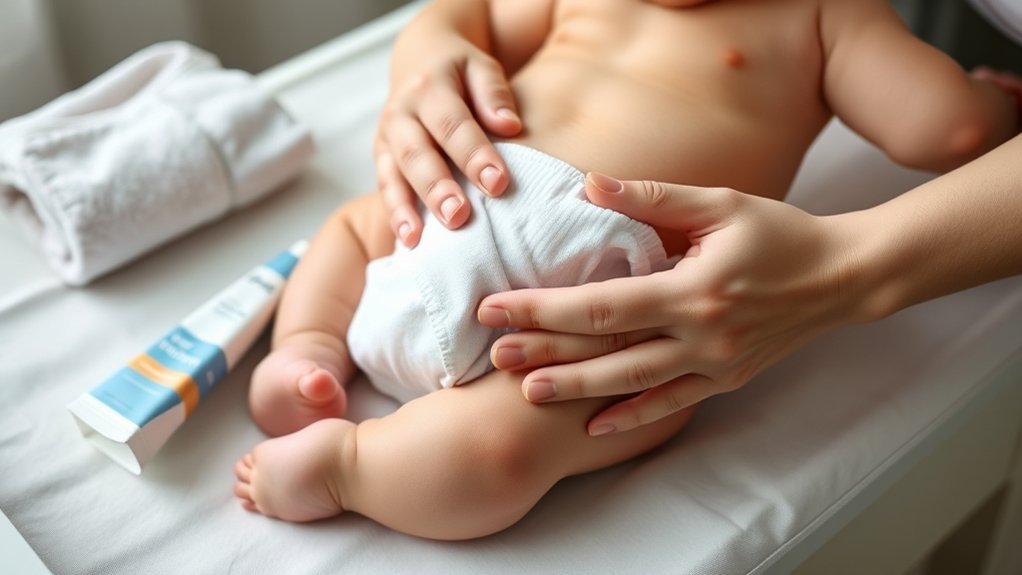
Reapply diaper rash cream at every diaper change, especially after cleansing the area and before putting on a fresh diaper, so the skin stays protected from moisture and irritation.
You should reapply diaper rash cream whenever you clean the skin, because a dry, intact surface helps the protective barrier work well. If you see the first sign of redness or irritation, don’t wait; reapply to prevent escalation and support healing.
During nighttime changes, apply during nighttime care too, since prolonged contact with moisture can worsen discomfort while your baby sleeps.
Keep using the cream through each change until the rash resolves, then shift to preventive use as needed. This routine gives you steady control, reduces friction, and supports the skin’s recovery without overcomplicating care.
Common Diaper Rash Cream Mistakes
A few common diaper rash cream mistakes can slow healing or make irritation worse. You’ll protect your baby better when you avoid these pitfalls while applying diaper cream.
- Don’t put cream on wet skin; moisture retention can trap dampness and worsen diaper rash. Pat the diaper area dry first.
- Don’t use too much cream. A thick layer can prevent the skin from breathing and may cause skin irritation instead of relief.
- Don’t skip air time or frequent diaper changes. Clean, dry breaks help prevent diaper rash and support healing.
Cream alone isn’t enough to prevent diaper rash. You still need proper cleansing, frequent diaper changes, and a dry diaper area. Understanding normal spit-up can also help you recognize when your baby’s discomfort may not be related to diaper rash.
Keep watching the rash for signs of infection or increasing severity, because early attention helps you stay calm and in control.
Watch for signs of infection or worsening rash so you can act early and stay calm.
When you avoid these mistakes, you give the skin space to recover and help your child feel freer, more comfortable, and less burdened by irritation.
When Diaper Rash Needs a Doctor
If your baby’s diaper rash doesn’t improve after three days of consistent care, it’s time to call your pediatrician. You should seek medical advice sooner if you see signs of infection, including increased redness, swelling, pus, or blisters.
Watch your baby closely during diaper changes; if the rash causes obvious discomfort or pain, don’t wait. Persistent rashes that don’t respond to over-the-counter treatment may need prescription-strength creams or a closer evaluation.
Fever, poor feeding, or unusual fussiness can point to an underlying issue that needs prompt care. When you act early, you protect your baby’s skin and avoid unnecessary suffering.
Trust your judgment: if the diaper rash looks worse, spreads, or keeps returning, your pediatrician can help you decide the next step. You don’t have to manage every rash alone, and you deserve clear guidance that supports your child’s comfort and healing.
Frequently Asked Questions
How to Properly Apply Diaper Rash Cream?
You clean, dry, then apply a thin diaper cream layer with clean fingers, noting diaper cream benefits, common misconceptions, choosing brands, when to apply, skin types, preventing rashes, application tools, frequency guidelines, ingredient importance.
Do You Apply Diaper Cream With Fingers?
Yes—you can use clean fingers, spread, smooth, seal during diaper cream application for finger hygiene, cream consistency, skin barrier, rash prevention, baby comfort, and product effectiveness; during your diaper change routine, alternative applicators work too.
Should Diaper Rash Cream Be Rubbed In?
No, you shouldn’t rub diaper rash cream in; gentle applying techniques boost diaper cream effectiveness and preserve the skin barrier. Common misconceptions ignore cream ingredients, pediatrician advice, diapering tips, rash prevention, and moisture control.
Do I Apply Diaper Cream All the Time or Only When There Is a Rash?
You can use diaper cream all the time for prevention; 1 in 3 babies gets diaper rash. Follow frequency guidelines, watch rash symptoms, and choose cream types. Prevention tips, common causes, product reviews, application techniques, caregiver advice.
Conclusion
You’ve got the basics down: clean the area, pat it dry, spread a thin layer of diaper rash cream, and change into a fresh diaper. Think of the cream as a protective shield, calming irritated skin like a cool umbrella in a storm. Reapply with each diaper change if needed, and avoid rubbing it in too hard. If the rash doesn’t improve or looks worse, call your child’s doctor for guidance.
