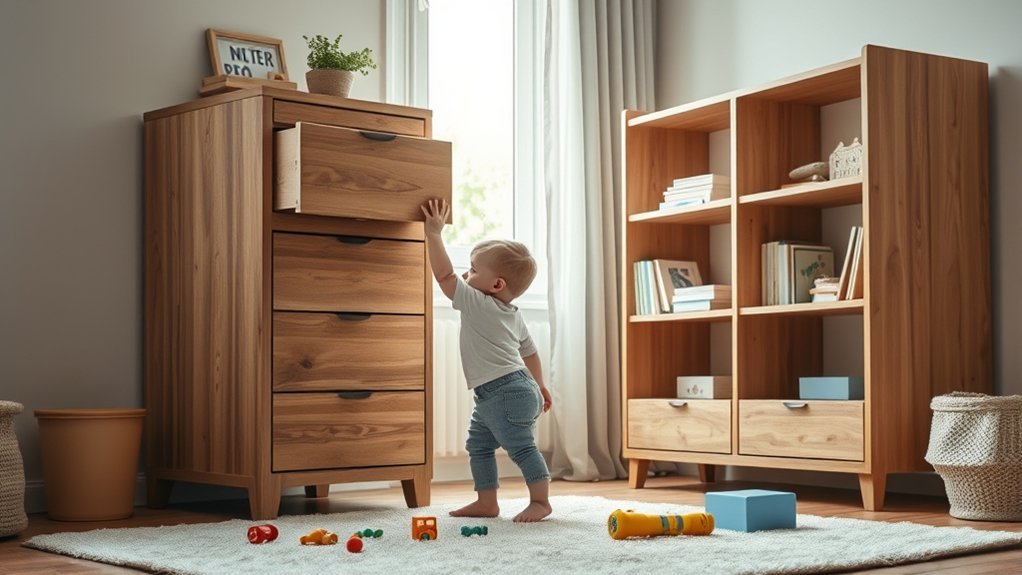
You can’t count on heavy furniture or drawer latches to keep kids safe. Dressers, bookcases, and TVs can tip when a child climbs, pulls, or opens a drawer, especially under age 5. Anchor tall, top-heavy pieces to wall studs, use at least two restraints when needed, and keep heavier items low. Check anchors often and close drawers after use. A few simple habits can make your home much safer, and there’s more to know.
How Furniture Tip-Overs Happen
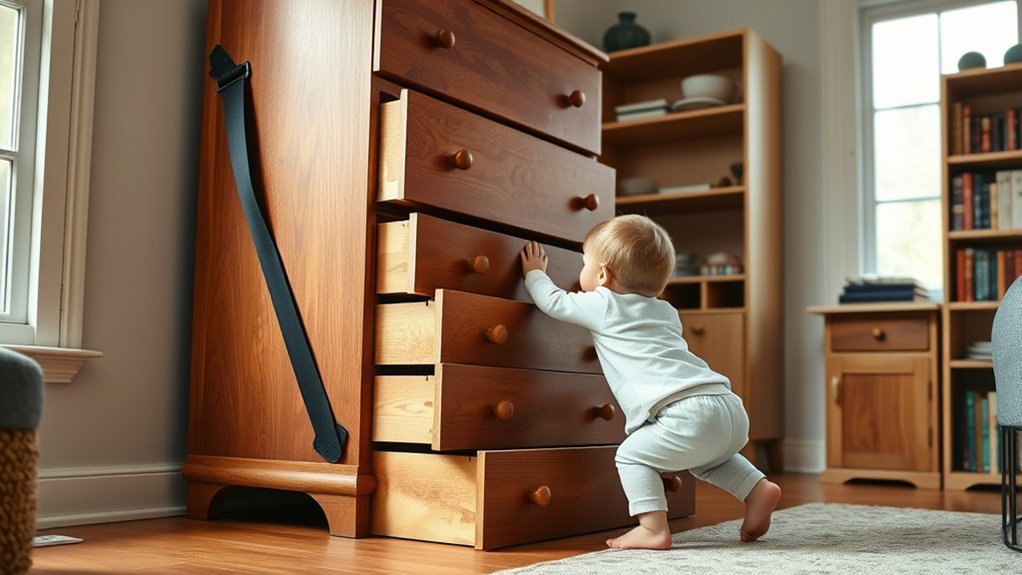
Furniture tip-overs often happen when a child climbs on an open drawer, pulls on a shelf, or uses a dresser like a step stool, shifting the center of gravity until the piece becomes unstable. You can think of it as a balance problem, not a weight problem.
Even short furniture can fall if it isn’t anchored, and children under 5 face the highest risk. Their executive function skills are still developing, so they may not fully grasp consequences when they tug, climb, or reach.
That’s why furniture safety means more than watching closely; it means using proactive measures in every room. Anchor dressers, chests, and nightstands, and keep drawers closed when you can.
These simple steps help reduce injuries and support a home where children can explore with more freedom and less danger. Furniture tip-overs aren’t rare, but you can lower the risk with steady, practical choices.
Why Heavy Furniture Isn’t Safer
Even if a dresser or chest feels rock solid, that doesn’t mean it’s safe. A heavy dresser can still tip when you open drawers, because the center of gravity shifts forward.
For tip-over prevention, you need to anchor the furniture, not just trust its weight. The Consumer Product Safety Commission reports thousands of tip-over injuries each year, and many involve children under 6.
Anchor the furniture, not just trust its weight—tip-over injuries still happen, often to children under 6.
That’s why child safety depends on more than size or mass. Older furniture often lacks today’s stability features, so weight alone won’t protect you from tip-over incidents.
You can lower the risk by using furniture straps and checking every tall piece in your home. Even one unanchored item can lead to serious injury.
The good news is that you have control here: secure the furniture, teach kids not to climb, and treat every heavy piece as a hazard until it’s anchored.
Myths About Furniture Anchoring
You may hear that only flimsy or lightweight furniture needs anchors, but even sturdy dressers and bookcases can tip when drawers open or a child climbs.
You might also think anchoring is only needed in play areas or that drawer latches are enough, yet tip-overs can happen anywhere and latches don’t stop climbing.
Anchors matter because they help protect your child from hazards that size, price, or age alone can’t prevent.
Common Furniture Myths
Many common furniture myths can make homes feel safer than they really are, but the truth is that tip-overs can happen in any room and with any type of dresser, shelf, or cabinet.
You can’t count on a heavy dresser to stay put, because open drawers can shift balance and cause tip-over deaths.
Don’t assume a young child stays safe just because a room seems off-limits; children wander, and supervision alone can’t prevent every reach or climb.
Latches help, but they don’t anchor furniture or stop unsteady furniture from tipping.
Older kids may know better, yet curiosity still wins.
Quality brand? Same risk.
Trust facts, not common furniture myths, and use clear safety steps that support your family’s freedom and executive function skills.
Why Anchors Matter
Anchors matter because furniture can tip when you least expect it, even if it looks sturdy or sits low to the ground. You protect children by securing dressers, shelves, and other furniture against tip-overs, not by trusting weight alone. Pulling out drawers shifts balance, so supervision and drawer latches help, but they don’t replace anchors.
| Myth | Fact | Action |
|---|---|---|
| Heavy pieces are safe | Any furniture can tip | Install anchors |
| Low furniture can’t fall | Climbing raises risk | Anchor it |
| Latches are enough | They’re not complete safety | Use both |
| Regulation covers all models | Shorter units may be unregulated | Check every piece |
Only about 27% of homes use anchors, yet injuries and fatalities happen fast. Anchors give you freedom from avoidable risk.
Which Furniture You Should Anchor First
Start with the tallest, most tip-prone pieces first, especially dressers, bookcases, and any furniture with drawers that can shift weight when opened. When you anchor furniture in this order, you lower the biggest risk of tip-overs fast.
Start with the tallest, most tip-prone pieces first, like dressers and bookcases, to reduce tip-over risk quickly.
Focus on tall furniture with a high center of gravity, because children may pull on drawers or climb before you notice, even with close supervision.
Next, secure televisions on sturdy bases or wall-mounted supports, since a falling screen can cause injury or death.
Don’t stop in the playroom; anchor furniture in bedrooms, living rooms, and guest spaces, too, because children move freely and surprises happen.
Then check wider or heavier pieces and plan for at least two anchors per item for steadier support.
How to Anchor Furniture the Right Way
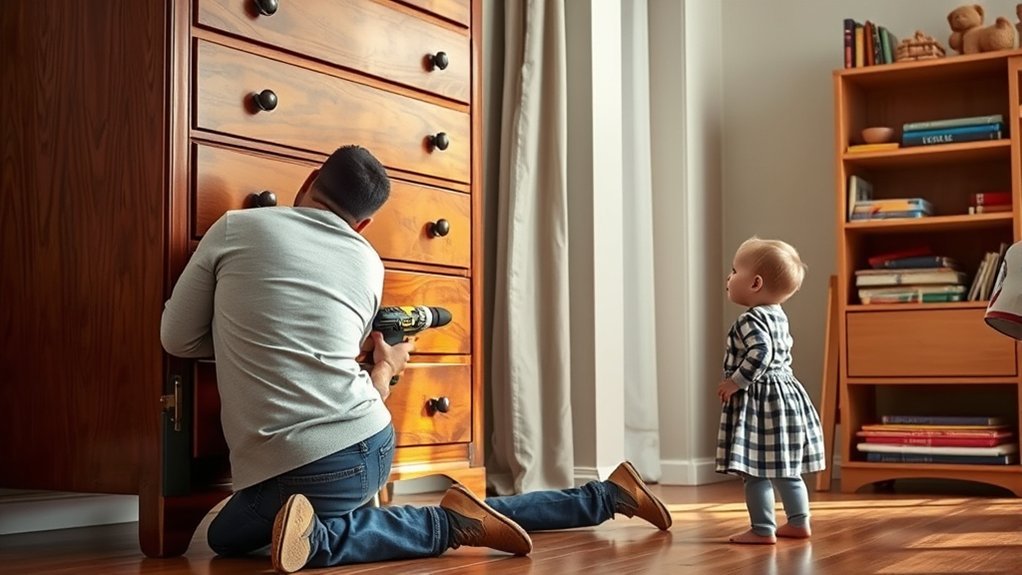
Secure each piece by fastening anchors to solid wall backing, ideally studs, and use at least two restraints per item so the furniture stays stable if it’s pulled or bumped. That’s the core of effective furniture anchoring.
Choose approved anchor systems, including built-in options on newer STURDY-compliant pieces, and install them exactly as directed so they can do their job. Keep heavier items in lower drawers or on lower shelves to improve stability and help reduce risk of tip-over injury.
After installation, inspect and maintain every strap, bracket, and screw; wear, looseness, or damage can weaken protection. If a dresser or cabinet doesn’t include a built-in system, add one that matches the piece and wall.
Good child safety starts with simple, solid steps that protect your space without taking away your freedom. When you anchor correctly, you make home feel open, calm, and safer for everyone.
Daily Habits That Reduce Tip-Over Risk
Even after you’ve anchored furniture, a few daily habits can further lower tip-over risk. Keep checking that your furniture anchoring still holds, and secure furniture again if you move rooms or add weight.
Put heavy items in lower drawers and shelves so the center of gravity stays low. Clear tempting toys, remotes, and decor from high spots; children are curious, and they’ll climb to reach what they want.
Place play zones where you can monitor play areas easily, because visible spaces make supervision simpler and unsupervised climbing less likely. Keep safety discussions short and regular, reminding children that furniture isn’t for climbing, even when they think they can manage it.
These small routines don’t restrict your home—they help you use it freely and confidently. When you build these habits into your day, you reduce accidents, protect your family, and make every room safer without adding stress.
Frequently Asked Questions
Does All Furniture Need to Be Anchored?
Yes—you should anchor all furniture types, because furniture stability varies and risk factors change with use. Don’t trust common misconceptions; use best practices, anchoring methods, and DIY solutions. Safety standards and accident statistics support childproofing tips.
Are Furniture Anchors Necessary?
Yes, furniture anchors are necessary: they improve furniture stability, protect child safety, and reduce tip over hazards. You can choose anchor types, follow installation tips, try DIY solutions, and strengthen home safety through awareness campaigns.
What Is the Rule for Anchoring Furniture?
You anchor furniture to studs with at least two anchors, follow safety guidelines, and inspect regularly. Use child proofing tips, choose suitable anchor types, and apply proper installation techniques for furniture stability, home hazards, weight distribution, risk assessment.
Do All Dressers Need to Be Anchored?
Yes, you should anchor every dresser; when a drawer’s open, even the sturdiest one can tip. For dresser safety, use childproofing tips, assess furniture stability, choose anchor types, and follow best practices for home safety and accidental tipping prevention.
Conclusion
You can’t always spot a tip-over risk by looking at a piece of furniture, and that’s why anchoring matters. One child is hurt by furniture tipping over every 17 minutes in the U.S., a sobering reminder that prevention is worth it. By anchoring tall, unstable pieces, placing heavier items low, and building simple daily habits, you make your home safer. Small steps can give you real peace of mind and protect the people you love most.

