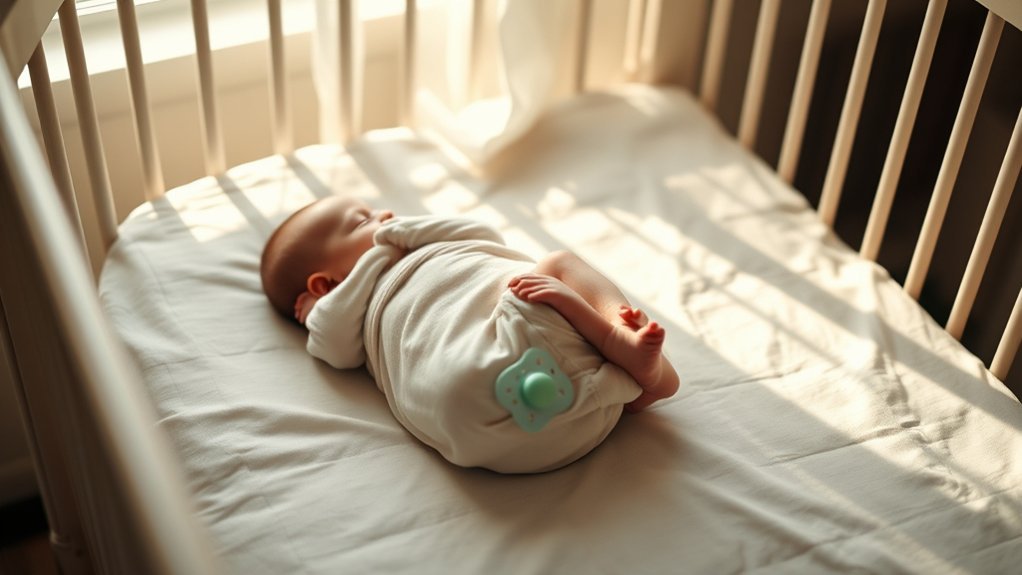
Yes—using a pacifier during sleep is linked to a lower risk of SIDS, but it doesn’t prevent SIDS on its own. The evidence is fairly strong, with meta-analyses showing a modest protective effect, especially for the last sleep. You should offer it for naps and nighttime after breastfeeding is established, and use safe sleep practices too. If you keep going, you’ll see when to start, how to use it, and when to stop.
What Is the Pacifier-SIDS Link?
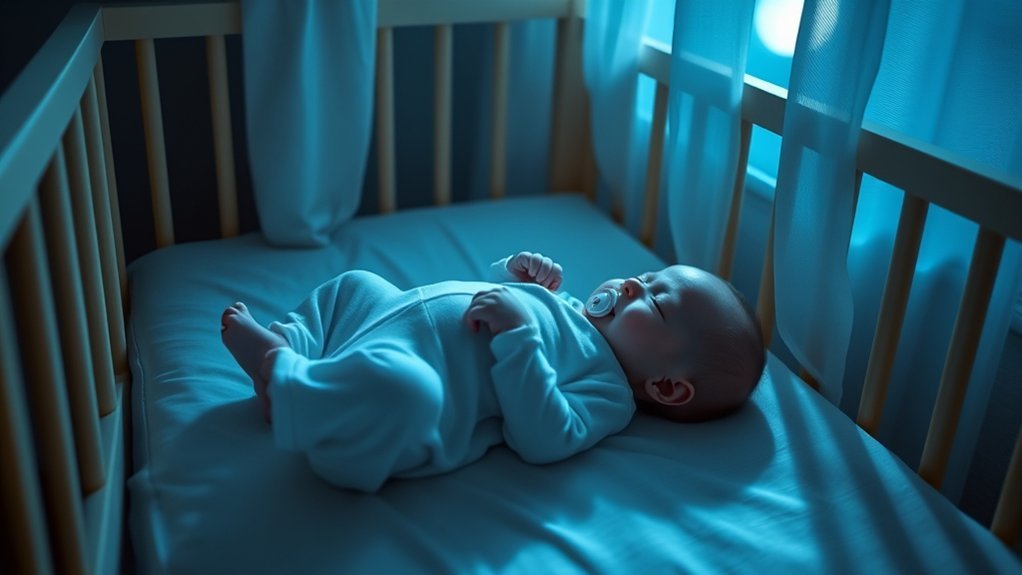
Research suggests that pacifier use during sleep is associated with a lower risk of Sudden Infant Death Syndrome (SIDS), with pooled analyses showing a substantial protective effect (SOR 0.47 in univariate studies and 0.39 in multivariate studies).
When you offer pacifiers at naps and nighttime, you may add a simple layer of protection while keeping your routine calm and flexible. The American Academy of Pediatrics recommends pacifiers for sleep episodes, and that guidance reflects a practical, evidence-based approach to infant safety.
Research also suggests a possible biologic benefit: pacifiers can increase salivation, which may support antibacterial defenses and reduce infection-related pathways linked to SIDS.
A meta-analysis estimated that one SIDS death could be prevented for every 2,733 infants using a pacifier. Even in higher-risk settings, the protective pattern has appeared, giving you a reassuring option that can fit your family’s values and your baby’s sleep needs without adding burden. Additionally, incorporating positive sleep cues into your baby’s sleep environment can further enhance their safety and comfort.
How Strong Is the Evidence for Pacifiers and SIDS?
Sure! Here’s the modified content with the addition:
—
The evidence for pacifier use and SIDS prevention is fairly strong: a meta-analysis of seven studies found that using a pacifier during sleep was associated with lower SIDS risk, with summary odds ratios of 0.47 in univariate analyses and 0.39 in multivariate analyses. For you, that means a pacifier isn’t a guarantee, but it does offer a meaningful, evidence-based layer of protection.
| What you may feel | What the evidence says |
|---|---|
| Hope | Risk drops |
| Relief | Guidance supports use |
| Concern | Benefit appears real |
| Freedom | You can choose confidently |
Researchers estimate one SIDS death could be prevented for every 2,733 infants using a pacifier. The American Academy of Pediatrics recommends it during sleep, and the US Preventive Services Task Force rates it a level B option. Possible benefits may come from increased saliva and antibacterial effects, which could help lower infection-related SIDS risk. Additionally, safe sleep practices are crucial in conjunction with pacifier use to further reduce SIDS risk.
What Did the Pacifier Meta-Analysis Find?
The meta-analysis screened 384 abstracts and included 7 studies, giving you a focused look at the evidence on pacifiers and SIDS.
It found a modest protective effect overall, with summary odds ratios of 0.90 in univariate analyses and 0.71 in multivariate analyses.
The estimated benefit was greater when you used a pacifier during the last sleep.
These findings support sleep-time pacifier use as a reasonable preventive measure, with one SIDS death prevented for about every 2,733 infants who use a pacifier. Additionally, understanding the potential impact of postpartum anxiety on a mother’s ability to make safe sleep choices is crucial for infant well-being.
Study Scope And Methods
A meta-analysis of original case-control studies examined whether pacifier use lowers the risk of sudden infant death syndrome (SIDS), reviewing 384 abstracts published between January 1966 and May 2004.
You can see the scope was narrow and careful: only nine articles met eligibility, and seven entered the final analysis. That approach let researchers compare studies that used similar case-control methods and clinical definitions.
They assessed both usual pacifier use and use during the last sleep, then combined results with summary odds ratios. This design helps you judge the evidence without hype.
It doesn’t prove cause, but it does give you a structured look at how pacifier use has been studied and why the signal deserves attention.
Risk Reduction Results
Across seven case-control studies, the meta-analysis found a measurable association between pacifier use and lower SIDS risk: the summary odds ratio was 0.90 for usual use and 0.47 when the pacifier was used during the last sleep. You can read this as a modest but real protective effect of pacifiers.
Multivariate analyses showed stronger results, with odds ratios of 0.71 and 0.39, suggesting the association held even after adjustment. The review also estimated that one SIDS death might be prevented for every 2,733 infants using a pacifier during sleep.
For you, this means the evidence supports pacifiers as one part of a broader, evidence-based approach to reducing the risk of SIDS, without overpromising and with respect for your choices.
Sleep-Time Use Matters
Sleep-time use appears to matter most in the pacifier meta-analysis, since the strongest association with lower SIDS risk showed up when infants used a pacifier during the last sleep, with a summary odds ratio of 0.47.
In seven studies, pacifier use during sleep was linked with lower risk, and usual use also showed protection. The evidence was stronger in multivariate models than in univariate ones, suggesting the association holds after adjustment.
Practically, pacifiers may help reduce the risk, especially when you offer them for every sleep episode, including naps and nighttime.
The US Preventive Services Task Force rates this advice as level B, meaning moderate certainty. That’s reassuring: you can use this simple tool without losing your freedom to choose what fits your family.
Why Might Pacifiers Lower SIDS Risk?
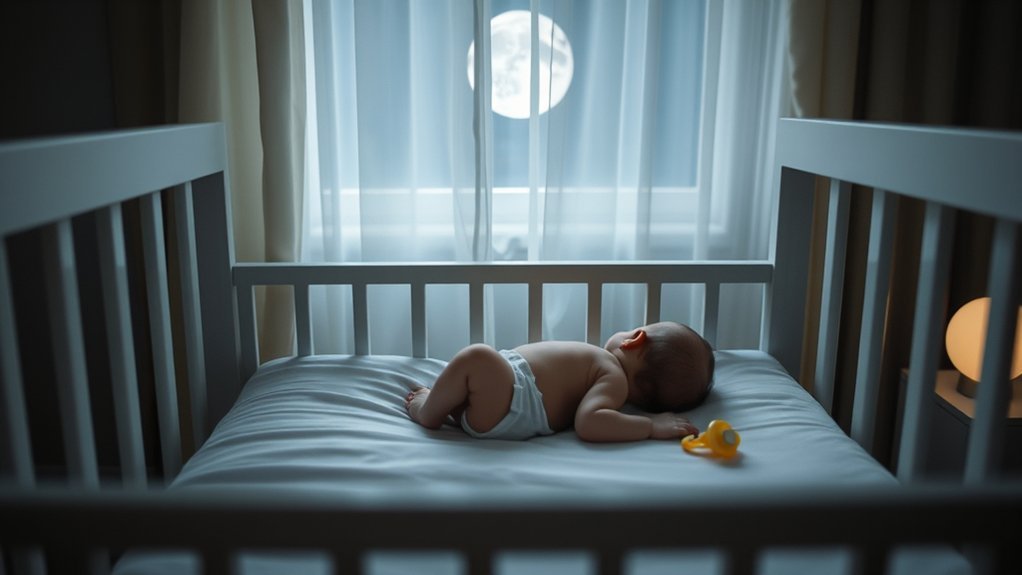
Pacifiers may lower SIDS risk in part by helping keep a baby’s airway open during sleep, since sucking can encourage the tongue to move forward.
When you use pacifiers, you’re supporting a simple mechanical change that may reduce airway obstruction during vulnerable sleep periods.
Research links pacifier use during sleep with a strong drop in SIDS risk, with a multivariate odds ratio of 0.39.
That protective signal may also reflect more saliva, which contains antibacterial compounds that could help lower infection-related stress.
For every 2,733 infants who use a pacifier, one SIDS death could potentially be prevented, which shows why this small tool matters.
The evidence doesn’t promise certainty, but it does point to a meaningful, accessible way to support infant safety.
If you choose pacifiers, you’re using a low-cost option backed by evidence and endorsed by the American Academy of Pediatrics. Additionally, combining pacifier use with safe sleep practices can further enhance infant safety during sleep.
When Should Parents Offer a Pacifier?
If you decide to use a pacifier, timing matters. When should parents offer a pacifier? Offer it for naps and nighttime sleep, because that’s when the evidence shows the greatest potential benefit.
| Timing | Guidance |
|---|---|
| 3 to 4 weeks | Start after breastfeeding is well established |
| Every sleep | Offer for naps and overnight |
| Up to 1 year | Follow American Academy of Pediatrics guidance |
| Awake time | Don’t rely on it as the first soothing option |
You can try feeding, rocking, or holding first, then offer the pacifier if your baby still wants it. The American Academy of Pediatrics recommends pacifier use through the first year, which matches the peak SIDS risk window. Around 1 year, remove it during awake time, and by 2 years, stop it completely to support healthy oral development. This approach gives you flexibility without losing the protective sleep routine.
How Do Pacifiers Fit Safe Sleep?
You can include a pacifier as part of safe sleep because the American Academy of Pediatrics recommends it during naps and nighttime to help lower SIDS risk.
Studies show a meaningful protective association, with one meta-analysis finding an odds ratio as low as 0.39 for pacifier use during the last sleep.
You should still follow the full safe sleep routine: place your baby on their back on a firm mattress, keep the crib free of soft bedding, and avoid smoke exposure and overheating. Additionally, using a pacifier can help to promote deeper sleep in infants, contributing to a safer sleep environment.
Pacifiers And SIDS Risk
Used during sleep, pacifiers are associated with a meaningful reduction in SIDS risk, with multivariate analyses showing an odds ratio of 0.39. For you, that means pacifiers may offer real protection, not just comfort.
The evidence suggests that one SIDS death could be prevented for every 2,733 infants who use a pacifier. The American Academy of Pediatrics advises offering pacifiers for naps and nighttime sleep, and the US Preventive Services Task Force supports use through 1 year, when SIDS risk is highest.
Researchers think pacifiers may raise saliva production, which can help defend against infection-related contributors to SIDS risk. You don’t need to choose between soothing and science; pacifiers can do both.
Safe Sleep Guidelines
Pacifiers fit into safe sleep as a helpful add-on, not a substitute for the core rules: place your baby on their back on a firm, flat surface in a clear sleep space, and keep the room cool and well ventilated.
The American Academy of Pediatrics supports pacifier use during sleep because it’s linked with lower SIDS risk, especially for the last sleep of the day.
You can offer a pacifier after breastfeeding is established, usually around 1 month, so you don’t disrupt feeding.
Keep the sleep area free of soft objects, and remove the pacifier when your baby’s awake by 1 year to reduce dependence.
Used this way, pacifier use can fit cleanly into safe sleep without compromising feeding, comfort, or freedom.
What Are the Risks of Pacifier Use?
Although pacifiers can offer comfort, they aren’t risk-free. With pacifier use, you should know the main risks: prolonged use has been linked to more middle ear infections, and long-term use beyond age 2 may affect tooth alignment and oral development.
If your child becomes dependent on a pacifier, you may see more nighttime crying when it’s missing, because they haven’t practiced other self-soothing skills. That can feel exhausting, but it’s manageable.
Introducing a pacifier too early can also interfere with breastfeeding, which may affect nutrition and bonding. For that reason, timing matters.
The evidence is reassuring: when pacifiers are introduced after breastfeeding is well established, studies haven’t shown adverse effects on breastfeeding.
You can reduce risks by limiting use to sleep, replacing worn pacifiers, and weaning gradually as your child grows. Choosing what fits your family supports your freedom while protecting your child’s development. Additionally, excessive crying episodes may indicate discomfort related to gas, which can affect a baby’s ability to self-soothe.
Should Breastfed Babies Use Pacifiers?
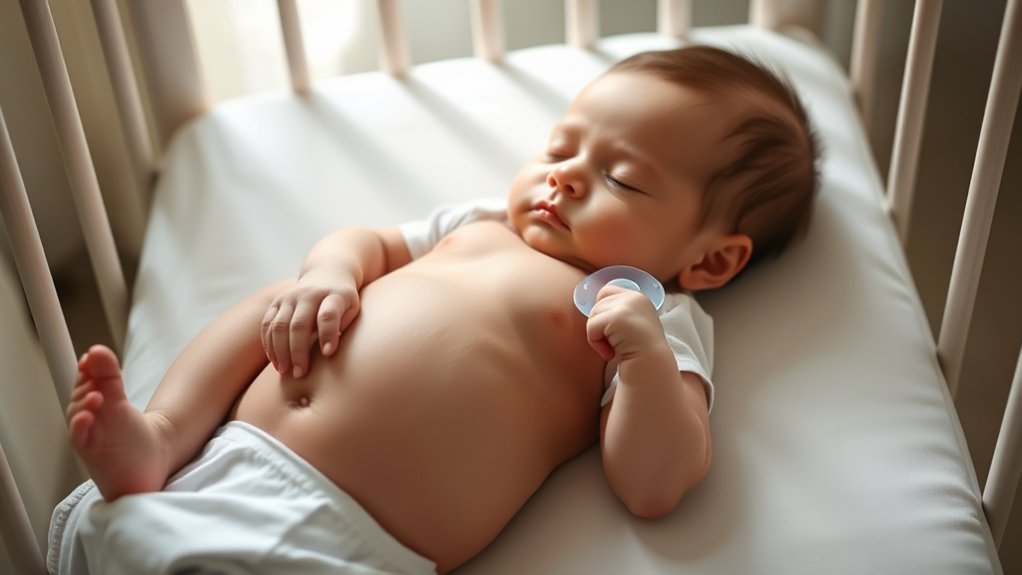
Yes—breastfed babies can use pacifiers once breastfeeding is well established, usually around 3 to 4 weeks of age.
You can consider using pacifiers during sleep because evidence suggests they may lower SIDS risk without harming breastfeeding when introduced appropriately.
For breastfed infants, this choice can support safety while preserving the benefits of nursing. The American Academy of Pediatrics recommends pacifier use for sleep, including for babies who breastfeed.
Research shows no negative effect on breastfeeding duration or success when you start later and watch for signs of disruption.
- Breastfeeding already reduces SIDS risk.
- Using pacifiers can add protection, not replace nursing.
- Timing matters: wait until feeding is established.
- Monitor routines so pacifiers don’t crowd out breastfeeding.
You’re not choosing between feeding freedom and protection. With thoughtful timing, you can support both.
How Do You Use a Pacifier Safely?
To use a pacifier safely, offer it at bedtime and for naps so it’s present during sleep, when it may help lower SIDS risk. Choose a one-piece, dishwasher-safe pacifier to reduce the risk of choking and to keep cleaning simple. You can wash or boil it often until your baby is 6 months old, which helps limit bacterial growth. Never coat the pacifier with sweet substances; that can raise cavity risk and undermine oral health. Additionally, understanding the Moro reflex can help parents recognize normal startle responses and ensure their baby feels secure during sleep.
| Step | Why it matters | Your action |
|---|---|---|
| Sleep times | Consistent use supports protection | Offer the pacifier at every nap and bedtime |
| Design | Safer construction | Pick one-piece, dishwasher-safe styles |
| Cleaning | Limits germs | Boil or wash frequently |
| Contents | Protects teeth | Keep it plain |
| Hygiene | Supports healthy development | Replace damaged pacifiers promptly |
You’re free to use this tool without guilt; just keep it clean, simple, and age-appropriate.
When Should You Wean Off a Pacifier?
Timing matters because prolonged pacifier use can increase the risk of dental problems, dependency, and middle ear infections.
You’ll generally want to start weaning between 6 and 12 months, with complete discontinuation by age 2. Many children do better when you first remove it during awake hours around age 1.
You can make the change easier by using praise, positive reinforcement, and professional guidance if your child struggles. Additionally, consider the right materials for swaddling, as they can provide comfort and support during this transition.
Why Weaning Timing Matters
When it comes to pacifier use, weaning at the right time matters because prolonged use can affect dental development, increase dependency, and contribute to other health concerns.
You can support weaning by making it gradual and consistent, which often feels more manageable for you and your child. Remove the pacifier during awake times by age 1, and aim to phase it out by age 2.
- Weaning earlier can lower the risk of middle ear infections.
- Waiting too long may affect oral alignment and speech habits.
- Introduce a pacifier only after breastfeeding is established, usually at 3-4 weeks.
- Watch for dependence so you can guide a smoother change.
Best Age to Stop
The best age to stop using a pacifier is generally by age 2, according to the American Academy of Pediatrics, to help reduce the risk of dental misalignment and dependence.
If you’re asking for the best age to stop, start planning earlier: begin weaning between 6 and 12 months to lower ear infection risk, and stop use a pacifier during awake time by age 1 to support speech and oral habits.
Gradual reduction usually feels easier than abrupt cutoff and may lessen nighttime crying spells. You can also reinforce progress with praise and positive feedback, which helps your child adapt without feeling controlled.
This evidence-based approach supports healthy development while giving you more freedom to move beyond the pacifier stage with confidence and calm.
Gentle Ways to Wean
If you’re planning to stop pacifier use, a gradual approach often works best. Between 6 and 12 months, you can start gentle ways to wean by limiting sucking on a pacifier during awake time. By age 1, aim to remove it when your child is alert, which supports speech and oral development.
- Praise moments without the pacifier.
- Offer a blanket, toy, or cuddle instead.
- Watch for nighttime crying that may signal dependency.
- Stop completely by age 2 to lower dental risk.
These steps give you room to respond without pressure. You’re not taking comfort away; you’re helping your child build new coping skills.
Consistency matters, but so does patience. If the change feels hard, adjust your pace while keeping the goal clear.
Frequently Asked Questions
Do Pacifiers Actually Reduce SIDS?
Yes—pacifiers can reduce SIDS risk. In SIDS research, you’ll see clear pacifier benefits, especially during sleep. You don’t need perfection; introduce one after breastfeeding’s established, and use it through infancy, when risk’s highest.
What Are Three Ways to Prevent SIDS?
Put baby on the back, use a firm crib, and keep the sleep area clear. Breastfeeding benefits may help, and safe sleep position matters. Don’t smoke around baby; these evidence-based steps can lower SIDS risk.
What Is the Number One Cause of SIDS?
There isn’t one proven number one cause of SIDS; you’re seeing a mix of SIDS risk factors, especially unsafe sleep position. You can lower risk by placing your baby on their back and keeping sleep space clear.
Is It Okay to Let Baby Sleep With a Pacifier?
Yes, you can let your baby sleep with a pacifier; it may improve sleep safety and offers pacifier benefits, including lower SIDS risk. Offer it once breastfeeding’s established, and don’t force it if it falls out.
Conclusion
If you’re wondering whether a pacifier can help lower SIDS risk, the evidence suggests it may offer some protection during sleep. For example, if your baby falls asleep easily with a clean, age-appropriate pacifier after feeding, that small step could fit into a broader safe-sleep routine. It’s not a guarantee, but it’s a simple, evidence-based option to discuss with your pediatrician—especially if you’re balancing breastfeeding, sleep, and your baby’s comfort.
