Disclosure: As an Amazon Associate, we earn from qualifying purchases. If you click a link on this page and make a purchase, we may receive a small commission at no extra cost to you.
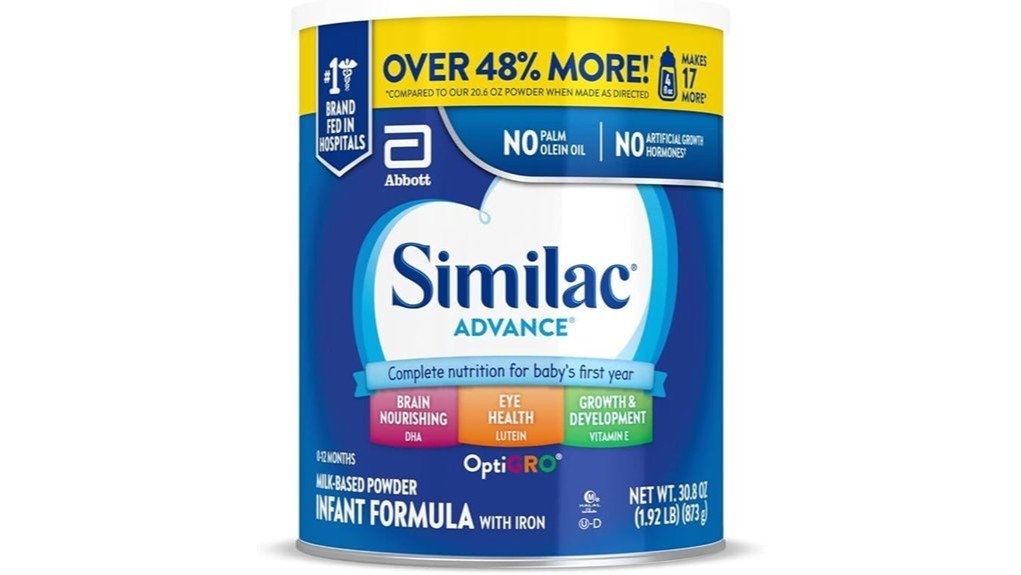
Choosing an infant formula can feel stressful because your baby’s nutrition, tolerance, and daily feeding routine all matter. Similac Advance is a milk-based, iron-fortified formula made for healthy term infants during the first year of life. It includes DHA and lutein, does not use palm olein oil, and is designed to provide complete nutrition when breastfeeding is not used or needs supplementation. This review helps you decide whether Similac Advance is a practical fit for your baby, or whether you should ask your pediatrician about a more specialized formula.
Quick Verdict
Rating: Recommended with caveats
Best For: Parents who want a standard milk-based, iron-fortified formula for a healthy term infant.
Bottom Line: Similac Advance is a dependable everyday formula option with DHA, lutein, iron, and a palm olein-free blend. It is not the right choice for every baby, especially if your child has cow’s milk allergy, prematurity concerns, or special feeding needs.
| Specification | Detail |
|---|---|
| Brand | Similac |
| Product | Similac Advance |
| Product type | Milk-based infant formula |
| Nutrition type | Iron-fortified, nutritionally complete formula for the first year |
| Key nutrients mentioned | DHA, lutein, and iron |
| Formula base | Milk-based |
| Palm olein oil | Not included, according to the article details |
| Artificial growth hormones | Not included, according to the article details |
| Best use | Daily formula feeding or supplementation for healthy term infants, when appropriate |
| Safety note | Prepare exactly as directed and ask a pediatrician if your baby has allergy, prematurity, digestive, or medical concerns. |
Key Takeaways
- Similac Advance is a milk-based, iron-fortified formula designed to provide complete nutrition for healthy term infants.
- It includes DHA and lutein, nutrients often discussed for early brain and eye development during the first year.
- The formula is palm olein free, which may support calcium absorption compared with some formulas that use palm olein oil.
- Parents may value its familiar brand reputation, hospital-use history, and role as a breastfeeding alternative or supplement.
- It may be worth considering for many families, but preparation accuracy and pediatric guidance are important.
- It is not meant for every baby, especially infants with suspected allergy, prematurity, or special dietary needs.
What Is Similac Advance?
Similac Advance is a milk-based, iron-fortified infant formula designed to provide complete nutrition during a baby’s first year. It is made for families who need a standard formula option for a healthy term infant, either as full formula feeding or as a supplement to breastfeeding when appropriate.
Similac Advance is a milk-based, iron-fortified formula providing complete nutrition throughout a baby’s first year.
The formula is positioned as inspired by breast milk and includes nutrients such as DHA and lutein. These ingredients are often compared by parents because they relate to early development, especially during the months when the brain and eyes are growing quickly.
Its main strength is that it gives you a familiar, widely recognized formula option without needing a specialized hypoallergenic, soy-based, or sensitive-stomach product. Its main limitation is also clear: babies with confirmed or suspected cow’s milk allergy, prematurity needs, or medical feeding concerns may need a different formula chosen with a pediatrician.
Before You Buy: Similac Advance is a standard milk-based formula. If your baby has allergy symptoms, blood in stool, severe reflux, poor weight gain, prematurity, or a diagnosed medical condition, ask your pediatrician before using or switching formulas.
What’s Inside Similac Advance?
Inside this infant formula are several ingredients chosen to support growth and development during the first year of life. The article-supported details include a milk-based formula, iron fortification, DHA, lutein, and a palm olein-free blend.
DHA is commonly included in infant formulas because it is associated with early brain development. Lutein is often linked with eye health. Iron supports healthy red blood cells and oxygen delivery, which matters during a baby’s rapid growth stage.
The formula is also described as free from artificial growth hormones. For many parents, that detail can make the product feel simpler and more straightforward, especially when comparing standard infant formulas on the shelf.
How Similac Advance Supports Development
Designed for a baby’s first year, this milk-based, iron-fortified formula supports early development by providing balanced nutrition in a breast milk-inspired blend. It is meant to help meet general nutritional needs when breastfeeding is not possible, not chosen, or supplemented.
Its DHA contributes to brain development, while lutein supports eye health. Iron helps form healthy red blood cells and supports oxygen delivery to growing tissues, including the nervous system.
The palm olein-free blend may also appeal to parents who are comparing formulas for calcium use and stool comfort. Still, every baby responds differently, so stool changes, gas, spit-up, or feeding discomfort should be watched carefully after any formula change.
Who Should Choose Similac Advance?
Similac Advance is often a good option for caregivers seeking a milk-based, iron-fortified infant formula that provides complete nutrition during a baby’s first year. It may suit families who want a standard formula rather than a specialty formula for sensitivity, allergy, or premature infants.
A milk-based, iron-fortified formula that provides complete nutrition through baby’s first year.
Best For
- Healthy term infants who need a standard milk-based formula.
- Parents who want an iron-fortified option with DHA and lutein.
- Families looking for a breastfeeding alternative or supplement with complete nutrition.
Skip If
- Your baby has a diagnosed or suspected cow’s milk allergy.
- Your pediatrician has recommended a hypoallergenic, premature-infant, soy-based, or sensitive formula.
- Your baby has ongoing feeding trouble that needs medical evaluation.
Caregivers who value kosher or halal certification, SNAP eligibility in select stores, and a brand widely used in hospitals may also find it practical. Always confirm package-specific labels, seals, and store eligibility before purchase because packaging and availability can vary.
Feeding and Preparation Safety
Formula safety depends heavily on correct preparation. Similac Advance should be mixed only as directed on the product label, using the right amount of powder and water. Adding extra powder or too much water can change the nutrition balance and may be unsafe for infants.
Caregivers should also follow the storage and use timing on the package. Prepared formula should not sit out longer than the label allows, and bottles should be cleaned carefully to reduce contamination risk.
This formula is not a medical treatment for fussiness, reflux, allergy, constipation, or colic. If your baby has persistent vomiting, rash, blood in stool, dehydration signs, poor feeding, or poor weight gain, contact a pediatrician instead of solving the issue through repeated formula switching.
Pro Tip: When trying any new formula, write down feeding amounts, stool changes, spit-up, rash, and fussiness for a few days. Clear notes make it easier to discuss patterns with your pediatrician.
Comfort and Tolerance
Similac Advance may work well for many healthy term infants, but tolerance is individual. Some babies accept a milk-based formula without major issues, while others may show more gas, spit-up, stool changes, or fussiness during feeding.
The absence of palm olein oil may be a helpful detail for parents comparing formulas, since the article notes that it may support calcium absorption. Even so, comfort depends on the baby, preparation accuracy, bottle technique, feeding pace, and medical history.
If your baby seems uncomfortable after switching formulas, avoid making several changes quickly unless your pediatrician directs you to do so. Frequent switching can make it harder to know what is causing the problem.
Daily Use and Parent Convenience
For daily feeding, the biggest advantage of Similac Advance is its standard formula profile. You are not dealing with a niche specialty formula, which may make routine purchasing and feeding easier for many families.
Parents may also appreciate practical benefits mentioned in the article, such as SNAP eligibility in select stores and possible rewards points through the MySimilac QR code on select products. These benefits do not change the formula’s nutrition, but they can matter for families who buy formula regularly.
The main convenience limitation is that formula feeding always requires careful measuring, clean bottles, and safe storage. That extra routine is part of using any powdered or prepared infant formula, not just Similac Advance.
Pros and Cons of Similac Advance
From a nutritional standpoint, this formula offers several clear advantages: it is milk-based, iron-fortified, and formulated to provide complete nutrition during a baby’s first year. It also includes DHA and lutein, two nutrients that parents often look for when comparing formula options.
Pros
- Milk-based and iron-fortified for healthy term infants.
- Provides complete nutrition during the first year when used as directed.
- Includes DHA and lutein for early brain and eye development support.
- Palm olein free, which may support calcium absorption compared with some formulas.
- Free from artificial growth hormones, according to the article details.
Cons
- Not suitable for every baby, especially infants with cow’s milk allergy concerns.
- Requires exact preparation and safe storage every time.
- May require pediatric guidance if your baby has reflux, digestive discomfort, or poor weight gain.
How It Performs in Real Use
For Full Formula Feeding
For parents who are not breastfeeding, Similac Advance can serve as a complete nutrition source for a healthy term infant when used exactly as directed. Its iron-fortified, milk-based profile makes it a standard everyday formula rather than a specialized medical formula.
For Supplementing Breastfeeding
Some families use formula to supplement breastfeeding because of supply concerns, work schedules, shared feeding duties, or personal preference. Similac Advance may fit that role if your baby tolerates milk-based formula and your pediatrician has not recommended a different option.
For Sensitive Feeding Situations
If your baby has mild fussiness or occasional spit-up, you may still need to watch patterns carefully. Similac Advance is not a sensitive or hypoallergenic formula, so ongoing symptoms should be discussed with a pediatrician instead of assuming this formula will solve the issue.
For Budget and Availability Planning
Formula is a repeat purchase, so availability, store options, rewards, and SNAP eligibility in select stores can matter. Similac Advance may be practical for families who want a widely recognized formula with common retail access, but you should confirm the exact package, size, and eligibility before buying.
How to Use It Correctly
Always follow the package directions for water amount, powder amount, storage, and feeding time limits. Do not dilute formula to stretch supply, and do not add extra powder unless a medical professional specifically instructs you to do so.
Use clean bottles and safe water preparation practices based on your pediatrician’s guidance and the product label. Newborns, premature infants, and babies with immune concerns may need extra caution with formula preparation.
When switching from another formula, ask your pediatrician if your baby has a medical history or has shown feeding issues. A gradual or direct switch may be recommended depending on your baby’s needs, but that decision should be based on professional guidance.
Is It Worth the Price?
Similac Advance can be a smart buy for everyday use if your baby needs a standard milk-based formula and tolerates it well. It provides complete nutrition, includes DHA and lutein, and avoids palm olein oil, which makes it a strong value for parents comparing mainstream infant formulas.
The best value comes when the formula fits your baby’s needs without requiring frequent changes. If your baby needs a specialty formula, then the better value may be the product your pediatrician recommends, even if it costs more.
Because formula pricing and package sizes can vary, check the current package details before ordering. Do not buy only by brand name, since the exact product type, size, and seller can affect what arrives.
How It Compares to Alternatives
Compared with sensitive or hypoallergenic formulas, Similac Advance is a more standard choice. It makes sense for healthy term infants who do not need a specialized formula for allergy, lactose sensitivity concerns, or digestive management.
If your baby has confirmed cow’s milk allergy, a hypoallergenic formula may be more appropriate. If your baby has frequent fussiness or digestive discomfort, your pediatrician may compare Similac Advance with sensitive or gentle formula options before recommending a change.
Frequently Asked Questions
Is Similac Advance eligible for SNAP benefits?
Yes, Similac Advance may be eligible for SNAP benefits in select stores, depending on SNAP rules and retailer participation. Always check the specific store, product size, and checkout eligibility before buying.
Does Similac Advance have kosher and halal certification?
The article notes that Similac Advance carries kosher and halal certification. You should still confirm the exact package seals and regional labeling before purchase because packaging can vary.
Can I earn rewards points with Similac Advance purchases?
Yes, select purchases may earn rewards points through the MySimilac QR code program. Check the package and program terms because rewards availability can depend on the product and promotion.
Is Similac Advance free from artificial growth hormones?
Yes, the article states that Similac Advance is free from artificial growth hormones. This may appeal to parents who want a mainstream formula without that added concern.
Is Similac Advance the brand most used in hospitals?
The article states that Similac is widely used in hospitals. Hospital use can reassure some parents, but your baby’s tolerance and pediatrician’s guidance matter more than brand familiarity alone.
Is Similac Advance good for babies with cow’s milk allergy?
Similac Advance is milk-based, so it may not be suitable for babies with cow’s milk allergy. If you suspect allergy symptoms, ask your pediatrician about the right formula type before using it.
Can Similac Advance be used from birth?
The article describes Similac Advance as a formula for a baby’s first year. For newborns with special health needs, prematurity, or feeding problems, ask your pediatrician before choosing any formula.
What is the biggest mistake to avoid with Similac Advance?
The biggest mistake is preparing it incorrectly. Always measure water and formula exactly as directed, store prepared bottles safely, and avoid changing formulas repeatedly without guidance if your baby has symptoms.
The Bottom Line
Similac Advance is worth considering if you want a standard milk-based, iron-fortified infant formula with DHA, lutein, and complete nutrition for a healthy term baby. It is less suitable if your baby needs a hypoallergenic, sensitive, premature-infant, or medically guided formula. The best choice is the formula your baby tolerates well and your pediatrician agrees is appropriate.

