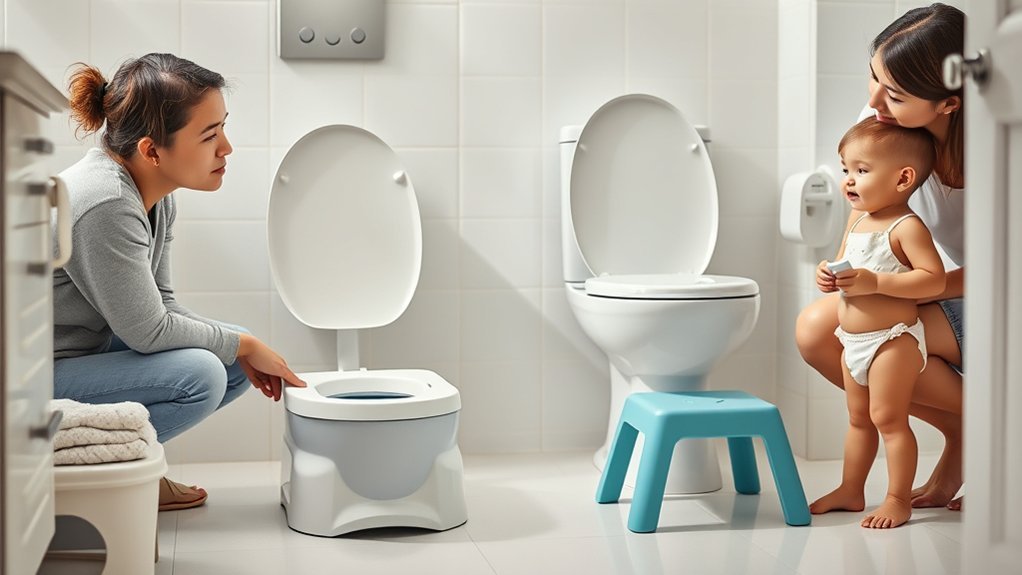
Potty training works best when you follow your child’s readiness cues, not myths about a perfect age, gender, or diaper type. You’ll usually see signs like staying dry longer, noticing a dirty diaper, showing interest in the toilet, and following simple directions. Pressure can backfire and cause resistance, while calm praise and steady routines help. Underwear can come later, once your child feels ready. If you keep going, you’ll see what really works and why.
When Should Potty Training Start?
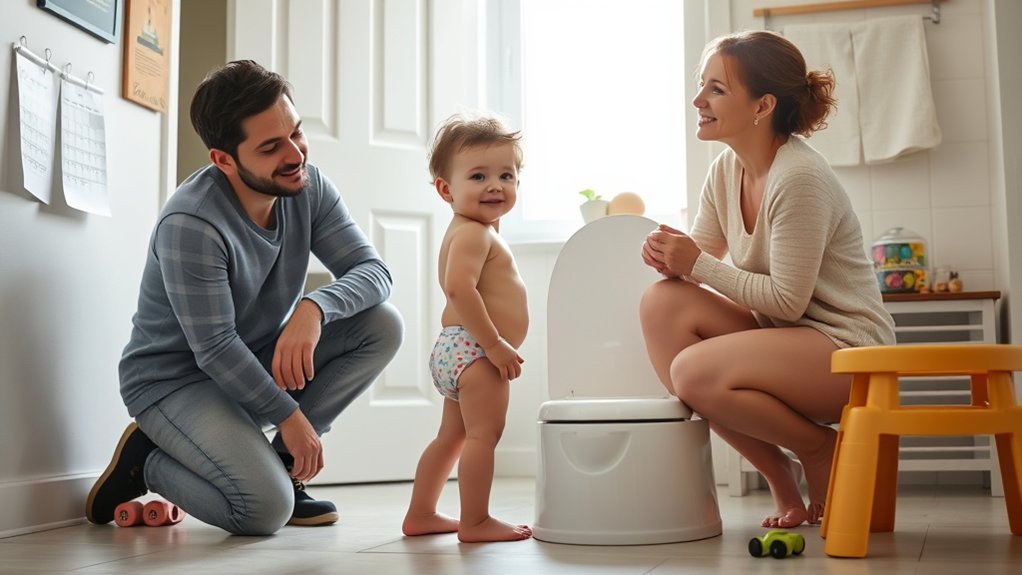
When should you start potty training? The evidence suggests an ideal age of about 27 to 32 months, but there’s no single rule for every child.
You can start potty training by watching signs of readiness: staying dry for longer stretches, discomfort with a soiled diaper, interest in the toilet, and following simple instructions.
These cues fit child development better than common myths about a “correct” age. If you begin before 27 months, training duration often stretches to 13–14 months. If you wait past 32 months, you may see more accidents and friction.
Cultural differences also shape timing; some families begin around 9 months, while others wait until after 3 years. Trust your child’s pace, not pressure.
You don’t need to force a timeline to support freedom, dignity, and confidence.
What Readiness Signs Actually Matter?
The readiness signs that matter most are practical, not perfect: your child stays dry for longer stretches, notices discomfort in a dirty diaper, shows curiosity about the toilet, and can follow simple instructions.
Look for practical readiness: longer dry stretches, toilet curiosity, discomfort in dirty diapers, and simple instruction-following.
These readiness signs usually appear as potty training becomes more doable, often around 27 to 32 months, but individual children don’t follow a script. You’ll get better results by watching for staying dry, interest, and cooperation than by chasing an exact age at initiation.
When you wait for clear cues, you often support a smoother training experience because your child can understand what’s happening and respond. If you start too early, you may face more accidents and more frustration.
Trust your observations over societal pressures. Your child’s pace is valid, and your job isn’t to force progress; it’s to notice readiness and meet it with calm support.
Why There’s No Perfect Potty Training Age?
Why does potty training seem to have a “right” age when kids are so different? You don’t need a magic number.
Potty Training works best when you watch your child, not the calendar. Some children start at 9 months; others aren’t ready until after 3 years. Research suggests 27 to 32 months often works well, but readiness signs matter more than age.
Look for longer dry stretches, interest in the toilet, and simple communication. If you choose methods before those signs appear, training can take longer. That doesn’t mean your child is behind; it means they’re learning at their own pace.
Culture and family expectations may push a rigid timeline, but your child doesn’t owe anyone speed. Trust evidence, trust observation, and choose an age that fits your child’s readiness.
Liberation here means dropping the myth of one perfect moment and using methods that support steady, confident progress.
Why Pressure Makes Potty Training Backfire?
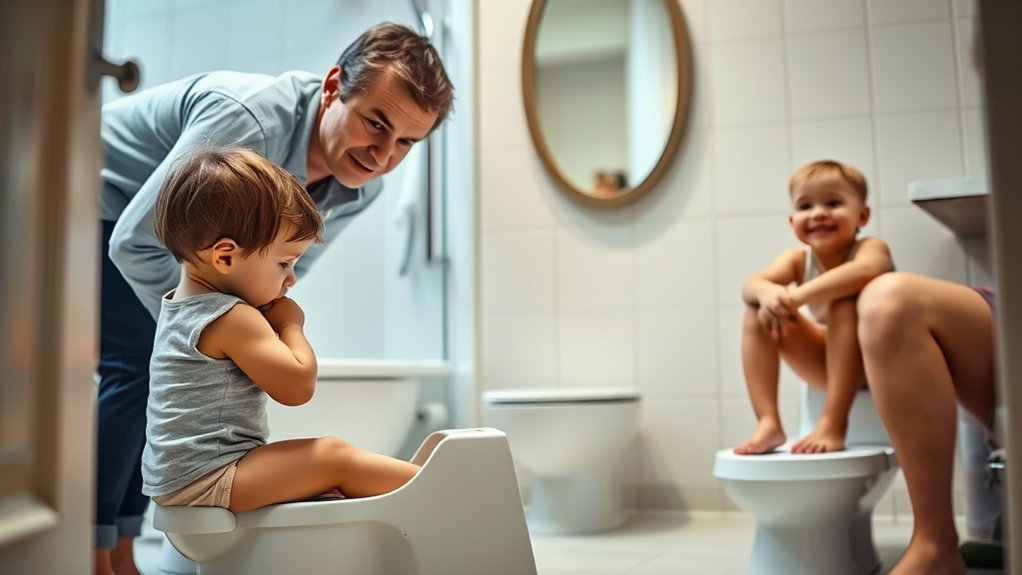
If you push potty training before your child shows readiness signs, you can trigger resistance instead of progress.
Pressure often makes kids anxious, and that anxiety can lead them to withhold or refuse the potty.
You’ll usually get better results when you watch for readiness cues and keep the process calm, patient, and child-led.
Signs Of Readiness
Readiness clues matter more than age, and they usually show up in small, practical ways: your child may stay dry for longer stretches, notice a dirty diaper, or show curiosity about the toilet.
A training expert would tell you to watch the signs of readiness, not the calendar.
- Dry diapers last longer.
- Your child dislikes feeling wet or dirty.
- Toilet interest appears naturally.
When you stop pressuring your toddler, you protect an individual pace that fits their body and brain.
That calm approach lowers stress for parents and keeps a positive atmosphere at home.
You’re not delaying freedom; you’re building it with patience, observation, and trust.
Pressure Backfires Fast
When you push potty training before your child is ready, you can create the very resistance you’re trying to avoid. In toilet training, pressure often triggers anxiety, and children may answer with refusal, regression, or holding bowel movements.
That can lead to constipation and make the process harder. Research shows success rates drop when you rush or push too hard.
Instead, watch for readiness cues: staying dry longer, showing interest, or asking to use the potty. When you respond to those signs, you build a positive learning environment that supports cooperation, not conflict.
Stay calm, patient, and practical. You’re not losing ground by waiting; you’re protecting your child’s confidence and freeing both of you from a stressful battle.
Which Potty Training Methods Actually Work?
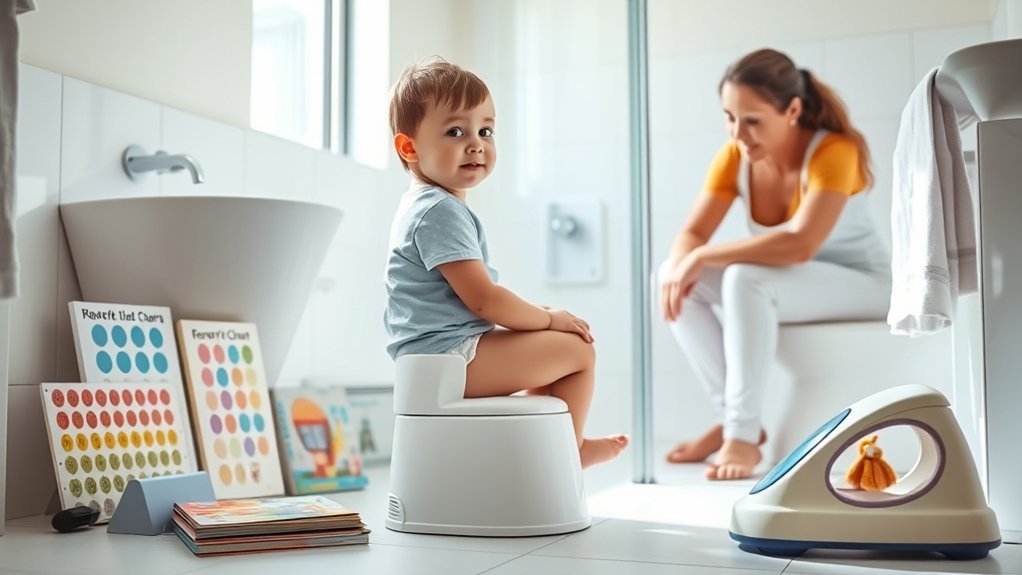
When you’re choosing a potty training method, child-led approaches often work best because they follow your child’s readiness and keep stress lower.
Intensive parent-led methods can work too, but they usually need more structure, consistency, and quick positive reinforcement like praise for success.
You’ll get the best results when you match the method to your child’s cues instead of forcing a fixed timeline.
Child-Led Methods
Child-led potty training works best when you follow your child’s cues instead of forcing a fixed schedule, because readiness often predicts smoother progress and fewer setbacks.
With child-led methods, you watch for readiness cues, like staying dry, discomfort with soiled diapers, and curiosity about the toilet.
- Start when your child shows interest.
- Use positive reinforcement for sitting and trying.
- Keep consistency among caregivers so everyone supports the same rhythm.
This approach often brings shorter training times and fewer accidents than more parent-led plans.
You’re not giving up control; you’re creating a supportive environment that respects your child’s pace and builds confidence.
When you respond to signs instead of pressure, you make room for successful outcomes and a calmer, more liberated potty journey.
Intensive Training Methods
If a child-led pace feels too slow for your family, intensive potty training offers a more structured option. The Azrin & Foxx Method uses intensive training methods with a parent-led schedule to create repeated chances to succeed. You’ll still want positive reinforcement, because it shortens training duration and helps your child choose the potty more often.
| What you do | Why it works |
|---|---|
| Set timed potty breaks | Builds routine |
| Use praise or rewards | Strengthens success |
| Keep caregivers aligned | Prevents confusion |
| Start at the right age | Reduces delays |
| Stay consistent | Supports learning |
Compared with child-oriented methods, this approach can feel faster and more freeing when you want clear progress. Research also shows starting before 27 months can lengthen training, while waiting past 32 months may increase accidents.
Do Underwear Help Potty Training?
Underwear can help potty training, but only at the right time—introducing them too early can confuse your child and make accidents feel like failure instead of part of learning.
In toilet training, readiness cues matter more than a premature introduction. You’ll get better results when your child shows comfort with using the potty before you change from diapers. A gradual shift lets them build confidence without pressure.
- Watch for readiness cues: staying dry longer, interest in the potty, and simple communication.
- Keep diapers or training pants until potty use feels familiar, then move to underwear.
- Expect accidents; they’re normal and don’t mean you’ve failed.
When you time underwear well, they can support independence and help your child connect urges with bathroom trips.
When you rush, you may create confusion, frustration, and feelings of failure. Trust the process, honor your child’s pace, and choose the path that supports real liberation from diaper dependence.
Why Praise Matters in Potty Training?
Praise can make potty training feel safer and more doable for your child. In toilet training, positive reinforcement works better than pressure because your child learns through encouragement, not fear. When you notice effort, like sitting on the potty or trying again, you lower anxiety and build trust. That calm support can shorten training time and reduce regression.
Keep your praise specific and steady: “You sat there bravely,” or “You told me you’d go.” This kind of feedback rewards progress, not perfection, and it keeps motivation alive. You don’t need big celebrations every time; too much excitement can create pressure and reluctance.
Instead, aim for a relaxed, supportive rhythm that helps your child feel capable and free. When you use praise wisely, you’re not bribing or controlling. You’re giving your child the confidence to practice, learn, and grow at their own pace.
Do Boys, Girls, or Diapers Change Training?
When you’re figuring out potty training, it helps to ignore common myths about boys, girls, and diapers. Research shows toilet training works about the same for boys and girls; success depends more on readiness signs than on gender.
Girls may show cues a little earlier, but that doesn’t mean boys are behind. Some boys learn standing later, so that can slow practice, not ability. Diaper type also isn’t the driver: cloth and disposable diapers don’t change outcomes much. Your focus belongs on the child, not the label.
- Watch readiness signs, not age.
- Use training methods that fit your child.
- Start early potty training when cues appear.
When you trust myths and facts over stereotypes, you give your child room to build bladder control and confidence. That freedom helps you choose the timing that truly works. Additionally, understanding picky eating behavior can help create a more relaxed atmosphere during mealtimes, which supports overall development.
How Do You Handle Potty Training Setbacks?
Potty training setbacks are common, and they often show up after stress, a change in routine, illness, or a new developmental stage, so the key is to stay calm and supportive. During toilet training, you can regain momentum by watching for patterns, keeping a consistent routine, and offering positive reinforcement for every win. Be patient and supportive; pressure usually backfires.
| Trigger | What to do | Why it helps |
|---|---|---|
| Illness | Pause and reset | Rest restores confidence |
| New sibling | Add one-on-one time | Reduces insecurity |
| Moving | Rebuild habits | Familiarity eases stress |
| Regression | Consult a pediatrician | Rules out medical issues |
If setbacks continue, address triggers instead of blaming your child. Protect your child’s autonomy, celebrate small steps, and keep your expectations realistic. You’re not failing; you’re guiding a learning process. With steady support, most children return to progress.
Frequently Asked Questions
How Do I Choose a Potty Chair or Seat?
Choose a potty chair or seat that fits your child’s size, feels comfortable, and has sturdy seat safety features. Consider potty chair types, design preferences, training aids, and shift strategies so you can support progress confidently.
Should Potty Training Happen at Home or Daycare?
You can potty train in either setting: 67% succeed fastest with consistent home environment and daycare routines. Focus on child readiness, caregiver communication, consistency strategies, parental involvement, and social influences; you’ll build confidence, not pressure.
How Often Should I Schedule Bathroom Trips?
You should schedule bathroom trips every 1–2 hours, then adjust with age readiness and behavior cues. Use timing strategies, bathroom routines, and consistency importance, with parental involvement and reward systems; you’ll support progress without pressure.
What Foods or Drinks Affect Potty Training Success?
You’ll boost success with fiber rich foods, steady hydration importance, and potty friendly snacks; watch sugar impact, dairy effects, fruit juices, and meal timing. You can guide your child calmly, without pressure.
How Do I Clean up Accidents Without Shaming?
You can clean accidents calmly, use mess management tools, and offer emotional support tips. Practice positive reinforcement strategies, notice toddler communication cues, set realistic expectations, and keep creating a safe environment; shame doesn’t help, connection does.
Conclusion
Potty training isn’t a race; it’s more like learning a new dance, with a few missed steps along the way. When you watch for readiness, skip the pressure, and use steady praise, you give your child room to succeed. The right method is the one that fits your child and your family, not some magic age. If setbacks pop up, stay calm, keep practicing, and trust that progress usually comes in small, steady wins.
