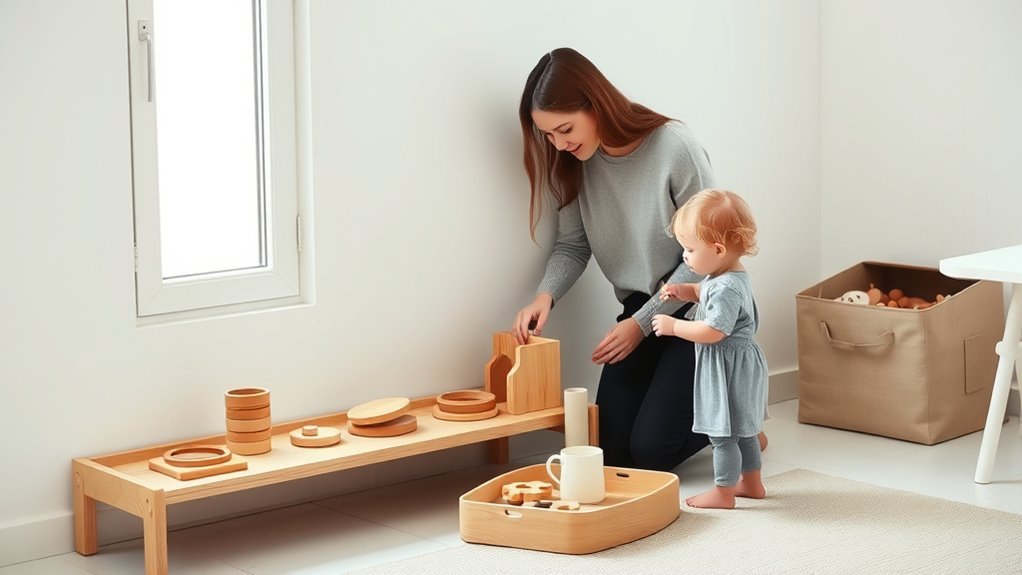
Bring Montessori home by keeping your space simple, child-sized, and easy for your child to use on their own. Offer a few meaningful toys and materials, rotate them to prevent overwhelm, and follow your child’s interests with hands-on activities like pouring, sorting, and practical life tasks. Protect uninterrupted play, use storytelling and songs to build language, and keep routines calm and predictable. If you keep going, you’ll see how small changes can make a big difference.
Montessori Home Basics for Parents
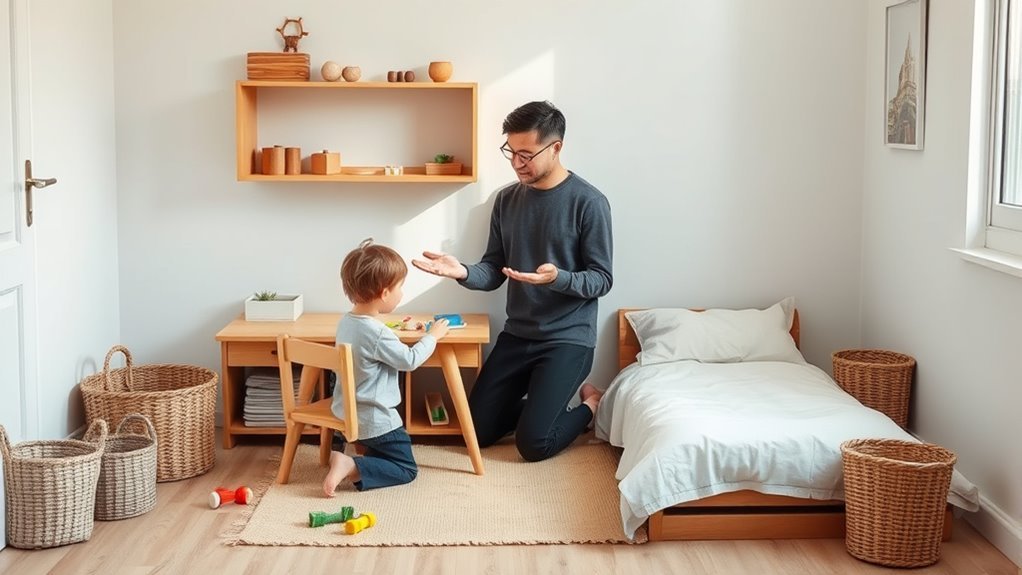
To bring Montessori home, start by creating a prepared environment that supports your child’s independence in every room.
In Montessori, you set the stage with a Prepared Environment, then trust your child to move, choose, and learn. Offer age-appropriate materials within reach, and let your child use them without constant correction.
A child-led approach works best when you observe your child, notice what sparks curiosity, and adapt gently. You can limit toy overload by rotating a few meaningful options, which helps your child focus and explore deeply.
Invite practical life skills through cooking, tidying, pouring, and caring for the home; these tasks build confidence and real competence.
Step back often. When you pause to watch instead of direct, you give your child room to practice independence and feel capable.
Keep the space simple, respectful, and responsive so your child can thrive.
Create a Child-Sized Montessori Space
A Montessori home works best when your child can move through it with ease, and that starts with a space made for their size. Use child-sized furniture so your child can sit, work, and reach without help. Choose accessible storage with low, open shelves, and place items where little hands can return them after use. This simple setup helps you create a prepared environment that invites choice and order.
Set up defined learning areas for reading, art, and practical life so your child knows where to focus. Bring in natural materials like wood, cotton, and metal to make the room feel calm, durable, and welcoming.
Check every corner for safety features such as rounded edges, stable pieces, and non-toxic finishes. When you design for your child’s body and mind, you foster independence every day. That’s the heart of Montessori at home: trust your child, shape the space, and let freedom grow within clear boundaries.
Simplify Toys and Learning Materials
You can declutter play spaces by donating toys your child no longer uses, which helps reduce distractions and makes the room feel calmer.
Keep only a few materials out at once, and rotate toys regularly so your child stays interested without feeling overwhelmed.
When you simplify the choices, you make it easier for your child to focus, choose independently, and enjoy deeper play.
Declutter Play Spaces
Decluttering your child’s play space can make a big difference in how they focus, explore, and play. When you simplify play spaces, you help your child notice the engaging toys that truly invite curiosity.
Remove extras that distract, and keep only a few well-chosen materials within reach. Use open shelves so your child can see, choose, and return items with growing independence. You can also rotate toys to keep interest fresh without overwhelming them.
Create designated areas for art, reading, and sensory work so each activity has a clear place. This calm setup supports deeper play, stronger attention, and more joyful learning.
You’re not limiting freedom—you’re giving your child room to move, choose, and grow with confidence.
Rotate Toy Selection
Once your child’s play space feels calm and organized, rotating the toys can keep that simplicity working for you. When you rotate toy selection, you give your child fresh interest without buying more stuff.
Keep a small set out, and store the rest out of sight. Swap items every few weeks so children learn through novelty, new challenges, and deeper exploration.
Limit number of toys available to enhance concentration and reduce overstimulation. As you play, focus on observing which toys spark curiosity and real engagement; that helps you make tailored rotations that fit your child.
Keep track of unused pieces, and donate what no longer serves. This rhythm protects your home from clutter and supports a richer learning experience.
Rotate Toys Without Overwhelm
A simple toy rotation can keep your child’s play area calm and engaging. To rotate toys well, store excess items out of sight so your child can focus on a few clear choices. This helps you limit the number of toys available, enhance concentration, and avoid the stress of too much clutter.
Watch which toys spark curiosity and support exploration, then keep those in the mix. Your child’s interests will show you what deserves space now.
Every few weeks, make regular swaps so the shelf feels fresh without becoming chaotic. Match the display to developmental stages, and track what gets used often versus what stays untouched. That way, you can maintain engagement without forcing variety.
Fewer, well-chosen toys invite longer attention, deeper play, and more meaningful engagement. You’re not taking anything away; you’re creating room for freedom, focus, and joyful discovery.
Follow Your Child’s Interests
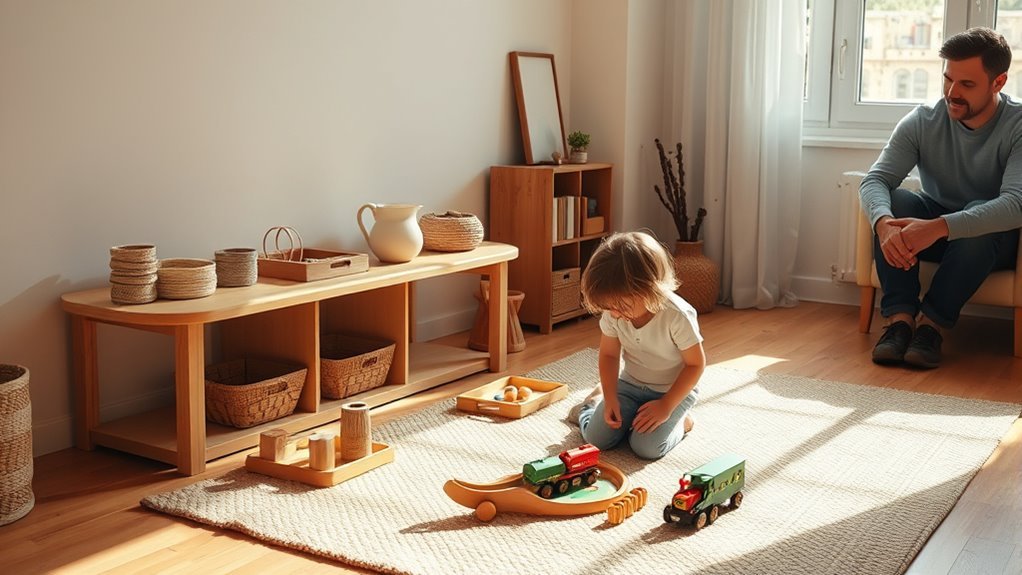
When you notice what draws your child in, you can shape learning around that curiosity and keep their enthusiasm alive.
In Montessori principles, you follow the child’s interests, not a rigid script, so your child feels seen and respected. Offer age-appropriate books, games, and simple tools that match what they’re drawn to, and create a Prepared environment that invites hands-on discovery.
In a home Montessori environment, this freedom to explore helps your child build skill at their own pace and deepens learning without pressure. You don’t need to force every interest into a lesson; some fascinations fade, and that’s okay.
Stay flexible, notice what evolves, and introduce new themes when your child is ready. Celebrate their progress, even in small steps, instead of comparing them to others. That kind of support can boost confidence, nurture self-esteem, and keep your child enthusiastic to keep learning.
Let Playtime Stay Uninterrupted
Let your child stay with an activity long enough to really get into it, because uninterrupted play helps build concentration, self-discipline, and confidence. When you protect uninterrupted playtime, children can explore ideas, repeat actions, and stay absorbed without rushing. That deeper focus strengthens concentration and helps them finish what they start.
Uninterrupted play gives children space to concentrate, repeat, and build the confidence to finish what they start.
If you step in too often, you can break their flow and make it harder for them to return to the same creativity. Instead, let them work through small challenges. Those moments grow problem-solving skills, resilience, and trust in themselves, all central to Montessori philosophy.
Watch quietly and observe children as they play. You’ll notice what captures their attention and how they learn best.
With regular, calm stretches of play, children also begin to self-regulate and manage time more independently. You’re not doing less; you’re making room for real learning opportunities and helping your child build freedom through focus.
Use Montessori Questions and Storytelling
You can spark deeper thinking with simple Montessori-style questions and storytelling. When you use Montessori questions like “Would you rather…?” you invite your child to weigh choices, build critical thinking skills, and make decisions with confidence.
Keep the tone open and playful so they can express thoughts without fear of being wrong.
Storytelling also helps children grow. Invite them to co-create a story, finish your sentence, or tell you what happens next. This kind of storytelling strengthens creativity, language, and self-expression while helping them engage children’s natural curiosity.
You can also ask them to describe their artwork, name the feelings in it, and explain why they chose those colors or shapes.
When you read together, try different character voices to enhance comprehension and keep the story lively.
Songs and dances can add another joyful layer, giving your child more ways to communicate, perform, and feel proud of their voice.
Support Focus With Hands-On Activities
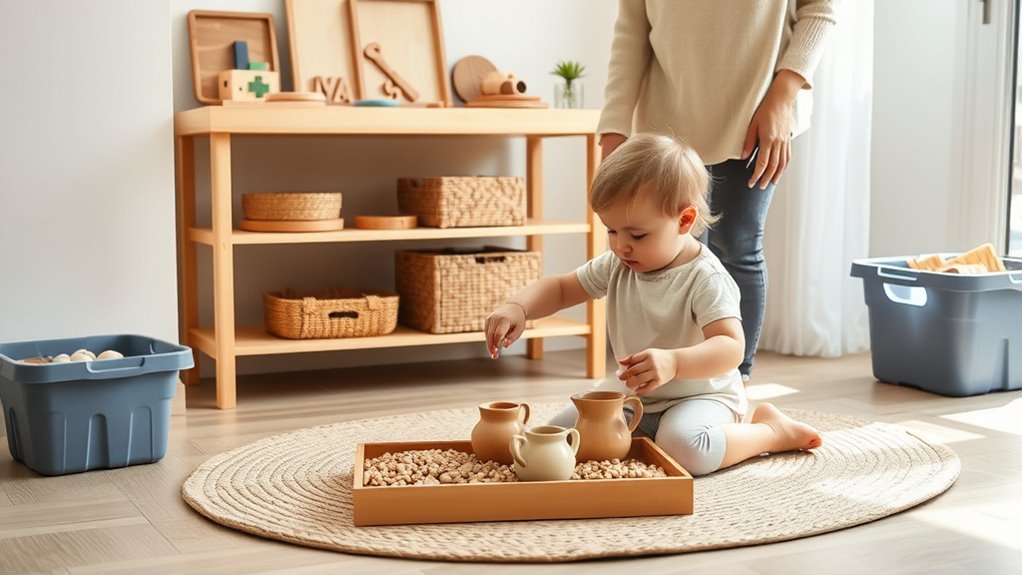
You can help your child focus by offering hands-on activities that invite them to touch, move, and explore.
Pouring, sorting, gardening, and other sensory tasks build skills and keep their attention on one clear purpose.
When you rotate simple, age-appropriate materials, you make it easier for your child to stay engaged and work with confidence.
Hands-On Concentration
Hands-on work can become a child’s quiet anchor for concentration. When you offer hands-on learning, you support your child’s concentration without pressure.
Choose Practical Life activities like pouring, sorting, or spooning so your child can practice focus while doing real work. In the Montessori Approach, you create a safe, learning environment by reducing distractions, keeping spaces calm, and offering only a few materials at a time.
Then your child can engage in sensory play, explore and learn at their own pace. Start with simple tasks, then gradually add complexity so attention grows naturally.
Watch closely as your child works; their choices reveal what truly interests them. When you follow that lead, concentration deepens, confidence rises, and your home feels freer, calmer, and more respectful.
Sensory Skill Builders
Sensory activities can build on that quiet focus by giving your child meaningful ways to explore with their whole body.
In the Montessori Method at Home, you can offer water play, textured materials, and sound exploration to strengthen sensory skills while keeping your child engaged.
Set out play dough, sand, or clay for hands-on exploration that supports fine motor control and creative expression.
Try sensory bins with rice, beans, or fabric so your child can touch, sort, and compare textures.
Add practical life tasks like pouring, mixing, and transferring to grow independence and responsibility.
Rotate materials often so the space stays fresh and inviting.
With simple sensory activities, you help your child learn through joy, choice, and self-directed discovery.
Focus-Friendly Activities
A calm, organized space makes it easier for your child to settle into meaningful work. Choose focus-friendly activities like sorting, pouring, and transferring to strengthen fine motor control and build concentration.
Offer learning materials in simple trays or baskets so your child can move with purpose and make choices freely. Add sensory materials such as textured fabrics, pinecones, or shells to invite curiosity and deeper attention.
Create a Prepared environment with minimal distractions, then protect uninterrupted work periods so your child can enter independent exploration without rushing. Rotate practical life and sensory tasks often to keep interest fresh and challenge growing skills.
When you engage children this way, you support calm, confident focus and help them experience learning as something they own.
Avoid Common Montessori Home Mistakes
Even with the best intentions, it’s easy to make a few Montessori-at-home mistakes that can get in the way of your child’s independence.
In Montessori parenting, your goal is to create a Montessori Prepared Environment that supports your child’s growth, not control every move. When you allow children to lead, they build confidence through real learning activities and freedom within clear do’s and dont’s.
- Don’t micromanage; step back and let discovery happen.
- Separate sleep and play areas so each space has a clear purpose.
- Offer sensory materials that invite touch, sight, sound, smell, and movement.
- Introduce one material or skill at a time, then make environmental adjustments as needed.
Keep watching how your space works for your child.
Simple, child-centered changes help you create a Montessori home where curiosity thrives and independence feels natural.
Build Daily Montessori Routines
Daily Montessori routines help your child know what to expect, build confidence, and move through the day with more independence.
Start with a simple morning daily routine: wake, dress, eat, and prepare together so your child feels secure and prepared.
Set aside uninterrupted work periods for child use; this lets you encourage children to choose activities, develop concentration, and finish with purpose.
Weave practical life tasks into the day—pouring, sweeping, meal preparation, or folding—so your child practices independence, responsibility, and fine motor control.
Add time outside every day for exploration, movement, and curiosity about nature.
In the evening, keep a calming bedtime routine with quiet activities like reading, dim lights, and cuddles to support rest and connection.
Use positive reinforcement when your child follows the rhythm.
When you keep routines steady, you create freedom within structure, and your home becomes a place where your child can thrive.
Frequently Asked Questions
How Do I Introduce Montessori at Home if My Child Resists Change?
You can start with a gentle introduction and gradual change, offering engaging activities, sensory materials, and collaborative choices. Keep consistent routines, encourage child led exploration, and use positive reinforcement so your child feels safe, free, and empowered.
What Age Should I Start Montessori Practices at Home?
You can start at birth; it’s never too early, and you don’t need perfection. Use Montessori materials, practical life, sensory activities, and observation techniques to support child independence in calm learning environments, with parent involvement and mixed age play.
How Do I Handle Siblings With Different Developmental Needs?
You can honor sibling dynamics by matching individualized activities to developmental stages, creating tailored environments, and inviting cooperative play. Give shared responsibilities, practice conflict resolution, and keep fostering independence so each child thrives, freely and confidently.
Can Montessori Work in a Small Apartment or Shared Room?
Yes—you can, like a tiny Narnia. In your small space, choose adaptable materials, multi functional furniture, sensory corners, natural light, and quiet zones. Embrace organized chaos with engaging activities; you’ll create freedom, not clutter.
How Do I Balance Montessori With My Child’s School or Daycare Routines?
You can balance them by keeping Montessori principles in your home, integrating routines with school, and using flexible schedules. Support child led learning through practical life, sensory activities, smart environment setup, and clear communication strategies.
Conclusion
Montessori at home works best when you see your child as the guide and your home as the map. Keep the space small, simple, and ready for little hands, like a garden trimmed for new sprouts. Offer a few open-ended materials, then step back and watch curiosity bloom. When you follow your child’s rhythm and keep routines steady, you’ll build a calm, hands-on home where learning feels as natural as breathing.
