You’re healing properly after a C-section if your pain, swelling, and incision soreness steadily improve over the first few weeks, your bleeding changes from bright red to lighter colors, and your incision stays clean and dry. Mild cramping, fatigue, and numbness can be normal, especially with breastfeeding. You should be able to move more, rest better, and need less pain relief each day. Watch for warning signs, and you’ll know what needs urgent care next.
What Normal C-Section Recovery Looks Like?
Normal C-section recovery typically takes six to eight weeks, with the most discomfort in the first few days and steady improvement after that.
Normal C-section recovery typically takes six to eight weeks, with discomfort easing steadily after the first few days.
In your C-section recovery, you should expect a clear healing recovery timeline, with pain easing gradually as your body repairs. You may feel postpartum cramping, especially when breastfeeding, because your uterus is contracting.
Tenderness near the incision is normal, and careful incision care supports healing while stitches dissolve over several weeks. You’ll also notice vaginal bleeding, or lochia, which can shift from bright red to pink and then to yellowish-white.
Track the amount and pattern, but don’t assume all bleeding is abnormal. Watch for signs of infection, including worsening pain, redness, or drainage.
Emotional fluctuations, such as sadness or anxiety, can also occur during recovery. If they persist or intensify, seek support promptly; you deserve care, autonomy, and recovery that feels manageable. Additionally, maintaining incision care is vital for preventing complications during this period.
C-Section Recovery Signs You’re Healing Well
As your C-section recovery progresses, you should notice a gradual decrease in incision pain and overall discomfort within the first few weeks after surgery.
Your incision should stay clean, with no redness, swelling, or discharge, which supports normal healing. If stitches or Steri-Strips begin to dissolve or fall off within 10 to 14 days, that’s expected.
You’ll also likely see bowel function return toward baseline, with less gas pain after the first week, showing your digestive system is settling.
By two weeks postpartum, your energy levels should improve enough for light activities such as walking, without worsening pain or fatigue.
Emotional stability matters too: fewer mood swings and no prolonged sadness suggest your body and mind are both recovering well. Additionally, being aware of signs of infection can help ensure a safe recovery.
These signs show you’re moving through recovery with increasing independence and without unnecessary restriction.
How Your Incision Heals Over Time
During the first few days after a C-section, your incision should start healing as swelling and redness gradually decrease. You’ll likely notice less postoperative tenderness as the tissue repairs.
By one week, the incision may still feel sore, but reduced swelling and early scar formation should be visible. Mild discomfort is expected, yet sharp or intense pain isn’t normal and can signal complications.
Monitor the area closely for changes in color, drainage, warmth, or increasing pain. These can be signs of infection and need prompt medical review. Additionally, keeping the wound clean and dry is crucial for preventing infection and promoting healing.
Keep the incision clean and dry, and follow your surgeon’s wound-care instructions. Steri-Strips often stay in place for 10 to 14 days, then peel away on their own; stitches usually dissolve within 6 to 8 weeks.
Steady healing means your body is reclaiming strength, and attentive self-monitoring helps protect your recovery and freedom.
Normal Pain and Bleeding After C-Section
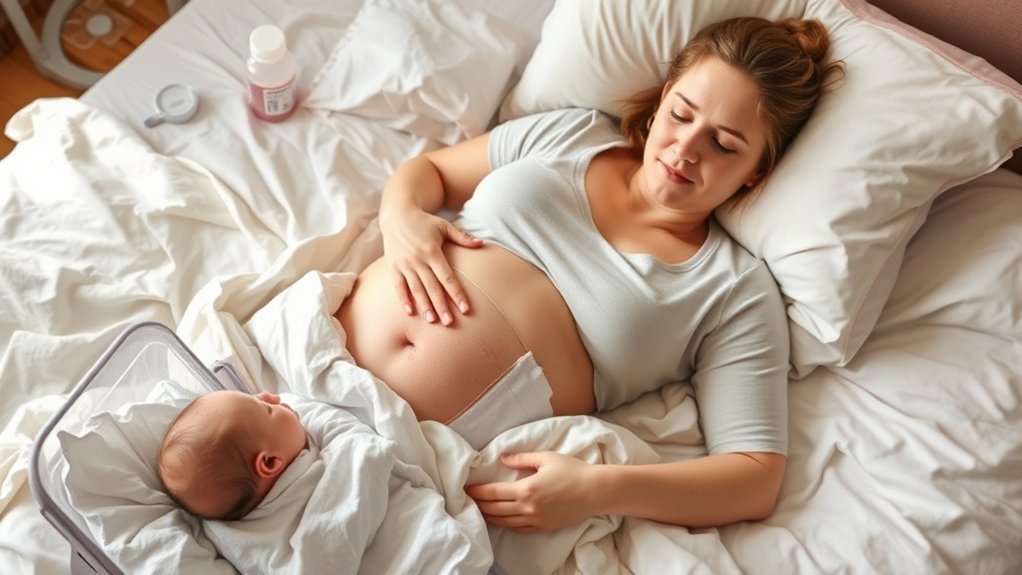
After a C-section, you’ll usually have dull abdominal cramping and incision soreness for several days. The pain should peak early then gradually improve over the next few weeks.
You may also have lochia, with bleeding that starts bright red, then turns pink, and later yellowish-white, lasting up to six weeks. It’s important to monitor your pain levels closely to ensure that your recovery is on track.
Contact your healthcare provider if you’re soaking more than one pad per hour, passing large clots, or your pain or bleeding isn’t following the expected healing pattern.
Expected Pain Pattern
Pain and soreness after a C-section are expected to peak in the first few days, then gradually improve over the following weeks, with a noticeable decrease by about two weeks. You may feel normal postpartum pain, incision tenderness, and afterpains, especially during breastfeeding. |
| Finding | Typical pattern |
|---|---|
| Pain | Worst in days 1–3, then eases |
| Incision | Tender for about a week |
| Bleeding | Normal lochia can persist for weeks |
| Healing | Should trend steadily better |
You deserve clear recovery signs, not doubt. Mild redness-free soreness and fading bleeding fit healing. If your pain worsens, doesn’t respond to medication, or you notice heavy bleeding, pus, or fever, contact healthcare promptly. Lingering numbness or tingling can still be normal as nerves recover, but worsening symptoms aren’t.
Normal Bleeding Changes
Vaginal bleeding, called lochia, is normal after a C-section and can last 4 to 6 weeks as your body heals.
You’ll usually see normal bleeding changes from bright red to pinkish-brown, then yellow or white as healing progresses. The flow should steadily lessen, though it may briefly increase after activity or breastfeeding.
This vaginal bleeding is expected, but heavy bleeding or large clots, especially after the first few days, isn’t normal and needs prompt review by a healthcare provider.
Watch your recovery with confidence: a fever above 100.4°F or a persistent foul odor from lochia can signal infection and requires immediate medical attention.
Your body is doing repair work, and clear tracking helps you protect your health and your freedom.
Healing Signs To Watch
As your body heals after a C-section, normal pain usually peaks in the first few days and then gradually improves over several weeks, with soreness around the incision expected.
In your C-Section recovery, watch these healing signs:
- Abdominal pain should lessen, and pain relief should become easier with rest and prescribed care.
- Vaginal bleeding in the postpartum period can last 4-6 weeks, but it should taper and shift from bright red to lighter flow.
- Incision care matters: reduced tenderness, dissolving stitches, and no swelling or redness suggest progress.
Keep up infection monitoring for drainage, fever, or increasing pain.
These changes can signal complications signs, so contact your clinician promptly. Your body deserves informed support as you reclaim strength.
Signs Your C-Section Is Not Healing Well
If your c-section isn’t healing well, certain warning signs need prompt medical attention. Watch your incision closely for increasing redness, swelling, warmth, or pus, because these can point to infection and delayed healing.
A fever over 100.4 degrees Fahrenheit is another red flag that may signal complications and should be evaluated by your healthcare provider.
You should also take severe abdominal pain seriously, especially if it doesn’t improve with prescribed medication.
Heavy vaginal bleeding, large clots, or a sudden increase in flow isn’t normal and needs immediate communication with a healthcare provider.
Foul-smelling discharge, difficulty breathing, or leg swelling also require urgent medical assessment, since they can indicate more serious complications.
Trust your body’s signals and seek care quickly; timely treatment protects your recovery and supports safer healing. Additionally, emotional healing is as important as physical recovery after a C-section.
C-Section Recovery Timeline: Weeks 1–12
C-section recovery usually follows a predictable timeline, but your pace may vary based on pain control, activity level, and overall health.
In week 1, you’ll likely feel mild pain at the incision site, grogginess, and fatigue; you may need others to assist with daily tasks.
By week 2, pain should ease, and you can begin light walking while gently lifting your baby, but avoid heavy lifting.
- Weeks 1–2: Protect the incision, rest often, and mobilize briefly.
- Weeks 3–6: Your healing timeline improves as energy and mobility return; many people clear for light exercise and driving at the postpartum checkup.
- Weeks 6–12: You can usually resume most activities, though weak abdominal muscles may still change how you feel. Close monitoring during your recovery is essential to ensure proper healing.
Full recovery often occurs by 8–12 weeks, but numbness around the incision can linger.
Seek emotional support as you adjust.
How Breastfeeding Affects C-Section Recovery

Breastfeeding after a C-section can trigger uterine contractions, and you may feel mild cramping as your uterus returns to its pre-pregnancy size. These contractions also support reduced postpartum bleeding through oxytocin release. To protect your incision, use comfortable positions like the football hold or side-lying hold, which keep pressure off the surgical site. Staying hydrated is key to supporting digestion, which can further aid in your recovery.
Breastfeeding Positions For Comfort
Although comfort matters during early postpartum feeding, breastfeeding soon after surgery is encouraged because it can stimulate uterine contractions, support healing, and help reduce postpartum bleeding.
You can protect your C-section incision by choosing a position that limits abdominal pressure while preserving latch quality. Try these options:
- Football hold: keep your baby beside you so weight stays off the incision.
- Side-lying hold: rest on your side and let both of you relax.
- Frequent breastfeeding: feed often to support milk flow and reduce engorgement.
If a position still feels strained, adjust pillows, change angles, and seek a lactation consultant.
You deserve comfort, control, and healing postpartum; the right breastfeeding position can support all three without sacrificing recovery.
Breastfeeding And Uterine Cramps
As your milk lets down, you may notice uterine cramping, or afterpains, during breastfeeding; this is a normal response caused by oxytocin, which helps the uterus contract and return to its pre-pregnancy size after a C-section.
During the first few postpartum days, you may feel stronger cramping as breastfeeding triggers uterine contractions. This can signal active healing, even if it feels intense.
Frequent breastfeeding often helps your uterus recover faster, because repeated oxytocin release supports contraction.
For pain relief, you can use ibuprofen or acetaminophen; both are safe for breastfeeding when taken as directed.
If the cramping feels severe, persistent, or different from typical afterpains, contact your clinician.
Your body’s recovery is real, measurable, and worthy of support.
When to Call Your Doctor Right Away
If you have a fever over 100.4 degrees Fahrenheit, report it promptly, even if your postoperative bowel movement is normal. Severe abdominal pain that doesn’t improve with medication also needs urgent evaluation.
- Heavy vaginal bleeding or large clots
- Chest pain or breathing difficulty
- Sudden leg swelling
These symptoms can indicate blood clots or another serious complication. Don’t wait for them to pass on their own. Contact your clinician, go to urgent care, or seek emergency evaluation immediately.
Fast action protects your recovery and supports your autonomy. Keep your discharge instructions nearby, and treat new or worsening symptoms as clinical warning signs. Additionally, be aware that monitoring recovery closely is essential for identifying any concerning changes.
Frequently Asked Questions
How Do I Know if I’m Healing Well After a C-Section?
You’re healing well if your incision care shows less redness, pain management improves, mobility tips help you move, and breastfeeding challenges ease. Use nutrition needs, postpartum exercise, sleep strategies, emotional support, support networks, and keep follow up appointments.
How Do I Know if Something Is Wrong After a C-Section?
Like a warning light, you should seek care if you’ve got fever, worsening pain, redness, swelling, drainage, heavy bleeding, clots, breathing trouble, or foul odor; prioritize pain management, incision care, rest, and follow up appointments.
What Is the Hardest Day of C-Section Recovery?
The hardest day’s usually day one, when pain peaks. Use pain management, emotional support, mobility tips, incision care, nutrition advice, postpartum exercise, breastfeeding challenges, sleep strategies, family assistance, and self care practices to recover.
What Are the Red Flags for C-Section Recovery?
Red flags: fever, redness, swelling, drainage, heavy bleeding, clots, severe pain, breathing trouble, leg swelling, foul discharge. Don’t let it slide—seek care fast. Use pain management, scar care, emotional support, follow-up appointments, nutrition tips.
Conclusion
Your C-section recovery should feel like a steady climb, not a sudden sprint. If your incision is closing, bleeding is tapering, and pain is improving each week, you’re likely healing normally. One patient told me her recovery felt like “a zipper slowly sealing,” and that’s often the right image. Watch for fever, worsening redness, heavy bleeding, or foul drainage, and call your doctor right away if they appear.
