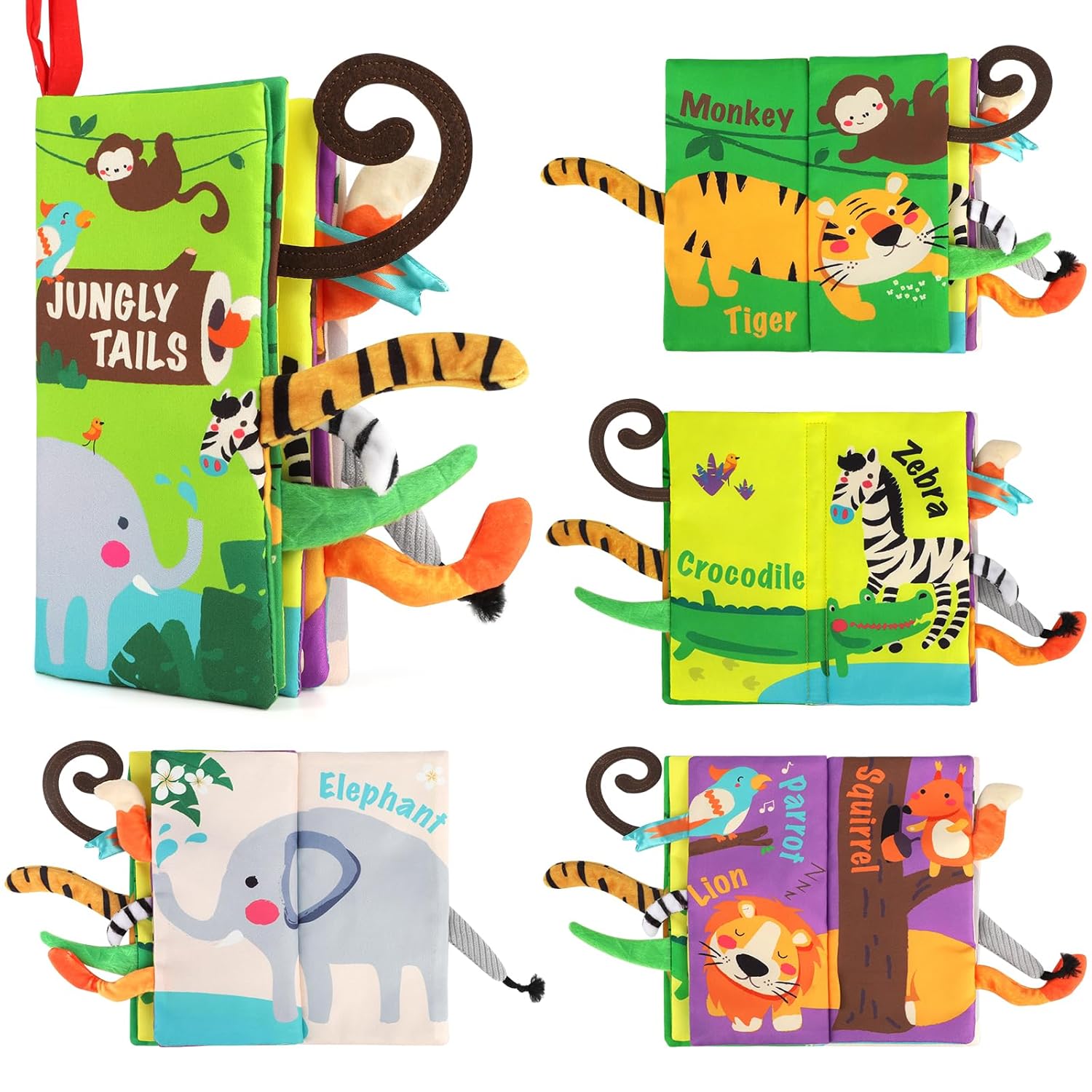
Peekaboo looks simple, but it teaches your baby a lot at once. When you hide and reappear, you help your baby practice object permanence, attention, memory, and cause-and-effect thinking. The laughter comes from a safe, predictable surprise, and that warm exchange also builds trust. As your baby grows, peekaboo supports turn-taking, shared attention, and early social skills.
What’s in This Article
- Why Babies Love Peekaboo
- Object Permanence and Peekaboo
- Why Peekaboo Makes Babies Laugh
- How Peekaboo Helps Baby Brains Grow
- Peekaboo and Early Social Skills
- When Babies Start to Understand Peekaboo
- Peekaboo Variations for Different Ages
- Peekaboo Games That Use Props
- Simple Baby Games That Build the Same Skills
- Why Repetition Makes Peekaboo Work
- Frequently Asked Questions
- Conclusion
Quick Answer
Babies love peekaboo because it combines a familiar face, a short surprise, and a safe return. This helps your baby learn that you still exist when hidden. It also supports memory, attention, bonding, and early social turn-taking.
Key Takeaways
- Peekaboo helps your baby practice object permanence in a playful way.
- The hide-and-reveal pattern builds attention, memory, and prediction skills.
- Your warm response turns the game into a bonding and trust-building moment.
- Different peekaboo games can match your baby’s age and attention level.
- Simple games like hiding toys and rolling balls can build similar skills.
Why Babies Love Peekaboo

Babies love peekaboo because it taps into several early learning skills at once. When you play peekaboo, you help your baby notice object permanence, the idea that people and things still exist when hidden. Many babies show stronger signs of this skill around 6 to 8 months.
Your face vanishes, then returns, and that small surprise invites laughter, joy, and secure bonding. The predictable pattern also trains attention, memory recall, and early cause-and-effect thinking. Your baby learns what usually happens next, then enjoys the reveal.
Repeated play also supports social growth. You and your baby take turns, mirror expressions, and practice shared attention. These small exchanges build emotional and relational skills.
Repeated play builds social skills through turn-taking, shared attention, and joyful back-and-forth connection.
In this small game, you offer your child a steady lesson. The world stays reliable, relationships feel responsive, and learning can feel delightful.
Object Permanence and Peekaboo
Peekaboo does more than get a laugh. It helps infants build object permanence, the understanding that people and objects still exist when out of sight. Around 6 to 8 months, you may see your baby track hidden faces and expect their return.
Before that stage, a covered toy can seem gone for good. Peekaboo gives your baby repeated, low-stress practice with disappearance and reappearance. Each round strengthens memory, supports awareness of separation, and helps your baby test a new rule: unseen doesn’t mean absent.
The game’s predictability matters too. When you hide and return, your baby learns patterns, refines attention, and builds trust in a world that can feel uncertain.
That’s why peekaboo supports both emotional security and object permanence. It also prepares your child for more complex learning through simple play.
Why Peekaboo Makes Babies Laugh
When you play peekaboo, the sudden return of a familiar face creates surprise. That unexpected reveal often makes babies laugh.
You also give your baby a chance to predict the next reveal. That anticipation can help your baby feel secure while building early cognitive skills.
Over time, your repeated playful exchanges connect joy with social interaction. Laughter becomes part of how your baby bonds with you.
Surprise and Anticipation
The appeal of peekaboo comes from a simple balance: surprise and anticipation. Your hidden face suddenly returns, and that reveal creates a brief, pleasant mismatch between what your baby expects and what happens.
| Cue | Effect |
|---|---|
| Hide | Builds expectancy |
| Reveal | Sparks laughter |
This rhythm supports learning because you help your baby explore absence and presence without distress. The game also strengthens security. When you respond warmly, your baby learns that uncertainty can end safely.
That shared joy reinforces bonding, and your baby’s laughter invites more connection. In this simple exchange, you support development through playful learning.
Familiar Faces Reappear
Because a familiar face disappears and then returns, peekaboo gives your baby a safe, exciting surprise. You help your baby link joy with recognition. The same caregiver returns, and that reunion feels thrilling.
Because the game repeats, your baby can predict the reveal. This strengthens object permanence and supports early cognitive growth. Each round tells your child that hidden faces still exist, even when they’re out of sight.
The laughter you hear reflects both surprise and delight, and it deepens emotional bonding. When familiar faces reappear, your baby learns trust, pattern recognition, and connection through a simple game.
How Peekaboo Helps Baby Brains Grow
Even a simple game of peekaboo gives your baby’s brain a useful workout. Your baby tracks a hidden face, predicts its return, and processes the surprise of reappearance.
In peekaboo, you help your baby practice object permanence, the understanding that something still exists when it’s out of sight. That lesson strengthens memory and recall. Your baby must hold the image of you in mind and compare it with the next reveal.
Each round also supports visual and cognitive processing. Your baby compares patterns, notices timing, and anticipates the next reveal. Repeated play can support neural connections during the first years of life.
Because the game has a clear rhythm, your baby starts solving a small problem: What happens next? The joy and laughter matter too. Positive emotion keeps your baby engaged and supports healthy learning.
Peekaboo and Early Social Skills

Peekaboo gives babies an early lesson in social exchange. The game depends on back-and-forth interaction and simple turn-taking. When you play peekaboo, you help your baby practice waiting, responding, and sharing attention with another person.
Your face becomes a live signal. Your baby learns to notice expressions, mirror them, and connect emotion with interaction. Repeated positive exchanges can build security and strengthen attachment, giving your baby a safer base for exploring the world.
Your face becomes a live signal, building security, attachment, and a trustworthy base for exploring the world.
Peekaboo also teaches your baby to read social cues and expect joyful responses. Over time, those brief moments of hiding and reappearing help your baby keep attention on people, not just objects.
In that way, peekaboo isn’t just play. It gives your baby an early foundation for connection, communication, and social growth.
When Babies Start to Understand Peekaboo
You’ll often see your baby begin to understand peekaboo around 6 to 8 months. This timing matches the stage when object permanence often starts to emerge.
Before about 6 months, your baby may act as if a hidden face or toy has gone for good. That response can change as the brain reaches this key developmental step.
Object Permanence Milestone
Around 6 to 8 months of age, many babies begin developing object permanence. This means your baby starts to understand that people and things still exist even when hidden.
Before this stage, hidden faces can seem to vanish, so peekaboo feels startling. When you hide and reappear, you help your baby test the idea that absence doesn’t mean disappearance. That repeated pattern strengthens object permanence through clear, predictable practice.
Your baby’s joy and surprise show growing memory, attention, and emotional engagement. By practicing peekaboo, you support early problem-solving skills and a more secure grasp of the world.
Age-Based Peekaboo Response
Babies often start engaging with peekaboo between 4 and 6 months, when they recognize familiar faces and voices. At this stage, peekaboo may spark attention because your baby tracks social cues and expects them to return.
By 6 to 8 months, object permanence becomes more noticeable for many babies. Hiding a face no longer means it’s gone. Your baby begins to understand that it still exists.
Around 9 to 12 months, you may see active participation. Your baby may hide their own face or cover an object, which shows stronger memory and recognition.
Repeated play supports cognitive growth, and the surprise pattern keeps learning motivating. Peekaboo works as a small tool that helps you support your baby’s developing mind.
Peekaboo Variations for Different Ages
You can adapt peekaboo as your baby grows. Each stage benefits from a slightly different level of challenge and social surprise. For newborns, you can gently cover and uncover your face with your hands. Babies often pay close attention to human faces, so this simple pattern supports early focus.
As your baby develops, you can expand peekaboo by hiding a small object under a pillow or blanket. This adds a developmental layer of anticipation. With older infants, you can briefly move behind furniture, then reappear to support object permanence and social delight.
Toddlers often enjoy scarf-and-toy hiding games. Quick reveal cycles match their growing curiosity. You can also add a musical cue, like a drumbeat or bell, to signal your return and deepen sensory engagement.
These small changes keep the game responsive, joyful, and matched to your child’s growing abilities.
Pro tip: Watch your baby’s face and pause when they look away, because short breaks help play stay calm and fun.
Peekaboo Games That Use Props
You can use scarves and blankets to make peekaboo more engaging. These props add visual surprise and rich sensory input that babies notice right away.
You can also hide toys in boxes to introduce new textures and shapes. This supports curiosity and exploration during play.
If you add musical instruments, you give your baby an auditory surprise. That sound can make the game feel more active and memorable.
Using Scarves and Blankets
When you add scarves or blankets to peekaboo, the game gains an extra layer of surprise. Your baby sees something disappear and then return, which supports object permanence. You also support attention, tracking, and early cognition through play.
- Use scarves to cover your face, then reveal it slowly.
- Let blankets hide a toy, then uncover it with delight.
- Vary the speed so your baby can follow movement and anticipate change.
- Repeat the game to strengthen memory, sensory engagement, and social connection.
These simple props invite touch and sight together. Because you keep the pattern familiar but flexible, your baby gets repeated chances to learn that hidden things still exist. That discovery can feel joyful.
Hiding Toys in Boxes
Boxes add a new layer of peekaboo surprise because they let you hide a toy completely. When you bring it back into view, you help your baby practice object permanence.
The box’s texture, shape, and weight also invite sensory exploration. This supports curiosity and early problem-solving. As you repeat the hide-and-reveal pattern, your baby starts to predict what comes next.
You can vary the game by changing where the toy goes. This keeps the play fresh without removing your child’s sense of choice. The back-and-forth interaction also deepens emotional connection through shared laughter and responsive play.
Musical Peekaboo Surprises
Musical props can make peekaboo more engaging because they add sound to the familiar hide-and-reveal pattern. When you use musical peekaboo, you strengthen auditory engagement and support learning through surprise.
Try these prop-based options:
- Shake a tambourine or maracas before you reappear.
- Move scarves or fabric that rustle as you cover and uncover your face.
- Hide a toy in a box or bag that rattles when you shake it.
- Use a puppet that sings or makes sounds during the reveal.
Each variation gives your baby a clear sound-action link. This can support attention, anticipation, and language development.
You’re not just entertaining your baby. You’re helping them map emotions, sounds, and social cues in a playful way.
How to Keep Peekaboo Safe and Comfortable
Peekaboo should feel warm, gentle, and easy for your baby to follow. Use soft facial expressions, a calm voice, and short hiding moments. Stop or slow down if your baby looks away, cries, arches, or seems overwhelmed.
Keep blankets and scarves away from your baby’s nose and mouth. Use light fabrics only when you can watch your baby closely. Never leave a baby alone with loose fabric, small props, or toys that could block breathing.
Warning: Avoid covering your baby’s face tightly or leaving loose fabric near a sleeping baby.
Simple Baby Games That Build the Same Skills

You can build many of the same developmental skills as peekaboo with simple, everyday games. Hide a toy under a scarf or blanket, and you give your baby a game that strengthens object permanence while sparking visual surprise.
Try “Where’s the Baby?” by briefly covering your child’s face with a cloth, then revealing them. This supports anticipation, emotional connection, and joyful social learning. You can also hide familiar objects and invite your baby to find them.
Rolling a ball back and forth adds turn-taking, shared attention, and early social exchange. Singing short songs with repetitive phrases during play helps language development and auditory recognition.
Rolling a ball back and forth builds turn-taking, shared attention, and early social connection.
These low-cost interactions matter because they center your baby’s curiosity and relationship-building. With a few ordinary materials, you can create responsive play without fancy toys or rigid routines.
Why Repetition Makes Peekaboo Work
Peekaboo works well because it repeats a simple pattern that babies can learn, predict, and enjoy. With each round, you help your baby practice repetition and build object permanence. Hidden faces still exist. That insight supports cognitive growth and keeps attention engaged.
- You show a face, then hide it.
- Your baby anticipates the reveal.
- The brain links surprise with memory.
- Joy strengthens your bond and learning.
Predictable play gives your infant a safe and rewarding chance to rehearse new ideas. You support development through active, responsive interaction. The game’s simplicity makes it easy to use, while its pattern keeps infants interested.
Laughter matters too, because positive emotion helps learning stick. When you repeat peekaboo, you offer your child a small lesson. The world stays reliable, even when it disappears from sight.
Frequently Asked Questions
Why Do Babies Enjoy Peekaboo?
Babies enjoy peekaboo because it blends surprise, repetition, and warm attention from you. Your baby learns that hidden people still exist, then enjoys the safe return. The game also supports attention, bonding, and early social learning.
What Are Signs of Strong Early Learning in Babies?
You may notice strong early learning through steady eye contact, memory for familiar routines, quick responses, and interest in faces or sounds. These signs do not prove future intelligence on their own. They simply show that your baby engages with people and patterns.
Does Peekaboo Actually Help Babies Learn?
Yes, peekaboo can help babies learn through surprise, repetition, and responsive interaction. You support object permanence, memory, attention, and social connection. The game works best when you keep it gentle and follow your baby’s cues.
What Is the 5-8-5 Rule for Babies?
The 5-8-5 rule describes a simple play rhythm: engage for 5 seconds, pause for 8 seconds, then reconnect for 5 seconds. Some caregivers use it to give babies time to respond. Treat it as a flexible play idea, not a strict developmental rule.
When Should You Stop Playing Peekaboo?
Stop or pause peekaboo when your baby turns away, cries, stiffens, or seems tired. These cues tell you that your baby needs a break. You can try again later with a softer voice and slower reveal.
Medical Disclaimer: This article is for informational purposes only and does not constitute professional medical advice. Always consult a qualified doctor before making decisions based on this information.
Conclusion
Peekaboo matters because it turns a simple surprise into a useful learning moment for your baby. Each playful pause and reveal helps your baby practice attention, anticipation, trust, and connection. Keep the game short, gentle, and steady, and follow your baby’s cues. These tiny moments can support big developmental steps while helping your baby learn, laugh, and bond with you.