
Choosing between baby wraps and structured carriers depends on your baby’s age, your comfort, and how you’ll use it. Wraps give you a snug, womb-like fit, work well for newborns, and feel cozy for bonding and short outings. Structured carriers offer quicker adjustments, stronger support, and better comfort for longer trips or older babies. If you want flexibility, having both can be the smartest option, and there’s more to compare below.
Baby Wraps vs Baby Carriers: What’s the Difference?
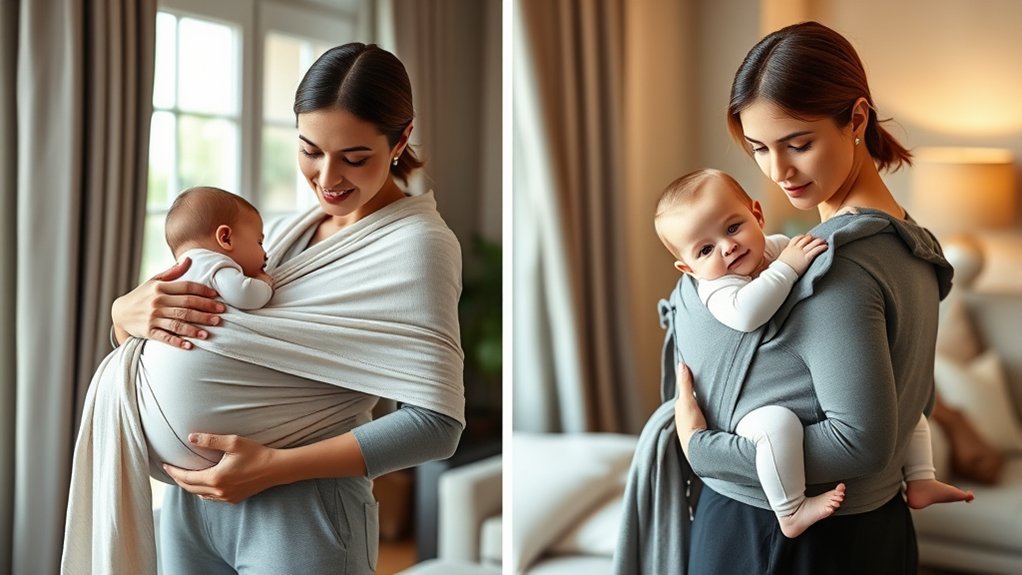
When you’re deciding between a baby wrap and a structured carrier, the biggest difference comes down to fit and support.
Baby wraps use long fabric to give you a snug fit that molds to your body and your baby’s, while structured carriers rely on buckles and straps for a fixed shape and quicker on-and-off use. That snugness can improve weight distribution, especially when you want a close carry.
You’ll also notice wraps often offer more versatility in carrying positions and affordability, which can feel liberating if you want flexibility without a big price tag.
Structured carriers, though, usually give stronger support and faster adjustments, so they’re easier when you’re on the move.
For newborns, wraps often feel especially secure, but safety considerations matter either way: you need correct tying with wraps and hip health checks with structured carriers. Engaging in mindfulness practices can also help ease any anxiety you might feel about using either option.
Choose the option that matches your comfort, routine, and confidence.
Which Is Better for Your Baby’s Age and Weight?
Age matters a lot when you’re choosing between a baby wrap and a structured carrier. For newborns, a baby wrap often works best because it gives a snug, womb-like feel and lets you keep your baby close during babywearing. It also suits their small size and lighter weight, while offering flexibility before strong neck control develops. As your baby grows, structured carriers become a better match. From about 3 months on, they add support, multiple carrying positions, and better weight distribution for you and your child. For older babies and toddlers, structured carriers usually win because they handle heavier weights and stay useful longer. In practice, you can think of wraps as more versatile early on, and structured carriers as a durable option for growth. You don’t have to choose forever; choose what fits your baby’s age, weight, and development now. Additionally, introducing tummy time can complement babywearing by promoting essential motor skills and muscle strength.
Which Is More Comfortable to Wear?
Comfort is subjective, but the right carrier can make a big difference in how you feel during the day. When you compare baby wraps and structured carriers, think about your body, your routine, and your personal comfort.
Baby wraps can give you a snug fit that feels close and calming, and many people love that womb-like feeling. But wraps have a learning curve, so you may need practice to get safe support and good alignment.
Structured carriers often offer better weight distribution, with padded shoulder straps and a waistband that ease pressure on your back and shoulders.
- baby wraps: customizable, cozy, but skill-dependent
- structured carriers: supportive, quick, and easy
- comfort changes with fabric layers and bulk
- babywearing should feel freeing, not restrictive
- choose what supports your body best
If you want the most practical comfort, structured carriers often win; if you value softness and a snug fit, wraps may feel better. Additionally, proper latch techniques can enhance your overall experience and comfort when babywearing.
Which Works Better for Errands and Travel?

For errands and travel, structured carriers usually offer the biggest convenience because they’re quicker to put on, easier to adjust, and often provide better lumbar support for longer outings.
If you need to move fast, a Carrier can free your hands without much fuss. Its structured design usually gives better weight distribution across your hips and shoulders, which helps when you’re walking from store to store. Many models also add versatility with multiple positions, so you can adapt as your Baby grows.
A Wrap still has clear strengths for travel. It’s lightweight, highly portable, and easy to tuck into a diaper bag when space is tight. That makes it a practical backup for short trips or unpredictable days.
Still, it may take more time to secure, and extra fabric layers can feel warmer. If you want ease of use and support, go structured; if portability matters most, a Wrap can shine. Additionally, understanding underlying causes of discomfort can enhance your experience while carrying your baby.
[Products Worth Considering]
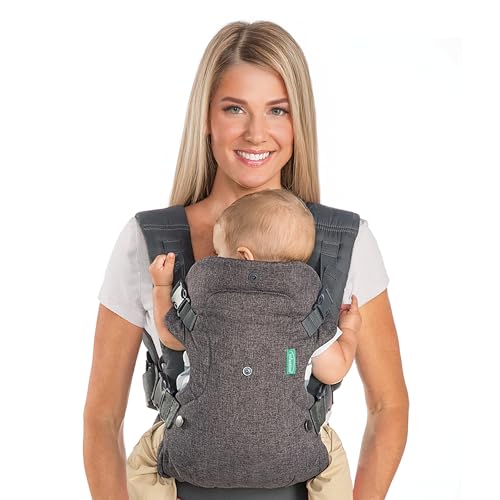
4-IN-1 CARRYING POSITIONS FOR EVERY STAGE: Convertible baby carrier with facing-in (narrow/wide), facing-out, and back carry positions. Supports newborn to toddler (8–32 lbs) with ergonomic babywearing at every stage

Hands Free Comfort: This ergonomic Baby Carrier perfect for experiencing hands-free convenience in everyday use, outing or travel. Lightweight design and effortless wearability, Momcozy's original baby carrier is an ideal choice for travel and busy lifestyles. It ensures both comfort and elegance as you carry your little one while on the move

4-IN-1 CARRYING POSITIONS FOR EVERY STAGE: Convertible baby carrier with facing-in (narrow/wide), facing-out, and back carry options to support ergonimoic babywearing from newborn through toddlerhood (8–32 lbs)
Should You Get Both a Wrap and a Carrier?
Yes—many parents find that having both a baby wrap and a structured carrier gives them the most flexibility as their baby grows. In the baby wrap vs carrier decision, you don’t have to pick one forever; you can match the tool to the moment.
A wrap lets you wrap around your body for a snug, calming fit in the newborn stage, while a structured carrier offers secure and comfortable support as your child moves from newborn to toddlerhood.
- Use wraps for bonding and short outings.
- Choose a structured carrier for longer trips.
- Match different types of babywearing to your baby’s age.
- Prioritize comfort and convenience for your routine.
- Make the shift from wraps to structured carriers when needed.
This balanced approach helps you choose the right carrier for errands, hikes, and home life. The benefits of babywearing last longer when you keep both options available.
[Products Worth Considering]

【Adjustable Size】Momcozy baby wrap carrier is designed with adjustable size, the size can be covered to XXS-XXL to suit different groups of people; The baby wrap allows you not to worry about postpartum body changes and other issues, and can adjust the appropriate size at any time according to your and your baby's body shape, suitable for the whole family to use. Traditional baby carriers loosen during use, but the adjustable size design keeps your baby supported and balanced in your arms.

Stay Close, Hands-Free: Baby wraps carrier designed for new parents who want to keep baby safe and near, our soft wrap frees your hands while keeping your newborn or toddler (7–35 lbs) snuggled close, stay connected during everyday moments.

Ergonomically Designed - Expertly engineered for extended baby wearing, the D-Lite Baby Wrap Carrier ergonomically redistributes weight & features a breathable, cushioned back-contouring panel for hands-free comfort & support for both parent & baby.
Frequently Asked Questions
Are Baby Wraps or Carriers Better?
You’re best choosing based on comfort level, ease of use, weight distribution, age suitability, fabric types, breastfeeding access, temperature control, style options, safety features, and travel convenience; wraps suit newborns, carriers suit older babies.
What Is the Most Recommended Baby Carrier?
Ergobaby Omni Deluxe likely tops your list. Why settle for less? You’ll get baby carrier features, baby wearing benefits, ergonomic support importance, age suitability guidelines, safety standards overview, ease of use tips, climate considerations, portability factors, style preferences analysis.
When to Switch to Structured Baby Carrier?
You can switch around 3–4 months, when your baby’s neck control improves, or sooner if baby weight, mobility needs, and carrier comfort demand it. Consider parent preferences, ease of use, safety features, baby positioning, lifestyle factors, personal style.
What Is the Difference Between a Sling and a Structured Carrier?
A sling uses carrier materials in one pouch; a structured carrier adds straps and a waist belt. You’ll feel different weight distribution, ease of use, infant comfort, versatility options, safety features, adjustability levels, breastfeeding access, travel convenience.
Conclusion
Choosing between a baby wrap and a structured carrier depends on your needs. If you want a snug, flexible fit for newborn snuggles, a wrap can feel like a warm hug. If you need quicker on-and-off use and more support for bigger babies, a structured carrier may work better. You don’t always have to pick just one. Many parents find that having both gives you the best of comfort, convenience, and versatility.
