
Choosing between a baby wrap and a structured carrier can feel harder than it should. Both can keep your baby close, but they work best at different ages, weights, and moments in your day. This guide compares comfort, support, travel use, safety basics, and when each option makes the most sense.
Quick Answer
Baby wraps often work best for newborns because they create a snug, close fit. Structured carriers usually work better for longer outings, older babies, and toddlers because they offer more support and faster adjustments. Many parents use both as their baby grows.
Key Takeaways
- Choose a wrap for a soft, snug newborn carry when you feel confident tying it safely.
- Choose a structured carrier for longer walks, errands, and better back and shoulder support.
- Check your baby’s airway, head support, and hip position every time you use either option.
- Switch to a structured carrier when your baby gets heavier or needs more support.
- Use both if you want the most flexibility from newborn days through toddlerhood.
Baby Wraps vs Baby Carriers: What’s the Difference?
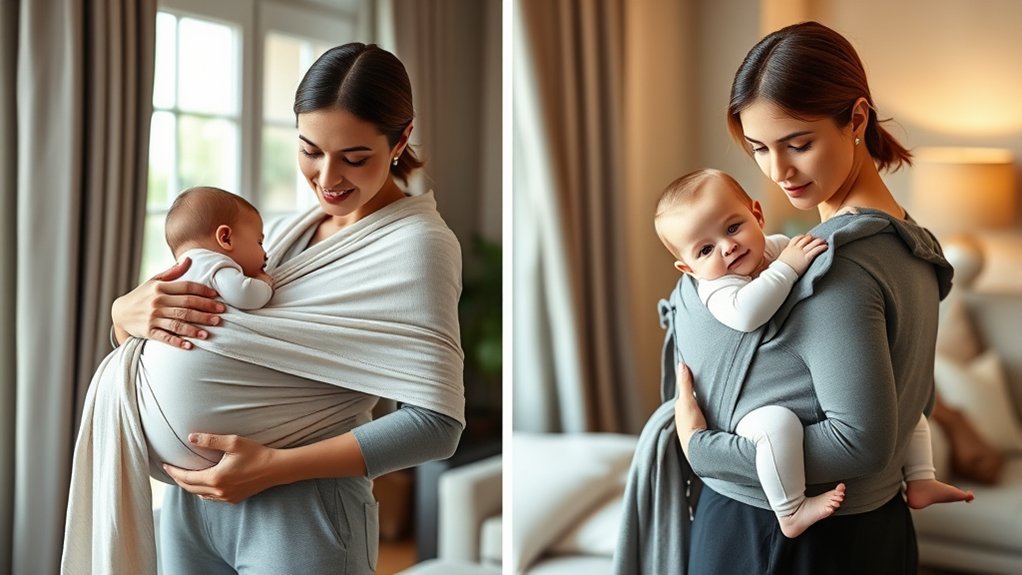
When you compare a baby wrap with a structured carrier, the main difference comes down to fit, support, and ease of use.
A baby wrap uses one long piece of fabric that you tie around your body and your baby. It can mold closely to both of you, which helps create a snug fit and steady weight distribution when you tie it well.
A structured carrier uses buckles, straps, and a shaped seat. It gives you faster setup, more built-in support, and easier adjustments when you need to get out the door.
| Feature | Baby Wrap | Structured Carrier |
|---|---|---|
| Best stage | Newborns and smaller babies | Older babies and toddlers |
| Setup | Takes practice to tie well | Buckles on and adjusts quickly |
| Support | Soft and flexible | More structured back and hip support |
| Portability | Light and easy to pack | Bulkier but more supportive |
Wraps often cost less and offer more flexibility in carrying positions. Structured carriers often feel easier for errands, travel, and longer walks.
Safety matters with both. You need correct tying with wraps, proper strap fit with carriers, and a baby position that keeps your baby’s face visible and airway clear.
Which Is Better for Your Baby’s Age and Weight?
Age and weight matter a lot when you choose between a baby wrap and a structured carrier. Newborns often do well in wraps because the fabric gives a close, womb-like feel.
A wrap also suits a smaller baby before strong neck control develops. You still need to support your baby’s head and keep the chin off the chest.
As your baby grows, a structured carrier often becomes easier on your body. From about 3 to 4 months, many babies have better head and neck control, though every baby develops at a different pace.
For older babies and toddlers, structured carriers usually work better. They can handle more weight, offer more support, and stay useful longer than many stretchy wraps.
Think of wraps as a strong early-stage choice and structured carriers as a practical growth-stage choice. You don’t have to choose one forever.
Which Is More Comfortable to Wear?
Comfort depends on your body, your baby, and how long you plan to carry. The right carrier should feel secure without digging into your neck, shoulders, or lower back.
Baby wraps can feel soft, close, and calming. Many parents like the snug fit for bonding and short outings, but wraps take practice.
Structured carriers often give stronger weight distribution. Padded shoulder straps and a waist belt can move weight from your shoulders to your hips.
- Choose a baby wrap if you want a soft, custom fit.
- Choose a structured carrier if you want fast setup and steady support.
- Check fabric layers if you or your baby overheat easily.
- Adjust the fit when your baby grows or changes position.
- Stop and reset if babywearing feels painful or restrictive.
Pro tip: Test any carrier at home for 10 minutes before you use it on a long outing.
If you want the most practical comfort for longer wear, structured carriers often win. If you value softness and a close fit, a wrap may feel better.
Which Works Better for Errands and Travel?

For errands and travel, structured carriers usually give you the most convenience. They buckle on quickly, adjust fast, and often provide better lumbar support for longer outings.
If you need to move through a store, airport, or parking lot, a carrier can free your hands with less fuss. Many models also offer several carry positions, so you can adjust as your baby grows.
A wrap still works well as a travel backup. It’s lightweight, highly portable, and easy to tuck into a diaper bag when space feels tight.
Still, a wrap may take more time to secure, and extra fabric can feel warm. Go structured when you want support and speed. Choose a wrap when packability matters most.
Choose a Baby Wrap If…
A baby wrap may fit your life best if you want a close newborn carry and don’t mind practicing the tie. It can also work well at home, on short walks, or during calm bonding time.
- You have a newborn or smaller baby.
- You want a soft carrier that molds to your body.
- You need a light option that packs small.
- You feel comfortable learning safe tying techniques.
Choose a Structured Carrier If…
A structured carrier may fit your routine best if you want fast setup and more support. It often helps when your baby gets heavier or when you carry for longer periods.
- You run errands often and need quick buckles.
- You want more back, shoulder, and hip support.
- Your baby has better head and neck control.
- You need a carrier that can grow into toddler use.
What Safety Rules Apply to Both Options?
Safe babywearing matters more than the carrier style you choose. Your baby’s face should stay visible, close enough to kiss, and free from fabric or pressure.
Keep your baby’s chin off the chest so the airway stays open. Support the neck when your baby cannot hold their head steady yet.
Check hip position too. Your baby’s knees should sit higher than the bottom, with the thighs supported in a natural spread-squat position.
Warning: Stop using any wrap or carrier if your baby slumps, struggles to breathe, or cannot keep their face clear.
Should You Get Both a Wrap and a Carrier?
Yes, many parents find that having both a baby wrap and a structured carrier gives them the most flexibility. In the baby wrap vs carrier decision, you don’t have to pick one for every stage.
A wrap can help during the newborn stage, when your baby wants close contact and a snug fit. A structured carrier can take over as your child grows and needs more support.
- Use wraps for bonding and short outings.
- Choose a structured carrier for longer trips.
- Match your carrier to your baby’s age and size.
- Put comfort and safety ahead of style.
- Switch tools when your current option stops working well.
This balanced approach helps you choose the right carrier for errands, walks, travel, and home life. The benefits of babywearing can last longer when you keep both options available.
Frequently Asked Questions
Are Baby Wraps or Carriers Better?
Neither option works best for every family. Wraps often suit newborns and short carries, while structured carriers often suit older babies, errands, and longer trips.
What Is the Most Recommended Baby Carrier?
The most recommended baby carrier depends on your baby’s age, your body, your budget, and your daily routine. Look for strong support, safe positioning, easy adjustments, breathable fabric, and a fit that feels good on you.
When Should You Switch to a Structured Baby Carrier?
You can often switch around 3 to 4 months, when your baby has better neck control. You may switch sooner or later based on your carrier’s instructions, your baby’s size, and how comfortable both of you feel.
What Is the Difference Between a Sling and a Structured Carrier?
A sling usually uses fabric that goes over one shoulder, while a structured carrier uses straps, buckles, and a waist belt. A sling can feel simple and compact, but a structured carrier often gives stronger support for longer carries.
Can You Breastfeed in a Baby Wrap or Carrier?
Some parents breastfeed in wraps or carriers after they learn safe positioning. You should always make sure your baby’s airway stays clear, then reposition your baby upright and snug when feeding ends.
Conclusion
The best choice depends on your baby’s stage and your daily routine. Choose a baby wrap when you want a soft, snug fit for newborn closeness. Choose a structured carrier when you need faster setup and more support for a growing baby. Start with the option that feels safest and most useful today, then adjust as your baby grows.