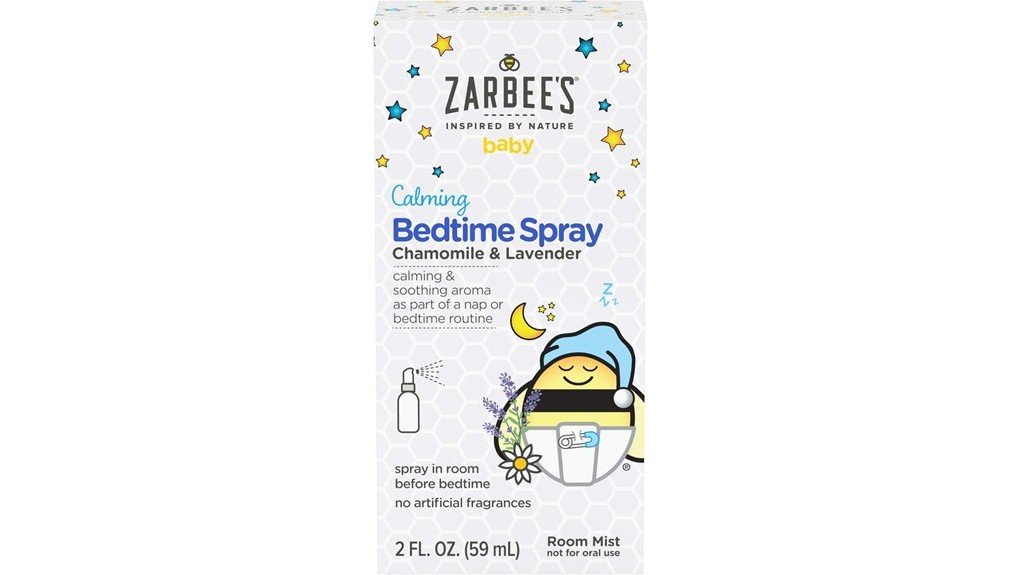
Zarbee’s Baby Sleep Spray is marketed as a gentle bedtime aid for infants, using lavender and chamomile to create a calmer sleep environment. Its ingredient list is brief, which may appeal to caregivers seeking a simpler option without artificial fragrances. Yet questions remain about how well it works, how it should be used, and whether it is appropriate for every baby. The details matter, especially when sleep routines are involved.
Key Takeaways
- Zarbee’s Baby Sleep Spray uses lavender and chamomile to support a calming bedtime routine for infants.
- Its simple formula avoids artificial fragrances, parabens, and petroleum, appealing to low-intervention caregivers.
- The spray is meant for the air near the sleep area, not directly on the baby’s skin or face.
- It can create a consistent sensory cue that helps signal winding down for sleep.
- Individual sensitivities may occur, so patch testing and monitoring your baby’s response are recommended.
What Is Zarbee’s Baby Sleep Spray?
Zarbee’s Baby Sleep Spray is a bedtime spray formulated with lavender and chamomile to support a calming nighttime routine for infants.
It is designed as a simple, parent-friendly tool that adds aromatic benefits to the sleep environment without complicating care. The spray highlights calming ingredients chosen to encourage a quieter shift toward rest, while fitting into routines that respect a family’s need for ease and autonomy.
Positioned for use from birth onward, it reflects a practical, evidence-informed approach to bedtime comfort. The format is uncomplicated, allowing caregivers to support sleep with minimal effort and maximal discretion.
What’s in It and Is It Safe?
Its calming promise rests largely on a short, nature-inspired ingredient list centered on lavender and chamomile, with no artificial fragrances, parabens, or petroleum.
A short, nature-inspired blend centered on lavender and chamomile, free of artificial fragrances, parabens, and petroleum.
That composition suggests ingredient benefits aligned with gentle aromatics rather than heavy additives, which may appeal to families seeking simpler routines.
From an evidence-based perspective, the formula appears designed for low complexity, a factor that can reduce common safety concerns tied to unnecessary chemicals.
It is marketed for infants 0+ months, yet individual sensitivity remains possible, so patch testing and pediatric guidance remain prudent.
Such restraint supports informed choice and bodily autonomy without overstating efficacy.
How the Spray Supports Bedtime
A brief mist of lavender and chamomile may help signal that the day is winding down, creating a consistent sensory cue that supports a bedtime routine.
In practice, this type of fragrance can contribute to a calming atmosphere, which may ease the shift from activity to rest.
For families seeking gentle, autonomy-respecting sleep support, the spray offers a simple, noninvasive option. Its purpose is not to force sleep, but to complement familiar cues that help infants settle.
Used as part of a predictable evening pattern, it may support relaxation for both baby and caregiver without unnecessary complexity or overstimulation.
How to Use the Spray at Night
Before bedtime, the spray can be used as part of a consistent evening routine by lightly misting the air near the baby’s sleep area, rather than directly onto the infant’s skin or face. A brief application may help establish a predictable bedtime routine and support a calming atmosphere.
| Step | Action | Note |
|---|---|---|
| 1 | Shake gently | Guarantee even dispersion |
| 2 | Mist nearby air | Avoid direct contact |
| 3 | Pause briefly | Let scent settle |
| 4 | Continue routine | Use familiar cues |
| 5 | Observe response | Keep use simple |
Evidence suggests consistency matters more than quantity.
Who Should Try Zarbee’s Baby Sleep Spray?
Zarbee’s Baby Sleep Spray may appeal to caregivers looking for a gentle, bedtime-oriented tool to support a calming sleep routine for infants from birth onward.
Zarbee’s Baby Sleep Spray may help support a gentle, bedtime routine for infants from birth onward.
It suits families seeking parenting tips grounded in simple, low-intervention comfort measures. Caregivers who prefer products without artificial fragrances, parabens, or petroleum may find it aligned with their values.
It may also be useful for households aiming to make sleep routines more consistent and soothing at naptime or bedtime.
Those with highly sensitive infants should observe for individual response and consult a pediatric clinician if concerns arise.
Frequently Asked Questions
Can It Be Used on Bedding or Pajamas?
It can be applied to bedding or pajamas if the label permits, but safety ingredients and application methods should be checked first. A light spray at a distance is typically the most prudent, clinically cautious approach.
Does the Scent Linger Throughout the Night?
The mist is a lantern at dusk: gentle, not enduring. Generally, its scent strength softens after initial use and may not last throughout the night. Baby reactions vary, so observation remains the clearest guide.
Is the Spray Travel-Friendly for Trips?
Yes; its compact spray bottle appears travel friendly for trips. The travel size supports easy packing, while ingredients safety remains a priority, with natural, pediatrician-approved formulation and no artificial fragrances, parabens, or petroleum.
How Long Does One Bottle Typically Last?
One bottle typically lasts several weeks to a few months, depending on bottle usage and how often the spray ingredients are applied. Consistent bedtime routines usually extend value, while occasional use conserves supply well.
Is It Suitable for Shared Nursery Rooms?
Yes, it may suit shared nursery rooms if all caregivers accept the scent and safety considerations are reviewed. The spray can support a calmer sleep environment, but ventilation, infant sensitivities, and institutional policies should guide use.
Conclusion
Zarbee’s Baby Sleep Spray appears to offer a gentle, low-risk addition to bedtime routines. Its lavender and chamomile scent may help create a predictable cue for rest, much like a dim lamp signaling evening in a quiet room. In one small family anecdote, a parent reported smoother shifts after introducing the mist consistently. While not a sleep treatment, it may support calmer routines for infants when used sparingly and appropriately.

