Disclosure: As an Amazon Associate, we earn from qualifying purchases. If you buy through links on this page, we may earn a small commission at no extra cost to you.
A baby fruit feeder can seem like a simple tool, but many parents find it useful for early solids and teething relief. Its soft silicone pouch lets a baby explore flavors with less mess and less worry about choking. Size, cleaning, and safety still matter, though. The real question is whether it fits a child’s needs well enough to become part of daily mealtime.
Key Takeaways
- Baby fruit feeders help babies safely explore soft solids with less choking risk.
- The silicone pouch lets tiny food bits through while keeping feeding relatively tidy.
- Chilled fruit inside can soothe teething gums and support sensory development.
- Choose the feeder size by age: small for 4–6 months, medium for 6–10 months, large for 10+ months.
- Food-grade, BPA-free feeders are easy to clean, but they still require supervision and washing after each use.
What Is a Baby Fruit Feeder
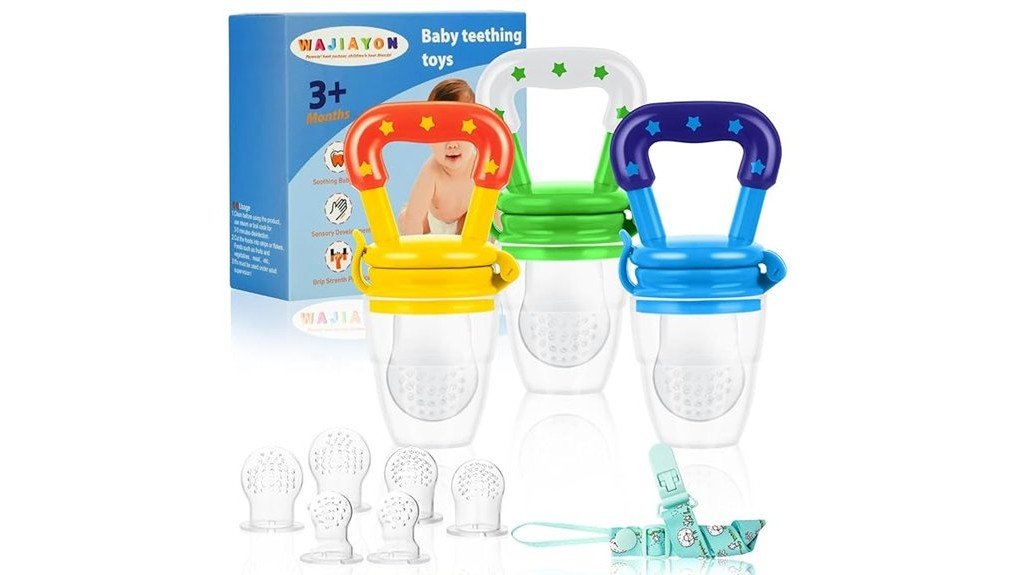
A baby fruit feeder is a simple feeding tool designed to help infants begin exploring solid foods safely. It holds soft fruit or other age-appropriate foods inside a perforated silicone pouch, so only small, manageable bits reach the mouth.
For parents seeking a practical nutritional introduction, it offers a controlled way to observe feeding preferences without overwhelming the child. The feeder can support early taste exploration while keeping meals tidy and more manageable.
Its design gives caregivers a measured sense of freedom, allowing infants to participate in feeding with less worry and greater confidence.
Baby Fruit Feeder Benefits for Solids and Teething
Beyond introducing first tastes, a baby fruit feeder also supports the move toward solids in a safer, more controlled way. It lets caregivers offer soft fruits or other mashable foods without handing over risky chunks, giving infants room for nutritional exploration at their own pace.
The mesh or silicone barrier encourages tasting while limiting mess and choking concerns, which can feel freeing during busy days. For teething, chilled fillings may soothe sore gums and redirect biting from fingers to the feeder.
This simple tool can support sensory development, making early feeding calmer, cleaner, and more empowering.
Which Baby Fruit Feeder Size Fits Your Baby
Choosing the right baby fruit feeder size starts with the baby’s age and stage of development, since each option is meant to match different needs as little ones grow.
Small feeders suit 4 to 6 months, when early exploring begins. Medium sizes fit 6 to 10 months, supporting stronger chewing and growing curiosity. Large feeders are better after 10 months, when bigger hands and fuller mouth movements need more room.
These size recommendations help families choose with confidence instead of guesswork. Matching the feeder to growth stages gives babies freedom to practice feeding at a pace that feels natural and empowering.
Is a Baby Fruit Feeder Safe and Easy to Clean
Safety and ease of cleaning are two of the strongest reasons parents consider a baby fruit feeder. Its safety features often include food-grade silicone, BPA-free materials, and a mesh or perforated design that limits large pieces from passing through. That gives caregivers more confidence during early feeding.
Practical cleaning tips matter too: disassemble the feeder after use, rinse promptly, and place it in boiling water, a steamer, or a microwave-safe sterilizer if the maker allows. For families seeking simpler routines, this tool can feel remarkably low-maintenance while still supporting independent feeding.
How to Use a Baby Fruit Feeder for Teething
A baby fruit feeder can be especially helpful during teething when it is used with chilled or frozen fruit, giving sore gums a gentle surface to chew on while offering a small amount of flavor and texture.
Caregivers can prepare it with thoughtful fruit choices and simple teething techniques that support comfort and independence.
- Choose soft fruits like banana, pear, or peach.
- Chill pieces briefly; avoid hard frozen chunks.
- Supervise use and wash the feeder after each session.
This approach lets infants explore relief safely, while adults honor a calmer, more liberated feeding routine during difficult teething days.
Frequently Asked Questions
Can I Put Breast Milk or Formula in the Feeder?
Yes, breast milk or formula can be used, though chilled or frozen portions work best for teething relief. That supports breast milk benefits and offers formula alternatives, while keeping feeding practical, safe, and gentle.
How Often Should I Replace the Silicone Nipple?
The silicone nipple should be replaced as soon as it shows wear, tearing, or discoloration; with normal use, that may mean every few months. Regular checks support silicone durability and feeding safety, while preserving easy, liberated feeding.
Does the Feeder Work With Frozen Breast Milk?
Yes, the feeder can work with frozen breast milk if it is solid enough to stay contained. Frozen benefits include soothing gums, while feeding alternatives like milk cubes offer gentle, practical relief during teething.
Are Replacement Nipples Sold Separately?
Replacement nipples may be sold separately, depending on the seller. Like spare sails for a small boat, replacement options can extend use, and checking nipple materials helps guarantee safety, comfort, and compatibility for growing infants.
Can Older Toddlers Use the Fruit Feeder Safely?
Older toddlers can use the fruit feeder safely if monitored, though toddler safety depends on bite strength and feeding preferences. The larger size suits older mouths, but regular supervision and inspection remain practical.
Conclusion
In the end, the baby fruit feeder proves to be a small tool with a big role in early feeding. It helps babies explore new flavors, supports safe self-feeding, and offers soothing relief during teething. With the right size and simple cleaning routine, it can fit smoothly into daily life. Like a gentle bridge between milk and meals, it encourages confidence, comfort, and independence at the table.

