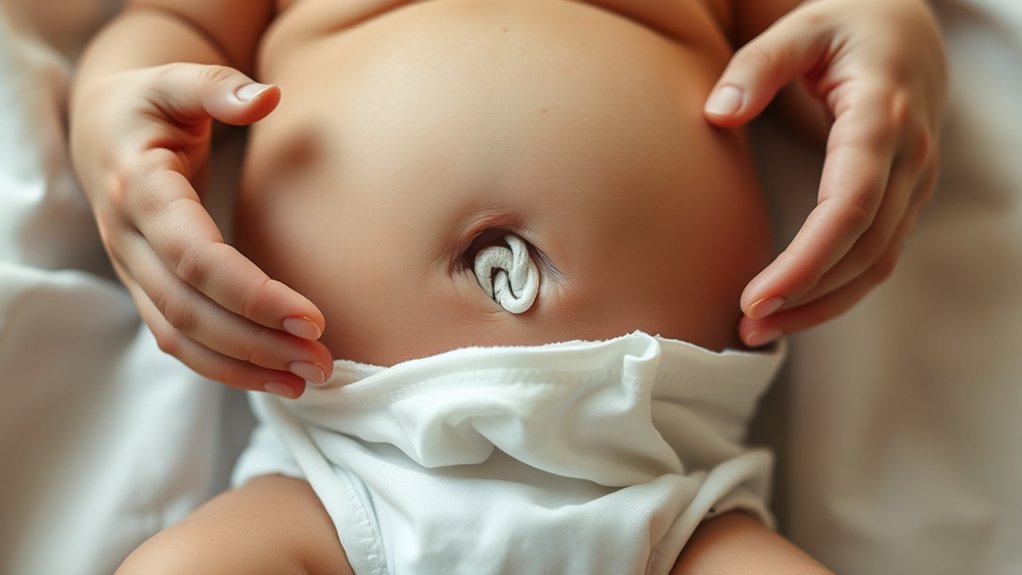
Keep your baby’s umbilical cord stump clean, dry, and exposed to air so it can heal and fall off on its own, usually within 1 to 3 weeks. Fold the diaper down, use sponge baths, and gently wipe away any fluid, then pat it dry. Don’t submerge the stump in water or pull it off. Watch for redness, pus, foul odor, bleeding, fever, or irritability—you’ll find more practical guidance below.
What an Umbilical Cord Stump Is
The umbilical cord stump is the small remnant left after the cord is cut at birth; it’s the tissue that once connected the baby to the placenta for oxygen and nutrient delivery during pregnancy.
In newborns, this umbilical cord stump usually measures about one inch and may look whitish or bluish at first. You’ll notice it dry over time as the healing process progresses. It typically falls off within 1 to 3 weeks after birth, revealing the belly button and confirming that your baby no longer depends on this cord for nutrients.
Proper care matters because moisture or contamination can increase infection risk. During this short period, you can observe the stump as normal postnatal tissue, not a wound that needs intervention beyond clean, dry conditions.
Understanding this anatomy helps you support safe newborn care and recognize expected changes without fear, while respecting the body’s capacity to heal.
How to Care for Your Baby’s Umbilical Cord Stump
Keep your baby’s umbilical cord stump dry by exposing it to air and folding the diaper down so it doesn’t cover or irritate the area. To keep the stump dry, expose the stump whenever possible and let the air drying benefits support healing.
If fluid collects, clean with a wet cotton swab and pat the skin dry. Use sponge baths instead of soaking your baby until the umbilical cord stump falls off, usually within 1 to 3 weeks. Avoid covering with diapers, since friction and trapped moisture can delay separation.
Monitor for signs of infection, including redness, swelling, warmth, or discharge, and consult a pediatrician if you notice anything concerning. You should allow the stump to fall off naturally; don’t pull on it.
This care approach protects the area, reduces irritation, and supports a clean, low-intervention healing process that respects your baby’s body and your autonomy.
Umbilical Cord Care Do’s and Don’ts
You should keep the umbilical cord stump clean and dry, and let air reach it by folding down the front of the diaper and using sponge baths until it falls off.
Don’t submerge the stump in water or use rubbing alcohol, since both can irritate the area and delay healing.
Don’t pull on the stump; it should detach naturally, and you should watch for redness, swelling, pus, or delayed separation beyond three weeks.
Clean, Dry, Air
Keeping the umbilical stump clean, dry, and exposed to air helps it heal faster and lowers the risk of infection. You can clean any fluid with a wet cotton swab, then let the umbilical cord stump stay open to air.
Use sponge baths instead of immersing your baby until the stump falls off, usually within 1 to 3 weeks. Fold down the front of the diaper so it doesn’t cover the area and can dry freely.
Don’t use rubbing alcohol unless a healthcare professional specifically tells you to, because it can irritate tissue and slow the healing process.
Watch for persistent redness, swelling, or discharge. If you notice these signs, contact your pediatrician promptly for guidance and support.
Avoid Alcohol, Pulling, Submersion
Avoid rubbing alcohol on the umbilical stump unless your pediatrician specifically recommends it, because it can irritate the skin and delay healing. You should avoid alcohol here and let the umbilical cord stump dry naturally.
Don’t pull on it; separation usually occurs on its own within 1 to 3 weeks, and forced removal can cause injury and infection. Avoid submersion until it falls off. Use sponge baths instead, keeping the area clean without soaking it.
Keep exposed to air whenever possible; air drying helps promote drying and infection prevention. Fold the diaper folded down below the stump so urine and stool don’t contact it.
These steps support safe healing, protect your baby’s skin, and respect the body’s own timing.
Why the Stump Needs to Stay Dry
A dry umbilical cord stump is less likely to support bacterial growth, which helps reduce the risk of infection and allows it to heal and separate normally.
Your umbilical cord stump needs keeping dry because moisture can slow the healing process and delay detachment. You can support air drying by leaving it exposed to air whenever possible.
Practical care tips include:
- Use sponge baths instead of submerging your baby in water.
- Keep the diaper folded below the stump so it stays uncovered.
- Let the stump remain exposed to air after cleaning.
These steps help prevent infection by limiting moisture around the tissue.
In most cases, the stump falls off within 1 to 3 weeks, and a dry environment supports this timeline. You’re protecting your baby’s body with simple, evidence-based care that respects natural separation.
Dryness isn’t neglect; it’s a clinical necessity that supports safe healing and keeps the stump clean, stable, and free to detach.
Signs of Umbilical Cord Infection
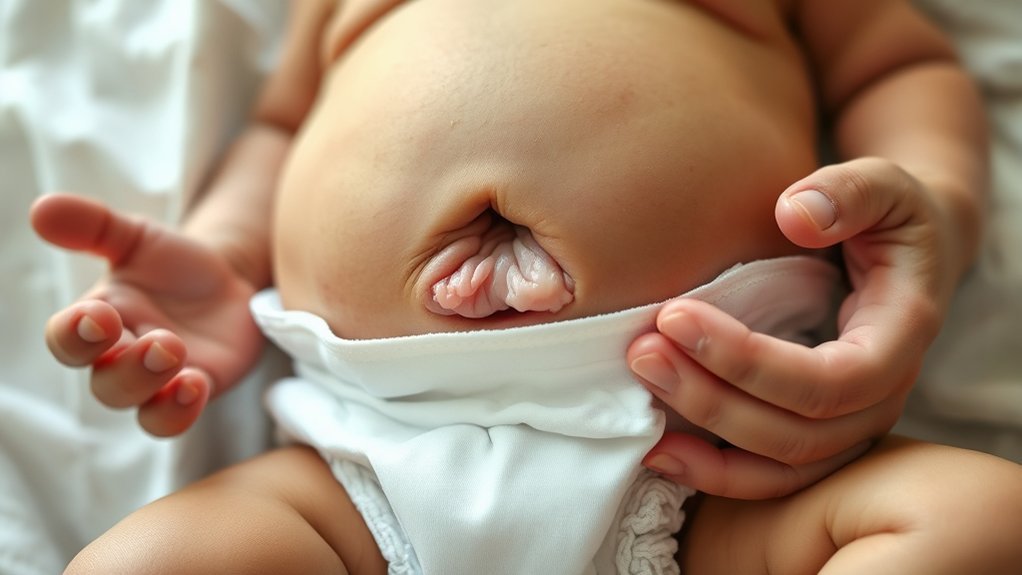
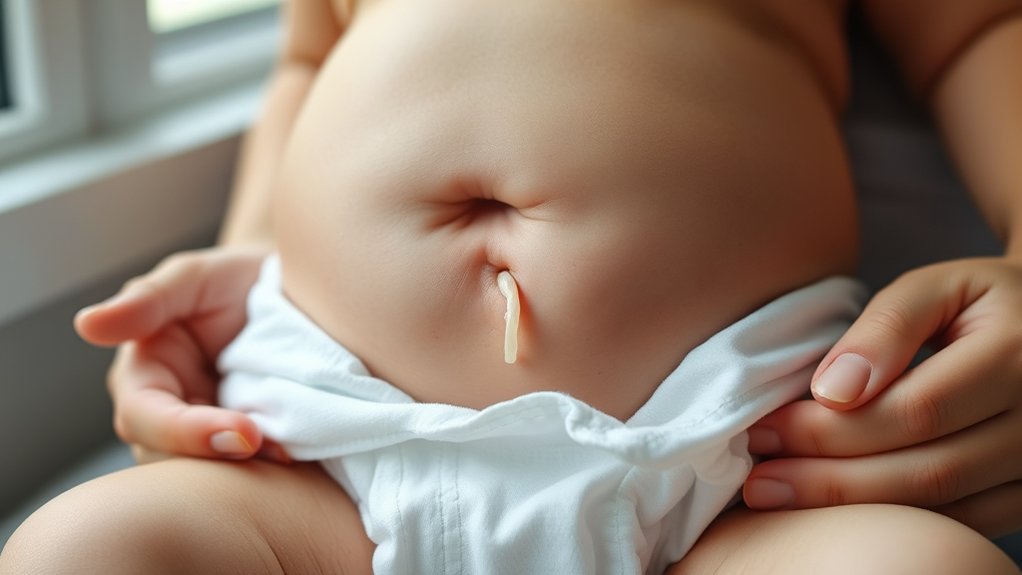
You should watch for redness or red streaks around the umbilical stump, along with swelling or tenderness, because these findings can indicate infection.
Thick yellow pus or any foul odor from the stump also suggests a likely complication.
If you notice these signs, you should seek prompt medical evaluation.
Redness And Swelling
Redness or swelling at the base of the umbilical cord stump can signal infection and should be assessed promptly. You should monitor the stump closely for changes in redness, swelling, tenderness, or warmth.
If you notice thick fluid, bleeding, or a spreading area of irritation, contact a healthcare professional for prompt treatment.
- Check the skin around the stump daily.
- Note whether redness is increasing or the area feels tender.
- Seek care if the stump hasn’t fallen off after three weeks or if symptoms worsen.
A healthy stump should stay dry and shrink without expanding inflammation.
Early evaluation helps protect your newborn’s well-being and supports confident, informed care without delay or guesswork.
Pus And Odor
Pus oozing from the umbilical cord stump, especially if it’s thick and yellow, can be a sign of infection and needs immediate medical attention.
You should also watch for a foul-smelling discharge, which often points to infection and warrants prompt evaluation.
Redness or red streaks around the stump, along with tenderness or ongoing swelling, can signal worsening inflammation.
On darker skin, redness may be harder to see, so check for warmth, odor, or pain when you touch the area.
If your baby has fever, irritability, or poor feeding with these signs, seek medical attention right away.
Early assessment protects your baby’s health and helps you act with confidence.
When to Call Your Pediatrician
Call your pediatrician if the umbilical cord stump hasn’t fallen off within three weeks, as this may warrant evaluation. Knowing when to call your pediatrician helps you protect your baby’s health without delay.
Watch for these signs:
- Persistent active bleeding from the umbilical cord stump needs immediate medical attention.
- Thick yellow fluid or pus means you should consult your pediatrician to assess for infection.
- A red, warm, swollen, or painful stump needs prompt medical evaluation, as do changes in behavior like fever, irritability, or poor feeding.
You don’t need to guess or wait for symptoms to worsen. If the area looks inflamed, leaks continuously, or your baby seems unwell, contact your clinician promptly.
Early assessment supports safe healing and limits complications. Trust your observations; you’re the first person to notice subtle shifts in your baby’s condition.
Frequently Asked Questions
What Not to Do With Umbilical Cord?
Don’t submerge, pull, cover, or use alcohol on the stump. Good Umbilical care means dry Cleaning methods, less Moisture exposure, and watching Infection signs, Skin irritation, and Cord separation; seek Doctor consultation and Parent education.
How Can I Make My Umbilical Cord Heal Faster?
You can speed umbilical cord healing by keeping it clean, dry, and exposed, supporting umbilical cord hygiene and a favorable healing environment. Use safe newborn bathing techniques, watch signs of infection, and seek pediatrician consultations for common concerns.
Do I Cover My Umbilical Cord With a Diaper?
No—keep your diaper below the stump. Good diaper placement supports cord exposure, moisture control, and a healthier healing environment. Follow hygiene practices, avoid common misconceptions, use diaper alternatives if needed, and watch for infection signs; proper cleaning helps.
How Long Does It Take for a Baby’s Umbilical Cord to Heal Completely?
Like a drying leaf, your baby’s umbilical cord usually heals in 1–3 weeks; rare cases take up to 8. Watch signs of infection, follow proper cleaning techniques, and seek pediatric advice if concerns persist.
Conclusion
Your baby’s stump is like a small, drying leaf on a branch: it should stay clean, uncovered, and air-dried until it falls away on its own. Keeping it dry helps it shrivel safely and lowers infection risk. Watch for spreading redness, swelling, foul odor, pus, or fever. If you notice these signs, call your pediatrician promptly. With gentle care and careful observation, you help the cord stump heal just as it should.
