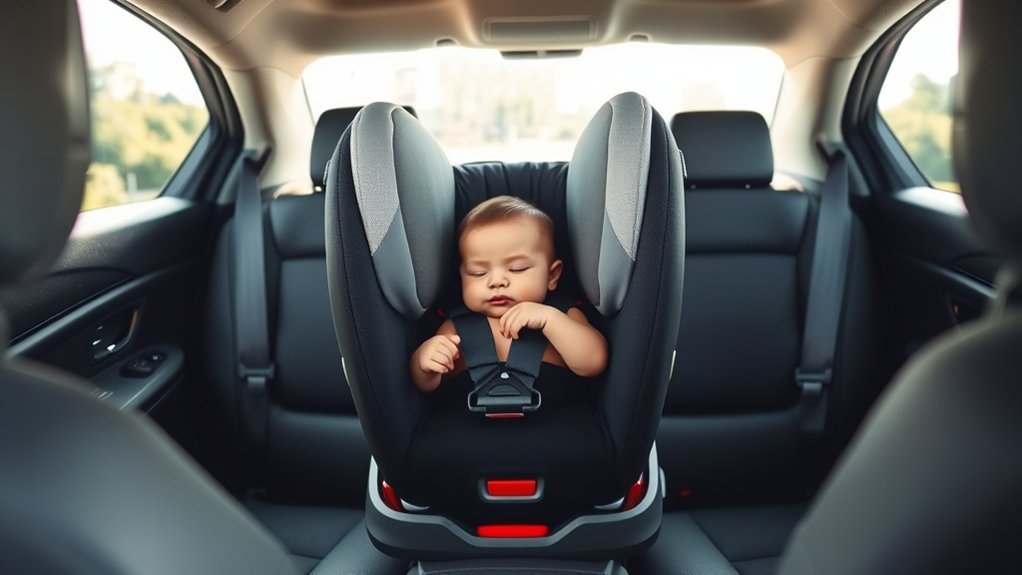
LATCH and seat belts can both be safe for your baby when the car seat is installed correctly. The safer choice is the method that gives you a tight, approved fit in your specific car seat and vehicle. A properly installed rear-facing car seat should move less than 1 inch at the belt path, and your child should stay rear-facing until reaching the seat’s rear-facing height or weight limit.
Quick Answer
LATCH is not automatically safer than a seat belt. Use the method allowed by your car seat manual and vehicle owner’s manual that lets you install the seat tightly. If the car seat moves more than 1 inch at the belt path, reinstall it or get help from a certified technician.
Key Takeaways
- LATCH and seat belts are both safe when used correctly, but you normally use only one system, not both.
- Lower anchors have weight limits, so check the car seat label and manual before using LATCH.
- A rear-facing seat should move less than 1 inch side to side or front to back at the belt path.
- Keep your child rear-facing as long as possible, until they reach the seat’s rear-facing height or weight limit.
- When in doubt, ask a certified Child Passenger Safety Technician to inspect the installation.
At a Glance
| Time Required | 10–20 minutes for a careful install and fit check |
| Difficulty | Beginner to moderate, depending on your vehicle seat shape and car seat model |
| Tools Needed | Car seat manual, vehicle owner’s manual, rear-facing car seat, LATCH connectors or vehicle seat belt |
| Cost | Usually free; many inspection stations offer free car seat checks |
Warning: Do not install a car seat with both LATCH and the seat belt unless both the car seat manual and vehicle owner’s manual clearly allow it. Also, never place a rear-facing car seat in front of an active passenger airbag.
Is LATCH Safer Than a Seat Belt?
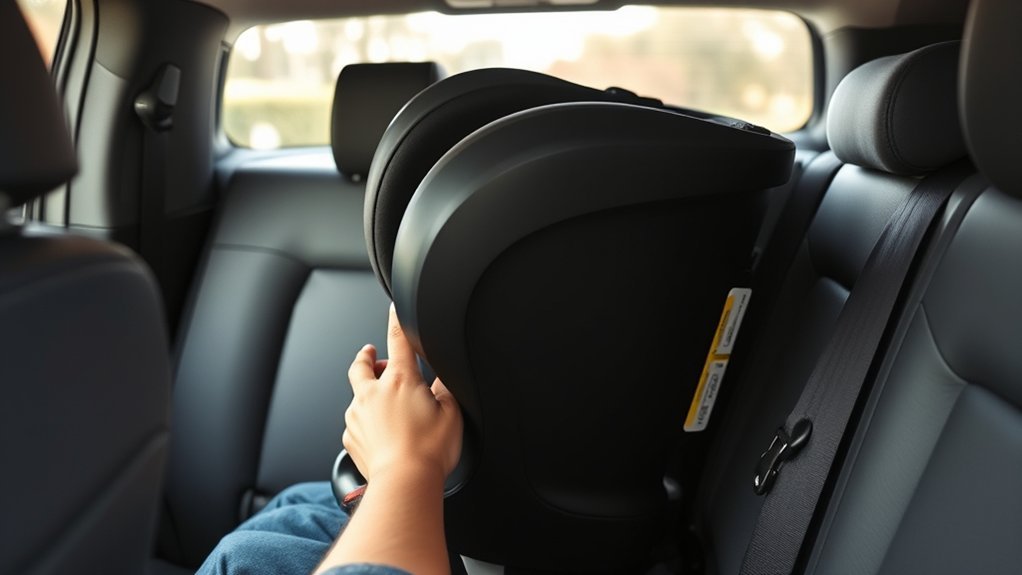
No, LATCH is not automatically safer than a seat belt. The safest method is the one you can install correctly, tightly, and according to both manuals.
The American Academy of Pediatrics guidance on HealthyChildren.org explains that car seats may be installed with either the vehicle seat belt or LATCH, and that the two systems are equally safe when used correctly. The National Highway Traffic Safety Administration also says to use either the lower anchors or the seat belt to secure the car seat, not both, unless the manuals allow it.
That means you should not choose LATCH just because it sounds newer or easier. Choose LATCH if the lower anchors are approved for your child’s weight, the seating position is allowed, and the seat gets tight. Choose the seat belt if it gives you a tighter fit, if you are installing in a center seat without lower anchors, or if your child and car seat exceed the lower-anchor weight limit.
LATCH vs Seat Belt: Quick Comparison
| Method | Best When | Watch Out For |
| LATCH | Your vehicle has approved lower anchors in that seating position and the car seat installs tightly. | Lower anchors have weight limits. Many center seats do not have lower anchors. |
| Seat Belt | You need the center seat, you have passed the LATCH weight limit, or the belt gives the tighter fit. | The belt must be routed correctly, locked properly, and tightened with no twists. |
How LATCH Works in Rear-Facing Seats
LATCH stands for Lower Anchors and Tethers for Children. For most rear-facing car seats in the United States, the lower anchors are the part you use. They are small metal bars found in the crack where the vehicle seat back and seat bottom meet.
To use LATCH, you connect the car seat’s lower-anchor connectors to the vehicle’s lower anchors, then tighten the LATCH strap through the correct rear-facing belt path. The seat should sit flat and secure on the vehicle seat, with the recline angle set according to the car seat manual.
A tight install means the seat moves less than 1 inch side to side or front to back when you test it at the belt path, not at the top of the seat.
LATCH can make installation faster, especially with infant seat bases. But it is not magic. If the connectors are clipped to the wrong anchors, the strap is routed through the wrong belt path, or the seat moves too much, the installation is not safe enough.
When Seat Belts Are Just as Safe
A seat belt can be just as safe as LATCH when it is routed, locked, and tightened correctly. In some vehicles, the seat belt is the better choice because it gives a tighter fit or lets you use the center rear seat.
Seat belt installation matters most when:
- Your child plus car seat is over the lower-anchor weight limit.
- Your vehicle does not have lower anchors in the seating position you want to use.
- The seat belt gives a tighter installation than LATCH.
- Your car seat manual requires the seat belt for that setup.
Read the vehicle owner’s manual to learn how your seat belt locks. Some belts lock when you pull the shoulder belt all the way out and let it retract. Some car seats use built-in lock-offs. Others may need a specific locking step listed in the manual.
Pro Tip: If the seat feels tight with LATCH but loose with the belt, or tight with the belt but loose with LATCH, use the tighter approved method. Safety depends on the finished installation, not the label on the attachment system.
What Rear-Impact Research Shows
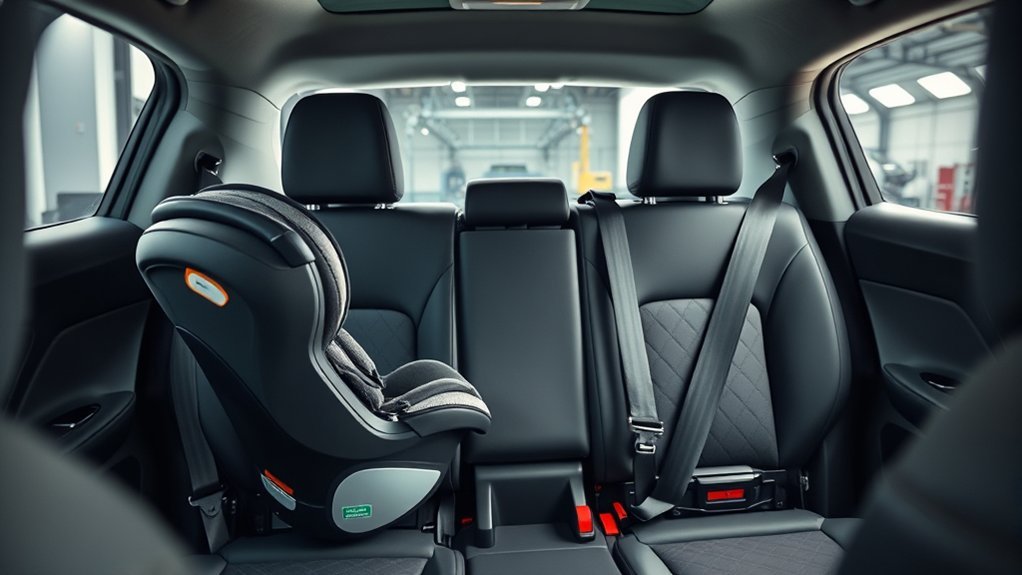
Rear-impact performance can vary by car seat model, vehicle seat shape, recline angle, and installation method. That is why you should not assume one attachment system is always best in every vehicle.
Some rear-impact sled tests have raised questions about how certain rear-facing seats move when installed with lower anchors compared with a seat belt. But those findings do not mean every LATCH installation is unsafe. They mean parents should focus on proper fit, correct belt path, the seat’s rebound-control features, and the specific instructions from the car seat maker.
Modern rear-facing car seats may include features such as anti-rebound bars or load legs. HealthyChildren.org notes that these features can help absorb crash energy and reduce rotation in a rear-facing installation. If your seat has one of these features, use it exactly as the manual directs.
Rear-Impact Test Results
Rear-impact test results are useful for engineers and manufacturers, but they are not a simple rule that tells every parent to choose one system every time. A real-world installation depends on your vehicle, your car seat, your child’s size, and the seating position.
For parents, the practical takeaway is clear:
- Use the installation method allowed by both manuals.
- Confirm the seat moves less than 1 inch at the belt path.
- Keep the car seat at the correct recline angle.
- Use any required anti-rebound bar, load leg, lock-off, or base feature exactly as instructed.
Higher HIC With LATCH
Head Injury Criterion, often shortened to HIC, is a crash-test measure used by safety researchers. Parents do not need to calculate HIC to install a car seat. What matters at home is choosing a seat that fits your vehicle and installing it so it limits unwanted movement.
If a seat is loose, too upright, routed through the wrong belt path, or installed with anchors that are not approved for that seating position, it may not protect your child as designed. A tight, manual-approved seat belt installation is better than a loose LATCH installation. A tight, manual-approved LATCH installation is better than a loose seat belt installation.
Head Strikes Increase Risk
In a crash, rear-facing seats are designed to cradle the child and help manage motion through the shell of the seat. If the seat moves too much, is at the wrong angle, or is not compatible with the vehicle position, the child may be exposed to more movement than necessary.
That is why your final fit check matters. Grip the seat at the rear-facing belt path and tug side to side and front to back. Do not test only at the top of the shell, because the top of a rear-facing seat may naturally move more than the belt path.
Why Rear-Facing Seats Change the Risk
Rear-facing seats protect babies and toddlers differently than forward-facing seats. In a crash, a rear-facing seat supports the child’s head, neck, and back across the shell of the seat. This is especially important because young children have heavy heads and developing necks.
The CDC child passenger safety guidance says children should ride in a rear-facing car seat with a harness until they reach the maximum weight or height limit of that seat. NHTSA gives the same practical advice: keep your child in the car seat for as long as possible within the manufacturer’s height and weight limits.
Rear-Facing Crash Dynamics
A rear-facing seat spreads crash forces across the child’s back and helps support the head and spine. This is why rear-facing is the safest position for infants and young toddlers who still fit within the seat’s rear-facing limits.
Do not turn a child forward-facing just because they reach a certain birthday. Use the car seat’s rear-facing height and weight limits. Many convertible and all-in-one seats allow rear-facing use well beyond infancy.
Head Injury Exposure
Head injury exposure can increase when the seat is loose, the recline is wrong, or the seat is used outside its limits. A correct rear-facing setup reduces avoidable movement and gives the car seat the best chance to perform as designed.
Check these details every time you reinstall the seat:
- The harness straps are at or below your child’s shoulders for rear-facing use.
- The chest clip is level with the armpits.
- The harness is snug, with no pinchable slack at the shoulder.
- The recline indicator is in the correct range for your child’s age and seat model.
- The seat belt or LATCH strap runs through the correct rear-facing belt path.
Installation Impact Differences
Installation method can change how a rear-facing car seat sits on the vehicle seat. Some car seats install better with LATCH. Others install better with the seat belt. Some vehicle seating positions are too narrow, too sloped, or too uneven for a good fit with one method.
The best installation is the one that meets all of these checks:
- Allowed by the car seat manual.
- Allowed by the vehicle owner’s manual.
- Within the child’s height and weight limits.
- Within the lower-anchor weight limit if LATCH is used.
- Less than 1 inch of movement at the belt path.
- Correct recline angle for rear-facing use.
How to Install a Rear-Facing Car Seat
Start by reading both manuals. Your car seat manual tells you which belt path, recline angle, lock-off, base, and harness settings to use. Your vehicle owner’s manual tells you where the lower anchors and tether anchors are, which seating positions allow car seat installation, and how the seat belt locks.
Rear-Facing Installation Steps
- Choose the back seat. The back seat is the safest place for children. The center rear seat can be a good choice if you can get a tight installation there.
- Choose one method. Use either LATCH or the seat belt unless both manuals clearly allow using both.
- Use the rear-facing belt path. Do not route the belt or LATCH strap through the forward-facing belt path.
- Set the recline angle. Use the recline indicator or angle line on the seat.
- Tighten the system. Press down where the child sits or where the manual directs, then pull the LATCH strap or seat belt tight.
- Lock the seat belt if using the belt. Use the locking method required by your vehicle or the car seat’s lock-off.
- Check movement at the belt path. The seat should not move more than 1 inch side to side or front to back.
- Buckle your child correctly. Use snug harness straps and place the chest clip at armpit level.
Note: Rolled towels, pool noodles, aftermarket inserts, strap covers, or padding should only be used if your car seat manual specifically allows them. Never add unapproved padding behind or under your child.
LATCH Weight Limits You Should Know
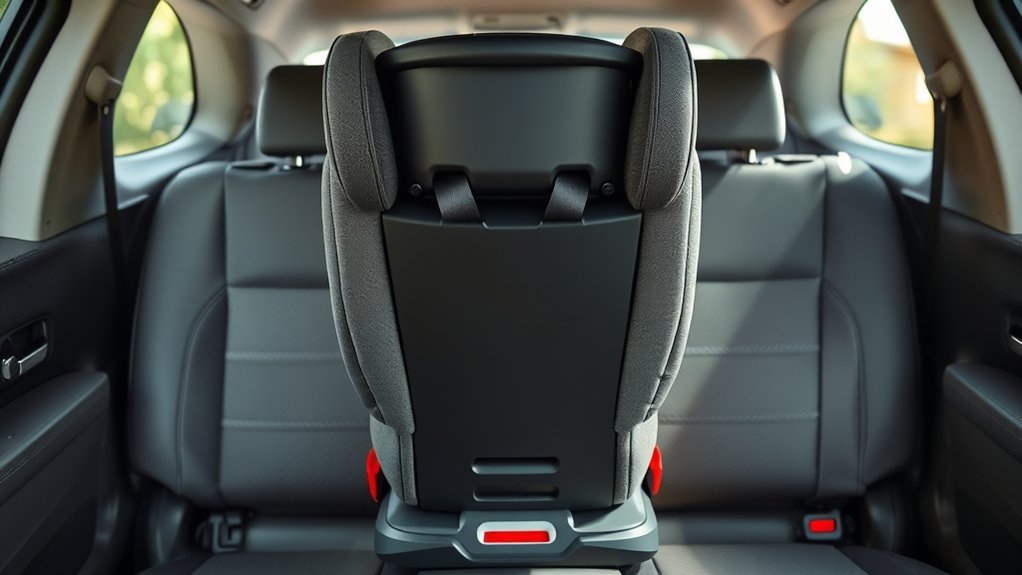
LATCH lower anchors have weight limits. A common rule is that the child’s weight plus the car seat’s weight must not exceed 65 pounds for lower-anchor use, unless your manuals give a different approved limit.
NHTSA explains the lower-anchor formula this way: 65 pounds minus the weight of the car seat equals the maximum child weight for lower-anchor use. For example, if the car seat weighs 25 pounds, the lower-anchor limit would be 40 pounds for the child.
Lower-anchor limit = 65 lb total weight minus the weight of the car seat, unless your car seat or vehicle manual gives a different approved limit.
Check the label on the car seat, the car seat manual, and the vehicle owner’s manual. If your child is over the lower-anchor limit, stop using the lower anchors and reinstall the seat with the vehicle seat belt.
Seat Belt Installation Tips That Matter
Seat belt installation is safe when the belt is routed and locked correctly. The most common mistake is leaving slack in the belt or forgetting to lock it.
Use these tips for a stronger seat belt installation:
- Thread the belt through the correct rear-facing belt path.
- Keep the belt flat with no twists.
- Buckle the belt fully.
- Lock the belt using the method in your vehicle manual or the car seat’s lock-off.
- Press the car seat down while tightening to remove slack.
- Check movement only at the belt path.
If the belt bunches, loosens, or will not lock, stop and reread the manuals. Some vehicles have different locking rules for different seating positions.
When to Choose Seat Belt Over LATCH
Choose the seat belt over LATCH when the seat belt gives a better fit or when LATCH is not allowed for your setup. The seat belt is not a backup or downgrade. It is a full installation method when used correctly.
Weight Limit Reached
Use the seat belt once your child and car seat exceed the lower-anchor weight limit. Do not keep using LATCH past the stated limit because the lower anchors were not designed for unlimited combined weight.
Check the weight limit often as your child grows. This is especially important with heavier convertible and all-in-one seats.
Better Center Fit
The center rear seat can reduce exposure in some side-impact crashes, but only if you can install the car seat tightly there. Many vehicles do not have lower anchors in the center seat. Some vehicles allow “borrowing” inner lower anchors from the side seats, but many do not.
If the center seat has no approved lower anchors, use the seat belt if you can get a tight fit. If the center seat is too narrow, too raised, or too uneven for a secure installation, an outboard rear seat with a tight installation may be the safer choice.
How to Check a Tight Car Seat Install
A tight install is the most important final check. Grip the car seat at the belt path with your non-dominant hand and give it a firm tug side to side and front to back. The seat should not move more than 1 inch in either direction at that point.
Then check the rest of the setup:
- Harness position: For rear-facing, harness straps should come from at or below your child’s shoulders.
- Harness tightness: You should not be able to pinch slack at the shoulder.
- Chest clip: Place it at armpit level.
- Recline: Check the seat’s recline indicator.
- Belt path: Confirm the strap or belt is in the rear-facing path.
- Airbag safety: Do not put a rear-facing seat in front of an active passenger airbag.
- Manual check: Confirm the method is allowed by both the car seat and vehicle manuals.
Recheck the install after long trips, after moving the seat, after cleaning the cover, or anytime another caregiver buckles the seat in.
When to Get a Car Seat Inspection
Get help from a certified Child Passenger Safety Technician if the seat still moves too much, the belt will not lock, the recline angle looks wrong, or your vehicle seat shape makes installation difficult. A technician can show you how to install the seat yourself instead of simply doing it for you.
You can find inspection help through the NHTSA car seat inspection station tool or through Safe Kids Worldwide’s technician certification resources. Many inspections are free, though availability can vary by location.
Frequently Asked Questions
Is a car seat base safer than a seat belt?
A car seat base is not automatically safer than a seat belt. A base can make infant seat installation easier and more consistent, but the safest setup is the one installed tightly and correctly according to the manual. Some infant seats can also be installed safely without the base if the manual allows it.
Do I need to install my newborn car seat with the seat belt, LATCH, or both?
Use either the seat belt or LATCH, not both, unless both the car seat manual and vehicle owner’s manual clearly say dual installation is allowed. After installing, test the seat at the belt path. It should move less than 1 inch side to side or front to back.
What is statistically the safest seat in a car for a child car seat?
The rear middle seat is often preferred because it is farthest from side impacts. But the safest position is the rear seating position where you can install the car seat tightly and correctly. If the center seat does not allow a secure installation, use another approved rear seat position.
Is it better to use both LATCH and the seat belt whenever you can?
Usually, no. Most car seats are designed to be installed with one method at a time. Use both only if the car seat maker and vehicle maker both allow it. Otherwise, choose the single approved method that gives the tightest installation.
When should I stop using LATCH?
Stop using the lower anchors when your child exceeds the lower-anchor weight limit listed on the car seat label or in the manual. If no specific child weight is listed, use the NHTSA formula: 65 pounds minus the car seat’s weight. Then reinstall with the vehicle seat belt.
Conclusion
LATCH and seat belts can both protect your baby when used correctly. LATCH may be easier in some cars, while the seat belt may be better for center-seat installs, heavier children, or vehicles where the belt gives a tighter fit. The real safety test is simple: follow both manuals, use one approved method, keep your child rear-facing until the seat’s limit, and make sure the car seat moves less than 1 inch at the belt path.
Sources
- National Highway Traffic Safety Administration: Car Seats and Booster Seats — installation methods, lower-anchor weight limits, inspection help, and car seat safety guidance.
- HealthyChildren.org: Car Seats, Information for Families — AAP parent guidance on LATCH, seat belts, rear-facing seats, harness fit, and installation checks.
- CDC: Child Passenger Safety — current child passenger safety stages, rear-facing guidance, and back-seat recommendations.
- Safe Kids Worldwide: Child Passenger Safety Technician Certification — certified technician resources for car seat inspection and education.