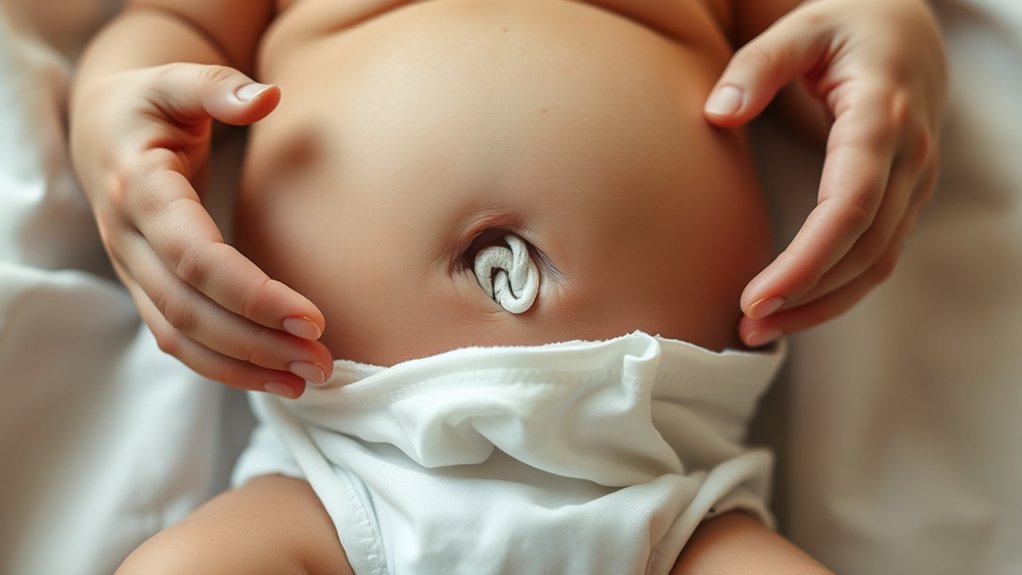
Keep your baby’s umbilical cord stump clean, dry, and exposed to air while it heals. Most stumps dry, shrink, darken, and fall off on their own within 1 to 3 weeks. Fold the diaper below the stump, use sponge baths, and never pull it off. Call your pediatrician if you see spreading redness, pus, foul odor, fever, poor feeding, or unusual sleepiness.
Quick Answer
For safe umbilical cord stump care, keep the stump dry, fold the diaper below it, clean stool or fluid gently, and pat the area dry. Use sponge baths until it falls off. Do not use rubbing alcohol, cover it tightly, submerge it, or pull it off unless your baby’s clinician gives different instructions.
Key Takeaways
- Most umbilical cord stumps fall off naturally within 1 to 3 weeks.
- Dry cord care is usually enough: fold the diaper down, expose the stump to air, and keep it clean.
- Do not pull the stump, soak it in bathwater, or apply rubbing alcohol unless a healthcare professional tells you to.
- A little clear fluid or a small spot of blood can be normal, but thick yellow pus, spreading redness, warmth, swelling, foul odor, fever, poor feeding, or unusual tiredness needs prompt medical advice.
At a Glance
| Time Required | A few seconds at each diaper change; healing usually takes 1 to 3 weeks |
| Difficulty | Easy, but requires daily observation |
| Tools Needed | Clean hands, clean diaper, soft washcloth or cotton swab, warm water, mild baby soap if stool gets on the stump, clean towel |
| Cost | No special cost for routine care; call your clinician if treatment is needed |
What an Umbilical Cord Stump Is
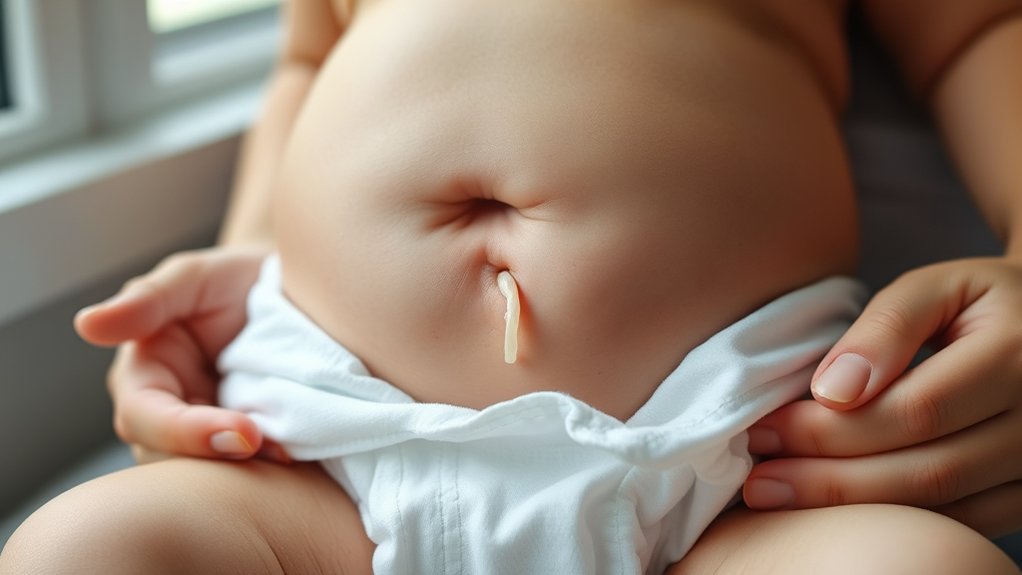
The umbilical cord stump is the short piece of cord left on your baby’s belly after the umbilical cord is clamped and cut at birth. During pregnancy, the cord carried oxygen and nutrients from the placenta to your baby. After birth, your baby no longer needs it, so the remaining stump dries and separates on its own.
At first, the stump may look whitish, bluish, yellowish, or shiny. Over the next few days, it usually becomes drier, darker, smaller, and firmer. It often looks brown, gray, or black before it falls off. This color change is usually normal as long as the skin around the stump is not spreading red, warm, swollen, tender, or foul smelling.
Most stumps fall off within 1 to 3 weeks. According to Mayo Clinic, you should talk to your baby’s healthcare professional if the stump has not fallen off after three weeks.
Note: The stump is not something you need to scrub or treat aggressively. Gentle, dry care is usually the safest routine unless your baby’s healthcare professional gives you different instructions.
How to Care for Your Baby’s Umbilical Cord Stump
Good umbilical cord stump care is simple: keep the stump clean, keep it dry, and give it air. Wash your hands before diaper changes or cleaning. Then check the skin around the base of the stump once a day for redness, swelling, warmth, odor, discharge, or bleeding.
- Fold the diaper down. Keep the front of the diaper below the stump so it does not rub, trap moisture, or cover the area.
- Use sponge baths. Wipe your baby with a warm, damp washcloth instead of placing your baby in a tub until the stump falls off.
- Clean fluid gently. If clear or blood-tinged fluid collects around the base, wipe it away with a wet cotton swab or soft cloth. Pat the area dry with a clean cloth.
- Clean stool right away. If poop gets on the stump, clean the dirty area with mild soap and water, then rinse gently and dry well.
- Let it fall naturally. Even if the stump looks loose or hangs by a thread, do not pull it off.
If the stump accidentally gets wet during a sponge bath, do not panic. Pat it dry and leave it open to air. The goal is not to keep every drop of water away forever; the goal is to avoid soaking, rubbing, and trapping moisture against the stump.
Pro Tip: Many newborn diapers have a small dip or cutout at the front. If yours does not, fold the front edge down so the stump stays uncovered and dry.
Normal Umbilical Cord Healing Timeline
Every baby heals at a slightly different pace, but this timeline can help you know what to expect.
| First few days | The stump may look moist, pale, yellowish, bluish, or shiny. Keep it clean, dry, and open to air. |
| Days 3 to 14 | The stump often becomes darker, drier, smaller, and firmer. A small amount of clear or blood-tinged fluid can happen. |
| Around 1 to 3 weeks | The stump usually falls off on its own. Do not tug it, even if it looks nearly detached. |
| After it falls off | The belly button may look slightly raw, pink, or moist for a short time. Keep it clean and dry, and call your pediatrician if redness spreads or discharge becomes cloudy, thick, yellow, or foul smelling. |
Umbilical Cord Care Do’s and Don’ts
You should keep the umbilical cord stump clean and dry, and let air reach it by folding down the front of the diaper and using sponge baths until it falls off.
Don’t submerge the stump in water or use rubbing alcohol, since both can irritate the area or make it harder to keep the stump dry. Don’t pull on the stump; it should detach naturally. Watch for redness, swelling, pus, foul odor, fever, poor feeding, or delayed separation beyond three weeks.
Clean, Dry, Air
Keeping the umbilical stump clean, dry, and exposed to air helps it dry and separate normally. You can clean any clear fluid with a wet cotton swab, then pat the area dry and keep the umbilical cord stump open to air.
Use sponge baths instead of immersing your baby until the stump falls off. Fold down the front of the diaper so it doesn’t cover the area and can dry freely.
Don’t use rubbing alcohol unless a healthcare professional specifically tells you to. Seattle Children’s notes that normal cords do not need special treatment and that dry cord care is the usual approach.
Avoid Alcohol, Pulling, Submersion
Avoid rubbing alcohol on the umbilical stump unless your pediatrician specifically recommends it. Do not apply oils, powders, herbal pastes, antiseptics, or antibiotic ointment unless your baby’s clinician tells you to. Extra products can irritate newborn skin, trap moisture, or hide early signs of infection.
Don’t pull on the stump. Separation usually occurs on its own within 1 to 3 weeks, and forced removal can cause bleeding, pain, or infection. Avoid tub baths until the stump falls off. Use sponge baths instead, keeping the area clean without soaking it.
Keep the diaper folded below the stump so urine and stool are less likely to touch it. If stool gets on the stump, clean it gently with soap and water, rinse with a damp cloth, and dry it well.
Warning: Call your baby’s healthcare professional promptly if the skin around the stump becomes red or red-streaked, warm, swollen, tender, foul smelling, or if thick yellow pus appears. Fever, poor feeding, unusual tiredness, or unusual irritability in a newborn also needs urgent medical advice.
Why the Stump Needs to Stay Dry
A dry umbilical cord stump is less likely to stay moist enough for germs to grow. Dryness also helps the stump shrink, harden, and separate naturally.
Your baby’s stump needs air and low moisture because trapped dampness can slow the healing process and increase irritation. You can support air drying by leaving it exposed whenever possible.
Practical care tips include:
- Use sponge baths instead of submerging your baby in water.
- Keep the diaper folded below the stump so it stays uncovered.
- Let the stump remain exposed to air after cleaning.
- Change wet or soiled diapers promptly so moisture does not sit near the stump.
These steps help prevent infection by limiting moisture around the tissue. Dryness isn’t neglect; it is part of safe newborn care.
Signs of Umbilical Cord Infection
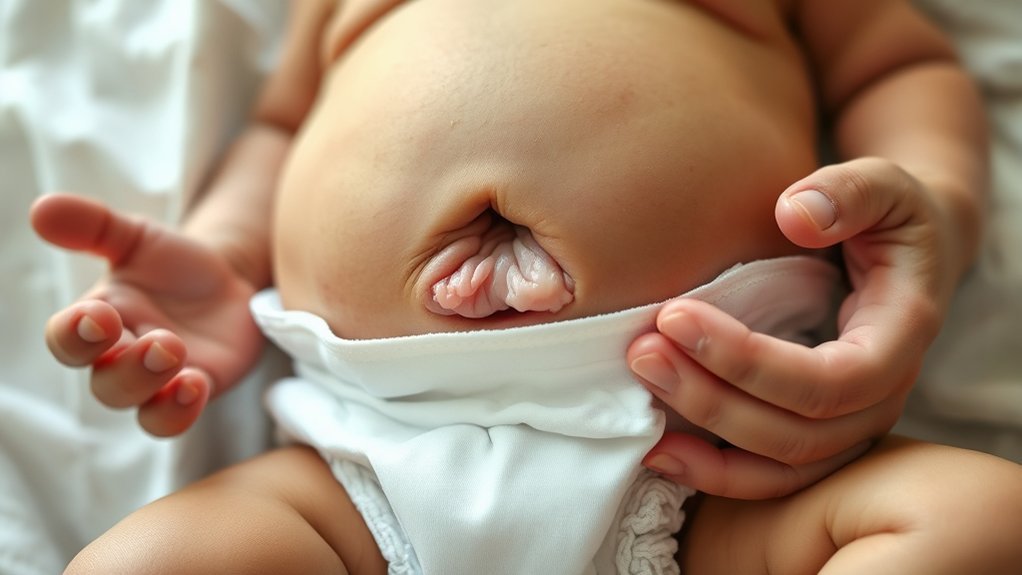
You should watch for redness or red streaks around the umbilical stump, along with swelling, warmth, tenderness, or pain. These findings can suggest infection and should be assessed promptly.
Thick yellow pus or any foul odor from the stump also suggests a possible complication. If you notice these signs, seek prompt medical evaluation.
Redness and Swelling
Redness or swelling at the base of the umbilical cord stump can signal infection. Check the stump daily in good light. Look at the skin around the base, not only the dried stump itself.
On darker skin, redness may be harder to see. Feel gently for warmth, swelling, tenderness, or firmness. If the area feels warmer than nearby skin, looks swollen, or your baby cries when it is touched, contact your pediatrician.
- Check the skin around the stump once a day.
- Note whether redness is spreading or the area feels tender.
- Seek care if symptoms worsen or if your baby seems unwell.
A healthy stump should dry and shrink without spreading inflammation.
Pus and Odor
Pus oozing from the umbilical cord stump, especially if it is thick and yellow, can be a sign of infection and needs medical attention.
You should also watch for a foul-smelling discharge, which can point to infection and warrants prompt evaluation.
A small amount of clear, sticky, or blood-tinged fluid can happen during healing. That is different from thick yellow pus, cloudy drainage, spreading redness, or a bad smell.
If your baby has fever, irritability, unusual sleepiness, or poor feeding with these signs, seek medical attention right away. Newborn infections can worsen quickly, so do not wait for symptoms to become severe.
Normal vs. Concerning Umbilical Cord Signs
| Usually Normal | Call the Pediatrician |
| Stump turns brown, gray, or black as it dries | Skin around the stump becomes red, red-streaked, warm, swollen, or tender |
| A tiny spot of blood when the stump rubs or falls off | Bleeding gets worse or keeps leaving drops of blood after a few days |
| Small amount of clear or blood-tinged fluid | Thick yellow pus, cloudy drainage, foul odor, or lots of fluid |
| Stump falls off by itself within 1 to 3 weeks | Stump has not fallen off after three weeks, or your baby has fever, poor feeding, unusual tiredness, or unusual irritability |
When to Call Your Pediatrician
Call your pediatrician if the umbilical cord stump has not fallen off within three weeks, if bleeding is getting worse, or if the belly button area looks infected. Knowing when to call helps you protect your baby’s health without delay.
Seek prompt medical advice if you notice:
- Persistent active bleeding from the umbilical cord stump.
- Thick yellow fluid, pus, or foul odor.
- A red, warm, swollen, tender, or painful stump area.
- Red streaks spreading from the belly button.
- Fever, poor feeding, unusual tiredness, unusual irritability, or your baby acting abnormal in any way.
You don’t need to guess or wait for symptoms to worsen. If the area looks inflamed, leaks continuously, smells bad, or your baby seems unwell, contact your clinician promptly.
This article is for education only and does not replace medical care. Follow your baby’s discharge instructions and your pediatrician’s advice, especially if your baby was premature, had a NICU stay, has an immune condition, or your care team gave special cord-care directions.
After the Stump Falls Off
After the stump falls off, your baby’s belly button may look slightly pink, moist, or raw for a short time. A little scabbing or a small spot of blood can be normal. Keep the area clean and dry while it finishes healing.
Continue sponge baths for a few more days if the belly button still looks moist. Once it looks dry and healed, tub baths are usually fine. Pat the belly button dry after bathing.
Call your pediatrician if you see a small moist red lump, ongoing drainage, spreading redness, foul odor, pus, or bleeding that does not stop. A moist red lump after the stump falls off may be an umbilical granuloma, which is usually treatable in a doctor’s office.
Frequently Asked Questions
What should I not do with my baby’s umbilical cord stump?
Do not pull it off, soak it in bathwater, cover it tightly with the diaper, scrub it, or apply rubbing alcohol, oils, powders, herbs, antiseptics, or antibiotic ointment unless your baby’s healthcare professional tells you to. Keep it clean, dry, and open to air.
How can I help my baby’s umbilical cord stump heal faster?
You cannot force it to fall off faster safely. The best way to support healing is to keep it dry, fold the diaper below it, use sponge baths, clean stool or fluid gently, and let it fall off naturally.
Do I cover my baby’s umbilical cord with a diaper?
No. Keep the front of the diaper below the stump so air can reach it and the diaper does not rub. You can fold the diaper down or use newborn diapers with a cord cutout.
How long does it take for a baby’s umbilical cord stump to heal completely?
Most umbilical cord stumps fall off within 1 to 3 weeks. The belly button may need a few more days to look fully dry. Call your pediatrician if the stump is still attached after three weeks or if you notice infection signs.
Is it okay if the umbilical cord stump gets wet?
A little accidental wetness is usually not a problem. Gently pat the stump dry and leave it exposed to air. Avoid soaking it in a tub until it falls off because sponge baths make it easier to keep the area dry.
What should I do if poop gets on the umbilical cord stump?
Clean the soiled area gently with mild soap and water, rinse with a damp cloth, and pat it dry. Then fold the diaper below the stump. Call your pediatrician if the area becomes red, swollen, warm, painful, foul smelling, or starts draining pus.
Is a little blood around the stump normal?
A tiny spot of blood can happen if the stump rubs against a diaper or when it falls off. Call your pediatrician if bleeding gets worse, does not stop with gentle pressure, keeps leaving drops of blood, or comes with redness, pus, odor, fever, or poor feeding.
Conclusion
Your baby’s umbilical cord stump should stay clean, uncovered, and air-dried until it falls away on its own. Keeping it dry helps it shrink safely and lowers infection risk. Watch for spreading redness, swelling, warmth, foul odor, thick yellow pus, fever, poor feeding, unusual sleepiness, or unusual irritability. If you notice these signs, call your pediatrician promptly. With gentle care and careful observation, you help the cord stump heal as it should.
Sources
- Mayo Clinic: Umbilical cord care do’s and don’ts for parents — supports dry cord care, diaper folding, sponge baths, avoiding routine alcohol, cleaning fluids, warning signs, and the three-week call threshold.
- Seattle Children’s: Umbilical Cord Symptoms — supports normal cord care, signs of omphalitis, normal bleeding, delayed separation, and when to seek care.
- American Academy of Pediatrics Pediatric Patient Education — supports pediatric patient education references for umbilical cord care, minor infection, bleeding, and delayed separation.