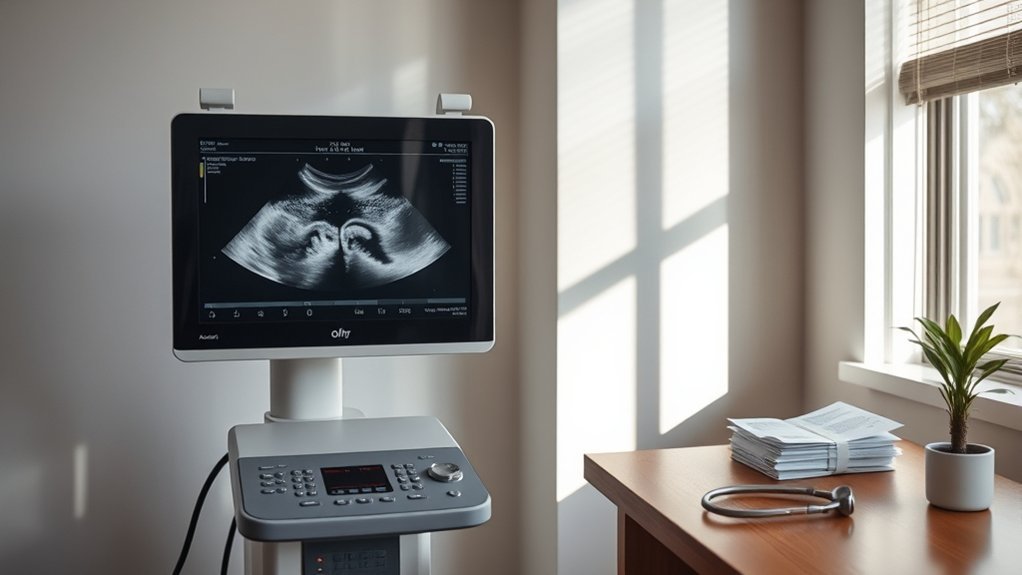
When you’re expecting twins, knowing your ultrasound schedule helps you stay on top of their health. You’ll start with an early dating scan and continue with regular appointments throughout the pregnancy. The frequency may surprise you, but it’s driven by the unique demands of carrying multiples. Here’s what to expect at each stage and why these exams matter.
Quick Answer
- Your first ultrasound is typically scheduled between 6 and 10 weeks to confirm the pregnancy and count embryos.
- A detailed anatomy scan happens around 18–20 weeks to check fetal development.
- After that, growth scans are usually scheduled every 4–6 weeks, with more frequent monitoring in the third trimester.
- Twin pregnancies carry specific risks (like twin-to-twin transfusion syndrome) that make this increased monitoring necessary.
What Is the Typical Ultrasound Schedule for Twins?
For a twin pregnancy, the ultrasound schedule generally follows a clear pattern. A dating scan around 8–10 weeks confirms the pregnancy and how many embryos are present. A detailed anatomy scan follows between 18–20 weeks to assess fetal development and flag any early complications.
From there, additional scans are usually scheduled every few weeks, especially in the third trimester, to monitor growth, amniotic fluid, and placental health. Your provider will adjust the schedule based on your specific situation.
When Will I Have My First Ultrasound?
For a twin pregnancy, the first ultrasound typically happens between 6 and 8 weeks. This early scan confirms the pregnancy, counts embryos, and checks for heartbeats. Your provider may include it as part of your first prenatal visit.
If you have a relevant medical history or specific symptoms, an earlier scan may be recommended. Talk to your healthcare team about your situation so the timing fits your needs.
How Often Will I Need Ultrasounds During My Pregnancy With Twins?
After the initial scan, expect ultrasounds roughly every four to six weeks. In the third trimester, your provider may recommend more frequent appointments to track your twins’ growth and position.
More scans may also be needed if complications arise, such as twin-to-twin transfusion syndrome or growth discrepancies between the babies. Underlying health conditions on your end can also increase monitoring frequency. Talk openly with your team about any symptoms or concerns as they come up.
What Can I Expect During Each Ultrasound Appointment?
Each ultrasound gives your care team a thorough look at how your twins are doing. Here’s what typically happens:
- Growth Assessment: The technician measures each twin to check that both are growing at a healthy rate.
- Heartbeat Monitoring: You’ll hear both heartbeats, which is a reassuring sign of wellbeing.
- Anatomy Scan: Key structures, like the brain, heart, and limbs, are examined to confirm proper development.
- Placental Positioning: The placement of the placenta or placentas is assessed to rule out complications.
These appointments give you meaningful insight into your pregnancy and help you feel connected to your babies.
Are There Specific Risks Associated With Twin Pregnancies That Require More Ultrasounds?
Twin pregnancies carry unique risks that call for more frequent monitoring. Understanding these factors helps you feel prepared as the pregnancy progresses.
Increased Monitoring Necessity
Carrying more than one baby raises the likelihood of complications, so more frequent ultrasounds are standard. Regular scans help keep both you and your babies on track. The main reasons for this include:
- Growth Monitoring: Checking that both twins are growing within normal ranges.
- Amniotic Fluid Levels: Confirming that fluid levels are adequate for both babies.
- Placental Health: Evaluating placental condition and function.
- Fetal Position: Tracking each twin’s position as you approach labor.
Potential Complications Awareness
Twin pregnancies come with a higher risk of several specific complications. Twin-to-twin transfusion syndrome (TTTS) is one example, where blood flow between twins becomes uneven. There’s also a greater chance of preterm labor, gestational diabetes, and preeclampsia.
Regular ultrasounds let your provider catch these issues early and take action before they become serious. Scans also help track each twin’s position and development so your care plan can be adjusted when needed.
Growth Assessment Importance
Tracking growth through ultrasounds is one of the most valuable parts of monitoring a twin pregnancy. Several risks make this especially necessary:
- Twin-to-Twin Transfusion Syndrome: Blood flow between twins can become unbalanced, causing developmental differences.
- Growth Discordance: One twin may fall behind in growth, which can signal a problem that needs attention.
- Preterm Labor Risk: Early signs of labor can be caught and addressed before they progress.
- Placental Issues: Placental health is closely tied to how well each baby is nourished.
How Can Ultrasounds Help Monitor the Health of Each Twin?
Ultrasounds are a core tool for tracking each twin’s health throughout pregnancy. They show how each baby is growing and can flag potential complications early, giving your provider time to act.
Assessing Growth Patterns
Growth scans give detailed information about each twin’s development, including:
- Fetal size: Individual growth rates are measured and compared to normal ranges.
- Amniotic fluid levels: Adequate fluid is tracked for each twin separately.
- Placental health: Any issues with placental function that could affect growth are identified.
- Organ development: Key organs in both babies can be visualized and assessed.
Detecting Twin Complications
Catching complications early is one of the main goals of regular ultrasounds in a twin pregnancy. Scans can identify conditions like TTTS, growth discrepancies, or placental abnormalities, allowing your provider to monitor each baby closely and step in when needed.
| Ultrasound Type | Purpose | Frequency |
|---|---|---|
| Dating Ultrasound | Confirm gestational age | First trimester |
| Anatomy Scan | Assess organ development | 18–20 weeks |
| Growth Monitoring | Evaluate growth patterns | Every 4–6 weeks |
| Doppler Ultrasound | Check blood flow | As needed |
| Follow-Up Scans | Monitor known complications | As directed |
What Types of Ultrasounds Are Performed During a Twin Pregnancy?
Several different types of scans are used throughout a twin pregnancy, each serving a specific purpose:
- Dating Ultrasound: Done in the first trimester to confirm your due date and the number of embryos.
- Nuchal Translucency Screening: Performed between 11–14 weeks to assess the risk of chromosomal abnormalities by measuring fluid at the back of each baby’s neck.
- Anatomy Scan: Typically around 20 weeks, this detailed scan checks physical development and anatomical structures in both twins.
- Growth Ultrasound: Scheduled later in pregnancy to track growth, amniotic fluid levels, and placental function for each baby.
Will I Be Able to Find Out the Genders of My Twins During the Ultrasounds?
Gender can often be determined during the anatomy scan at around 20 weeks. The technician looks for each baby’s sex organs during this appointment. Accuracy depends on the twins’ positions and image clarity.
Here’s a quick overview of when gender identification is most reliable:
| Ultrasound Type | Typical Timing | Gender Determination |
|---|---|---|
| Early Ultrasound | 6–10 weeks | Limited accuracy |
| Anatomy Scan | 18–20 weeks | Most accurate |
| Follow-up Scan | 22+ weeks | Confirmation possible |
Can I Bring Someone With Me to My Ultrasound Appointments?
Policies on support persons vary by facility, so check ahead of time. Many hospitals allow one support person in the ultrasound room, but some may have restrictions based on room size, current health protocols, or other guidelines.
Hospital Policy Guidelines
Before your appointment, check your hospital’s specific rules. Common policies include:
- Number of Guests: Some facilities allow one support person; others permit two.
- Visitor Restrictions: Safety protocols, such as those during flu season, may limit access.
- Age Restrictions: Children may not be allowed in the ultrasound room.
- Waiting Areas: If your support person can’t join you, they may need to wait in a designated area.
Confirming these details in advance helps the appointment go smoothly.
Support Person Restrictions
Most facilities allow one support person, but this can vary based on hospital policy or health conditions at the time. Check in advance, especially if you’re hoping to bring a partner, family member, or close friend. Knowing the rules ahead of time helps you plan and avoids surprises on the day.
Safety and Comfort
Having someone with you can ease anxiety and make the experience more meaningful. A few things to keep in mind:
- Hospital Policies: Confirm whether the facility allows support persons in the ultrasound room.
- Room Size: Space may be limited, which affects how many people can be present.
- Health Regulations: During certain health situations, access may be more restricted.
- Emotional Support: A familiar face can help reduce stress during the appointment.
Always confirm the current guidelines with your provider before your visit.
What Should I Do if I Have Concerns About the Ultrasound Schedule?
If you’re uneasy about your ultrasound schedule, reach out to your healthcare provider. Ask directly about the frequency, timing, and types of scans planned, and raise any doubts about whether certain scans are necessary.
A second opinion from another qualified professional is always an option if it gives you peace of mind. Connecting with support groups or forums for parents of multiples can also help. Hearing from others going through the same experience can be genuinely reassuring.
Frequently Asked Questions
Will Insurance Cover Additional Ultrasounds for Twin Pregnancies?
Most insurance plans do cover additional ultrasounds for twin pregnancies, but coverage varies by provider. Check your specific policy and talk to your healthcare provider to confirm which scans are covered.
Can Ultrasounds Detect Complications in Twin Pregnancies Early?
Yes. By monitoring growth, blood flow, and amniotic fluid, ultrasounds give your provider a clear picture of how both babies are developing, often catching problems before they become serious.
How Should I Prepare for My Ultrasound Appointments?
Drink plenty of water beforehand to fill your bladder, wear comfortable clothing, and bring any required paperwork. Arriving a few minutes early gives you time to settle in before the scan starts.
What Should I Expect After the Ultrasound Appointments?
After the scan, you’ll usually receive images and a report summarizing the findings. Your healthcare provider will walk you through the results, answer questions, and outline any next steps in your care or monitoring.
Are There Any Dietary Restrictions Before an Ultrasound?
Avoid heavy meals or foods that cause bloating before your scan. Staying hydrated helps, though, so drink water as directed. A clear picture makes it easier for the technician to see both babies.