
Before your NT scan, your clinic may ask you to arrive with a comfortably full bladder. Drink about 32 ounces of water 1 to 1.5 hours before your appointment unless your provider gives different instructions. Don’t empty your bladder before the scan, and wear clothes that let the sonographer reach your abdomen with ease. A Doppler ultrasound isn’t always part of nuchal translucency screening, so only have it if your clinician recommends it.
Quick Answer
An NT scan is a first-trimester ultrasound that measures fluid behind your baby’s neck. It helps estimate the chance of some chromosomal conditions, but it does not diagnose them. Your provider may combine the scan with blood tests and your age to guide the next steps.
Key Takeaways
- An NT scan usually takes place between 11 weeks and 13 weeks 6 days of pregnancy.
- A full bladder can help create clearer ultrasound images during an abdominal scan.
- NT screening estimates risk, but CVS or amniocentesis can provide diagnostic answers.
- Higher-risk results do not confirm a condition, so you should review them with your care team.
- Your provider’s instructions should guide your water intake, timing, and follow-up testing.
What Is an NT Scan?

An NT scan, or nuchal translucency scan, is a prenatal ultrasound that measures the fluid-filled space behind your baby’s neck. This measurement helps assess the chance of chromosomal conditions, especially Down syndrome.
You usually have this ultrasound between 11 weeks and 13 weeks 6 days of pregnancy. Many clinics also use fetal crown-rump length, often between 45 mm and 84 mm, to confirm the right timing.
During nuchal translucency screening, the sonographer places a probe on your abdomen. If the image is not clear enough, your provider may use a vaginal ultrasound approach.
The test is noninvasive and often takes 20 to 30 minutes. Your clinician may combine your result with your age and blood tests to refine risk assessment for chromosomal abnormalities.
Normal findings often suggest a lower risk, while an increased measurement may lead to more testing. These tests can include chorionic villus sampling (CVS), amniocentesis, or non-invasive prenatal testing (NIPT).
You deserve clear information, not fear. This scan supports informed, autonomous decision-making.
Why Doctors Recommend an NT Scan
Doctors recommend an NT scan because it helps screen your baby’s chance of chromosomal conditions. These may include Down syndrome, trisomy 13, and trisomy 18.
During the exam, the sonographer measures the fluid behind your baby’s neck. An increased thickness can signal a need for closer evaluation.
If the result looks higher risk, you can use it to guide next steps. Your provider may discuss genetic counseling, CVS, amniocentesis, or NIPT.
Screening for Genetic Risk
When your clinician recommends a nuchal translucency (NT) scan, it’s usually to screen for chromosomal conditions. These conditions include Down syndrome, trisomy 13, and trisomy 18.
This nuchal translucency screening test uses ultrasound to estimate genetic risk early in pregnancy. You may hear about it more often if you’re over 35 or have a family history of genetic disorders.
You’ll typically have it between 11 weeks and 13 weeks 6 days. The measurement behind your baby’s neck is one part of the full screening result.
When combined with blood test results, NT screening can identify many pregnancies affected by Down syndrome. It can also miss some cases, so your provider should explain the test’s limits.
If results look higher risk, your clinician may discuss CVS, amniocentesis, NIPT, and genetic counseling. You can choose the path that fits your values and circumstances.
Checking Nuchal Fluid
During the NT scan, your clinician measures the nuchal translucency. This is the fluid-filled space behind your baby’s neck.
You’ll usually have this first trimester screening between 11 weeks and 13 weeks 6 days. Your provider also checks whether the fetus measures within the expected range for the scan.
The scan is noninvasive and uses ultrasound to assess whether the nuchal fluid looks thicker than expected. Higher measurements can raise the chance of trisomy 21 or other congenital anomalies.
Normal values can feel reassuring, but they do not guarantee that no condition exists. The results help classify your pregnancy as lower or higher risk, often alongside your age and blood tests.
You get early information without giving up bodily autonomy or comfort. That information can help you move forward with clarity.
Guiding Next Steps
Because an NT scan can show early risk for chromosomal conditions, your clinician uses it to guide the next steps in pregnancy care. These conditions may include Down syndrome, trisomy 13, and trisomy 18.
This nuchal translucency scan measures fluid behind your baby’s neck during a noninvasive ultrasound. The scan results can show whether you may need closer monitoring or more testing.
- Low-risk findings usually support routine prenatal care.
- Higher-risk findings may lead to NIPT, CVS, or amniocentesis.
- Clear questions can help you make decisions with more confidence.
The test gives you early, actionable information without restricting your choices.
You can usually return to normal activities right after the 20- to 30-minute exam.
How to Prepare for an NT Scan
To help get clear images during an NT scan, your clinic may ask you to arrive with a full bladder. Drink about 32 ounces of water 1 to 1.5 hours before your appointment unless your provider gives different instructions.
A full bladder can support the ultrasound view and help improve measurements. Wear comfortable clothing that lets you expose your abdomen quickly and without stress.
| Step | Purpose |
|---|---|
| Drink 32 oz water | Follow common hydration guidance |
| Keep bladder full | Improve NT scan visibility |
| Stay still | Support precise fetal imaging |
During the scan, you’ll lie quietly while the sonographer looks for the best angle. If bladder fullness feels painful or stressful, contact your healthcare provider before you arrive.
Clear preparation can help you move through the NT scan with more confidence. It also helps the ultrasound team get the images they need.
Do’s and Don’ts Before Your Appointment

Now that you know how to prepare for the NT scan, follow a few simple do’s and don’ts before your appointment. Planning ahead can help your visit feel calmer and more controlled.
Drink water as your clinic directs, and don’t urinate before the scan unless your provider tells you to. Wear comfortable clothing with easy access to your abdomen.
Avoid a heavy meal right before the test if it makes you feel uneasy. Food does not usually affect the NT measurement, but comfort matters during the scan.
- Do drink water as directed by your clinic.
- Don’t empty your bladder before imaging unless your provider says so.
- Do follow specific instructions from your healthcare provider.
These steps help you move through the appointment with less stress and more control. If your clinician gives different guidance, follow that plan.
Why a Full Bladder Helps the Scan
A full bladder can give the ultrasound technician a clearer view during an abdominal ultrasound. It gently lifts the uterus and creates a fluid-filled window for imaging.
That extra visibility can help during the nuchal translucency exam, when precise measurement matters. Your clinic may ask you to drink about 32 ounces of water before your appointment.
The fluid acts like a natural acoustic window, helping the scan capture cleaner images of the fetus and nearby structures. It can also help position the uterus in a way that supports an accurate assessment.
Note: Some clinics give different water instructions, so your provider’s guidance should come first.
If the pressure feels uncomfortable, tell your healthcare provider before the scan. You should not have to push through distress.
A comfortably full bladder is not about restriction. It’s a practical step that can support better results and help the ultrasound technician work with precision.
How the NT Scan Is Done
With your bladder prepared, the NT scan itself is usually straightforward and takes about 20 to 30 minutes. You’ll have an ultrasound between 11 weeks and 13 weeks 6 days.
The technician may use an abdominal or vaginal approach, depending on image quality and your clinic’s protocol. For an abdominal scan, gel goes on your abdomen and a transducer slides over it to capture fetal images.
- You may feel mild pressure, but the procedure is noninvasive and generally painless.
- The technician focuses on the nuchal translucency measurement at the back of your baby’s neck.
- Your results may become available soon, but timing depends on your clinic and lab process.
This scan is designed to be efficient, precise, and respectful of your comfort. You only need to stay relaxed, follow the technician’s instructions, and ask for help if you feel discomfort.
What NT Scan Results Can Show
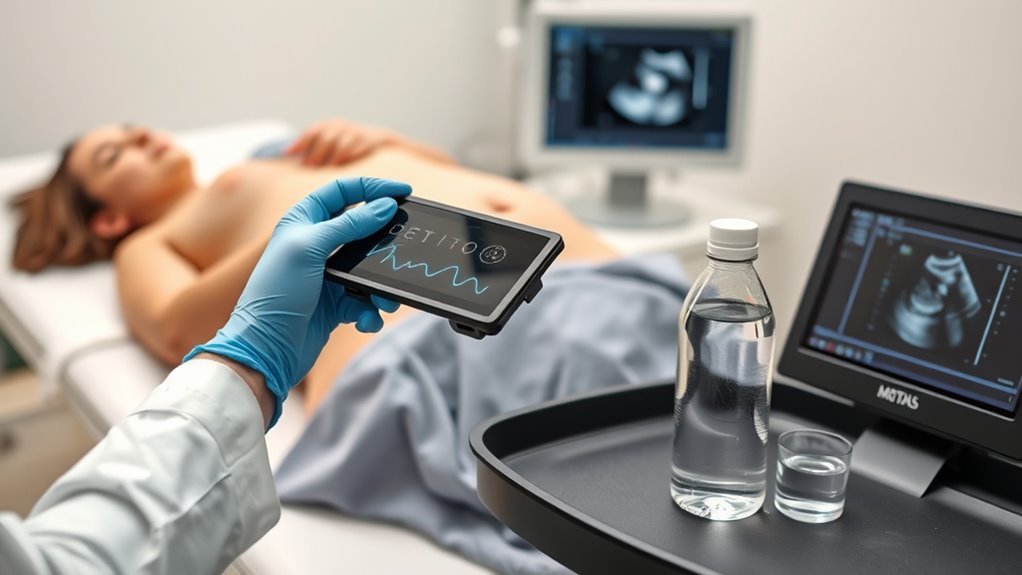
Your NT scan results may classify the finding as low risk or higher risk. The result depends on the nuchal translucency measurement and, when available, blood test data.
If the measurement is increased, it can suggest a higher chance of conditions such as Down syndrome, Patau syndrome, or Edwards syndrome. It does not provide a diagnosis.
When results suggest higher risk, you can discuss follow-up testing such as NIPT, CVS, or amniocentesis. These options can help clarify the finding and guide your prenatal care.
Risk Screening Results
NT scan results help estimate your baby’s risk for certain chromosomal conditions. The scan measures the fluid-filled space behind the neck and compares it with your baby’s gestational age.
In nuchal translucency screening, a small amount of fluid can be normal. Higher results raise risk estimates, not diagnoses.
Your provider may combine the ultrasound result with maternal blood hormones and age. This combined screening can give a more useful risk estimate than ultrasound alone.
- Normal results usually suggest lower risk.
- Higher-risk results may lead to NIPT, CVS, or amniocentesis.
- Some patients receive elevated screening results even when the baby does not have the condition.
If your results are abnormal, you can choose next steps with your care team and genetic counseling. This support helps you stay in control of informed decisions.
Conditions Detected
The NT scan can help flag an increased risk for certain chromosomal conditions. These include Down syndrome (trisomy 21), Patau syndrome (trisomy 13), and Edwards syndrome (trisomy 18).
During nuchal translucency screening, the scan measures the thickness of the fluid-filled space behind your baby’s neck. Some providers may also look for related markers, such as the nasal bone.
A larger measurement can suggest higher genetic risk, but it is not a diagnostic test. If the nasal bone is present and other findings look normal, your provider may consider your risk lower.
Follow-Up Testing Options
When the nuchal translucency measurement is higher than expected, it can point to an increased risk of chromosomal conditions. These may include Down syndrome, trisomy 13, or trisomy 18.
Your NT measurement is one part of a broader risk picture that may include maternal age and blood tests. If risk stays elevated, you may choose follow-up testing to get clearer answers.
- Non-invasive prenatal testing (NIPT) from maternal blood
- Chorionic villus sampling (CVS) for diagnostic confirmation
- Amniocentesis for diagnostic testing later in pregnancy
- Genetic counseling to review options and plan next steps
Normal results usually suggest lower risk, while abnormal findings call for timely evaluation. Ask your provider which option fits your pregnancy timing and personal needs.
How NT Results Are Calculated
Your NT result comes from measuring the thickness of the nuchal translucency. This fluid-filled space behind your baby’s neck gets measured in millimeters and compared with gestational age.
The sonographer records this nuchal translucency measurement at the right crown-rump length. Your clinician then interprets the results alongside your age and any blood test results.
A blood test may check beta-human chorionic gonadotropin (beta-hCG) and pregnancy-associated plasma protein A (PAPP-A). This hormone data helps estimate risk for chromosomal abnormalities with more detail than ultrasound alone.
Higher values can raise the calculated risk, but they don’t diagnose a condition. The calculation guides informed choices, not destiny.
If NT Results Are Abnormal
If your NT result comes back abnormal, it means the scan suggests a higher risk of a chromosomal condition. It does not confirm a diagnosis.
When the measurement is higher than expected, your provider may offer genetic counseling. This support helps you review what the abnormal results mean and choose next steps with clarity.
Your care team may discuss:
- Chorionic villus sampling (CVS) or amniocentesis for diagnostic testing
- Follow-up ultrasounds to monitor fetal development
- Blood tests, including NIPT, to refine risk estimates
Warning: Do not treat a higher-risk NT result as a diagnosis without follow-up guidance from your clinician.
These options help build a more complete picture of your fetus’s health. You stay in control of each decision, and your clinicians should explain benefits, limits, and timing clearly.
Questions to Ask Your Provider
Your appointment may feel easier when you bring a short list of questions. Clear questions help you understand the result, the test limits, and your choices.
- What does my NT measurement mean for my gestational age?
- Will you combine this scan with blood test results?
- Do I need NIPT, CVS, amniocentesis, or genetic counseling?
- When should I expect the full results?
- Who should I call if I feel worried after the appointment?
Write down the answers during your visit, or ask your provider to print the summary. You deserve time to understand the information before making decisions.
Frequently Asked Questions
Should you drink water before an NT scan?
Yes, many clinics ask you to drink water before an NT scan. A comfortably full bladder can improve the ultrasound view during an abdominal scan. Follow your clinician’s instructions because some clinics use different protocols.
How do you prepare for an NT ultrasound?
Wear loose clothing, bring any required paperwork, and follow your clinic’s water instructions. You usually do not need special food restrictions unless your provider gives them. Arrive on time so the scan happens during the right pregnancy window.
Can you drink water before a Doppler test?
You can usually drink water before a Doppler test, but preparation depends on the type of exam. Doppler ultrasound may not be part of a routine NT scan. Ask your clinician whether you need Doppler imaging and how to prepare.
When is the best time to do an NT ultrasound?
The usual timing is between 11 weeks and 13 weeks 6 days of pregnancy. This window helps your provider measure the nuchal translucency more reliably. If you schedule too early or too late, the scan may not give the needed measurement.
Does an abnormal NT scan mean your baby has a condition?
No, an abnormal NT scan does not confirm a condition. It means your screening result may show higher risk and needs more review. Your provider may suggest genetic counseling, NIPT, CVS, or amniocentesis.
Medical Disclaimer: This article is for informational purposes only and does not constitute professional medical advice. Always consult a qualified doctor or prenatal care provider before making decisions based on this information.
Conclusion
An NT scan helps estimate early pregnancy risk, but it does not diagnose chromosomal conditions on its own. Before your scan, follow your provider’s water instructions and arrive with a comfortably full bladder if asked.
If your results look higher risk, ask about genetic counseling and follow-up testing. Clear answers can help you make calm, informed choices for your pregnancy care.