Many parents feel overwhelmed when introducing traditional first foods to their babies. You might wonder when to start, which foods to choose, and how to keep your baby safe while exploring new tastes and textures. Understanding the right approach can help you build healthy eating habits from the very beginning.
Quick Answer
- Most babies are ready for solid foods around 6 months of age, per the American Academy of Pediatrics.
- Look for signs like sitting up unassisted, showing interest in food, and having good head control.
- Start with single-ingredient foods such as iron-fortified cereals, pureed vegetables, or pureed fruits.
- Introduce one new food at a time and wait 3 to 5 days before adding another to watch for allergic reactions.
When Can My Baby Begin Solid Foods?
The American Academy of Pediatrics recommends starting solid foods around 6 months of age. Before then, your baby’s diet should consist mainly of breast milk or formula.
Signs of readiness include being able to sit up unassisted, showing interest in food, and having good head and neck control. Babies who are ready have typically doubled their birth weight by around 4 months and weigh at least 13 pounds.
Starting solids too early can pose health risks. When you do start, focus on single-ingredient foods and wait 3 to 5 days before trying something new. This makes it easier to spot any potential allergic reactions.
Which Food Should I Give My Baby First?
Choosing the right first foods is an important part of your baby’s development. Around 6 months, good starting options include:
- Iron-fortified cereals – Oatmeal or barley are solid choices. Rice cereal was once the go-to option, but health organizations now recommend rotating grains because of concerns about arsenic levels in rice.
- Pureed fruits – Smooth textures like pureed apple or banana work well.
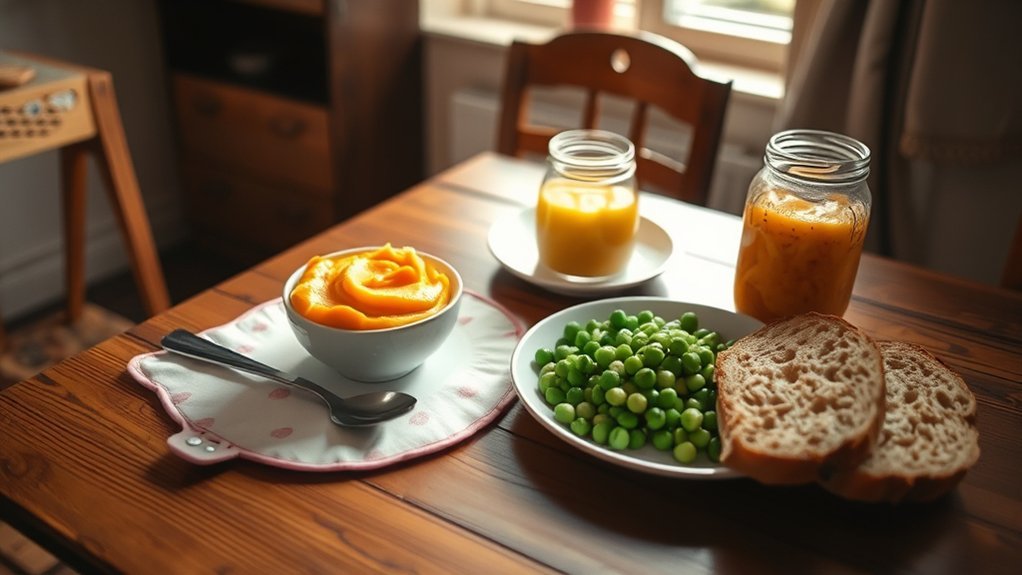
- Pureed vegetables – Easily mashable options like sweet potatoes or peas are great starting points.
- Single-ingredient foods – Introduce one food at a time, waiting 3 to 5 days to watch for allergic reactions before adding another.
Always pay attention to texture. Foods need to be smooth enough for your baby to swallow safely to avoid choking hazards. Early exposure to common allergenic foods may also reduce allergy risks, so talk to your pediatrician about how to approach those foods.
How Do I Feed My Baby?
Starting solids can feel like a lot at first, but a few simple steps help.
Begin with small amounts of single-ingredient purees or mashed foods, like baby cereal. Start with about half a spoonful and see how your baby responds. Always offer breast milk or formula first, since solids are meant to complement, not replace, these primary nutrients until your baby is at least 1 year old.
Introduce one new food at a time, waiting 3 to 5 days to monitor for allergic reactions. As you progress, make sure foods are soft, easy to swallow, and cut into small pieces to avoid choking hazards. Offering a variety of healthy foods early helps build a broader palate over time. For more on transitioning to solids, the nutrition and feeding recommendations from MyChild are worth reviewing.
What About Water When Starting Solids?
Once your baby starts eating solid foods around 6 months, you can also begin offering small amounts of water. A few sips from a cup at mealtimes is enough to start.
Breast milk or formula still provides most of the hydration your baby needs during this period, so water is a supplement, not a replacement. Avoid juice entirely in the first year. It offers little nutritional value and can lead to excess sugar intake early on.
Do not give cow’s milk as a main drink before 12 months, though small amounts used in cooking or mixed into foods are fine. If you have questions about your baby’s fluid intake, your pediatrician is the best resource.
What Changes Can I Expect After My Baby Starts Solids?
Once solid foods enter the picture, you’ll notice some clear changes in your baby’s behavior and development:
- Bowel Movements: Stools will become more formed, reflecting the shift away from an all-milk diet.
- Interest in Food: Your baby may watch you eat closely and reach for food during mealtimes.
- Weight Gain: Increased caloric intake from solids can lead to gradual weight gain, while breastfeeding remains a key source of nutrition.
- Self-Feeding: Expect mess as your baby starts experimenting with self-feeding and different textures. This is normal and part of the learning process.
Make sure your baby is getting the right nutritional information as they transition to support their overall health and development.
Good Eating Habits Start Early
The period between 6 and 12 months is a critical window for shaping your child’s relationship with food. Introducing a variety of healthy foods and textures during this time helps build acceptance of diverse flavors later on.
Regular family meals encourage positive eating behaviors and give your baby a chance to observe and mimic. It may take 10 to 15 exposures before your baby accepts a new food, so persistence matters more than immediate success.
After 9 months, offer 2 to 3 healthy snacks daily to support self-regulation. Encouraging self-feeding with finger foods also builds motor skills and independence. Starting these habits early builds a positive relationship with food and may reduce the risk of food allergies. Community involvement in maternal health can also play a role in supporting healthy eating practices from an early age.
Frequently Asked Questions
What Types of Foods Should Be Omitted When Introducing First Foods?
Avoid choking hazards like whole grapes, nuts, and large chunks of meat. Skip raw fruits and vegetables in large pieces, along with candy and juice, for nutritional reasons.
Which Should Be the First Food for an Infant?
Iron-fortified single-grain cereals, like oatmeal or barley, are a good starting point. Pureed fruits and vegetables are also solid options. These foods provide key nutrients while introducing your baby to different flavors and textures.
What Should Be the First Food Introduced Into an Infant’s Diet?
Around 70% of parents start their infants on iron-fortified cereals. Starting with pureed vegetables can help balance sweetness before introducing fruits and meats, which helps build varied nutrition from the start.
What Are the Red Flags When Starting Solids?
Watch for signs like difficulty sitting up, frequent gagging, refusing food, increased fussiness, or allergy symptoms. These can indicate readiness issues or discomfort and may call for a conversation with your pediatrician.
Conclusion
Introducing solid foods is a gradual process, and patience goes a long way. Each new food you offer is a step toward building healthy eating habits that support your baby’s growth for years to come. Choose safe, nutritious options, pay attention to how your baby responds, and know that a little messiness and resistance along the way is completely normal. The habits you establish now lay the groundwork for a lifetime of good nutrition.

