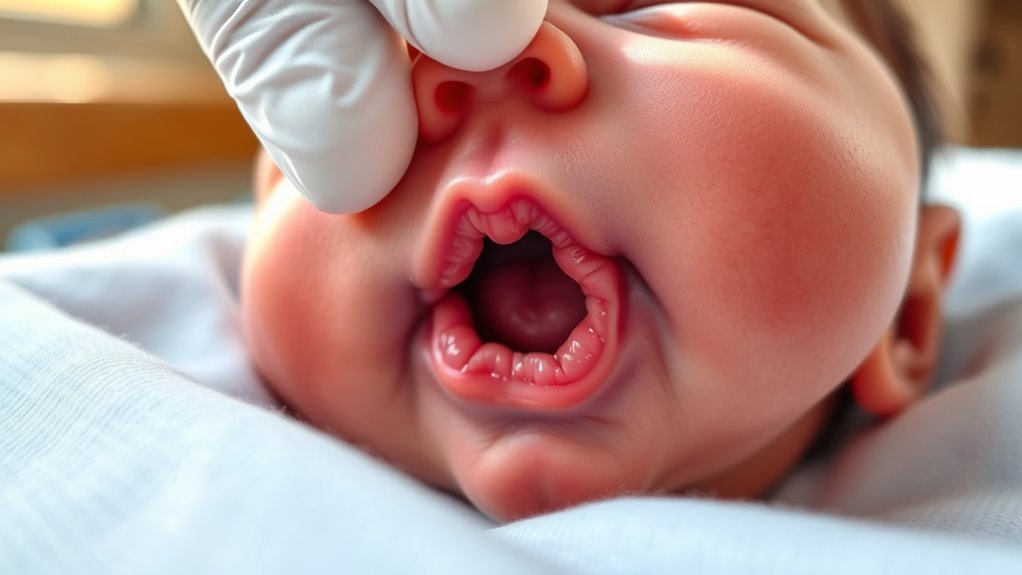
Tongue tie in babies, or ankyloglossia, happens when the lingual frenulum is too short or tight, limiting tongue movement. It often shows up as breastfeeding trouble, poor latch, clicking, or slow weight gain. During pregnancy, genetics, prenatal development, and folate-related pathways may play a role, but the exact cause isn’t always clear. Doctors diagnose it with a mouth exam, and support or a frenotomy can help. There’s more to understand about signs and care.
What Is Tongue Tie in Babies?

Tongue tie, or ankyloglossia, is a condition some babies are born with when the lingual frenulum is too short or tight, limiting how well the tongue can move. You may hear it called tongue tie, and it affects about 4% to 11% of newborns, often boys.
Because the tongue can’t lift, extend, or move freely, you might notice breastfeeding difficulties, such as poor latching or lasting feeding strain. Other symptoms of tongue-tie can include trouble reaching past the lower front teeth later on, and sometimes speech challenges as your child grows.
A pediatrician or lactation consultant usually spots it soon after birth with a simple look at the mouth and tongue. Many babies don’t need surgery, but if feeding problems continue despite support, a frenotomy may help you and your baby feed with more ease and freedom.
What Causes Tongue Tie in Babies?
Tongue-tie happens when the lingual frenulum doesn’t develop or detach as it should, which can limit tongue movement.
You may notice that genetics and prenatal factors, like fetal development, maternal health, and uterine space, can play a role in this variation.
Some research also links folic acid-related pathways, including MTHFR variations, to a higher risk of tongue-tie.
Lingual Frenulum Development
Although the exact cause isn’t always clear, tongue-tie in babies usually happens when the lingual frenulum—the small band of tissue under the tongue—doesn’t separate fully before birth. When that tissue stays attached, it can limit movement and make feeding harder.
During fetal growth, developmental variations can leave the frenulum shorter or tighter than usual. You may also see patterns linked to genetic factors, since tongue-tie often runs in families.
In some pregnancies, environmental factors, including certain medications or exposures, and intrauterine conditions may influence how this tissue forms. Maternal health and nutrition can also shape development.
None of this means you did something wrong; it simply means your baby’s body took a different path. Many babies thrive once you understand the issue and get support.
Genetic and Prenatal Factors
During fetal growth, the lingual frenulum should separate and lengthen; when genetic factors affect tissue formation, that process can stay too tight. Prenatal conditions like limited space or unusual positioning in the womb can also change how the frenulum forms.
Your maternal health matters as well, because nutrition and overall pregnancy wellbeing support normal oral development. These influences don’t mean you did anything wrong. They simply show that tongue-tie often starts early, shaped by biology and the environment working together before your baby is born.
Folic Acid Research Link
Recent research has looked at folic acid intake as one possible factor in tongue-tie development, though it doesn’t mean folic acid itself causes the condition. Some studies found that mothers of infants with ankyloglossia reported folic acid use slightly more often, and regular pre-conception intake showed a stronger link.
Researchers think higher folic acid during organogenesis may support tissue synthesis in a way that could influence tongue development. Still, the findings don’t prove harm, and differences in diagnosis may affect reported rates.
If you took folic acid, you didn’t do anything wrong. You still helped support healthy prenatal development, and many infants exposed to folic acid never develop ankyloglossia.
The evidence is still emerging, so keep focusing on informed, empowered care.
Could Genes or Folate Play a Role?
Genes and prenatal nutrition may both play a role in tongue-tie, and researchers think the condition often has a hereditary component. If you’ve heard of ankyloglossia, you’ve heard another name for tongue-tie, and genes may help explain why it can run in families.
Genes and prenatal nutrition may both influence tongue-tie, which often appears to run in families.
Studies also point to variations in the MTHFR gene, which may raise the risk of congenital differences. Some research has found a link between regular folic acid use in pregnancy and a higher rate of tongue-tie, but that doesn’t mean folic acid causes it on its own.
Your body’s nutrition, your genes, and other environmental factors can interact in complex ways. One study reported more regular folic acid use among mothers of affected infants than among mothers of healthy babies.
You deserve clear answers, so keep in mind that scientists still need more research before they can explain exactly how these factors fit together.
How Tongue Tie Affects Feeding
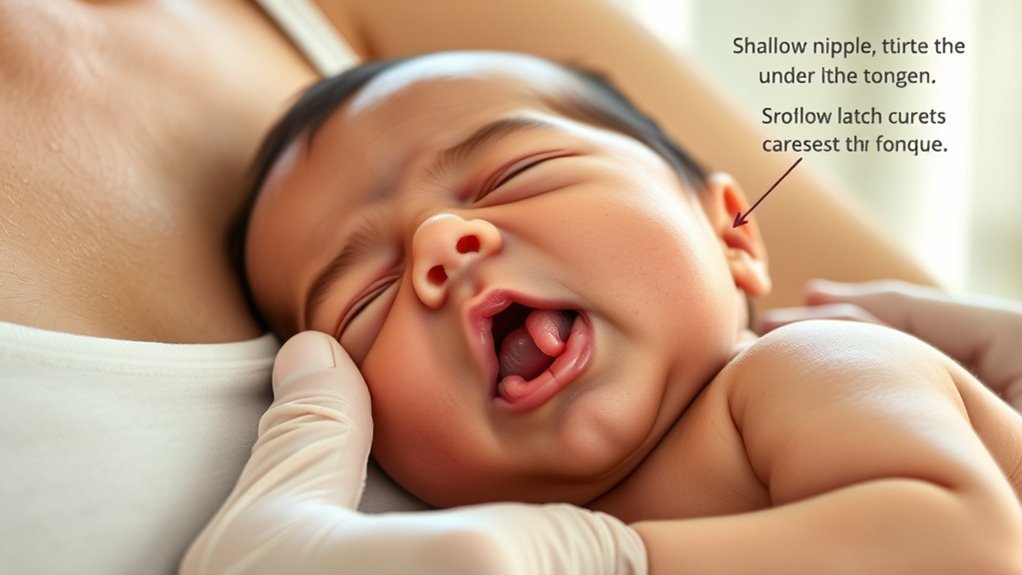
Tongue-tie can make it hard for your baby to latch well, which can turn breastfeeding into a frustrating start.
You might also notice that your baby isn’t transferring milk efficiently, even when they seem to feed often.
If feeding feels painful or slow, early support can help you and your baby get back on track.
Breastfeeding Latch Problems
When ankyloglossia limits a baby’s tongue movement, breastfeeding can become difficult right from the start because the infant can’t form a strong, effective latch.
With tongue ties, you may notice breastfeeding latch problems like clicking, gulping, or slipping off the breast, all signs of restricted tongue movement. This can leave you with nipple pain, cracked skin, and frustration, even when you’re trying to feed with care.
Early identification and management matter, because support can protect your baby’s comfort and your own. Many families find relief when a frenotomy helps improve feeding, and your care team can guide next steps.
You deserve options that make feeding easier, calmer, and more connected, so don’t ignore persistent latch issues or waiting to ask for help.
Milk Transfer Challenges
If your baby has ankyloglossia, getting milk out efficiently can be the bigger problem—not just getting latched on. With tongue tie, your baby may suck, click, swallow air, and tire fast, so you can see feeding difficulties even when the breast looks well placed.
| What you notice | What it can mean |
|---|---|
| Noisy feeds | Poor suction |
| Short, frequent feeds | Low transfer |
| Slow weight gain | Not enough intake |
That mismatch can leave your milk supply feeling off-balance and your nipples sore or cracked. Early identification helps you act before frustration grows. About 4% to 11% of newborns may be affected, and many babies improve after frenotomy. You deserve feeding that works.
Signs of Tongue Tie to Watch For

Signs of tongue tie in babies often show up during feeding, especially if your baby has trouble latching, seems frustrated at the breast, or isn’t gaining weight as expected.
Signs of tongue tie often show up at feeding, with latching trouble, frustration, or slow weight gain.
You might notice clicking sounds during breastfeeding, which can point to an uneven latch from restricted tongue movement. Your baby’s tongue may also look notched or heart-shaped when it sticks out, another clue of tongue-tie.
In some babies, ankyloglossia makes it hard to move the tongue side to side or lift it to the upper gums, which can limit effective feeding.
If you’ve tried different breastfeeding positions and the challenges keep happening, trust what you’re seeing and keep asking questions. You deserve support, and your baby deserves a feed that feels calm and nourishing.
These signs of tongue-tie don’t mean you’ve done anything wrong; they simply tell you it may be time to seek further help and more answers.
How Doctors Diagnose Tongue Tie
Doctors usually diagnose tongue tie, or ankyloglossia, shortly after birth with a physical exam that looks at how your baby’s tongue moves and how the frenulum is shaped.
If your infant has breastfeeding difficulties, your pediatrician may check for trouble latching, poor milk transfer, or slow weight gain. A lactation consultant can also spot signs during feeding and help guide the diagnosis.
These evaluations matter because some infants have subtle restrictions that aren’t obvious at first glance. Ankyloglossia affects about 1% to 11% of newborns, and it’s seen more often in boys.
Because diagnostic criteria can vary, different providers may assess the same baby a little differently. That’s why early, careful review helps you get clear answers and supports informed choices about your child’s feeding and comfort.
Tongue Tie Treatment Options for Babies
When tongue tie is causing feeding problems, treatment usually starts with supportive breastfeeding techniques and positioning to help your baby latch and transfer milk more easily. For many babies, this hands-on approach is enough.
In the treatment of ankyloglossia, lactation consultants can guide you through holds, breast support, and pacing that ease strain for you both.
- A snug cradle hold
- Baby’s chin close to breast
- A deeper latch
- Gentle milk flow support
- Calm, patient feeding sessions
If a tongue-tie still limits movement, frenotomy is the most common procedure. A clinician uses blunt-ended scissors to clip the lingual frenulum, and many babies improve quickly. This quick step resolves breastfeeding difficulties in about 54% of cases.
For severe cases, frenuloplasty may offer a more extensive option. Still, most infants don’t need surgery; with support, they often adapt and build stronger feeding skills over time.
When to Get Help for Tongue Tie
If your baby has trouble latching, leaves you with persistent nipple pain, or isn’t gaining weight well despite frequent feedings, it’s time to get help and have a tongue tie evaluated. You deserve support, and early care can ease breastfeeding strain and protect your baby’s growth.
| Sign | What it may mean |
|---|---|
| Poor latch or pain | Possible tongue tie |
| Slow weight gain | Feeding issues |
| Speech or eating trouble | Needs assessment |
Reach out to a lactation consultant or pediatrician if breastfeeding stays painful or milk transfer seems weak. For older children, ask about tongue tie if you notice speech concerns, trouble with certain sounds, or difficulty eating, brushing teeth, or using utensils. A timely assessment can clarify what’s going on and guide the next step. Trust your instincts: you don’t have to push through discomfort alone.
Frequently Asked Questions
What Causes a Baby to Be Tongue Tied at Birth?
You can’t control every cause, but genetic factors, pregnancy environment, and fetal positioning often shape tongue tie at birth. It may lead to breastfeeding challenges, later speech development, dental issues; diagnosis methods confirm it.
What Are the Long Term Effects of Tongue Tie in Babies?
Like a tight guitar string, tongue tie can shape your child’s future. You may see breastfeeding challenges, speech development delays, oral health problems, social impacts, and dental issues, but treatment often eases these long-term effects.
What Vitamin Deficiency Causes Tongue Tie?
Folate deficiency may play a role in tongue tie. You can boost prenatal nutrition with vitamin sources, make dietary adjustments, support maternal health, and maybe ease breastfeeding challenges, though research still isn’t conclusive.
What Causes a Tongue Tie in Pregnancy?
A tongue tie in pregnancy usually comes from genetic factors, fetal development changes, prenatal nutrition gaps, maternal health issues, and environmental influences. You can’t always prevent it, but you’re not at fault, and support exists.
Conclusion
Tongue tie can make feeding harder for you and your baby, but it’s also common and treatable. In fact, studies suggest it affects about 4% to 11% of newborns, so you’re not alone in noticing the signs. If your baby struggles to latch, feed well, or gain weight, talk with your doctor or lactation specialist. With the right support, you can find the best next step and help your baby feed more comfortably.
