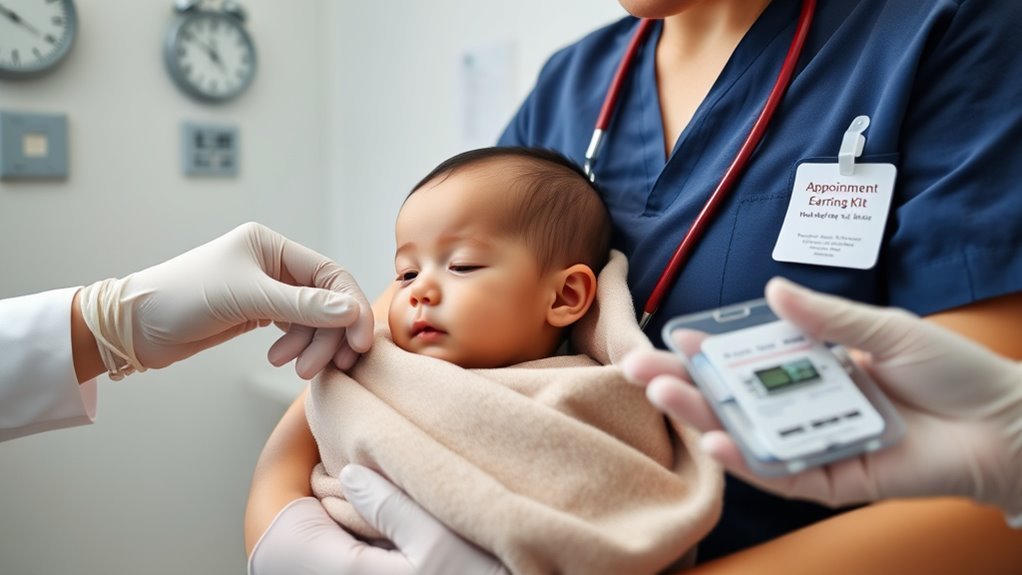
You can usually consider baby ear piercing after your baby is healthy, old enough for routine vaccines, and you can follow daily aftercare without missing steps. Many parents wait until at least 2 to 3 months, but the safest timing depends on your pediatrician’s advice, your family’s preferences, and your ability to keep the piercing clean. Choose a trained medical professional instead of a retail kiosk, use hypoallergenic starter studs with secure backs, and watch closely for redness, swelling, drainage, fever, worsening pain, or an embedded earring.
Quick Answer
Baby ear piercing is often considered after 2 to 3 months, once your baby is healthy and routine vaccines have started. The key safety steps are choosing a sterile medical setting, using hypoallergenic jewelry, cleaning the piercing daily, and calling the pediatrician if infection signs appear.
Key Takeaways
- Many families choose baby ear piercing after 2 to 3 months, but your pediatrician can help confirm the safest timing for your baby.
- A medical office or trained professional is safer than a retail kiosk because sterile technique and aftercare guidance matter.
- Use hypoallergenic earrings such as surgical steel, titanium, or 14-karat gold to reduce irritation risk.
- Clean the piercing as directed, keep the backs from pressing too tightly, and avoid touching the earrings with unwashed hands.
- Call your pediatrician for redness, swelling, warmth, pus, fever, persistent bleeding, severe pain, or an embedded earring.
At a Glance
| Common Timing | Often after 2 to 3 months, when the baby is healthy and routine vaccines have started |
| Best Setting | Pediatrician’s office, medical clinic, or trained professional using sterile equipment |
| Jewelry Type | Small hypoallergenic studs with secure backs and smooth edges |
| Aftercare | Clean as directed, avoid dirty hands, check backs daily, and monitor for infection |
When Can Babies Get Their Ears Pierced?

Babies can often get their ears pierced after they are healthy, old enough for routine immunizations to begin, and cleared by a pediatrician. Many parents choose to wait until at least 2 to 3 months, but there is no single perfect age for every baby.
The main issue is not only age. It is whether the piercing can be done in a sterile setting and whether you can provide careful aftercare every day. Young babies may touch their ears less than toddlers, which can make healing easier in some families. However, older children can sometimes participate in the decision and help follow care instructions.
If your baby was born premature, has a skin condition, has immune system concerns, has a history of poor wound healing, or has an active illness, speak with your pediatrician before scheduling ear piercing.
Warning: Do not pierce your baby’s ears during fever, rash, ear infection, severe eczema flare, or any illness. Wait until your baby is well and your pediatrician says it is reasonable.
For a calmer experience, schedule the procedure after a nap and feeding, when your baby is more relaxed. This helps reduce stress for you and your baby while keeping the focus on safety, comfort, and proper healing.
What Is the Best Age for Ear Piercing?
The best age for ear piercing depends on your family’s preference, your baby’s health, your pediatrician’s advice, and how easily you can manage aftercare.
Many clinicians and parents consider 2 to 3 months because infants at this age may be less likely to pull at earrings. Some families wait until after age one, while others wait until the child is old enough to ask for earrings and help care for them.
There is no universal rule that fits every family. The safest choice is the one that combines medical readiness, sterile technique, quality jewelry, and consistent aftercare.
Timing Depends On Preference
When it comes to ear piercing, the best age often depends on your preferences and your child’s needs. If you want to pierce your baby’s ears early, you may choose around 2 to 3 months, when many infants touch earrings less. Some parents prefer waiting until about one year or older so the child can be more involved. Cultural values also matter, and many families see baby ear piercing as a meaningful tradition.
| Timing | Consideration |
|---|---|
| 2 to 3 months | Common early timing after routine vaccines begin |
| Birth or newborn stage | Some families choose this for cultural reasons, but pediatric guidance is important |
| 1 year or older | Child may be stronger and easier to monitor, but may touch earrings more |
| Older child | Child can help decide and understand aftercare better |
You can choose what fits your family best, but the decision should still be based on safety, not pressure.
Infant Healing And Care
Around 2 to 3 months, many infants may heal well after ear piercing because they are less likely to grab, twist, or remove the earrings. Still, healing depends on clean technique and consistent care, not age alone.
In baby ear piercing, your role is central: infant healing depends on consistent aftercare, clean hands, and calm monitoring. The risks stay lower when you clean gently and watch for redness, swelling, warmth, or discharge.
- Clean the area exactly as directed by the professional who performed the piercing.
- Avoid twisting earrings unless your clinician specifically tells you to do so.
- Delay piercing if you cannot support daily care for several weeks.
You may choose to wait until your child can join aftercare, but if you pierce earlier, careful supervision helps reduce complications.
How Do You Prepare for Baby Ear Piercing?
To help your baby have a calmer piercing experience, plan the appointment for a time when they are naturally settled, ideally after a nap and feeding. This timing can reduce crying, improve cooperation, and make ear piercings feel less overwhelming for you and your baby.
Plan the appointment after a nap and feeding for a calmer, more cooperative piercing experience.
Use practical safety tips: bring a pacifier, bottle, teether, blanket, or other familiar comfort item to help soothe your baby during the procedure. Keep your baby’s routine as consistent as possible before and after the visit, since predictability can support relaxation.
You can also prepare by feeding right after the piercing, which often offers immediate comfort and may ease stress. For infection prevention, choose a sterile setting, such as a healthcare professional’s office, where hygiene standards are followed.
Pro Tip: Ask the provider before the visit whether both ears can be pierced quickly in one appointment, what jewelry they use, and what aftercare solution or method they recommend.
Before the appointment, confirm that your baby is not sick, the jewelry is hypoallergenic, the piercing equipment is sterile, and you understand exactly how to clean the area afterward. A calm, well-planned approach gives you more control and helps you support your baby with confidence.
Where Should You Get Baby Ears Pierced?
For a safer experience, choose a healthcare professional’s office, such as a pediatrician’s office or medical clinic, for your baby’s ear piercing. You will usually get cleaner technique, better supervision, and clearer aftercare instructions.
This setting is best for ear piercing for kids because it supports sterile conditions and a quicker response if concerns arise.
- Choose a healthcare professional. A pediatrician or clinic can assess your baby and explain aftercare clearly.
- Avoid retail kiosks when possible. Some retail locations may not offer the same medical screening, sterile technique, or infant-specific guidance.
- Look for trained personnel. Experienced staff should use sterile supplies and hypoallergenic earrings to help reduce irritation and complications.
When you pick a clinical setting, you are choosing evidence-based protection, not limiting your options.
A professional environment keeps the process controlled, sanitary, and more reassuring for both you and your baby.
How Does the Piercing Device Work?
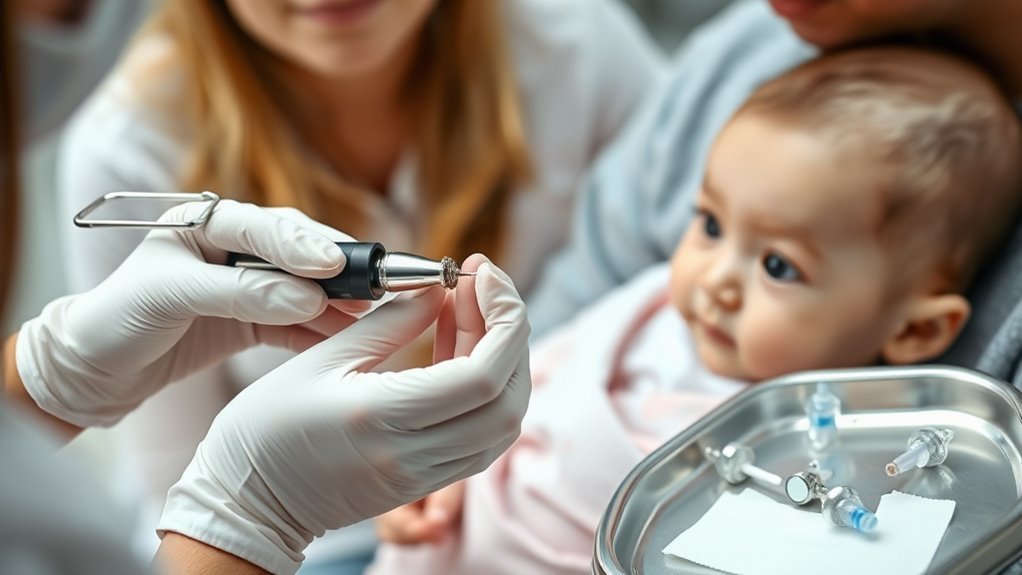
The piercing device or method depends on the provider. Some medical offices use a sterile, hand-pressed device. Others may use a sterile needle or a medical-grade piercing system designed for earlobes.
A hand-pressed device is not the same as a spring-loaded piercing gun. The professional controls the pressure and placement more gradually, which can help with alignment and comfort.
Before the procedure, ask what device will be used, whether the parts are sterile or single-use, and what type of starter earrings are included.
Hand-Pressed Control
The hand-pressed control device gives healthcare professionals more control over the piercing process, allowing for a precise, guided application that supports safety and consistency.
When you choose ear piercing for your baby, this device may help the clinician place the piercing site accurately without the sudden force of a spring-loaded piercing gun. That gentler control can help reduce unnecessary tissue trauma while supporting a clean puncture and smoother healing.
- Sterile technique protects safety.
- Hand pressure improves control.
- Clean placement supports recovery.
You can feel more confident knowing the method is designed to work with careful, measured pressure rather than sudden impact. This approach respects your baby’s comfort and gives you a clearer, more dependable outcome.
Precise Nurse Guidance
With the same careful control that supports a gentle hand-pressed piercing, nurse guidance keeps the procedure precise from start to finish.
You can expect a trained nurse or medical professional to guide the controlled piercing with steady pressure, not a rushed approach. That means your baby’s ears get a measured placement that helps protect children’s safety and reduce discomfort.
The provider should use sterile equipment, which supports cleaner technique and lowers complication risk. Because the nurse controls each step, you are less likely to see uneven placement or avoidable tissue trauma.
Proper supervision matters, and it gives you freedom from guesswork while keeping the process calm, hygienic, and evidence-based.
In short, skilled guidance makes piercing safer, clearer, and more reassuring for you and your child.
How Much Pain Does Ear Piercing Cause?
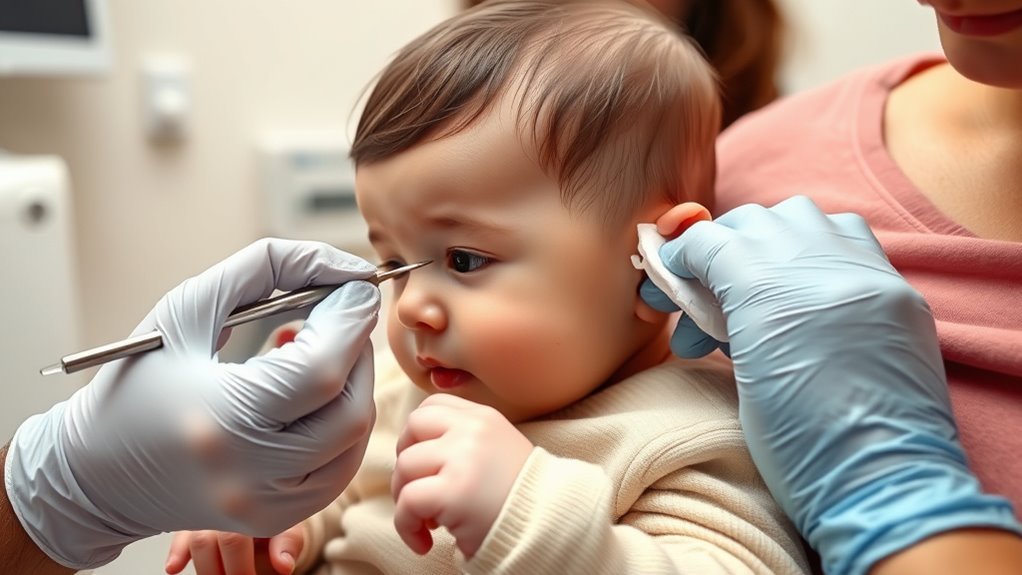
How painful is baby ear piercing? You can expect brief pain during ear piercing, usually just a few seconds, followed by mild discomfort that fades quickly.
Clinically, your baby’s response is often short-lived when a trained professional works quickly and cleanly. Some babies cry only briefly, while others cry longer because they are startled, restrained, hungry, or tired.
Ask your pediatrician whether any comfort measure is appropriate. Some providers may discuss topical numbing cream, but it should only be used if the clinician recommends it and explains how to apply it safely.
- Schedule the appointment after a nap and feeding.
- Bring a pacifier, bottle, or comfort item.
- Choose a skilled professional who performs infant ear piercing carefully.
Afterward, you may notice short-lived soreness, but it should not worsen over time. If discomfort continues longer than expected, monitor it closely and seek medical guidance.
Your goal is simple: make the experience as gentle, controlled, and informed as possible. With the right preparation, you keep control and reduce unnecessary pain.
What Baby Ear Piercing Risks Should You Watch For?
A few baby ear piercing risks deserve your attention, even when the procedure is done quickly and cleanly.
During ear piercing, you may see brief pain or a little bleeding at the puncture site, but this usually fades quickly.
Watch for infections: redness, swelling, warmth, tenderness, or drainage can signal a problem, and you should seek medical advice if these signs appear.
You should also consider allergic reactions to nickel or low-quality metals; choosing hypoallergenic jewelry lowers that risk.
Check the backing often, because it can become embedded in the hole and may need prompt removal.
Loose earrings can also pose a choking hazard, so select secure fasteners and inspect them regularly.
Warning: If an earring falls out, do not leave it within your baby’s reach. Small jewelry parts can become a choking risk.
These safety tips help you protect your baby while supporting a calm, informed choice.
How Do You Care for Baby Ear Piercing?
You should clean the piercing with the recommended aftercare solution or method as directed by the provider, often 2 times daily during the early healing period. Always wash your hands before you touch the earrings or the piercing site.
After cleaning, follow your provider’s advice about whether to rotate the earrings. Some professionals recommend gentle movement while the area is wet, while others advise leaving the jewelry alone to avoid irritation.
Use hypoallergenic earrings for the full healing period and beyond to lower the risk of allergic reactions and support healing.
Cleaning And Rotation
Keeping your baby’s ear piercings clean is the best way to support healing and lower the risk of infection. You will use cleaning and careful handling to protect the tissue while it settles.
- Clean the site as directed by the provider, commonly once or twice daily during the early healing period.
- Wash your hands before touching the earrings, and avoid letting others touch the piercing.
- Do not tighten the backs; leave a little space for swelling, and choose hypoallergenic earrings to reduce allergic risk.
If your provider tells you to rotate the earrings, do it gently only after cleaning. If they tell you not to rotate, follow that advice. The goal is to avoid trauma while keeping the piercing clean.
If you stay consistent, you are supporting healing with a simple, evidence-based routine that keeps your baby’s care calm, safe, and under your control.
Earrings And Healing
Earrings and the healing process go hand in hand in baby ear piercing care. Clean the site with the recommended aftercare solution or method, keep the area dry after cleaning, and avoid pulling, twisting, or changing the jewelry too soon.
Choose hypoallergenic earrings, like surgical steel, titanium, or 14-karat gold, to lower irritation and support healing. Keep backs secure, but do not tighten them; you need space on both sides to prevent pressure and embedding.
Watch for infection signs such as increasing pain, discharge, warmth, swelling, or inflammation. If you notice anything unusual, call your pediatrician promptly.
Consistent care protects the piercing, supports comfort, and lets you maintain your child’s style with confidence.
Which Earrings Are Safest for Babies?
When choosing earrings for a baby, prioritize hypoallergenic materials such as surgical steel, titanium, or at least 14-karat gold to lower the risk of allergic reactions. You are choosing comfort and safety, not decoration alone.
Choose hypoallergenic earrings like surgical steel, titanium, or 14-karat gold to help protect sensitive baby ears.
Small and secure designs reduce snagging and choking risks, while flat backs and smooth edges protect delicate skin. Avoid mixed metals or nickel-heavy jewelry, since they can trigger irritation in sensitive ears.
- Pick hypoallergenic materials.
- Choose small, smooth, secure earrings.
- Check the backs daily for tightness, looseness, and signs of embedding.
Keep the starter earrings in place until the piercing has healed and the provider says it is safe to change them. During this time, clean the area as directed and watch for redness, swelling, tenderness, or drainage.
If you notice changes, pause and reassess the jewelry choice. With the right pair, you can support healing while giving your baby a safer, simpler start.
When Should You Call the Pediatrician?
You should call your pediatrician if the piercing site becomes increasingly red, swollen, warm, painful, or starts to discharge, since these can be signs of infection.
If you notice fever, worsening tenderness, red streaking, or the area looks hot, do not wait for it to settle on its own.
You should also call the pediatrician right away if your baby has excessive pain, persistent bleeding from the earlobe, or if the earring seems embedded in the tissue.
These findings need prompt evaluation.
Watch for an allergic reaction too, including rash, itching, crusting, or notable irritation around the piercing.
A pediatrician can assess whether your baby needs treatment, removal of the jewelry, or a change in aftercare.
If you are unsure about healing, trust your judgment and reach out.
You deserve clear guidance, and early support can protect your baby’s comfort and health while preserving your choices.
Frequently Asked Questions
What is the best time to pierce baby ears?
Many families consider baby ear piercing after 2 to 3 months, once the baby is healthy and routine vaccines have started. The best time is after a nap and feeding, when your baby is calmer. Ask your pediatrician first, especially if your baby has medical concerns.
What is the 3 2 rule for ear piercings?
The 3-2 rule is a common parent guideline that suggests waiting until a baby is at least 3 months old and has had time after early vaccines. It is not a universal medical rule. Your pediatrician’s advice should guide timing, especially for premature babies or babies with health concerns.
Which day is good for an ear piercing for babies?
Choose a calm day when your baby is healthy, rested, and not teething badly or recovering from illness. A weekday can be helpful because your pediatrician’s office is easier to contact if you have aftercare questions or notice a problem.
Should I get my 2-year-old’s ears pierced?
Yes, you can consider it if you are ready to manage the aftercare and your child can avoid pulling at the earrings. A 2-year-old may understand simple instructions, but may also touch the jewelry more. Use sterile technique, hypoallergenic studs, and pediatrician-approved aftercare.
Can baby ear piercing get infected?
Yes. Infection can happen if the piercing is done with unclean equipment, touched with dirty hands, or not cared for properly. Signs include redness, swelling, warmth, pain, pus, fever, or worsening tenderness. Call your pediatrician if you notice these symptoms.
What earrings are best for baby ear piercing?
Small hypoallergenic studs are usually best. Look for surgical steel, titanium, or 14-karat gold, with smooth edges and secure backs. Avoid dangling earrings, sharp edges, loose backs, and nickel-heavy jewelry because they can irritate skin or increase choking risk.
Conclusion
Choosing when to pierce your baby’s ears is a personal decision, but safety should lead the way. You should wait until your baby is healthy, and you should use a trained professional who follows sterile technique. Choose hypoallergenic earrings, clean the area as directed, watch for redness, swelling, warmth, drainage, or pain, and call your pediatrician if concerns come up. The right timing and careful aftercare can lower risks and make the experience calmer for both you and your baby.
Sources
- HealthyChildren.org from the American Academy of Pediatrics — general safety guidance for children’s ear piercing and aftercare.
- CDC Child and Adolescent Immunization Schedule — routine vaccine timing for infants and children.
- U.S. Food and Drug Administration — general safety principles for skin procedures and infection prevention.
- American Academy of Dermatology Association — signs and care tips for infected piercings.