
Baby helmets can help reshape some infant skulls, but they aren’t a universal fix. You’ll usually get the best results when treatment starts early and when your baby has moderate to severe flattening or repositioning hasn’t helped enough. A 2014 randomized trial found no clear advantage over usual care for the infants studied, and parents reported issues like skin irritation, sweating, odor, and discomfort. Repositioning, more tummy time, and a careful medical check often come first.
What’s in This Article
- What Are Baby Helmets For?
- Do Baby Helmets Actually Work?
- What the 2014 Helmet Study Found
- When Baby Helmet Therapy Makes Sense
- How Repositioning Helps First
- What Helmet Therapy Is Like
- Why Experts Disagree on Baby Helmets
- How to Choose the Right Treatment
- Questions to Ask Your Baby’s Clinician
- Frequently Asked Questions
- Conclusion
Quick Answer
Baby helmets can help some infants with moderate to severe head flattening, especially when treatment starts early. They don’t clearly work better than repositioning for every baby, so you should start with a medical evaluation and conservative care. A helmet may make sense if flattening remains significant after repositioning, tummy time, or physical therapy.
Key Takeaways
- Baby helmets guide skull growth, but they don’t force the skull into shape.
- Repositioning and tummy time often come before helmet therapy.
- Helmet therapy tends to work best when a baby starts treatment early.
- Evidence remains mixed, so you should weigh benefits against cost and comfort.
- A clinician should check for neck tightness, craniosynostosis, or other concerns before treatment.
What Are Baby Helmets For?

Baby helmets, or cranial remolding orthoses, help correct some skull shape deformities in infants. These may include plagiocephaly, brachycephaly, and some long or narrow head-shape patterns.
You use this helmet as cranial therapy to guide growth toward a more balanced head shape. The device applies gentle, sustained pressure to selected areas while leaving room for expansion elsewhere.
You use this helmet as cranial therapy to guide growth toward a more balanced head shape.
Clinicians often fit infants during the first months of life, when the skull responds more easily to remodeling. You’ll often hear that the helmet must stay on for about 23 hours a day to keep steady guidance.
Helmet therapy focuses mainly on head shape and cosmetic alignment. It does not treat every skull problem, and it does not replace a medical exam.
For many infants, repositioning and tummy time can help first. You deserve clear, noncoercive counseling before you choose helmet therapy.
Do Baby Helmets Actually Work?
Baby helmets work by applying gentle, continuous guidance to a baby’s skull as it grows. This can improve head symmetry over time in selected cases.
Research shows mixed results. A 2014 randomized trial found no significant advantage over usual care in the infants studied, but other clinical experience suggests better results when treatment starts early.
You’d usually consider helmet therapy for persistent or severe asymmetry. You should weigh the cosmetic benefit against wear time, comfort issues, cost, and the fact that noninvasive options often help.
How Helmets Work
Cranial remolding helmets apply gentle, targeted pressure to an infant’s skull. They encourage growth in flatter areas while limiting growth in more prominent areas.
With helmet therapy, you use cranial remolding for a skull deformity linked to positional asymmetry. It mainly supports cosmetic correction, and earlier fitting can improve outcomes for some babies.
| Factor | Effect | Note |
|---|---|---|
| Pressure | Redirects growth | Targeted |
| Age | Better response | Earlier |
| Goal | Shape symmetry | Mostly cosmetic |
| Severity | Often improves | Variable |
| Method | Conservative care | Often first |
This mechanism doesn’t force the skull. It guides natural growth while your baby’s head still changes quickly.
You should know the device has a limited purpose. Conservative repositioning remains a strong first option for many families.
What Research Shows
The evidence on helmet therapy for positional plagiocephaly remains mixed. The best-known randomized controlled trial, published in 2014, found no meaningful difference in head shape outcomes between infants who wore helmets and infants who received usual care.
For you, that means helmet therapy doesn’t always change skull shape better than time, repositioning, and growth. Some later reports suggest earlier fitting may improve symmetry, but that does not create one clear answer for every baby.
You should also know that positional plagiocephaly often reflects a cosmetic head-shape concern, not a medical emergency. Because helmets can cost more and may cause skin irritation, you deserve to weigh benefit against burden.
The data support informed choice, not automatic intervention. You can ask for clear measurements and a reasoned plan before you decide.
When To Consider Them
When repositioning and increased tummy time haven’t improved head shape, you may consider a cranial remolding helmet. This matters most when a clinician measures moderate or severe flattening early in infancy.
You should first try repositioning strategies, unless your clinician sees a reason to act sooner. Parent education can often improve positional flattening without restricting your infant’s head.
Helmet therapy can support symmetry, but evidence shows mixed benefit. One randomized trial found no significant difference versus usual care in its study group.
You’re more likely to see gains when severe deformity persists early. Even then, the goal usually focuses on appearance and symmetry, not emergency medical treatment.
Expect about three months of wear in many cases, with the helmet on for about 23 hours daily. Adherence matters, and regular follow-up helps prevent poor fit.
If you value evidence and comfort, weigh burden, cost, and realistic head shape improvement before deciding.
Warning: Ask a clinician to rule out craniosynostosis or another medical cause before you treat head flattening as positional.
What the 2014 Helmet Study Found
In the 2014 BMJ randomized trial, researchers assigned 84 infants aged 5 to 6 months to helmet therapy or usual care. The study had a clear comparative design and a defined group of infants.
The two groups showed no significant difference in skull-shape improvement. This suggests that natural growth and usual care can produce similar outcomes for some babies.
You’d also note that parents in the helmet group reported adverse effects. The added treatment burden and cost weaken the case for routine helmet use in every infant.
Trial Design And Scope
A 2014 randomized controlled trial tested helmet therapy in 84 infants aged 5 to 6 months with moderate to severe positional skull deformities. One group wore helmets for 23 hours a day, while the control group received usual care without helmets.
This design let you compare helmet therapy against standard management in a defined group. The primary outcomes focused on objective skull-shape measures, not parental pressure or marketing claims.
The scope stayed narrow: one age window, one deformity type, and one intensive wear schedule. That precision helps you understand what the trial can and can’t prove.
For families who want to avoid unnecessary medicalization, the study’s structure matters. It asked whether helmets add value beyond natural development and routine care.
Similar Results In Both Groups
The 2014 randomized trial found that helmet therapy didn’t outperform usual care for moderate to severe positional skull deformities.
In 84 infants aged 5 to 6 months, skull shape improved in both groups. The data showed no significant between-group advantage for helmet therapy.
If you want evidence-based care, this matters. You don’t need to assume more intervention always means better outcomes.
The study points you toward conservative care as a valid option. It also supports careful decision-making that respects your infant’s comfort and your family’s values.
Side Effects And Costs
Beyond the lack of measurable benefit, the 2014 BMJ trial raised practical concerns about helmet therapy’s burden. You should weigh side effects and costs before choosing this path for positional plagiocephaly.
Parents reported skin irritation, sweating, odor, pain, and discomfort. The required 23-hour daily wear schedule can also make treatment hard for some families.
| Issue | Evidence | Implication |
|---|---|---|
| Skin irritation | Reported in helmet group | Monitor closely |
| Discomfort | Parent-reported | May reduce tolerance |
| Financial burden | Higher than usual care | May limit access |
These findings suggest you can often protect your child’s comfort by choosing conservative care first. Helmet therapy may still help selected cases, but it doesn’t fit every family or every baby.
When Baby Helmet Therapy Makes Sense
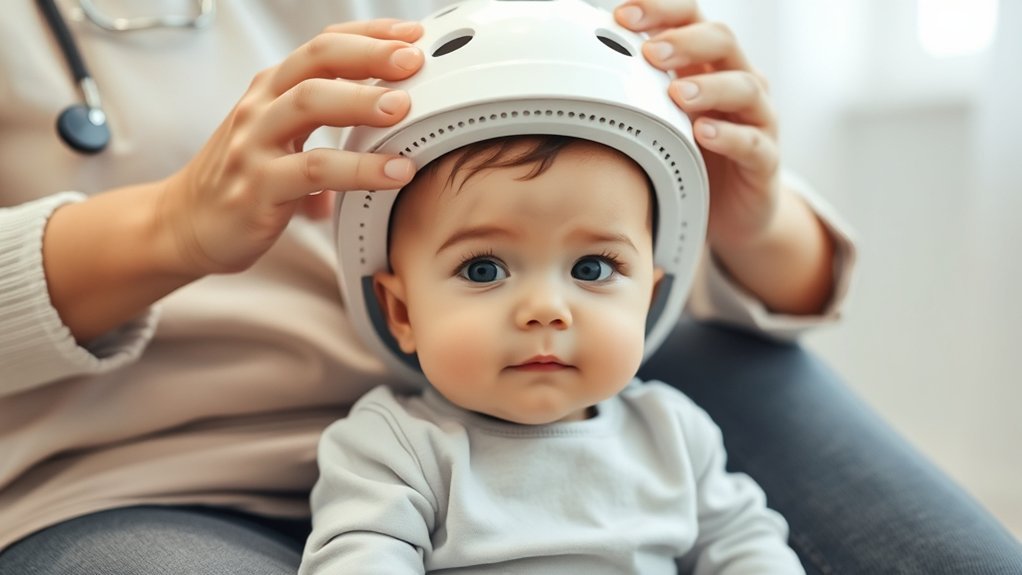
Helmet therapy makes the most sense when an infant has moderate to severe positional plagiocephaly. It may also help when simpler measures, such as tummy time and repositioning, haven’t corrected the asymmetry.
In these cases, helmet therapy can help guide skull growth while sutures remain open. You’ll usually see a better response when treatment starts early, because the skull changes faster during the first months.
For severe plagiocephaly, the helmet can offer a practical option, but it usually isn’t the first line. Clinicians often reserve it for cases where conservative care has failed or the deformity remains significant.
In moderate deformities, you may see visible improvement in head shape. The amount of change varies by age, severity, fit, and daily wear time.
Specialized centers still fit many infants each year, so this approach remains common. That does not mean every baby with flattening needs a helmet.
How Repositioning Helps First
Before considering a helmet, you can often make meaningful progress with repositioning therapy. This works best in the first months, when the skull changes quickly.
You can prevent the head from resting in one position too long by increasing tummy time, rotating sleeping orientation, and varying how you hold your infant. This approach targets positional plagiocephaly while the head remains responsive.
Parents who receive clear, specific coaching on head positioning often make better progress than those who wait without a plan. Many head-shape concerns improve naturally with consistent repositioning and growth.
When you act early, you may restore a more balanced shape without costly, prolonged helmet wear. Proactive monitoring of your baby’s movement patterns can also support broader developmental awareness.
Repositioning therapy isn’t a fallback. It’s a practical, evidence-based strategy that gives you more control, flexibility, and comfort in your infant’s care.
What Helmet Therapy Is Like
If you and your clinician decide a helmet fits your baby’s needs, treatment usually starts with a custom cranial orthosis. The orthotist fits it to your baby’s head to guide growth toward a more balanced shape.
In helmet therapy, these cranial helmets apply gentle pressure to selected skull areas. They also leave room for growth where deformational plagiocephaly has flattened the head.
You’ll usually keep the helmet on about 23 hours a day and remove it for bathing and cleaning. Follow-up visits let the orthotist measure growth and adjust fit as your baby’s head changes.
Typical treatment lasts about three months, though age and severity can change that timeline.
- Wear schedule: consistent use matters.
- Monitoring: regular checks help prevent poor fit.
- Timing: early treatment often improves the chance of visible change.
- Goal: support natural skull growth, not force it.
This approach can help you pursue a more balanced head shape with measured care.
Pro tip: Take clear photos from the same angles each week, so you can discuss real changes at follow-up visits.
Why Experts Disagree on Baby Helmets

Experts disagree on baby helmets because the evidence is mixed. A 2014 randomized controlled trial found no significant difference in skull-shape improvement between helmet therapy and usual care, while other reports suggest helmets may help when fitted early.
You also see disagreement because positional plagiocephaly often improves with growth. Many clinicians favor tummy time, repositioning, and physical therapy first.
| Finding | Implication |
|---|---|
| Trial data | No clear advantage for routine helmet use |
| Early fitting reports | Possible benefit in selected infants |
| Conservative care | Often effective and less intrusive |
Researchers in the Netherlands reported that usual care matched helmet outcomes in their trial. Meanwhile, helmet therapy demands long daily wear and higher cost, so experts question whether the burden justifies routine use.
If you want a careful approach, the core issue is simple. Evidence doesn’t support one universal answer, so experts disagree.
How to Choose the Right Treatment
Choosing the right treatment for plagiocephaly, brachycephaly, or another head-shape concern starts with a physician’s evaluation. Your clinician should review severity, age, neck motion, and likely response to growth.
You don’t need to accept an automatic prescription. You can ask for evidence-based guidance and a clear reason for each option.
First-line care usually follows your baby’s natural growth with repositioning and tummy time, plus parent education.
- Confirm whether the deformity is mild, moderate, or severe.
- Ask if physical therapy can address neck tightness or asymmetry.
- Discuss helmet therapy if asymmetry persists or remains significant.
- Prioritize early evaluation, because timing affects helmet results.
For many infants, conservative care improves skull shape without a helmet, avoiding cost and burden. You may also want support for your own well-being, especially if pregnancy or postpartum issues, such as round ligament pain, affect your daily care routine.
If your child’s head shape still worsens, you can revisit treatment quickly. Choose the least invasive option that still supports development and symmetry.
Questions to Ask Your Baby’s Clinician
Before you choose helmet therapy, ask questions that turn a vague recommendation into a clear plan. Good answers should include measurements, timing, and the reason your baby needs one option over another.
- How severe is my baby’s head flattening?
- Could neck tightness or torticollis contribute to the shape?
- Should we try repositioning or physical therapy first?
- How long would my baby need to wear a helmet each day?
- What side effects should I watch for at home?
- How will you measure progress during treatment?
These questions help you make a decision based on your baby’s needs. They also help you avoid pressure, fear, and unnecessary treatment.
Frequently Asked Questions
What Is the Success Rate of Helmet Therapy for Babies?
Helmet therapy success varies by age, severity, fit, and daily wear time. You’ll often see better results when treatment starts early and when families follow the wear schedule closely.
Do Baby Head Shaping Helmets Work?
Yes, baby head shaping helmets can help some infants, especially with persistent moderate or severe flattening. You may also see improvement with repositioning, so you should compare both options with your clinician.
At What Age Is It Too Late for a Baby to Wear a Helmet?
Helmet therapy usually becomes less effective as skull growth slows. After 12 months, many clinicians see lower benefit, so early evaluation matters.
What Are the Side Effects of a Cranial Helmet for Babies?
You may see skin irritation, pressure spots, sweating, odor, and discomfort during helmet therapy. Most effects are local and temporary, but you should report redness, sores, or poor fit quickly.
Can Repositioning Fix a Flat Spot Without a Helmet?
Repositioning can improve many mild to moderate flat spots, especially when you start early. Your clinician may also suggest physical therapy if your baby favors one side.
Medical Disclaimer: This article is for informational purposes only and does not constitute professional medical advice. Always consult a qualified doctor before making decisions based on this information.
Conclusion
Baby helmets can help selected infants, but they should not replace careful evaluation and conservative care. Start with a clinician’s exam, repositioning, tummy time, and physical therapy when needed.
If your baby has persistent moderate or severe flattening, ask about helmet therapy early enough to make treatment useful. The best choice is the one that fits your baby’s measurements, comfort, and real progress.