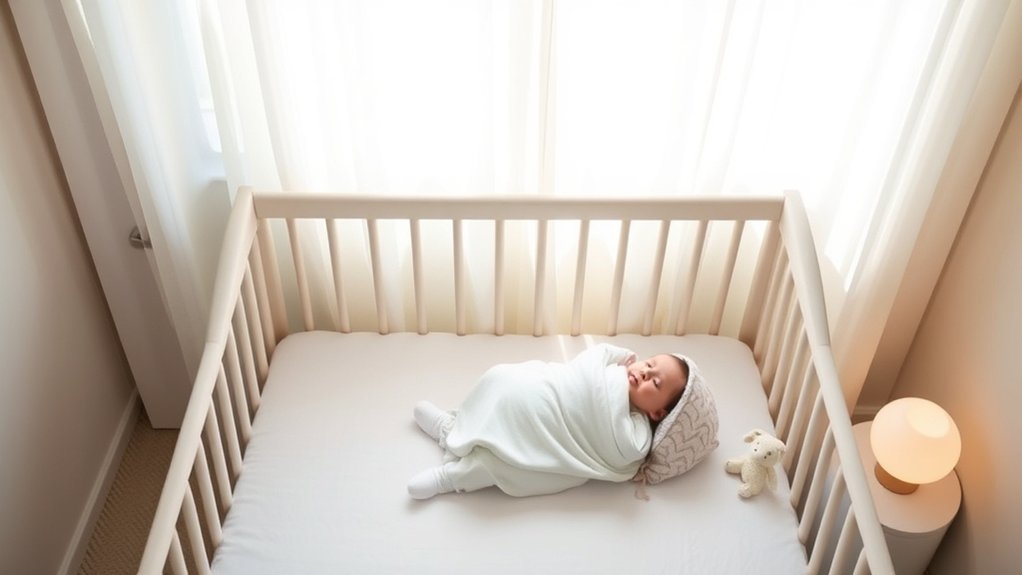
Setting up a sleep space for your baby takes more than picking out a crib. A safe sleep environment significantly reduces the risk of Sudden Infant Death Syndrome (SIDS) and supports healthy sleep habits from day one. Every detail, from the mattress to the room temperature, plays a role in keeping your baby safe overnight.
Quick Answer
- Always place your baby on their back to sleep, on a firm, flat mattress with a fitted sheet.
- Keep the sleep area free of pillows, blankets, bumpers, and stuffed toys.
- Maintain a room temperature between 68°F and 72°F (20°C to 22°C).
- Avoid bed-sharing. Use a crib or bassinet in your room for at least the first six months.
- Follow safe sleep guidelines every time your baby sleeps, including during naps.
Choose the Right Crib or Bassinet
The right crib or bassinet is the foundation of a safe sleep setup. Start by confirming it meets current safety standards, like those set by the Consumer Product Safety Commission.
Look for sturdy construction without sharp edges or loose parts. For a crib, choose one with adjustable mattress heights so you can lower it as your baby grows.
For a bassinet, choose one that is lightweight and easy to move, with a stable base. Avoid secondhand models unless you can fully verify their safety history.
Use a Firm Mattress and Fitted Sheet
A firm mattress and a properly fitted sheet are non-negotiable for safe baby sleep.
A firm surface reduces the risk of suffocation and supports healthy development. A well-fitted sheet prevents loose fabric that could pose a hazard.
Importance of Firmness
A firm mattress plays a key role in creating a safe sleep environment. It supports your baby’s airways and reduces the risk of suffocation or rebreathing carbon dioxide, which can happen on softer surfaces.
Make sure the mattress is firm enough to keep your baby’s airways clear. A fitted sheet should fit snugly to prevent any loose fabric that could create a risk.
A firm surface also helps promote healthy sleep patterns, letting your baby rest comfortably without rolling into an unsafe position.
Choosing Right Materials
Start with a firm mattress that fits snugly in the crib. A firm surface reduces the risk of suffocation and helps your baby’s spine develop properly. Avoid soft mattresses, as they can pose safety hazards.
Use a fitted sheet made from breathable, non-toxic materials. It should fit tightly over the mattress to prevent any loose fabric. Choose sheets that are free of harmful chemicals and irritants for a healthier sleep space.
These choices improve both safety and comfort, helping your baby rest peacefully. Prioritizing quality materials is a critical step in protecting your baby’s sleep.
Proper Sheet Fitting
Good materials only go so far if the sheet does not fit correctly. A well-fitted sheet prevents suffocation hazards and helps maintain a safe sleep space.
Here is how to make sure the fit is right:
- Choose a Firm Mattress: A firm surface reduces the risk of suffocation and supports safe sleep.
- Select Fitted Sheets: Use fitted sheets with elastic corners to keep them securely in place.
- Check for Size Compatibility: The sheet must match the mattress size. A mismatched fit can be dangerous.
- Inspect Sheets Regularly: Check for wear and tear often, and replace any damaged sheets right away.
Keep the Sleep Area Clear of Loose Items
A clear sleep area is one of the simplest ways to protect your baby. Soft objects like pillows, blankets, and stuffed toys can cause suffocation or entrapment.
Set up the sleep space with only a firm mattress and a fitted sheet. Remove bumpers, loose clothing, and any unnecessary items that could block airflow.
Check the sleep area regularly to make sure it stays clear. Even small objects can become dangerous. A clutter-free space is one of the most effective steps you can take toward a safe sleep environment.
Maintain a Comfortable Room Temperature
A clutter-free sleep area is just one piece of the puzzle.
The room temperature also plays a real role in your baby’s well-being. The ideal range is between 68°F and 72°F (20°C to 22°C).
Keeping the room between 68°F and 72°F helps prevent overheating, which is linked to a higher risk of SIDS.
Here are some tips to help you stay in that range:
- Use a Room Thermometer: Monitor the temperature so it stays within the ideal range.
- Dress Your Baby Appropriately: Use light layers to prevent overheating.
- Adjust Bedding: A light blanket or sleep sack works better than heavy quilts.
- Ventilation: Allow proper airflow by slightly opening a window or running a fan for circulation.
Position Your Baby on Their Back
Placing your baby on their back for sleep is one of the most effective steps you can take to reduce the risk of SIDS.
This simple habit promotes safer sleep and helps your baby stay comfortable through the night.
Importance of Back Sleeping
Back sleeping is the safest sleep position for babies and significantly reduces the risk of SIDS.
Here are the key benefits:
- Airway Protection: Keeps the airway open and clear, reducing the risk of suffocation.
- Temperature Regulation: Helps maintain a stable body temperature and reduces overheating.
- Reduced Reflux: Babies sleeping on their backs tend to experience less acid reflux.
- Sleep Cycle Support: This position encourages deeper, more restorative sleep.
Reducing Risk of SIDS
Always place your baby on their back to sleep. When babies sleep on their backs, their airways stay open, which reduces the chances of suffocation.
Make this a habit from the very first night you bring your baby home. As they grow and start rolling over on their own, consistently placing them on their back still sets a strong foundation for safe sleep.
Also make sure the sleep surface is firm and free from soft bedding, pillows, and toys.
Correct Sleep Positioning Techniques
Placing your baby on their back for sleep is the single most important positioning choice you can make. Here are four key tips to get it right:
- Always use a firm mattress: Make sure the crib or bassinet has a firm, flat mattress with a fitted sheet.
- Keep the sleep area clear: Remove pillows, toys, and blankets to reduce suffocation risks.
- Monitor room temperature: Keep the room at a comfortable temperature to prevent overheating.
- Encourage tummy time when awake: Supervised tummy time during waking hours helps strengthen your baby’s neck and shoulder muscles.
Avoid Sleeping in Bed With Your Baby
Sharing a bed with your baby may feel natural and comforting, but experts recommend against co-sleeping because of real safety concerns.
Keeping your baby in the same room as you, but in their own sleep space, gives you the closeness of co-sleeping without the risk.
Sharing a bed increases the risk of accidental suffocation, overheating, and falls. Instead, place your baby in a crib or bassinet close to your bed. You can still hear and respond to your baby quickly without the safety risk of sharing a sleep surface.
A separate sleep space protects your baby while still keeping you close. It also helps build healthy sleep habits early on.
Follow Safe Sleep Guidelines at All Times
Safe sleep is not a one-time setup. Following established safe sleep guidelines consistently, every sleep and every nap, is what makes the real difference in reducing sleep-related risks.
Here are four core guidelines to follow, drawn from current AAP safe sleep guidelines:
- Place your baby on their back for every sleep, including naps.
- Use a firm mattress with a fitted sheet. Avoid soft bedding, pillows, and toys.
- Keep the environment smoke-free, both during and after pregnancy.
- Keep the crib in your room but separate from your bed for at least the first six months, ideally up to one year.
A Few More Ways to Lower SIDS Risk
Beyond the sleep environment itself, a couple of additional habits are worth knowing about.
Offer a pacifier at sleep time. Research shows that pacifier use at the start of naps and bedtime is associated with a lower risk of SIDS. If you are breastfeeding, wait until nursing is well established before introducing one, usually around three to four weeks. Do not force it if your baby is not interested.
Keep the sleep environment smoke-free. Exposure to cigarette smoke, both before and after birth, significantly raises the risk of SIDS. This applies to smoke exposure anywhere your baby spends time, not just the bedroom. If anyone in the household smokes, ask them to do so outside and away from your baby.
Neither of these replaces the core steps above, but both are simple, evidence-based actions that can make a difference.
Frequently Asked Questions
Can I Use a Second-Hand Crib or Bassinet?
You can use a second-hand crib or bassinet, but make sure it complies with current safety standards. Check for recalls, signs of wear and tear, and avoid older models that lack modern safety features. Your baby’s safety comes first.
What Should I Do if My Baby Rolls Over?
If your baby rolls over, gently reposition them onto their back. Make sure their sleep space stays clear of pillows and toys. Keep a watchful eye, but know that rolling is a normal developmental milestone.
How Often Should I Check on My Baby While Sleeping?
Check on your baby every 15 to 30 minutes while they sleep, especially in the early months. Trust your instincts. If something feels off, go in and check.
Is It Safe to Use Sleep Positioners or Wedges?
No. Sleep positioners and wedges increase the risk of suffocation and positional asphyxia. Always follow recommended safe sleep guidelines and skip these products entirely.
When Can I Transition My Baby to a Toddler Bed?
Most children are ready to move to a toddler bed between ages 2 and 3, often when they start climbing out of the crib. Every child develops at their own pace, so watch for those readiness signs and go from there.
Conclusion
A safe sleep environment for your baby does not have to be complicated. The steps are straightforward: firm mattress, back sleeping, clear sleep space, right temperature, and a separate sleep surface close to you. Doing these things consistently, every sleep and every nap, is what protects your baby and builds a foundation for healthy rest. Start tonight, and adjust as your baby grows.