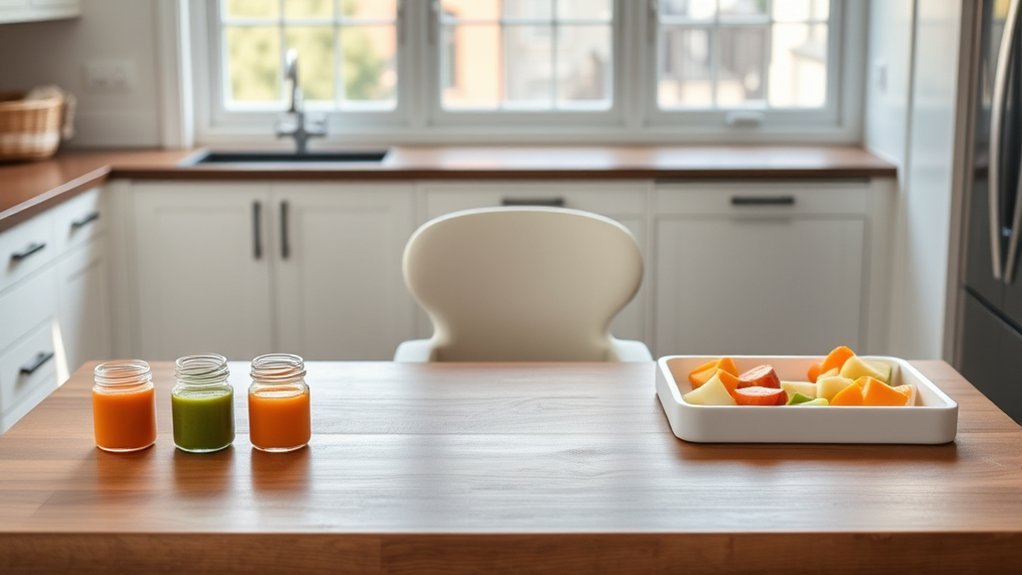
Purees have long been the go-to first food for infants, though baby-led weaning (BLW) has grown steadily in popularity since pediatric dietitian Gill Rapley introduced the method in 2005. Your choice can shape your child’s eating habits and development in meaningful ways. Each approach has unique benefits and challenges, and knowing the difference helps you build a positive feeding experience from day one. Consider how each method fits your child’s readiness and your family’s daily routine.
Quick Answer
- Purees are smooth, spoon-fed foods that give parents control over portions and nutrients.
- Baby-led weaning (BLW) lets babies self-feed soft whole foods, building motor skills and independence.
- Both methods are safe and nutritionally sound when age-appropriate foods are offered.
- Many families combine both approaches, and switching between methods at any point is perfectly fine.
Understanding Purees: Benefits and Challenges
Purees offer a smooth texture that’s easy for babies to swallow and digest, especially in the early weeks of solid food introduction. They let you control flavors and pack in a variety of nutrients, which can help develop early taste preferences. The downside: relying on purees for too long may delay self-feeding skills and slow the transition to different textures. Balance the convenience of purees with regular opportunities for your baby to explore chunkier foods as they grow. Every baby is different, so watch their cues and preferences throughout.
The Baby-Led Weaning Approach: An Overview
Baby-led weaning (BLW) takes a different approach to starting solids. You offer your baby whole foods and let them self-feed at their own pace. This builds independence, encourages engagement with food, and develops essential motor skills alongside a healthy relationship with eating. Research suggests BLW may lead to less picky eating and better self-regulation of appetite over time. Foods need to be age-appropriate and safely prepared, but many parents find this approach creates a positive mealtime experience for the whole family. BLW can empower your baby and make the shift to solids enjoyable for both of you.
Nutritional Considerations for Purees Vs BLW
Both methods can meet your baby’s nutritional needs, but the way you get there differs. Purees often provide a concentrated source of nutrients and make it easy to confirm your baby is getting enough. BLW encourages self-feeding, which promotes exploration but requires careful attention to food preparation to minimize choking hazards.
Nutrient Density Comparison
Nutrient density matters regardless of which method you choose. Here are three key differences worth knowing:
- Variety of Foods: BLW encourages exposure to a wider range of flavors and textures, which can enhance overall nutrient intake.
- Controlled Portions: Purees let you manage portion sizes, making it easier to target specific nutrients for your baby’s needs.
- Iron and Protein: Both methods require deliberate attention to iron and protein-rich foods. This is especially true with BLW, where solid foods need to supply adequate iron from the start.
A balanced diet is achievable with either approach. Let your baby’s needs and preferences guide you.
Risk of Choking
Choking risk is a top concern for parents deciding between purees and baby-led weaning. Purees are smooth and easy to swallow, which lowers the immediate physical risk. With BLW, the key is offering soft, easily mashable foods like ripe banana or cooked carrots. Research, including a 2016 study by Fangupo et al., found that BLW babies were no more likely to choke than those fed purees, provided foods were prepared safely. Always supervise meals and learn basic infant first aid for choking, regardless of which method you use.
Developmental Milestones: Which Method Supports Growth?
Both methods can support healthy development, but they take different paths. BLW tends to strengthen motor skills and cognitive growth through self-feeding and hands-on food exploration. Knowing how each approach aligns with your child’s milestones helps you make a well-informed choice.
Nutritional Benefits Comparison
Both purees and BLW can deliver the nutrients your baby needs during their first year. Each has specific strengths:
- Variety of Nutrients: BLW exposes babies to a broader range of flavors and textures early on, which can support a more balanced diet.
- Self-Regulation: With BLW, babies learn to read their own hunger cues, which may help prevent overeating later in life.
- Iron Intake: Purees can be blended with iron-rich foods, making it easier to ensure adequate iron, especially for babies who are not yet eating meat.
Knowing these differences helps you make informed choices for your child’s nutrition.
Motor Skills Development
Your feeding choice also shapes how quickly your baby develops motor skills. BLW gives babies daily practice with grasping and hand-to-mouth coordination through self-feeding. Purees involve more spoon-feeding, which limits that hands-on practice. Here’s a quick comparison:
| Method | Motor Skills Development | Key Milestones |
|---|---|---|
| Purees | Limited practice | Grasping objects |
| BLW | Enhanced coordination | Pincer grasp, self-feeding |
| Both | Varies by child | Experimentation with textures |
| Supportive | Encourages independence | Confidence in eating |
Choose the approach that fits your child’s readiness and personality. The goal is a supportive environment where they can develop essential motor skills at their own pace.
Cognitive Growth Impact
Both purees and BLW can support cognitive development, each in different ways. Here are three key areas to consider:
- Problem-Solving Skills: BLW encourages babies to explore and manipulate food, which builds early critical thinking and decision-making.
- Taste Preferences: Exposure to varied textures and flavors through BLW may strengthen sensory processing and openness to new foods.
- Social Interaction: Eating alongside family during BLW promotes social skills and communication, both of which support cognitive growth.
The Role of Parental Involvement in Feeding
Parental involvement shapes your baby’s eating habits and preferences more than the feeding method alone. Being present and engaged at mealtimes creates a positive atmosphere and encourages your baby to explore different foods. Research shows that when you model healthy eating behaviors, your baby is more likely to adopt them. Whether you choose purees or BLW, your participation helps your child build a healthy relationship with food. Offering a variety of nutritious options sets the stage for adventurous eaters. Your reaction to their food choices matters too. Staying positive and encouraging makes them more willing to try new things.
Safety Considerations: Choking Hazards and Food Preparation
Keeping your baby safe during meals comes down to a few consistent habits:
- Size Matters: Cut food into small, manageable pieces appropriate for your baby’s developmental stage.
- Cook Thoroughly: Cook fruits and vegetables until they’re soft so they’re easy for your baby to chew and swallow.
- Stay Close: Never leave your baby unattended while eating. Staying nearby allows you to respond immediately if they show signs of distress.
Personalizing the Feeding Journey: Finding What Works for Your Family
There’s no single feeding approach that works for every family. Your child’s developmental readiness, their preferences, and your lifestyle all play a role. Some parents thrive with purees; others find BLW more practical and engaging. Research shows both methods can support healthy eating habits, but flexibility is the real key. You might start with purees and move toward BLW as your baby grows, or blend both from the beginning. Follow your child’s cues and trust your own instincts. The best approach is whichever one fosters a positive eating experience and strengthens your family bond at mealtime.
Frequently Asked Questions
Can I Combine Purees and BLW for My Baby?
Yes. Many parents find a combined approach works well, letting babies explore textures through finger foods while still getting the nutrient support of pureed foods. There’s no evidence that combining both methods increases choking risk or confuses babies.
What Age Should I Start With Purees or BLW?
Around six months is the recommended starting point for both purees and BLW, according to the American Academy of Pediatrics. This gives your baby time to develop the motor skills and swallowing coordination they need. Every baby is different in their readiness, so watch for clear developmental signs rather than relying on the calendar alone.
How Do I Know if My Baby Is Ready for Solids?
Your baby is likely ready for solids when they can sit up unsupported, show clear interest in food, and coordinate their mouth and tongue well enough to swallow. This typically happens around six months, though some babies take a little longer. Trust your instincts, and check in with your pediatrician if you’re unsure.
Are There Specific Foods to Avoid for Each Method?
A few foods are off-limits with either method: honey (risk of infant botulism for babies under 12 months), whole nuts, and anything that is a known choking hazard. Stick to soft, age-appropriate foods and introduce potential allergens gradually, one at a time.
Can Siblings Influence a Baby’s Feeding Preferences?
Yes. Siblings model eating behaviors, which often encourages babies to try new foods. Positive sibling interactions at mealtime can build adventurous eating habits and broaden your baby’s palate over time.
Conclusion
Both purees and baby-led weaning can lead to a nourishing, healthy start with solid foods. Blending these approaches based on your child’s readiness and your family’s lifestyle is often the most practical path. Stay flexible, keep mealtimes low-pressure, and let your baby’s cues guide you. A positive early relationship with food is what lays the groundwork for lifelong healthy eating.