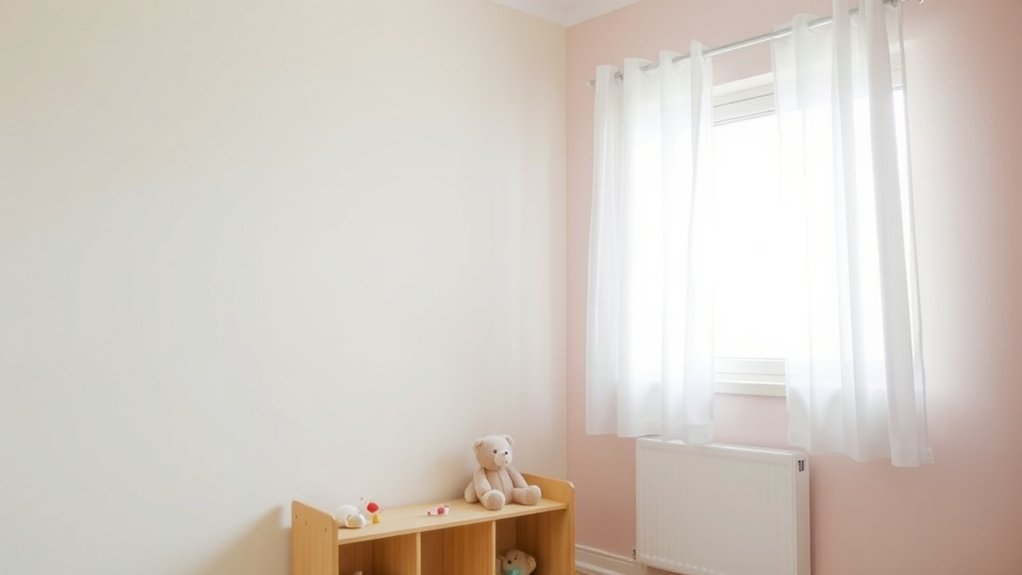
Choosing paint for your nursery isn’t just about color. It’s about your child’s health. Many traditional paints contain harmful chemicals known to affect respiratory health and development. Understanding what’s in your paint, and opting for safer alternatives, can make a real difference. Here’s what every parent should know about paint safety before picking up a brush.
Quick Answer
- Choose paints labeled “low-VOC” or “zero-VOC” to reduce harmful chemical exposure.
- Avoid paints containing VOCs, lead, or phthalates, which can cause respiratory issues and developmental delays.
- Ventilate the room during and after painting, and wait until the paint is fully cured before bringing your baby in.
- If your home was built before 1978, test for lead paint before starting any nursery renovation.
Understanding Paint Ingredients
When you choose paint for a nursery, the ingredients matter. They can directly affect your child’s health.
Different paint types, such as water-based or oil-based, have varied formulas that influence how safe they are. Always check ingredient labels for harmful additives like volatile organic compounds (VOCs), which can emit toxic fumes into the air.
Opt for paints labeled “low-VOC” or “no-VOC” to minimize risk. Natural or organic paints that use non-toxic materials are also worth considering.
Identifying Harmful Chemicals
Many paints contain volatile organic compounds (VOCs), lead, and phthalates. These can cause serious health problems, including respiratory issues and developmental delays, especially in young children.
Read labels carefully and choose products with minimal harmful ingredients. Even low levels of toxic substances can build up over time and affect your child’s health. Research brands and look for those that are transparent about their formulations.
For more detail on how VOCs affect indoor air, the EPA’s guidance on VOCs and indoor air quality is a useful starting point.
Choosing Low-VOC and No-VOC Paints
Low-VOC and no-VOC paints reduce the risk of harmful chemical exposure and are a smarter choice for any nursery. These eco-friendly options protect your child’s health without sacrificing color or quality.
| Low-VOC/No-VOC Paints | Traditional Paints |
|---|---|
| Fewer harmful chemicals | High in toxic emissions |
| Better air quality | Contributes to indoor pollution |
| Safer for sensitive skin | Potential irritants |
| Supports eco-conscious choices | Often contains VOCs |
| Enhances wellbeing | May cause headaches and nausea |
Many brands now offer a wide range of colors in low- and no-VOC formulas, so you won’t have to compromise on the look you want.
Importance of Proper Ventilation
Even with low-VOC and no-VOC paints, proper ventilation is essential for a safe nursery environment.
Keep the air moving during and after painting to clear out any lingering fumes. Open windows and use fans to bring in fresh air. This simple step reduces airborne hazards and makes the space more comfortable to work in.
Good ventilation also helps control humidity, which lowers the risk of mold and allergens that can affect your child’s breathing.
Non-Toxic Paint Options for Nurseries
Creating a safe nursery means choosing paints that are free from harmful chemicals. Here are three solid options to consider:
Explore non-toxic alternatives for your nursery to ensure a safe, healthy environment for your little one.
- Low-VOC paints: These paints emit fewer volatile organic compounds, making them safer for indoor air quality.
- Natural colorants: Look for paints that use plant-based pigments, providing a beautiful palette without toxic additives.
- Organic finishes: Choose coatings made from natural ingredients for a safe and eco-friendly result.
Safe Application Techniques
Following the right techniques during painting keeps chemical exposure to a minimum and produces a cleaner, more even finish. Here’s a quick overview:
| Application Method | Key Points |
|---|---|
| Brush Techniques | Use natural bristles, avoid overloading with paint, apply in long strokes. |
| Roller Methods | Choose a low-nap roller for smooth surfaces, maintain even pressure, and roll in one direction. |
| Preparation | Clean surfaces thoroughly, tape edges to prevent drips. |
| Ventilation | Open windows and doors to ensure fresh air circulation. |
| Protective Gear | Wear gloves and masks to limit exposure. |
Curing and Drying Time Considerations
Curing and drying times have a direct impact on air quality in your nursery and on your child’s safety.
Keep these points in mind:
- Allow enough time for the paint to cure completely. Depending on the product, this can take anywhere from a few days to several weeks.
- Use low-VOC or zero-VOC paints to reduce harmful emissions during the drying process.
- Keep the room well-ventilated to speed up drying and lower the concentration of airborne toxins.
Maintaining a Safe Environment After Painting
Once painting is done, a few steps will help keep the nursery safe before your baby moves in.
Ensure good airflow in the room to clear out remaining fumes. Pay attention to how long the surfaces take to dry, since touching wet paint can spread it and create hazards. Using non-toxic paint from the start makes the post-painting phase easier and safer overall.
Ventilation Importance
Proper ventilation helps reduce harmful fumes and controls odors after painting. A few simple steps go a long way:
- Open windows and doors to create a draft.
- Use fans to keep air moving through the space.
- Consider an air purifier to filter out any remaining toxins.
Surface Drying Time
Room temperature affects how quickly paint dries. Here’s a general reference for water-based latex paints:
| Surface Temperature | Estimated Drying Time |
|---|---|
| 60°F (15°C) | 6-8 hours |
| 70°F (21°C) | 4-6 hours |
| 80°F (27°C) | 2-4 hours |
Keep the room ventilated and monitor drying closely. Paint that feels dry to the touch may still be releasing fumes. Wait until the paint is fully cured before bringing your child into the space.
Non-Toxic Paint Options
Children are more vulnerable to harmful chemicals than adults, so choosing non-toxic paint is one of the most important decisions you’ll make for the nursery. Three reliable options:
- Zero-VOC Paints: No volatile organic compounds, which means less indoor air pollution.
- Natural Paints: Made from clay, plant oils, and other natural ingredients. Biodegradable and safe.
- Low-Toxicity Finishes: Durable coatings that skip the harmful chemicals found in many traditional products.
What About Lead Paint in Older Homes?
If your home was built before 1978, there’s a chance the existing walls already contain lead-based paint. This is a serious concern for nursery renovations, since sanding or disturbing old paint can release lead dust into the air.
Before you start any painting project in an older home, test the walls for lead. Home test kits are widely available, but a certified inspector can give you a more reliable result. If lead paint is found, do not sand or scrape the walls yourself. Hire a lead-safe certified contractor to handle the work.
Even if the lead paint is intact and not peeling, it’s worth knowing it’s there. Covering it with a fresh coat of safe paint is sometimes acceptable, but only after a professional assessment. Your local health department can point you toward certified contractors and testing resources.
Frequently Asked Questions
How Long Should I Wait Before Moving Furniture Back Into the Nursery?
Wait at least 2 to 3 days before moving furniture back in. Keep air circulating during that time to let the paint finish drying and to clear out any remaining fumes.
Are There Specific Brands Known for Safe Nursery Paints?
Yes. Benjamin Moore’s Natura, Sherwin-Williams’ Harmony, and Behr’s Premium Plus Zero-VOC formula are all well-regarded options. Each is formulated to reduce or eliminate VOC emissions, making them much safer for children’s spaces.
Can I Use Leftover Paint From Other Rooms in the Nursery?
It’s best not to. Paint from other rooms may contain higher levels of harmful chemicals. For the nursery, always choose a paint specifically labeled as safe for children’s spaces.
What Signs Indicate a Bad Paint Job for Children’s Safety?
Strong paint odors that linger well after drying are a red flag. Unusually bright or vivid colors can sometimes indicate pigments with higher chemical loads. If something smells off or the paint seems substandard, don’t assume it’s fine. Your child’s safety comes first.
Should I Consider Paint Finish for Safety in a Nursery?
Yes. Higher-sheen finishes are easier to clean and more resistant to stains, while flat or matte finishes can trap dust. Choose a finish that balances ease of cleaning with your overall safety priorities.
Conclusion
Prioritizing paint safety in your nursery protects your child’s health from day one. Some parents worry that low-VOC or no-VOC paints won’t offer the same vibrant colors as traditional options, but many brands now provide a wide range of shades without the harmful chemicals. Ventilate the room during and after painting, wait for the paint to fully cure, and test for lead if your home is older. A little extra care at the painting stage goes a long way toward creating a space where your child can truly thrive.

