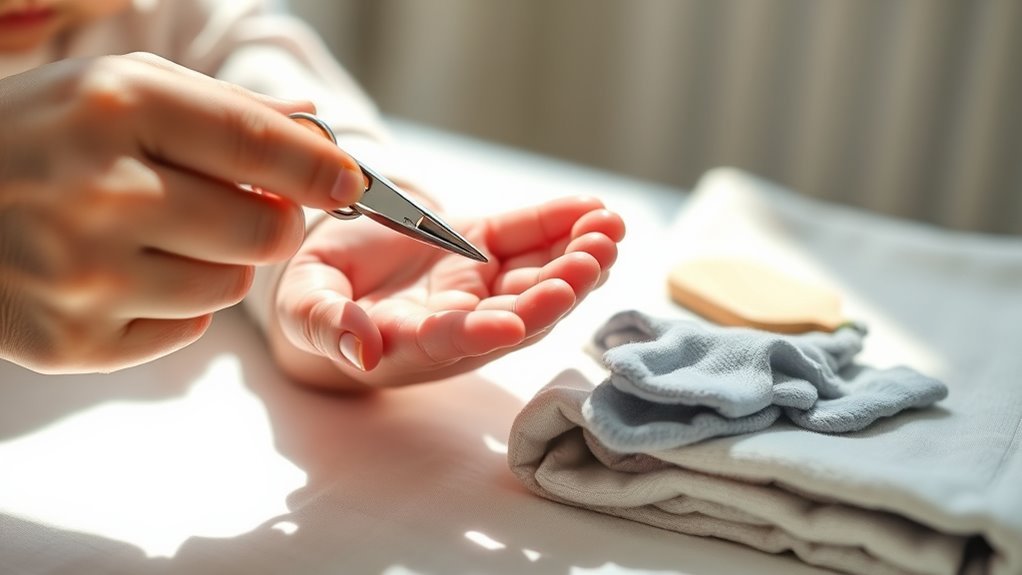
Trim your baby’s nails regularly to prevent scratches and tiny cuts, and do it when your baby is calm, asleep, or after a bath. Use baby nail scissors, clippers, or a soft file, and cut straight across in small snips. Don’t rush or use adult tools. If you nick the skin, press gently with a clean cloth. Keep the space soothing, and you’ll pick up a few easy tricks for smoother trims.
Why Baby Nail Trimming Matters
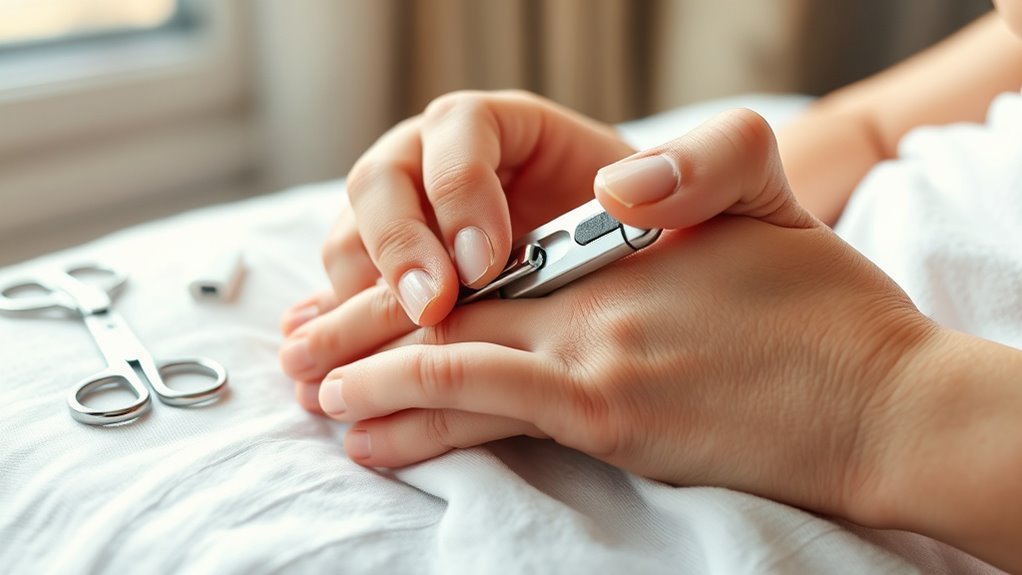
Because babies’ nails grow quickly, regular trimming helps prevent them from scratching their delicate skin, especially around the face and eyes.
When you keep baby nails neat, you also lower the chance of tiny cuts that can let germs in during play or curious exploring.
Nail trimming supports comfort, too; sharp edges can tug at soft clothes, blankets, and even make breastfeeding less pleasant.
By choosing to trim your baby’s nails regularly, you protect both your baby and the things you’ve lovingly gathered for them.
Regular nail trims help protect your baby and the little things you’ve lovingly chosen for them.
This simple care step is part of everyday hygiene and helps your little one move through the world with more ease.
A weekly routine works for many babies, and newborns may need attention more often.
You’re not being fussy—you’re making a practical, freeing choice that supports safety, comfort, and well-being.
When to Trim Baby Nails
Knowing why baby nail trimming matters naturally leads to the next question: when should you do it? You can trim your baby’s nails when they’re relaxed, asleep, or just after a bath, when the nails feel soft. These calm moments help you work with less fuss and more freedom.
- After a bath, soft nails are easier to manage.
- During sleep, your baby stays still and serene.
- While feeding or playing, you may catch a peaceful window.
- For newborns, check often; growth can be fast and need trimming every few days.
Older babies usually need a trim about once a week. Fingernails grow faster than toenails, so they need more attention, while toes may only need care twice a month.
Regular trimming helps you prevent scratches and lower infection risk, so you can care for your baby with confidence and ease.
Best Tools for Baby Nail Trimming
Choosing the right tools can make baby nail trimming safer and easier. You’ll feel more confident when you use baby nail scissors with rounded edges, because they help reduce accidental cuts.
Baby nail clippers with easy-grip handles can also give you better control and more precise snips on tiny nails. After trimming, a soft emery board helps smooth rough edges so they won’t scratch your baby’s skin.
Baby nail clippers with easy-grip handles help you trim tiny nails with better control and cleaner precision.
Skip adult-sized tools; they’re often bulky, awkward, and can make grooming harder than it needs to be. Choose tools that fit your hand and your baby’s small nails, so you can work with less stress and more freedom.
Keep every tool clean and sharp, since that supports a smoother trim and lowers infection risk. With the right kit, you’re not just grooming—you’re caring for your baby in a way that feels calm, capable, and gentle.
How to Trim Baby Nails Safely
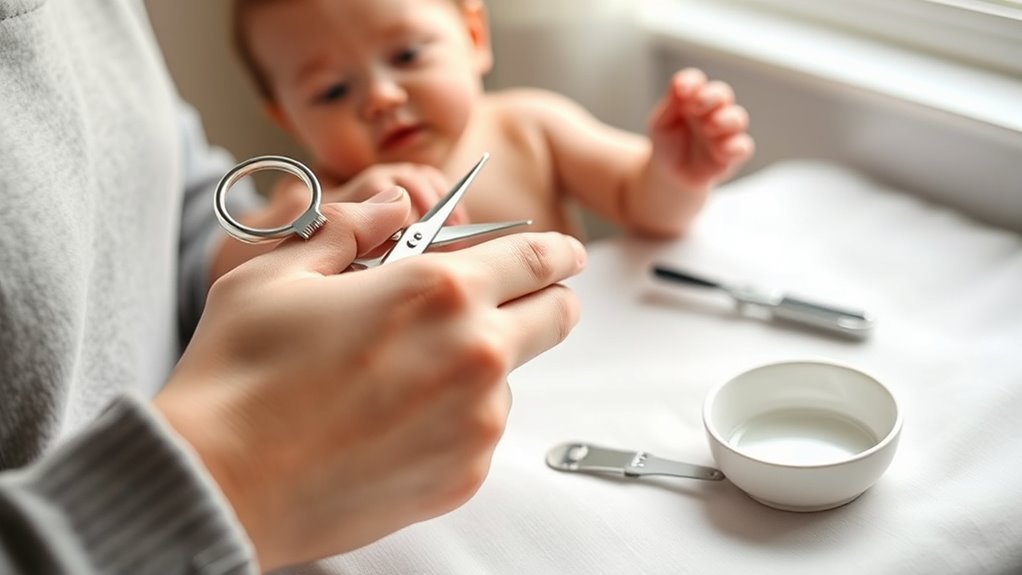
When your baby is calm or asleep, trimming nails is usually easier and safer because there’s less chance of sudden movement. You can trim the nails with baby scissors or clippers made for tiny hands, then cut your baby’s nails straight across to help prevent ingrown edges.
Gently press the finger pad away from the nail so you can see clearly and keep control without pinching baby’s skin. After each nail, check for rough spots and smooth them with a soft file so little scratches don’t happen.
- You’ll feel more confident when your baby stays still.
- You protect delicate fingers with each careful snip.
- You give yourself freedom from worry by working slowly.
- You keep tiny nails neat, safe, and comfortable.
Baby Nail Trimming Safety Tips
You’ll keep trimming safer by using baby-specific nail clippers or rounded-edge scissors, since adult tools can be too large and risky.
Try to trim when your baby’s calm, asleep, or just after a bath, when the nails are softer and easier to manage.
Hold each finger steady and gently move the finger pad away from the nail so you can work carefully and avoid nicking the skin.
Safe Trimming Tools
- You protect delicate fingers.
- You trim with more confidence.
- You reduce stress for both of you.
- You support a calm, independent routine.
Calm, Steady Technique
A calm, steady approach makes baby nail trimming much safer. Choose a calm moment or wait until your baby’s asleep, then trim in bright light with baby clippers or rounded scissors. Hold each finger steady by gently pressing the finger pad away from the nail; you’ll see better and feel more in control.
| Step | Why it helps | Your cue |
|---|---|---|
| Calm or asleep | Less movement | Breathe first |
| Steady finger | Clearer view | Hold gently |
| Smooth edges | No scratches | File softly |
Move slowly, trim small bits, and trust your pace. If a nail feels sharp after cutting, use a soft file to smooth it. You’re not racing anyone—you’re caring with intention, and that freedom matters.
What to Do If You Cut the Skin
If you accidentally nick your baby’s skin while trimming their nails, stay calm and apply gentle pressure with a clean cloth or sterile gauze pad until the bleeding stops. You didn’t fail; small cuts happen, and you can handle this with care and confidence.
- Breathe slowly so your hands stay steady and your baby feels your calm.
- Once the bleeding stops, clean the area with mild soap and warm water.
- Keep the skin clean and dry; skip bandages on tiny fingers to avoid choking hazards.
- Watch for increased redness, swelling, or discharge, and call your pediatrician if you notice them.
You’re protecting your baby, not perfecting a moment. A brief mishap doesn’t take away your tenderness or your ability to care well.
Protecting your baby matters more than perfecting the moment; a small mishap doesn’t lessen your care.
With a gentle response, you help the skin heal and keep the routine safe, simple, and free from panic.
How to Handle Baby Nail Problems
You may notice common baby nail problems like paronychia, which can cause redness, swelling, or a little pus around the nail and often clears on its own.
If the area keeps getting more red or swollen, or the symptoms don’t improve, check with your pediatrician for advice.
For minor issues, you can clean the area gently, use a mild antiseptic cream if needed, and protect it with mittens or socks so your baby doesn’t irritate it.
Common Nail Infections
Keep baby nails trimmed regularly, so little snags don’t linger. Keep the area clean and dry, because moisture can feed nail infections. If the skin looks mildly irritated, you may use a gentle antiseptic cream or liquid, following product directions.
- Breathe—you’re not failing.
- Clean gently, then let it dry.
- Trim carefully to protect delicate skin.
- Give yourself grace while baby heals.
If the area stays sore, ask your pediatrician. After treatment, mittens or socks can help stop extra rubbing and give your baby relief.
Signs Needing Care
Even with gentle care, it helps to know which baby nail problems need attention. If your baby’s nails trimmed still leave swelling, redness, or discoloration, trust your eye—these can signal infection. Paronychia often shows mild redness and swelling around the nail and may settle on its own, but ongoing changes deserve a closer look. You don’t need to panic; you do need to stay alert.
| Sign | What it may mean | Action |
|---|---|---|
| Swelling | Possible irritation | Monitor closely |
| Redness | Possible infection | Seek care if it spreads |
| Discoloration | Nail trouble | Ask a pediatrician |
Keep checking the skin and nails early so you can catch problems before they grow.
Gentle Home Treatment
When a baby nail problem is minor, simple home care can often help. Your baby’s nails are soft, so you may need to trim them straight across and check them often.
For small nicks, rinse with warm water and apply gentle pressure to stop the bleeding. If the skin around the nail looks slightly irritated, a little antiseptic cream may support gentle home treatment.
- Breathe and stay calm.
- Watch for swelling, redness, or discoloration.
- Use mittens or socks to keep tiny fingers from rubbing the area.
- Seek medical care fast if symptoms worsen.
You’re not powerless here. With careful attention, you can protect your baby’s comfort and freedom while preventing ingrown toenails and other problems.
Tips to Keep Baby Calm During Trimming
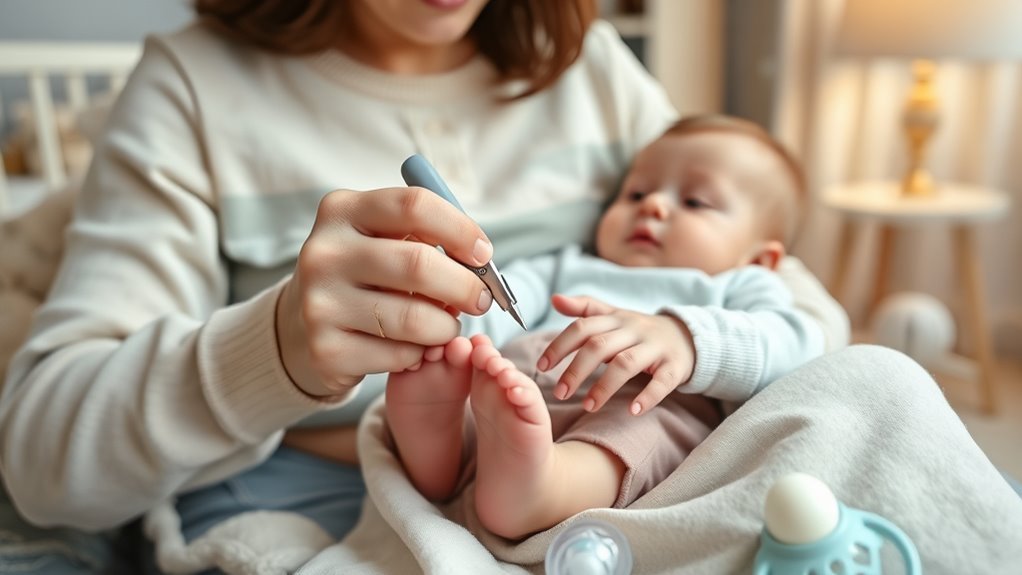
Choose a calm moment, like after a bath or during a feeding, so your baby is more relaxed and less likely to fidget. If you stay calm, your baby often follows your lead.
Offer a toy, soft book, or familiar song to distract them and make the trim feel normal, not stressful. Speak in a soothing voice, or sing quietly, to keep the mood gentle and secure.
If you can, ask a partner to hold your baby securely while you trim each nail. That extra support gives you freedom to work carefully and helps your baby feel contained without feeling trapped.
Keep sessions short and steady. When you finish, give positive reinforcement with praise, cuddles, or a few minutes of play. This helps your baby connect nail care with comfort, trust, and ease, making future trims simpler for both of you.
Frequently Asked Questions
How Can I Safely Trim Baby Nails?
You can safely trim baby nails with baby nail care: use the best clippers, hold fingers steady, cut straight across, and file edges. Try trimming techniques during sleep, plus soothing distractions afterward.
Is It Safe for a 3 Month Old to Be in a Nail Salon?
No, you shouldn’t take a 3-month-old to a nail salon. For baby nail care, keep nail salon safety in mind, skip professional grooming, and use parental supervision at home with gentle, sanitized tools.
Do I Sanitize Baby Nail Clippers?
Yes, you should sanitize baby nail clippers. Like a trusted key for baby nail care, clean them with alcohol wipes or soap and water, choose safe nail clipper types, and adjust trimming frequency as needed.
Why Shouldn’t You Cut Baby Nails?
You shouldn’t cut baby nails too short because nail growth can trigger painful ingrowns and cuts, hurting baby safety. Use baby grooming tools, stay calm, and trust your instincts around parental concerns.
Conclusion
Baby nail trimming doesn’t have to be a struggle. If you’ve ever heard that cutting nails after a bath helps prevent snips, there’s truth to it—softened nails are easier to trim safely. Keep your tools clean, work slowly, and stop if your baby gets fussy. With a calm approach and regular care, you can protect your little one from scratches and make grooming a simple part of your routine.
