Disclosure: As an Amazon Associate, we earn from qualifying purchases. If you click a link on this page and make a purchase, we may receive a small commission at no extra cost to you.
Baby food, fruit juice, formula, ketchup, and mystery spots can turn everyday laundry into a constant cleanup job. Miss Mouth’s Messy Eater Stain Treater is made for those common family stains, especially fresh food and baby-related messes. It appears most useful when you treat stains quickly, follow the label, and wash or clean the item soon after. This review helps you decide whether it is a smart stain remover for your home, where it works best, and where you should keep expectations realistic.
Quick Verdict
Rating: Recommended with caveats
Best For: Parents, caregivers, and busy households dealing with fresh food, drink, formula, and baby stains.
Bottom Line: Miss Mouth’s Messy Eater Stain Treater is a practical pick for everyday spills because it is easy to spray, simple to use, and suited to common family stains. It is not a guaranteed fix for every old stain, delicate fabric, or untreated mark, so fabric testing and quick treatment still matter.
Key Takeaways
- Miss Mouth’s Messy Eater Stain Treater works best on fresh baby, food, and drink stains.
- It can help with messes such as fruit juice, baby food, formula, ketchup, and blood, based on the article’s stated use cases.
- Results can vary depending on stain age, fabric type, surface, and how quickly you treat the mark.
- The spray can be used on clothing, baby items, upholstery, and small carpet spots when the care label allows it.
- EPA Safer Choice certification may reassure families, but it does not guarantee stain removal or fabric compatibility.
| Specification | Detail |
|---|---|
| Brand | Miss Mouth’s |
| Product name | Messy Eater Stain Treater |
| Product type | Spray stain remover and stain pre-treater |
| Best use | Fresh food, drink, formula, baby, and household stains |
| Common stain types | Fruit juice, baby food, formula, ketchup, and blood |
| Usable surfaces | Clothing, baby items, upholstery, and small carpet spots when compatible |
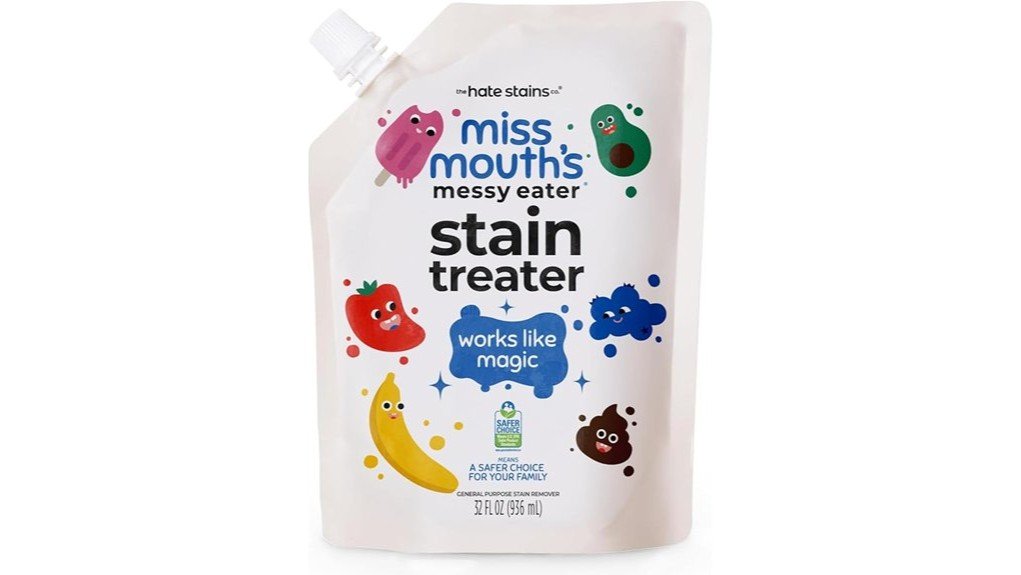
| Refill size mentioned | 32 oz refill bottle |
| Certification mentioned | EPA Safer Choice |
| Safety note | Follow the product label and test on a hidden area before using on delicate or unfamiliar fabrics. |
What Is Miss Mouth’s Messy Eater Stain Treater?
Miss Mouth’s Messy Eater Stain Treater is a spray stain remover made for everyday spills and fabric messes. It is especially relevant for homes with babies, toddlers, and young children because food, formula, juice, and sauce stains can happen several times a day.
The product is designed to be sprayed directly on stained areas before washing or cleaning. That makes it useful as a laundry pre-treater, but the article also supports use on upholstery and small carpet spots when the surface can safely handle the product.
Its main appeal is convenience. You do not need a complicated stain routine, but you still need to act quickly, check the care label, and repeat treatment when a mark does not lift the first time.
Does Miss Mouth’s Messy Eater Stain Treater Work?
Miss Mouth’s Messy Eater Stain Treater appears to work well for a wide range of common household stains, especially baby-related messes such as formula, baby food, fruit juice, ketchup, and blood. Its stain removal performance seems strongest on fresh marks because fresh stains have less time to bond deeply with fabric fibers.
It may also help with some older stains, but set-in marks are less predictable. A dried stain may need dampening, a longer pre-treatment step, gentle agitation, and a second round of treatment before washing.
The formula’s product effectiveness may appeal to households seeking practical, no-nonsense cleaning without complicated steps. Still, it should be treated as a stain helper, not a magic fix for every fabric, every stain, or every old mark.
Before You Buy: This spray is most useful when you treat stains quickly. Older stains, delicate fabrics, and surfaces with special care instructions may need testing first and may not clean fully in one attempt.
Who Should Buy It?
Best For
- Parents who deal with baby food, formula, fruit juice, and bib stains often.
- Caregivers who want a simple spray-and-wash stain routine.
- Households that need one stain remover for clothing, baby items, upholstery, and small carpet spots.
Skip If
- You expect one spray to remove every old or set-in stain without repeating the process.
- You mostly clean delicate fabrics that require special care or dry cleaning.
- You need a product for surfaces that cannot be spot-tested or safely rinsed or washed.
How to Use Miss Mouth’s on Fresh and Set-In Stains
For most fresh and set-in stains, the process is straightforward: remove any excess residue, dampen dried spots with water, then spray the stained area with Miss Mouth’s Messy Eater Stain Treater. The goal is to help the formula reach the stained fibers before the item goes into the wash or before you blot a washable surface.
- Remove extra food, liquid, or residue from the fabric or surface.
- Dampen dried stains lightly with water if the care label allows it.
- Spray the stained area directly and let it sit briefly.
- Rub gently only if needed, then wash or clean as usual.
- If the mark remains, repeat the treatment once more before drying.
The most important step is to avoid heat-drying an item before checking the stain. Heat can make some stains harder to remove, so review the fabric after washing and repeat treatment if needed.
Pro Tip: Keep the spray near your laundry basket or changing area so you can treat baby food, formula, and juice stains before they dry deeply into the fabric.
What Stains Does Miss Mouth’s Remove?
The stain remover is designed to handle both fresh and set-in messes, including common trouble spots such as fruit juice, baby food, formula, ketchup, and blood. These are the kinds of stains families often see on bibs, onesies, pajamas, burp cloths, high-chair covers, and casual clothing.
Its formula targets protein-based and food-based stains with a practical, fast-acting approach. For households seeking freedom from constant laundering, that coverage can reduce time and frustration.
Results may vary by fabric, stain age, and how quickly treatment begins, so it is not a universal fix. A fresh ketchup spot on cotton may respond better than an old stain on delicate fabric or upholstery that cannot be washed thoroughly.
Where Can You Use Miss Mouth’s Around the House?
Beyond laundry, the stain treater can be used on upholstery and carpets, giving it a broader role in everyday cleanup. It supports practical laundry tips when treating clothing, bibs, pajamas, bedding, and washable baby items before washing.
Its reach also extends to upholstery care, where small spills on couches or chairs can be addressed without much fuss. Used with restraint, it offers households a flexible option for common messes.
- Clothing and baby items
- Washable bibs, burp cloths, and casual fabric items
- Upholstered furniture, when the fabric care instructions allow spot treatment
- Small carpeted spots, especially fresh spills
The formula suits busy homes that value simple cleanup routines. While versatile, it remains best applied directly to stained areas, with gentle handling and prompt follow-up for reliable results.
Is EPA Safer Choice Certification Important?
EPA Safer Choice certification can matter to households looking for a stain remover that balances cleaning performance with a more cautious ingredient profile. It indicates that a product has been reviewed under the EPA Safer Choice program, which may support family buying confidence without turning the product into a guaranteed stain solution.
| Aspect | Note |
|---|---|
| Certification | EPA Safer Choice |
| Focus | Ingredient review |
| Benefit | Stronger confidence for family laundry |
| Limitation | Not a stain-removal guarantee |
| Use case | Family laundry and everyday cleanup |
For Miss Mouth’s Messy Eater Stain Treater, that label may reassure caregivers seeking practical cleaning and a less burdensome routine. Yet certification should be viewed as one factor among stain type, surface compatibility, care instructions, and performance needs.
Fabric Compatibility and Safety Notes
Because this stain treater may be used on baby clothing, upholstery, carpet, and other household fabrics, compatibility matters. Always read the product label and the fabric care tag before applying it to delicate, dark, vintage, wool, silk, leather, or dry-clean-only items.
For newborn clothing and baby items, use the product as directed and wash the item properly before use when needed. EPA Safer Choice certification may add confidence, but it does not replace label directions, skin sensitivity concerns, or careful rinsing and washing.
When treating upholstery or carpet, test a hidden area first. Some fabrics can discolor, water-mark, or react differently to cleaning products, especially if the stain is old or the material has a special finish.
How It Performs in Real Use
For Baby Food and Formula Stains
Baby food and formula stains are one of the strongest reasons to consider this product. It gives you a quick way to treat bibs, onesies, burp cloths, and washable baby fabrics before stains sit too long.
For Fruit Juice and Ketchup Spills
Fruit juice and ketchup can leave bright marks, especially on lighter clothing. Miss Mouth’s is most useful when you remove extra residue first, spray the spot, and wash the item before the stain dries fully.
For Upholstery and Carpet Spots
For small upholstery or carpet spills, the spray can be helpful when the surface allows spot cleaning. You should still test first because furniture and carpet materials can react differently than washable clothing.
For Older Set-In Stains
Older stains are less predictable. The product may soften or reduce some set-in marks, but you may need to dampen the area, repeat the treatment, and avoid drying the item with heat until you know the stain has lifted.
Common Mistakes to Avoid
The biggest mistake is waiting too long to treat the stain. Fresh stains usually respond better because the residue has not fully settled into the fabric.
Another mistake is using the spray on a surface without checking compatibility. A quick hidden-area test can help you avoid discoloration, water marks, or fabric damage.
You should also avoid rubbing aggressively. Gentle agitation can help, but harsh scrubbing may spread the stain, roughen the fabric, or damage delicate fibers.
Pros and Cons
Pros
- Useful for common family stains such as baby food, formula, juice, ketchup, and blood.
- Simple spray format makes it easy to treat stains before washing.
- Can be used beyond laundry on upholstery and small carpet spots when compatible.
- EPA Safer Choice certification may appeal to families who care about ingredient review.
- 32 oz refill option suits frequent stain treatment in busy households.
Cons
- Older or heat-set stains may need repeated treatment and may not fully lift.
- Fabric compatibility still matters, especially for delicate or special-care materials.
- It works best as part of a prompt stain routine, not as a guaranteed one-step fix.
Is It Worth the Price?
Miss Mouth’s Messy Eater Stain Treater is worth considering if your home deals with frequent food, drink, formula, and baby stains. Its value comes from convenience: you can keep it near the laundry area and treat stains before they become harder to clean.
It makes the most sense for families that use stain remover often. The 32 oz refill bottle mentioned in the article may be a practical option for repeated use, especially if you already know the formula fits your laundry routine.
It is not the best fit if you only need a cleaner for delicate fabrics, dry-clean-only items, or old stains that have already been washed and dried several times. In those cases, expectations should stay modest.
How It Compares to Alternatives
Compared with general laundry stain removers, Miss Mouth’s Messy Eater Stain Treater is more clearly positioned around baby, food, and family messes. That focus may make it easier to choose if your main problem is mealtime stains rather than grease, outdoor dirt, or heavy-duty workwear stains.
If you want a stain remover for broad household laundry, you may also compare it with other spray pre-treaters from major laundry brands. Miss Mouth’s makes the most sense if you want a simple, family-focused stain spray for everyday spills and washable baby items.
Frequently Asked Questions
How large is the refill bottle?
The refill bottle mentioned in the article is 32 oz. That size is useful for households that treat stains often, especially with baby clothes, bibs, and everyday washable items.
Is it safe for newborn clothing?
It appears suitable for newborn clothing when used as directed, but you should always check the product label and the clothing care tag first. For baby items, wash or rinse as directed before use and avoid using it on fabrics that require special care.
Does it have a scent?
It appears to have a mild scent, though scent strength can feel different from person to person. If your household is sensitive to fragrance, test a small item first and follow the washing instructions carefully.
Can it be used on delicate fabrics?
It can be used cautiously only when the fabric care label allows spot treatment. Test a hidden area first, especially on delicate, dark, vintage, silk, wool, or dry-clean-only materials.
Can Miss Mouth’s remove old stains?
It may help with some older stains, but set-in marks are less reliable than fresh stains. Dampen the spot if appropriate, treat it, wash or clean as directed, and repeat before using heat drying.
Can it be used on carpets and upholstery?
The article supports use on upholstery and small carpet spills, but only when the material is compatible with spot treatment. Always test a hidden area first and avoid soaking surfaces that are hard to rinse or dry.
How long does one bottle typically last?
Bottle longevity depends on usage frequency and stain size. A 32 oz bottle may last weeks to months, with frequent baby laundry and upholstery spot treatment using it faster than occasional clothing stains.
Who should skip this stain treater?
Skip it if you need a guaranteed fix for old, dried, or heat-set stains. You may also want to avoid it for delicate fabrics or surfaces where you cannot safely test, rinse, wash, or follow the care instructions.
The Bottom Line
Miss Mouth’s Messy Eater Stain Treater is a smart buy for everyday use if your home regularly deals with baby food, formula, juice, ketchup, and small household stains. Its biggest strength is simple, quick pre-treatment, while its main limitation is that old stains and delicate fabrics may still require trial and care.
Buy it if you want an easy stain spray for family laundry and washable messes. Skip it if you need a guaranteed solution for every set-in stain or a cleaner for special-care fabrics.

