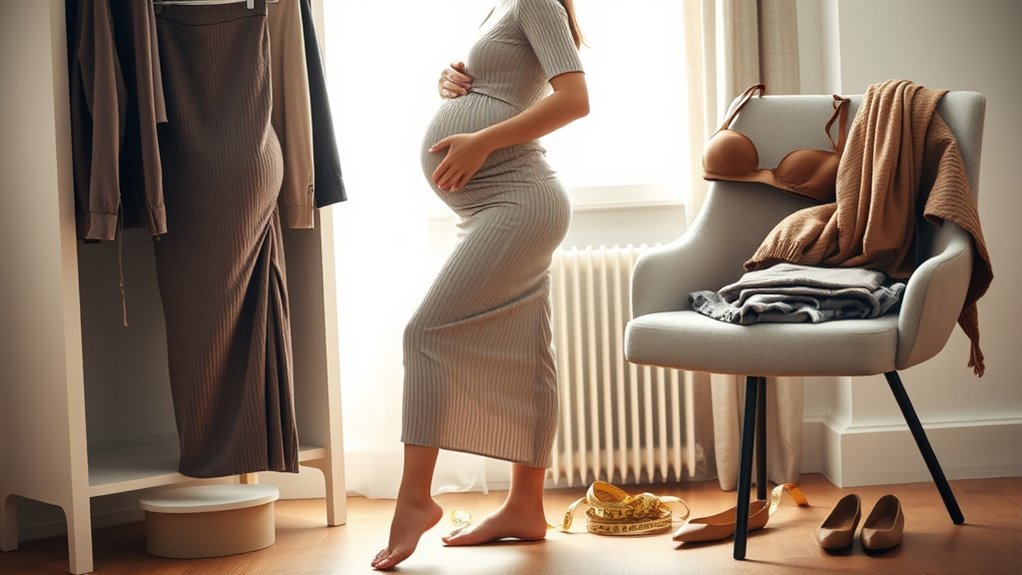
You’ll usually start needing maternity clothes around 12 to 20 weeks, when comfort matters more than your pre-pregnancy size. Choose stretchy, breathable pieces that fit your changing shape, and test for support, opacity, and movement before you buy. Build around maternity tees, leggings, jeans, and a good bra. Add bold colors, layers, and body-conscious styles to show off your bump with confidence. There’s plenty more to learn about dressing beautifully through every stage.
When Should You Start Wearing Maternity Clothes?
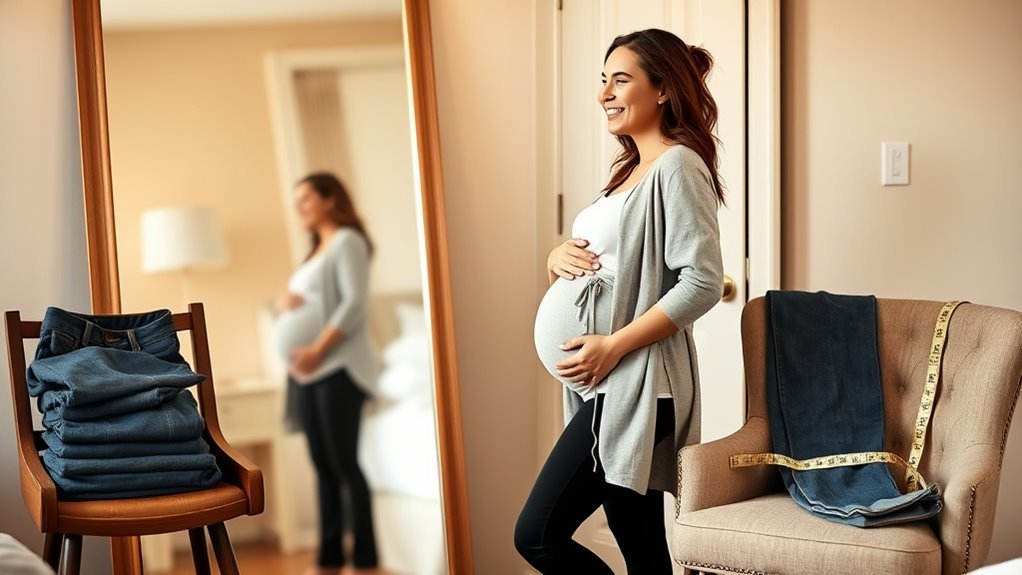
You’ll usually start wearing maternity clothes between 12 and 20 weeks of pregnancy, once your body begins to change in ways that make your regular clothes feel less comfortable.
Most people start maternity clothes between 12 and 20 weeks, when regular outfits begin to feel less comfortable.
For many expecting mothers, the switch happens as the second trimester unfolds and the belly starts to take shape. If you’re pregnant for the first time, you may notice changes later, while a previous pregnancy can bring them earlier.
Around 20 weeks, the shift often feels more obvious, and that’s a great cue to refresh your maternity wardrobe.
You don’t need to rush into shopping too soon; waiting until after the first trimester can help you choose pieces that fit the body you have now.
Trust comfort, honor your changing shape, and let your maternity clothes support movement, confidence, and ease. Dressing your bump isn’t about hiding it—it’s about claiming style that moves with you.
How Do You Choose Maternity Clothes Size?
Choosing maternity clothes sizes is less about chasing the number on the tag and more about finding pieces that feel good on your changing body. Maternity clothing often runs differently than your pre-pregnancy size, so use fit and comfort as your guide, not old rules.
Your proportions may shift, especially in your bust, so check bra fit and overall shape when you shop. Choose looser cuts and stretchy fabrics like jersey or flex that move with you and support changing bodies without feeling restrictive.
Before you buy, bend, sit, and stretch to see whether the fabric stays opaque; you deserve ease and confidence, not surprise sheer spots.
Think beyond the moment, too. Versatile styles can work after birth, helping you build a wardrobe that honors your body now and later.
Maternity Clothes You Need for Comfort
When comfort matters most, a few maternity wardrobe staples can make getting dressed feel much easier. Start with stretchy maternity T-shirts in neutral shades; they’re the backbone of versatile maternity wear, easy to layer, mix, and repeat without fuss.
Add a quality pair of maternity jeans, and you’ve got structure with give, so you can move through the day feeling polished and comfortable. For off-duty ease, choose pregnancy-friendly leggings that support you at home, on errands, or during a walk.
Breathable fabrics help you stay cool when your body feels warmer or more sensitive, and they keep outfits feeling fresh. Don’t overlook comfortable maternity underwear and bras, either—they provide the support you need as your shape changes.
With these essentials, you can dress freely, feel good in your body, and still look effortlessly put together.
What to Look for in Maternity Clothes
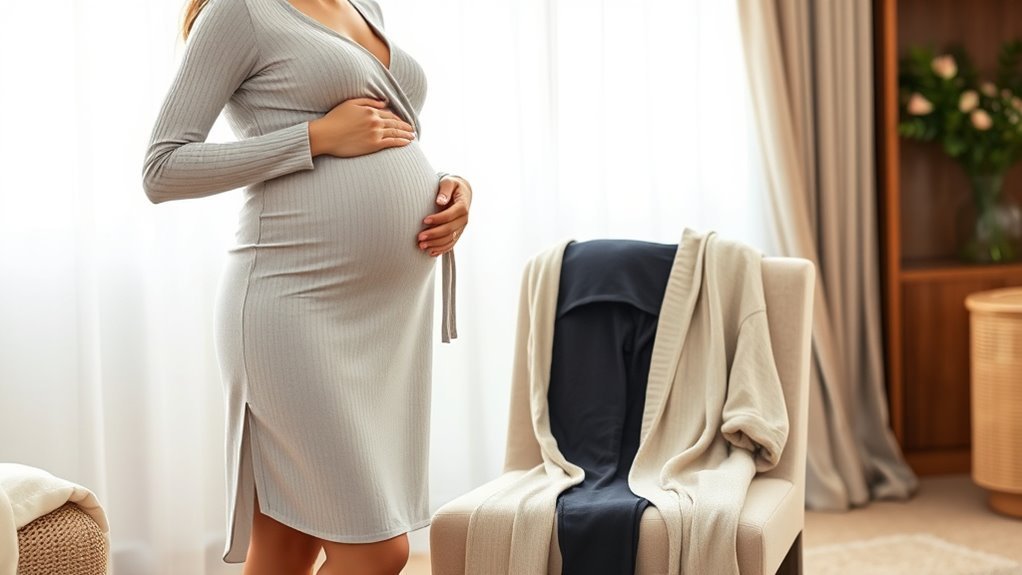
Comfort is only part of the equation—smart maternity clothes should also fit your changing shape and keep up with daily life. When you shop, focus on maternity clothing that moves with you, not against you.
Choose breathable fabrics with enough stretch to support comfort through warm spells, busy days, and restless nights. You’ll feel freer when the fit adapts instead of pinching or riding up. Look for ruching, too; it gives your belly room to grow while flattering your silhouette without effort.
Versatile pieces are worth it because they can carry you beyond pregnancy and into postpartum wear, stretching your wardrobe and your budget. If you’re planning ahead, check for nursing features that make feeding easier later.
The best picks honor your body, your pace, and your right to feel good in what you wear. With the right maternity choices, you can stay comfortable, confident, and unapologetically yourself.
How to Dress Your Bump in Style
A few smart styling choices can make your bump feel intentional, not limited. In maternity fashion, you can lean into stretchy jersey or spandex pieces that move with you and keep you comfortable all day.
Choose tops and dresses with ruching to highlight your shape without restricting it, and layer wisely with breathable cardigans, open shirts, or light jackets when temperatures shift.
Choose ruching to celebrate your shape, then layer with breathable pieces that move with you as temperatures change.
You don’t have to replace your whole wardrobe either; pair maternity leggings with your favorite oversized blazer, or style a bump-friendly tee with jeans you already love. That mix keeps your look personal, not prescribed.
Invest in versatile pieces like wrap dresses and nursing-friendly tops so your closet works now and later.
When you dress this way, you’re not hiding your body—you’re honoring it. Style should support your freedom, your comfort, and your changing silhouette, so you can move through each day feeling grounded, confident, and fully yourself.
Maternity Clothes Through History
You can see maternity wear’s roots in loose, seam-free dresses from the Middle Ages and the stylish Adrienne dress of the Baroque era, both designed to grow with you.
By the 1960s and late 20th century, comfort, self-expression, and celebrity influence helped reshape maternity fashion into something more tailored and visible.
Today, you get practical pieces that still feel chic, with styles that celebrate your changing body.
Early Maternity Wear
For centuries, maternity wear evolved slowly, and early solutions were often clever adaptations rather than dedicated clothing. In the Middle Ages, women wore aprons and loose dresses, letting you move freely while your body changed.
By the 14th century, fitted fashions appeared, so wealthy women tailored their gowns for maternity comfort and dignity.
- Loose seams eased growth
- Aprons offered simple coverage
- Tailoring supported shape
- Adrienne dresses allowed adjustability
- Georgian bibs helped nursing
During the Baroque period, the Adrienne dress grew with you, while laced vents echoed practical menswear.
Even then, options stayed limited, but each choice reflected resourceful style. If you’re tracing maternity history, you’ll see a quiet push for ease, function, and self-expression.
Modern Style Shifts
As fashion changed in the 1900s, maternity wear moved from tight corsets and hidden silhouettes toward clothing that could actually support your body.
By the 1960s, you’d see softer cuts, brighter colors, and a freer mood that matched women’s growing independence.
In the 1980s, many pregnant women wore loose, baggy pieces for work, proving maternity style could fit real life, not just expectations.
Then celebrity influence in the late 1990s and early 2000s helped turn bump dressing into a statement.
Today, you can choose comfortable maternity looks that celebrate your shape, express your style, and move with you.
Modern options give you freedom, confidence, and practicality without asking you to hide.
Why Maternity Clothes Have Changed
Maternity clothes have changed as fashion moved away from restrictive shapes and toward comfort that works with your body.
You can thank shifting style trends, the women’s movement, and celebrity influence for making maternity wear feel more modern and expressive.
Today’s designs use smarter fabrics and thoughtful features so you can look polished while staying comfortable.
Historical Fashion Shifts
Although maternity clothes have changed a lot over the decades, those shifts reflect more than just trends—they mirror women’s changing roles, rights, and priorities.
In the history of maternity, you can see how women moved from tight corsets to freer silhouettes as freedom grew. By the 1920s, after the 19th Amendment, maternity styles loosened up.
In the 1960s, bold colors and relaxed shapes matched liberation. Later, the 1980s and 1990s let you show your bump with confidence, not hide it.
- Early 1900s: restrictive support
- 1920s: softer, easier cuts
- 1960s: bright, relaxed looks
- 1980s-1990s: body-conscious confidence
- Today: comfort and self-expression
Modern Style Influence
When celebrity pregnancies started dominating magazines and red carpets in the late 1990s, maternity wear began to feel more modern, stylish, and worth investing in.
You saw icons like Gwen Stefani and Angelina Jolie make bump dressing look confident, and designers responded with options that felt both comfortable and stylish.
Sales grew as more women wanted pieces that matched their lives, not old rules. That shift built on the 1960s push for relaxed clothing and moved maternity fashion beyond corsets and fuss.
By the 2000s, you could choose looks for work, weekends, and celebrations, all while honoring your changing body.
Today, maternity style supports freedom, lets you express yourself, and keeps comfort at the center.
Frequently Asked Questions
What Is Special About Maternity Clothes?
Maternity clothes give you comfort features like stretch and support, with fabric types that grow with you. You can use styling tips to feel free, confident, and stylish while dressing your changing body every day.
What Is the 3-3-3 Rule for Clothes?
You’ll use three tops, three bottoms, and three layering pieces, mixing them for easy outfits. Choose bump friendly fabrics, stylish layering options, and versatile dress styles so you stay comfy, chic, and free.
What Is a Fun Fact About Clothes?
A fun fact: you can wear clothes made with fabric technology that stretches, breathes, and moves with you. You’ll feel confident, support body positivity, and make sustainable choices that look stylish, practical, and freeing.
What Is a Fun Fact About Pregnancy?
A fun fact about pregnancy: your body boosts blood volume up to 50%, while Bump growth, Cravings changes, and Mood swings can shift daily. You’re adapting beautifully, so choose comfort, style, and freedom.
Conclusion
So, when should you start, what should you choose, and how will you style it all? The answer’s simpler than it seems: you listen to your body, trust your comfort, and build a wardrobe that moves with you. One great piece can change everything, and the right fit can make you feel ready for anything. Your bump’s growing—and your style can too. Stay curious, keep it comfy, and watch what happens next.
