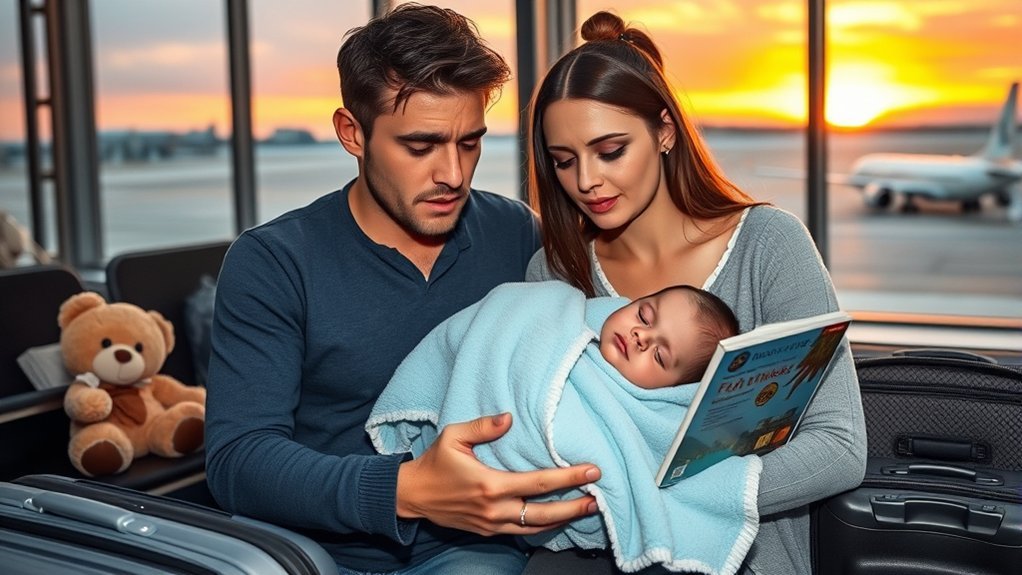
Long flights can make your baby tired, fussy, and harder to settle. Most sleep changes after travel improve with time, but some symptoms need faster attention. This guide helps you tell the difference between normal baby jet lag and warning signs that deserve a call to your pediatrician.
Quick Answer
Call your baby’s doctor if jet lag symptoms come with fever, repeated vomiting, diarrhea, poor feeding, fewer wet diapers, unusual sleepiness, or crying you can’t soothe. Mild fussiness and sleep disruption can happen after travel, but worsening symptoms need medical advice.
Key Takeaways
- Baby jet lag often affects sleep, feeding, mood, and nap timing after crossing time zones.
- Watch hydration closely, especially if your baby feeds less, vomits, or has diarrhea.
- Call a pediatrician if your baby seems unusually sleepy, weak, feverish, or hard to wake.
- Use light, routine, comfort, and small feeds to help your baby adjust gently.
- Trust your instincts when your baby’s behavior feels far from normal.
Understanding Jet Lag in Babies
When you travel across time zones with your baby, their sleep and feeding rhythm can shift. Babies have developing internal clocks, so a sudden time change may affect them more than it affects you.
Your baby may struggle with naps, bedtime, night waking, and hunger cues. You may also notice more fussiness as they adjust to a new light and sleep pattern.
Keep your baby’s routine as familiar as you can. Gentle daylight during the day and a calm bedtime routine can help their body adjust.
Common Symptoms of Jet Lag
Baby jet lag can look like sleep trouble, mood changes, and feeding changes. These symptoms often feel worse when your baby already feels tired from travel.
Watch the pattern, not just one hard moment. A baby who slowly improves over a few days usually needs comfort and routine, not urgent care.
Sleep Disruption Signs
Travel can disrupt your baby’s sleep pattern. Your baby may struggle to fall asleep, wake more often, or nap at unusual times.
You may also notice extra yawning, restlessness, or fussiness before sleep. These signs can happen when your baby feels overtired and out of rhythm.
If sleep trouble does not improve after a few days, review the sleep space, light exposure, and bedtime routine. Call your pediatrician if sleep issues come with fever, poor feeding, or unusual weakness.
Changes in Appetite
As your baby adjusts to a new time zone, their appetite may change. Some babies feed less than usual, while others want smaller feeds more often.
Monitor these changes because feeding affects comfort, hydration, and energy. Use the table below to spot common patterns.
| Appetite Change | Possible Impact |
|---|---|
| Decreased appetite | Irritability, low energy, fewer wet diapers |
| Increased appetite | Discomfort or overfeeding |
| Irregular eating times | Digestive upset |
| Refusal of familiar foods | Stress, fatigue, or confusion |
| Preference for snacks | Less balanced intake |
Offer feeds calmly and often. If your baby feeds much less than usual or shows signs of dehydration, contact a pediatrician.
When Irritability Becomes a Concern
Fussiness can happen after travel, but severe or lasting irritability deserves attention. Your baby may feel tired, overstimulated, hungry, or uncomfortable.
If crying feels unusual for your baby, take it seriously. Changes in behavior can help you spot a problem early.
Signs of Excessive Irritability
Call your pediatrician if your baby cries for a long time and you can’t soothe them. Also watch for a sharp change in feeding, alertness, or comfort.
Look for warning signs such as lethargy, fever, rash, repeated vomiting, or fewer wet diapers. These signs can point to more than jet lag.
If your baby was born premature or has ongoing health needs, consider reaching out to your pediatrician sooner. You can also visit support for families for general support resources.
Duration of Symptoms
Mild irritability after travel can improve as your baby rests and adjusts. But symptoms that worsen or last longer than expected need a closer look.
Track how long the fussiness has lasted and whether it affects sleep or feeding. Also note fever, vomiting, diarrhea, rash, or signs of pain.
Trust your instincts if your baby seems far from their normal self. Your pediatrician can help you decide whether the symptoms fit jet lag or something else.
Other Concerning Behaviors
Watch for behavior that does not match your baby’s usual pattern. Excessive crying, loss of appetite, poor eye contact, or unusual withdrawal can signal discomfort.
Pay attention to sleep patterns too. Constant trouble sleeping may happen with jet lag, but it becomes more concerning when paired with illness signs.
If your baby develops fever, rash, vomiting, diarrhea, breathing trouble, or dehydration signs, seek medical advice. Parent resources such as UNICEF’s global work may also help you find general child health information.
Changes in Eating and Drinking Habits
Your baby’s feeding and drinking habits may shift during travel. Time zone changes, tiredness, cabin dryness, and routine changes can all affect hunger cues.
Offer small, calm feeds and follow your baby’s cues. Do not force feeds, but do watch for signs that intake has dropped too much.
| Change in Habits | Possible Reason | Action to Take |
|---|---|---|
| Increased hunger | Shifted time zone | Offer small, frequent feeds |
| Decreased appetite | Travel fatigue | Offer familiar foods or normal milk feeds |
| Thirsty more often | Dry air or fluid loss | Keep breast milk, formula, or water ready when age-appropriate |
Stay close to your baby’s usual pattern when possible. A well-fed and well-hydrated baby usually handles travel changes better.
Sleep Patterns: What’s Normal and What’s Not
Travel can affect your baby’s sleep, especially after a long flight or a time zone change. You may see longer wake windows, short naps, or frequent night waking.
Many infants need a large amount of sleep across a full day, but needs vary by age. Your baby’s usual sleep pattern matters more than one general number.
Mild sleep disruption can improve with daylight, calm evenings, and familiar bedtime cues. But call a doctor if poor sleep comes with fever, poor feeding, breathing trouble, or unusual sleepiness.
Keep bedtime routines simple and familiar. A bath, feeding, book, song, or sleep sack can help your baby feel safe in a new place.
Recognizing Signs of Dehydration
Dehydration can happen faster in babies than in older children. Travel, heat, vomiting, diarrhea, or poor feeding can raise the risk.
Watch for these signs during and after your trip:
- Dry mouth and lips: Your baby’s mouth may look dry, or their lips may appear cracked.
- Fewer wet diapers: A clear drop in wet diapers can signal low fluid intake.
- Lethargy or unusual irritability: Your baby may seem very tired, weak, or harder to comfort.
Warning: Seek urgent medical help if your baby seems hard to wake, has very few wet diapers, or shows signs of severe dehydration.
If your baby may have touched or swallowed a harmful substance during travel, get help right away. You can also use hazardous substances resources for poison exposure guidance.
How to Help Your Baby Adjust After Travel
You can support your baby with gentle routine changes. Start with daylight in the morning, quiet evenings, and sleep cues that feel familiar.
- Offer feeds based on your baby’s hunger cues.
- Keep naps calm, but avoid making daytime sleep too long.
- Use outdoor light during the day when weather and safety allow.
- Keep nights dark, quiet, and boring.
- Give your baby extra comfort during the first few days.
Adjust slowly if your baby struggles. A calm approach works better than forcing a strict schedule right away.
When to Seek Medical Advice
Contact a healthcare professional if your baby’s symptoms feel intense, unusual, or worse over time. Do not assume every post-travel symptom comes from jet lag.
Call your pediatrician if your baby has prolonged irritability, excessive crying, unusual lethargy, poor feeding, repeated vomiting, diarrhea, or fever.
If your baby has ongoing vomiting, diarrhea, poor feeding, or a fever lasting more than a few days, seek medical advice promptly.
Monitor feeding and hydration closely. Fewer wet diapers, dry mouth, sunken-looking eyes, or unusual weakness can mean your baby needs care.
Jet lag can also make existing health issues harder to manage. If you feel unsure, ask your pediatrician for guidance.
Frequently Asked Questions
Can Jet Lag Affect My Baby’s Development or Growth?
Jet lag can temporarily affect your baby’s sleep, mood, and feeding pattern. It usually does not affect long-term growth or development when symptoms improve and your baby feeds well.
How Long Does Jet Lag Typically Last in Infants?
Baby jet lag may last a few days, depending on your baby’s age, routine, and number of time zones crossed. A steady routine and daylight exposure can help your baby adjust.
Are There Any Medications to Help With Baby Jet Lag?
You should not give your baby medicine for jet lag unless a pediatrician tells you to. Safer support often includes routine, comfort, light exposure, and regular feeding.
Can I Use Sleep Aids for My Baby During Travel?
Do not use sleep aids for your baby during travel without medical advice. Sleep aids can be unsafe for infants and may hide symptoms that need attention.
What Are Natural Remedies for Alleviating Jet Lag Symptoms in Babies?
You can use gentle, natural support such as daylight, a steady bedtime routine, calm feeds, and soothing touch. Avoid harsh schedule changes, especially during the first day after travel.
Medical Disclaimer: This article is for informational purposes only and does not constitute professional medical advice. Always consult a qualified doctor before making decisions based on this information.
Conclusion
Baby jet lag can be tiring, but warning signs matter more than the travel schedule. Watch your baby’s feeding, wet diapers, alertness, temperature, and comfort level after a long trip.
Call your pediatrician if symptoms worsen, last longer than expected, or feel unusual for your baby. A careful response helps protect your baby while your family settles into a new routine.