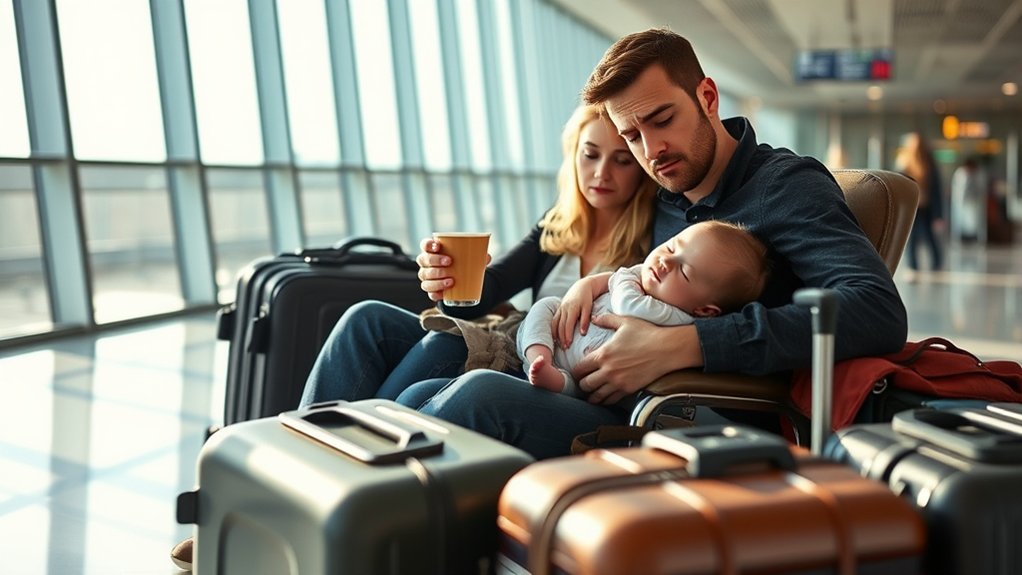
Jet lag can turn a trip with your baby into a blur of night wakings, short naps, and extra fussiness. Your baby’s body clock needs time to match the new time zone, and that shift can affect sleep, feeding, mood, and energy. With a simple plan before, during, and after travel, you can help your baby adjust with less stress.
Quick Answer
Jet lag can affect babies by disrupting their sleep, feeding, and mood. Most babies adjust best with daylight exposure, steady routines, familiar comfort items, and gradual schedule changes. Avoid using medicine for infant jet lag unless your baby’s doctor tells you to use it.
Key Takeaways
- Expect sleep changes, fussiness, and feeding shifts after crossing time zones.
- Adjust your baby’s sleep and feeding times slowly before travel when you can.
- Use daylight, calm routines, and familiar items to help reset your baby’s body clock.
- Keep naps helpful but not too long, so nighttime sleep can improve faster.
- Ask your pediatrician before using any medicine or supplement for jet lag.
Understanding Jet Lag: The Science Behind It
When you travel across time zones, your body’s internal clock can fall out of sync with local time. This mismatch can cause jet lag, which affects sleep, hunger, alertness, and mood.
Your circadian rhythm helps control when you feel sleepy or awake. Light, meals, activity, and bedtime cues all help reset that rhythm after travel.
Babies rely heavily on routine, so sudden time changes can feel hard for them. To ease the shift, adjust schedules before departure when possible, offer fluids often, and use natural light after arrival.
Symptoms of Jet Lag in Infants
You can often spot jet lag by watching changes in your baby’s usual sleep and feeding patterns. These signs may appear soon after arrival and improve over several days.
Watch for:
- More fussiness or irritability than usual
- Changes in appetite, including eating less or wanting to feed more often
- Trouble falling asleep or staying asleep
- Extra daytime drowsiness
- Frequent waking at night
If you notice these symptoms, your baby’s internal clock may still match the old time zone. A soothing routine can help your baby feel safe while their sleep rhythm shifts.
How Time Zone Changes Affect Babies
Time zone changes can affect babies in two main ways: sleep shifts and feeding changes. Your baby may feel ready to sleep, eat, or play at times that no longer match the local day.
Sleep Pattern Disruption
Babies thrive on predictable sleep cues, so travel can quickly disrupt naps and nighttime sleep. A baby who slept well at home may wake often in a hotel, rental, or relative’s house.
Try these steps to support sleep:
- Shift bedtime by 15 to 30 minutes per day before travel.
- Keep the same bedtime routine, even in a new place.
- Use blackout curtains or shades to darken the sleep space.
- Keep the room cool and quiet.
- Give your baby several days to adjust.
Your baby’s emotional well-being also matters during this change. Calm, steady care can help your baby settle into new sleep patterns.
Feeding Schedule Adjustments
Time zone changes can also shift hunger cues. Babies often feel hungry based on their home schedule, not the clock at your destination.
Use gradual changes when you can. Move feeds by 15 to 30 minutes each day until your baby’s feeding schedule lines up with local time.
| Local Time | Baby’s Current Feeding Time | Suggested Adjustment |
|---|---|---|
| 7:00 AM | 8:00 AM | Move earlier by 15 to 30 minutes per day |
| 12:00 PM | 1:00 PM | Move earlier by 15 to 30 minutes per day |
| 5:00 PM | 6:00 PM | Move earlier by 15 to 30 minutes per day |
| 10:00 PM | 11:00 PM | Move earlier by 15 to 30 minutes per day |
Follow your baby’s hunger cues, especially with younger infants. A flexible approach helps your baby stay fed while you guide them toward the new routine.
Tips for Minimizing Jet Lag Before Travel
Good planning can reduce the shock of a major time change. Start small schedule changes a few days before travel if your family routine allows it.
Try these practical steps:
- Move sleep and wake times toward your destination time zone.
- Use the same calming bedtime routine each night.
- Limit bright screens before bed when your baby can see them.
- Offer fluids often during travel, especially during flights.
- Pack familiar items, such as a sleep sack, blanket, or favorite toy.
If you breastfeed and worry about timing or supply during travel, consider asking a breastfeeding expert for guidance before your trip.
Pro tip: Pack one small bedtime kit with the items your baby already links with sleep.
Strategies for Coping With Jet Lag During Travel
Travel days often disrupt sleep, meals, and naps. Focus on comfort, hydration, and gentle movement rather than a perfect schedule.
| Strategy | What to Do | How It Helps |
|---|---|---|
| Offer Fluids Often | Breastfeed, bottle-feed, or offer age-appropriate fluids. | Helps reduce tiredness and irritability. |
| Use White Noise | Bring a portable white noise machine. | Helps block unfamiliar sounds. |
| Bring Comfort Items | Pack a favorite blanket, toy, or sleep sack. | Adds familiarity in a new place. |
| Keep Moving | Use gentle play during layovers or long waits. | Helps your baby release energy. |
Adjusting Sleep Schedules: A Step-by-Step Guide
After arrival, help your baby move toward the new time zone in small steps. A gentle plan works better than forcing sudden changes.
- Shift bedtime by 15 to 30 minutes each night.
- Wake your baby at a consistent morning time.
- Keep naps helpful, but avoid very long daytime sleep.
- Get your baby into natural light during the day.
- Watch your baby’s sleepy cues and adjust as needed.
Some babies need only a few days to settle. Others need more time, especially after long flights or big time changes.
Creating a Comfortable Sleep Environment for Your Baby
A calm sleep space can help your baby rest, even in a new time zone. Choose a quiet, dark place where your baby can sleep safely.
Use blackout curtains, shades, or a travel blind to block light. A white noise machine can help cover unfamiliar sounds from traffic, hallways, or other rooms.
Create a serene sleep space with blackout curtains and a white noise machine to help your baby rest peacefully.
Keep the room comfortably cool, often around 68 to 72°F (20 to 22°C). Use a familiar sleep sack or blanket only if it fits safe sleep guidance for your baby’s age.
Keep the sleep area clear of loose items if your baby sleeps in a crib or bassinet. Then use a short bedtime routine, such as a feed, diaper change, lullaby, and gentle rocking.
Warning: Keep loose blankets, pillows, and soft objects out of an infant’s sleep space unless your pediatrician gives different guidance.
The Role of Nutrition in Managing Jet Lag
Food and fluids can support your baby’s adjustment, but they won’t cure jet lag on their own. Aim for steady, age-appropriate feeds and meals.
These feeding choices may help:
- Offer lighter meals close to bedtime if your baby eats solids.
- Serve familiar foods to reduce stress in a new place.
- Keep hydration steady during flights and hot weather.
- Avoid sugary snacks close to sleep when your baby eats solids.
- Move meal times toward the new time zone in small steps.
For young infants, follow normal breast milk or formula feeding guidance. Ask your pediatrician before changing feeding routines for a newborn or medically fragile baby.
How Long Does Baby Jet Lag Last?
Baby jet lag often improves over a few days, but timing can vary. The size of the time change, your baby’s age, sleep needs, and travel stress all affect the adjustment.
Plan for a slower first few days after arrival. Keep plans light when possible, and protect your baby’s best nap or bedtime window.
When to Call Your Baby’s Doctor
Jet lag can cause fussiness and sleep changes, but it should not cause serious illness signs. Call your baby’s doctor if your baby seems unusually hard to wake, refuses feeds, has fewer wet diapers, or develops a fever.
You should also get medical advice before using melatonin, antihistamines, sleep aids, or other medicine for travel sleep. Babies need care that matches their age, weight, health history, and current symptoms.
Making the Most of Your Travel Experience With a Baby
Traveling with a baby may bring sleep disruptions, but those changes don’t have to spoil the trip. A flexible routine can help you enjoy the experience while supporting your baby’s needs.
Prepare for Sleep Disruptions
Assume naps and nights may look different during travel. That mindset helps you respond calmly when your baby wakes early, naps briefly, or needs extra comfort.
Use these tips to make sleep disruptions easier:
- Pack familiar sleep items that follow safe sleep guidance.
- Keep a flexible schedule when naps shift.
- Bring a portable white noise machine.
- Allow more travel time for breaks and feedings.
- Stay calm, since your baby can sense your stress.
- Support regular sleep habits when your schedule allows it.
Establish a Routine
A simple routine can help your baby feel secure in a new place. Try to keep the same order of events before sleep, even when the timing changes.
Before your trip, practice shifting sleep times slightly toward your destination’s time zone. After you arrive, use calming cues such as a bath, quiet story, feeding, lullaby, or cuddle.
Keep your baby’s surroundings as familiar as you can. A favorite sleep sack, lovey for older babies, or familiar bedtime song can help your baby settle.
Frequently Asked Questions
Can Jet Lag Affect Breastfeeding Schedules?
Yes, jet lag can disrupt breastfeeding schedules. Your baby may want to feed at times that match your home time zone, so use gradual shifts and follow hunger cues.
How Long Does Jet Lag Typically Last for Babies?
Jet lag often lasts a few days for babies, but every baby adjusts differently. Keep routines steady and use daylight during the day to support the change.
Are There Age-Related Differences in Jet Lag Severity?
Yes, age can change how jet lag looks. Younger babies may wake often because their sleep already changes a lot, while toddlers may struggle more with bedtime resistance and early waking.
Should I Wake My Baby During the Night to Adjust?
You usually don’t need to wake your baby during the night only to adjust to a new time zone. Focus on morning wake time, daylight exposure, and a calm bedtime routine instead.
Is Medication Recommended for Alleviating Jet Lag in Infants?
Medication is not a routine choice for infant jet lag. Ask your pediatrician before giving your baby any medicine or supplement for sleep during travel.
Medical Disclaimer: This article is for informational purposes only and does not replace professional medical advice. Always consult a qualified doctor before making health decisions for your baby.
Conclusion
Baby jet lag becomes easier to manage when you guide sleep, feeds, light, and comfort cues in the same direction. Start with small schedule shifts, protect your baby’s sleep space, and keep the first few days as gentle as possible. With patience and a steady routine, your family can settle into the new time zone and enjoy the trip together.
References
- HealthyChildren.org — American Academy of Pediatrics
- MyChild.ie Pregnancy and Baby Health Information — Health Service Executive
- Health and Safety Resources — Seattle Children’s

