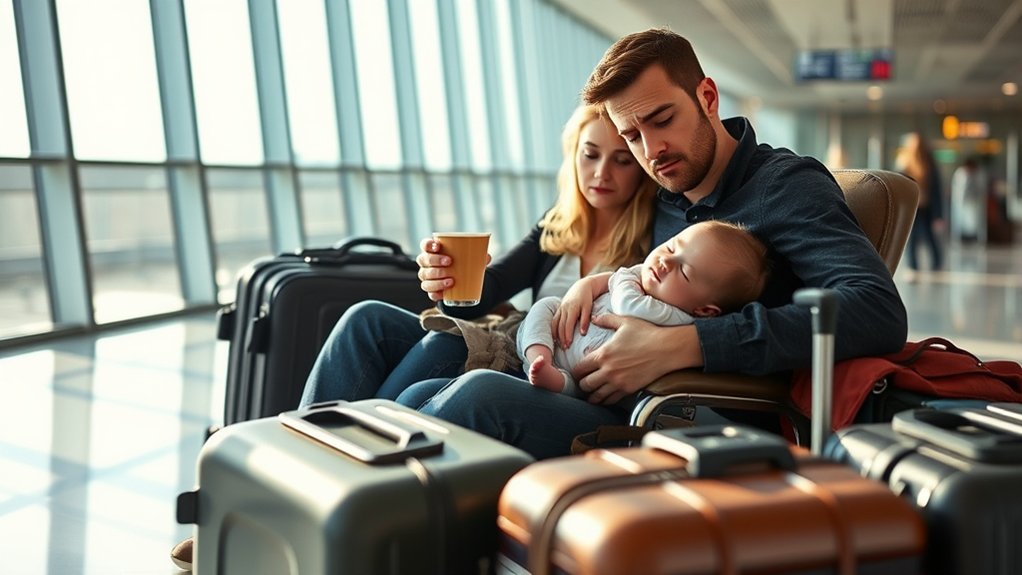
Steering through the turbulent waters of jet lag with a baby can feel like sailing through a storm without a compass. As a parent, you’re likely to face increased fussiness and disrupted sleep patterns that can leave you both feeling overwhelmed. Understanding how to manage this shift can make a significant difference in your travel experience. Discovering effective strategies to ease these challenges is essential for both you and your little one.
Understanding Jet Lag: The Science Behind It
When you travel across time zones, your body’s internal clock can feel out of sync, leading to jet lag. This occurs because your circadian rhythm, which regulates sleep and wakefulness, struggles to adjust to the new time zone.
Your body relies on cues like daylight to reset this rhythm, and sudden changes can disrupt your sleep patterns, energy levels, and overall well-being. You might find yourself feeling tired during the day and awake at night, making it hard to function.
To ease the adjustment, try adjusting your schedule before departure, staying hydrated during your flight, and exposing yourself to natural light upon arrival.
Understanding this process can help you manage expectations and minimize discomfort for you and your baby.
Symptoms of Jet Lag in Infants
How can you tell if your baby is experiencing jet lag? Recognizing the symptoms can help you support your little one as they adjust.
Keep an eye out for these signs:
- Increased fussiness or irritability
- Changes in appetite, either eating less or more than usual
- Difficulty falling asleep or staying asleep
- Unusual drowsiness during the day
- Frequent waking at night
If you notice these symptoms, it’s likely that your baby’s internal clock is out of sync with their new environment.
Understanding these signs can help you respond appropriately and create a soothing routine that may ease their adjustment.
How Time Zone Changes Affect Babies
When you change time zones with your baby, you might notice their sleep patterns getting disrupted.
This can lead to crankiness and confusion as their little bodies struggle to adapt.
You’ll also need to adjust their feeding schedule to help them settle into the new routine smoothly.
Sleep Patterns Disruption
As you navigate the challenges of traveling with a baby, it’s important to recognize that time zone changes can considerably disrupt your little one’s sleep patterns.
Babies thrive on routine, and shifting their sleep schedule can lead to crankiness and restless nights. Here are some tips to help ease the adjustment:
- Gradually adjust your baby’s sleep schedule before leaving.
- Maintain a calming bedtime routine, even in new environments.
- Use blackout curtains to create a dark sleeping space.
- Keep the room at a comfortable temperature for sleep.
- Be patient; it may take several days for your baby to adjust.
Additionally, ensuring your baby has proper emotional well-being during this transition can further support their ability to adapt to new sleep patterns.
Feeding Schedule Adjustments
Adjusting your baby’s feeding schedule can feel challenging, especially with the added stress of time zone changes. Babies thrive on routine, so altering their feeding times may lead to fussiness. To help ease the adjustment, consider this simple guideline:
| Local Time | Baby’s Feeding Time | Suggested Adjustment |
|---|---|---|
| 7:00 AM | 8:00 AM | Move forward 1 hour |
| 12:00 PM | 1:00 PM | Move forward 1 hour |
| 5:00 PM | 6:00 PM | Move forward 1 hour |
| 10:00 PM | 11:00 PM | Move forward 1 hour |
Gradually shift feeding times by 15-30 minutes each day. This approach helps your baby adapt while minimizing discomfort. Remember, patience is key during this adjustment!
Tips for Minimizing Jet Lag Before Travel
To help your baby avoid the discomfort of jet lag, it’s essential to prepare in advance. Here are some practical tips that can ease the adjustment:
- Adjust sleep schedules gradually a few days before departure to align with the destination’s time zone.
- Create a calming bedtime routine that your baby can associate with sleep, no matter where you are.
- Limit screen time before bed to help your baby wind down.
- Keep your baby hydrated during travel, as dehydration can exacerbate fatigue.
- Pack familiar items like a favorite blanket or toy to provide comfort in a new environment.
Additionally, consider seeking advice from a breastfeeding expert if you have concerns about your baby’s feeding schedule during travel.
With thoughtful planning, you can help your little one adjust more smoothly, making the journey less stressful for both of you.
Strategies for Coping With Jet Lag During Travel
How can you help your baby cope with jet lag during travel? It’s essential to create a comforting environment and stick to a flexible routine. Here are some practical strategies:
| Strategy | Description | Benefits |
|---|---|---|
| Stay Hydrated | Offer fluids regularly to keep them hydrated. | Reduces fatigue and irritability. |
| Use White Noise | Bring a portable white noise machine. | Helps drown out unfamiliar sounds. |
| Comfort Items | Pack their favorite blanket or toy. | Provides familiarity and security. |
| Keep Moving | Engage in gentle play during layovers. | Distracts and helps expend energy. |
Adjusting Sleep Schedules: A Step-by-Step Guide
After you’ve implemented some strategies to help your baby cope with jet lag, the next step involves adjusting their sleep schedule. This can feel overwhelming, but with a few practical steps, you can make it easier for both of you.
- Gradually shift bedtime by 15-30 minutes each night.
- Keep a consistent wake-up time, even on weekends.
- Limit daytime naps to 1-2 hours to encourage nighttime sleep.
- Expose your baby to natural light during the day to reset their internal clock.
- Monitor your baby’s cues for sleepiness and adjust as needed.
Creating a Comfortable Sleep Environment for Your Baby
Creating a comfortable sleep environment for your baby is essential, especially when adapting to new time zones.
Start by finding a quiet, dark space where your baby can rest undisturbed. Use blackout curtains to block out unwanted light and a white noise machine to drown out unfamiliar sounds.
Create a serene sleep space with blackout curtains and a white noise machine to help your baby rest peacefully.
Make sure the room temperature is comfortably cool, ideally between 68-72°F (20-22°C). Consider using a familiar blanket or sleep sack, as it can provide a sense of security.
Keep the sleep area safe and clutter-free, ensuring there are no loose items.
Finally, establish a calming bedtime routine that includes gentle rocking or soft lullabies, helping your baby adjust smoothly into sleep, regardless of time zone changes.
The Role of Nutrition in Managing Jet Lag
Adjusting your baby’s sleep environment can considerably impact their ability to cope with jet lag, but nutrition also plays an essential role in this process.
Ensuring your little one has a balanced diet can help regulate their sleep patterns, making the shift smoother.
- Offer light meals closer to bedtime to promote drowsiness.
- Provide foods rich in tryptophan, like turkey or bananas, to aid sleep.
- Keep hydration levels up; dehydration can worsen irritability and fatigue.
- Avoid sugary snacks that can lead to energy spikes and crashes.
- Consider timing meals to align with the new time zone.
Making the Most of Your Travel Experience With a Baby
Traveling with a baby means you’ll likely face some sleep disruptions, but that doesn’t have to ruin your trip.
By preparing for these changes and establishing a flexible routine, you can make the most of your experience.
Embrace the journey and find joy in new adventures together, no matter the challenges.
Prepare for Sleep Disruptions
Here are some tips to help you navigate the challenges:
- Pack familiar sleep items like their favorite blanket or stuffed animal.
- Keep a flexible schedule; don’t stress if nap times shift.
- Consider bringing a portable white noise machine to drown out unfamiliar sounds.
- Plan for longer travel times to accommodate breaks and feedings.
- Stay calm and patient; your baby will sense your mood.
- Remember that regular sleep habits can help your baby adjust to new environments more easily.
Establish a Routine
As you commence on your journey, establishing a routine can help ease the change for both you and your baby.
Try to maintain your baby’s regular nap and feeding schedules, even in a new environment. This consistency can provide comfort amid the chaos of travel.
Before your trip, practice adjusting their sleep times slightly to match your destination’s time zone. Once you arrive, create a calming bedtime routine—think soothing baths, quiet stories, or familiar lullabies.
It’s essential to keep your baby’s surroundings as consistent as possible, using their favorite blanket or stuffed animal.
Frequently Asked Questions
Can Jet Lag Affect Breastfeeding Schedules?
Yes, jet lag can disrupt breastfeeding schedules. You might find your baby’s feeding times shift, making it challenging to maintain a consistent routine. Adjusting your schedule gradually can help both of you adapt more smoothly.
How Long Does Jet Lag Typically Last for Babies?
Jet lag typically lasts for babies about a few days, but it can vary. You’ll notice your little one adjusting gradually, so be patient and maintain a consistent routine to help them adapt more easily.
Are There Age-Related Differences in Jet Lag Severity?
You’ll notice younger babies often experience less severe jet lag than toddlers. Their natural rhythms adjust quickly, while older children may struggle more. Understanding these age-related differences helps you navigate travel challenges better.
Should I Wake My Baby During the Night to Adjust?
You shouldn’t wake your baby during the night unnecessarily. Instead, focus on gradually adjusting their schedule and creating a calm environment. This way, they’ll adapt better to the new time zone without added stress.
Is Medication Recommended for Alleviating Jet Lag in Infants?
Medication isn’t generally recommended for jet lag in infants, as studies show over 80% of babies adjust naturally within a week. Instead, focus on routines and gentle methods to help your little one adapt.
Conclusion
As you navigate the challenges of jet lag with your baby, envision a soft, cozy blanket wrapping around you both, providing comfort amid the chaos. By gradually adjusting schedules and creating a nurturing environment, you can transform stressful travel into cherished memories. Embrace the journey, knowing that with patience and preparation, you’ll find your rhythm again. Together, you’ll explore new horizons, turning each sleepy yawn into a delightful adventure waiting to unfold.
