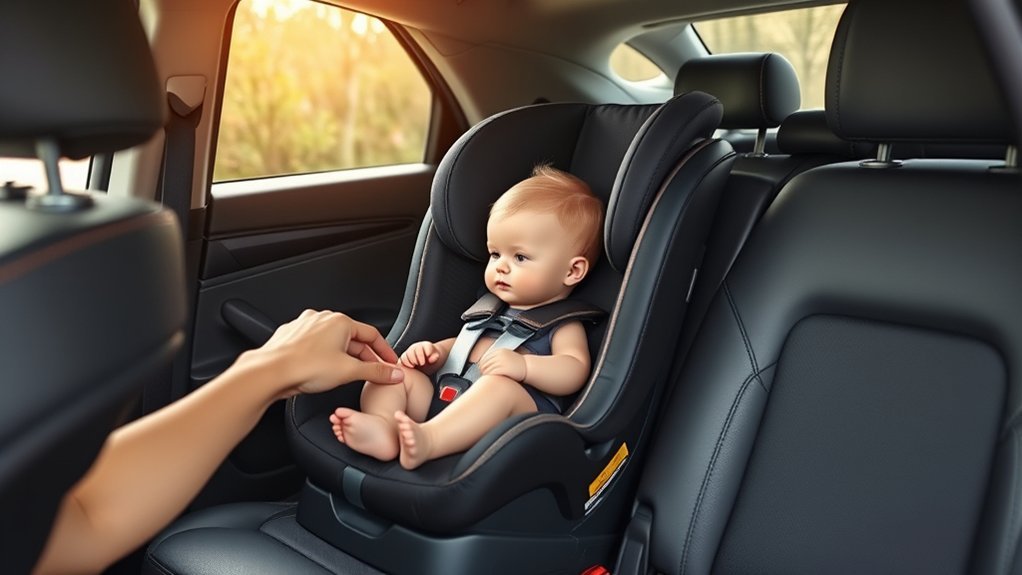
For a newborn, set your infant car seat to about 45 degrees so the airway stays open and the head doesn’t slump; as your baby grows, the seat can often move closer to 30 degrees if the manual allows. Check the built-in recline indicator—bubble, line, wheel, or ball—and keep it in the approved zone on a level surface. If the setup seems unclear, a few more details can help you verify it.
What Recline Angle Is Safe for Infant Car Seats?
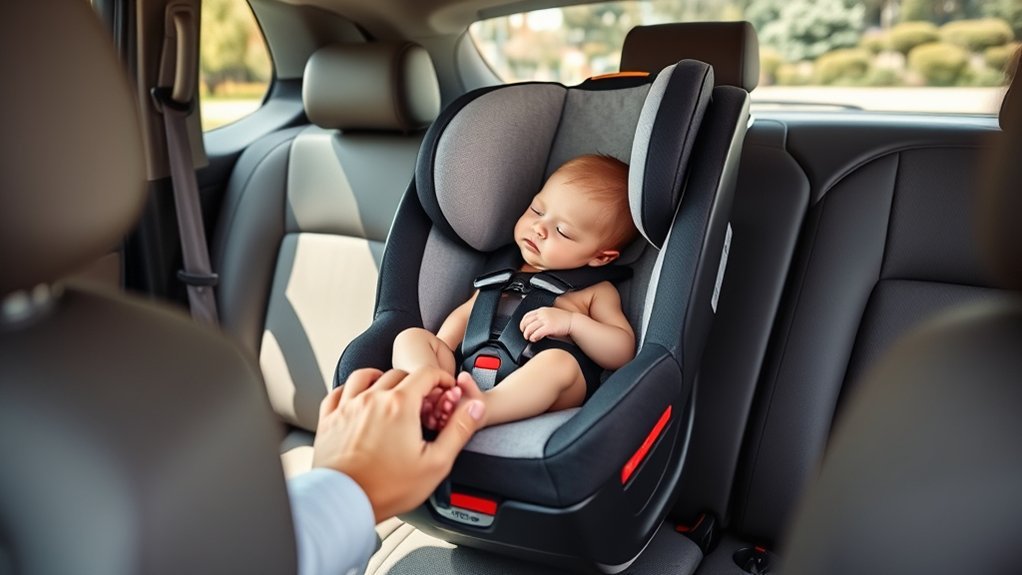
For newborns, the safe recline angle in an infant car seat is typically about 45 degrees, which helps keep the airway open and reduces the risk of the head slumping forward. You should set your car seat to this recline angle for newborns to support safety and protect breathing.
Newborns should ride at about a 45-degree recline to help keep the airway open and breathing safe.
As your infant grows and gains head control, you can usually move toward about 30 degrees, if the manual allows it. Keep the seat on a level surface so your measurement stays accurate. Many rear-facing seats use recline indicators, including bubbles or lines, to help you confirm the angle.
Still, you must follow the car seat manual first, because each model has specific limits. If the angle is too steep or too upright, you can compromise airway safety and increase crash risk.
Check that your baby’s head stays supported against the seat, and adjust the setup only within the manufacturer’s guidelines for freedom with control.
How to Read a Car Seat Recline Indicator?
To read a car seat recline indicator, first identify the type on your seat—bubble, wheel, line, or ball bearing—and then check where it falls against the marked range for your child’s age. Your infant seat uses recline angle indicators to show the correct recline angle, so you can set it without guesswork.
- Match the indicator to the age mark. Newborns usually need a more reclined position; older infants can ride slightly more upright.
- Adjust the base or seat until the marker sits inside the approved zone. If you see a wheel indicator, confirm the position by hand; some installs need extra checking.
- Verify against the manual every time. Ball indicators and line systems still depend on model-specific guidance, and the manual tells you how to read them precisely.
For freedom with safety, trust the marker, not intuition. If you’re unsure, consult a Certified Child Passenger Safety technician.
How Bubble, Line, Wheel, and Ball Indicators Work?
You’ll use bubble, line, wheel, and ball indicators to confirm the seat’s recline angle and match it to your child’s age and stage.
Bubble and ball indicators typically show two approved positions, while line and wheel markers guide you to the correct range on the base or shell.
Check the manual for the exact indicator rule for your model, because the required position can vary by seat.
Bubble Level Indicators
Bubble, line, wheel, and ball indicators are visual guides that help you set the correct infant car seat recline angle.
With bubble level indicators, you check whether the bubble sits centered in the marked zone. This tells you the seat’s recline angle matches the age range shown, usually 0-3+ months or 3+ months. That matters because newborns must stay in proper positioning so their airway stays open.
- Place the seat on the base.
- Read the bubble after tightening.
- Adjust until the bubble centers exactly.
Use your manual for the exact zone, because models vary. If you’re unsure, a child passenger safety technician can verify the setup.
This simple check helps you install with confidence and protect your infant’s breathing.
Line, Wheel, And Ball Indicators
With line indicators, you align the line to the ground, or match dual lines to the age zone shown.
Wheel indicators on rear-facing bases show your reclined angle in a rotating window; you may need a steeper setting for newborns and a more upright one for older infants.
Ball indicators use a ball bearing that settles into the correct zone for 0+ months or 3+ months, depending on the seat.
Always read the car seat manual before installing. It tells you the exact angle, age, and weight limits, so you can set the seat safely and with confidence.
Newborn Recline vs. Older Baby Position?
Newborns need a more reclined car seat position—typically about 45 degrees—to help keep their airways open and prevent the head from falling forward.
Older babies, especially after about 3 months, can usually sit a bit more upright at around 30 degrees as they gain head and neck control.
Older babies, especially after 3 months, can usually ride a bit more upright as head control improves.
For a newborn baby, keep the recline position within the seat’s infant range; as car seats recline, they must support safety without letting the chin drop.
You can use dual indicators to confirm the correct angle for growth.
- Check the newborn setting first.
- Shift gradually as head control improves.
- Recheck after every growth change.
If you place a newborn too upright, you risk airway obstruction.
If you recline too far, you increase crash injury risk.
You’re not locked into one angle; you can adjust with the child’s development and the seat’s guidance.
That’s how you protect freedom and safety.
How to Adjust Car Seat Recline With Noodles or Towels?
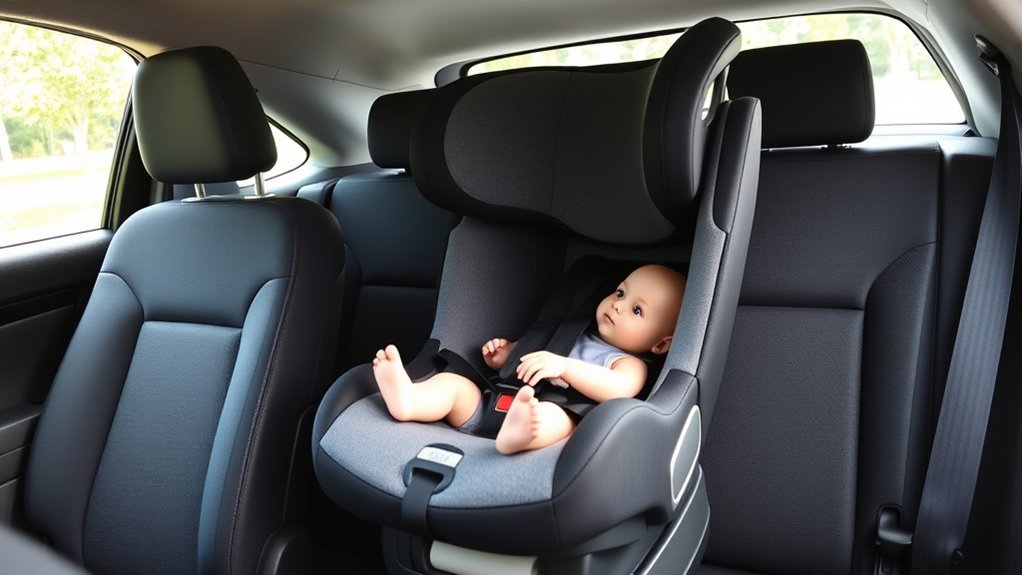
If your rear-facing seat needs a slight recline adjustment, you can use noodles or rolled towels to help set the angle within the seat’s allowed range.
Check the manual first: some brands, including Chicco and Diono, don’t permit this method. If the seat allows it, place the noodle or rolled towel under the base of the car seat, not behind the infant, to fine-tune the recline.
Park the vehicle on a flat surface before you install, because slope changes the angle reading and can throw off your setup.
After tightening the seat, verify that it stays secure and stable; it shouldn’t shift when you test it at the belt path.
For newborns, aim for roughly a 30–45 degree recline, unless your manual specifies otherwise.
Recheck the angle often and watch the infant’s head position to keep the airway clear and support safe, independent travel.
When to Ask an Expert to Check the Seat?
When you’re unsure whether the recline angle is correct, consult a certified child passenger safety technician for hands-on guidance. An expert can verify your car seat setup, assess the recline, and help you protect your child without guesswork.
Check for professional review when:
- Your baby’s head flops forward while seated.
- The recline indicator is hard to read or seems inconsistent.
- Installation feels unstable, confusing, or changes after growth adjustments.
You should also recheck the seat regularly, because a child’s size changes can shift the recline setting.
A technician can confirm that the car seat matches the manufacturer’s specifications and that the indicator shows a safe position.
If you want extra confidence, attend a community safety workshop or event for live demonstrations. That support can free you from uncertainty and help you install the seat correctly, every time.
Frequently Asked Questions
What Angle Should a Newborn Car Seat Recline At?
You should recline your newborn’s car seat about 45 degrees for safe positioning. Check seat installation using car seat features like level indicators; this supports infant safety and gives you practical travel tips.
What Is the Acceptable Recline for a Newborn?
You should aim for about 45 degrees recline for a newborn. It supports Recline safety, Newborn comfort, and proper Seat installation; use Angle adjustment only per Parent guidelines, and check your seat’s indicator.
Is It Okay for Newborn’s Head to Be Tilted in a Car Seat?
No, you shouldn’t let your newborn’s head tilt forward; it compromises airway safety. Use proper positioning, head support, and car seat features to avoid common mistakes. Check the seat’s indicators and adjust until alignment stays secure.
Should a Car Seat Be at a 45 Degree Angle?
No, you don’t worship the recline angle like a sacred throne; you set your car seat near 45 degrees for newborn infant positioning, follow safety standards, confirm proper installation, and check your manual.
Conclusion
Getting the recline angle right keeps your infant’s airway open and your install safe. Check the indicator first, then fine-tune the seat until the bubble, line, wheel, or ball lands in the approved range. For newborns, use the more reclined setting; as your baby grows, you can usually sit the seat a bit more upright. If you’re using noodles or towels, secure them tightly. When in doubt, have a certified technician check it—better safe than sorry.
