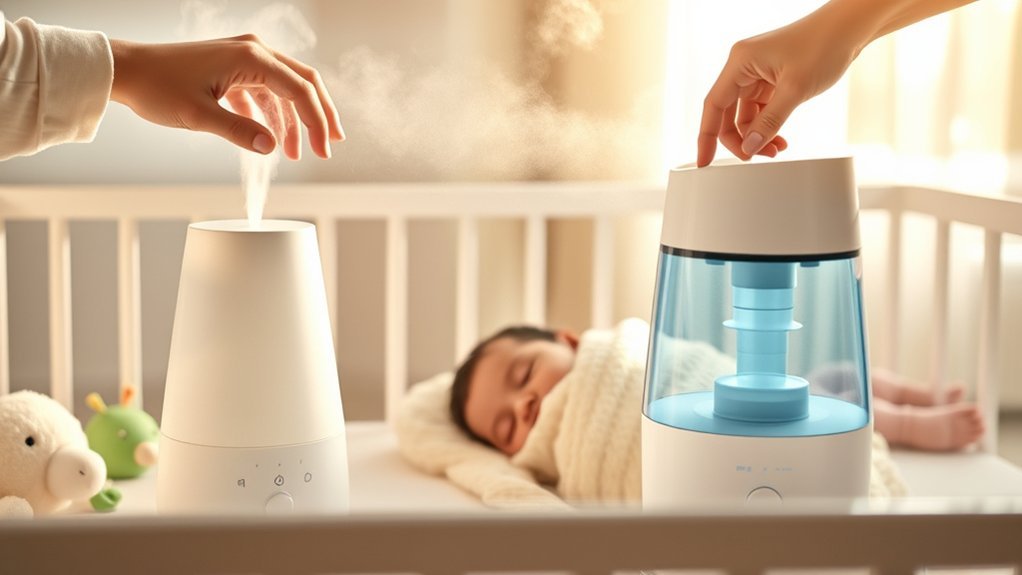
Low humidity can be hard on children’s skin and airways, especially during winter or in dry climates. A humidifier adds moisture back into the air and can make a real difference for your child’s comfort and health. But not every humidifier is the same, and choosing the wrong one, or using it incorrectly, can create new problems.
Quick Answer
- Humidifiers help children breathe easier, sleep better, and avoid dry, irritated skin.
- The ideal indoor humidity level is 30–50%.
- Cool-mist and ultrasonic models are generally the safest choices for kids’ rooms.
- Clean your humidifier every few days to prevent mold and bacteria growth.
- Watch for signs of over-humidification, such as condensation on windows or a musty smell.
Understanding Humidifiers: How They Work
Humidifiers add moisture to the air by releasing water vapor or mist into a room. There are four main types: evaporative, ultrasonic, steam vaporizer, and impeller. Each works differently and suits different needs.
Evaporative models use a fan to blow air through a wet wick, which naturally limits how much moisture they release. Ultrasonic humidifiers use high-frequency vibrations to create a fine mist and tend to run quietly, making them popular for bedrooms.
The Importance of Humidity Levels for Children
The right humidity level in your home supports your child’s respiratory health, keeps skin hydrated, and can improve sleep quality. Too little moisture in the air is a common and easy-to-fix problem.
Respiratory Health Benefits
Dry air irritates the airways and can make children more prone to colds, congestion, and respiratory infections. Keeping humidity at the right level helps in several ways:
- Keeps airways moist, reducing irritation
- Helps thin mucus, making it easier to breathe
- Supports overall lung function and health
- Reduces the risk of colds and flu
- Alleviates allergy symptoms by minimizing dust and airborne irritants
Balanced humidity is a simple, low-effort way to support your child’s breathing and overall health.
Skin Hydration Needs
Children’s skin is more sensitive than adult skin and loses moisture faster in dry conditions. When indoor air is too dry, it can cause irritation, redness, and general discomfort.
A humidifier helps maintain moisture in the air, which reduces the chance of dry skin and keeps your child more comfortable day and night.
Sleep Quality Improvement
Dry air is a quiet disruptor of sleep. It can cause snoring, a dry throat, or nasal congestion that wakes children up during the night.
A humidifier running in the bedroom can ease these issues:
- Reduces snoring and congestion
- Prevents dry throat and skin irritation
- Enhances comfort during colder months
- Encourages deeper, more restful sleep
- Supports overall respiratory health
Health Benefits of Using a Humidifier
A humidifier is especially useful during dry seasons or in arid climates. It makes breathing more comfortable, can reduce allergy symptoms by lowering irritation in nasal passages and throats, and helps prevent the dry skin that often comes with low-humidity environments.
You may notice fewer coughs, less congestion, and better rest across the whole family once humidity is balanced.
A well-hydrated environment enhances skin health and promotes overall wellness by preventing dryness and irritation.
Types of Humidifiers: Which One Is Right for Your Family?
Different types of humidifiers suit different spaces and needs. Here’s a quick breakdown:
- Cool mist: Good for larger spaces and can help reduce allergens.
- Warm mist: Soothes coughs and congestion, especially in winter.
- Ultrasonic humidifiers: Quiet and energy-efficient, well-suited for bedrooms.
- Evaporative humidifiers: Self-regulating; use a fan to circulate moisture.
- Hybrid models: Combine cool and warm mist features for more flexibility.
Consider noise levels, energy use, and how easy the unit is to clean before making a choice.
Where to Place a Humidifier in Your Child’s Room
Placement matters more than most people realize. Put the humidifier at least three feet from where your child sleeps so the mist doesn’t land directly on bedding or skin. Damp bedding can encourage mold growth over time.
Avoid placing it on carpet or directly on hardwood floors. A small table or dresser works well, as long as the mist points away from the wall. Walls that stay wet can develop mold behind the surface.
Keep the unit away from electronics and out of reach of young children. If you’re using a warm-mist or steam vaporizer, extra distance is worth it to prevent accidental burns.
Tips for Maintaining Your Humidifier
A humidifier you don’t clean regularly can do more harm than good. Mold and bacteria thrive in standing water and can be released into the air if the tank isn’t cleaned often.
Clean your humidifier every few days using a mix of vinegar and water. Wipe down the tank and base, then rinse thoroughly. Check your manual for the recommended filter replacement schedule, as this varies by model and affects how well the unit performs.
Safety Considerations When Using Humidifiers
A humidifier can genuinely improve your home’s air quality, but a few safety habits keep things running safely.
Key tips to follow:
- Keep the humidifier out of reach of children and pets.
- Maintain ideal humidity levels (30–50%) to prevent mold growth.
- Clean and disinfect the humidifier regularly to prevent bacterial buildup.
- Use distilled or demineralized water to reduce mineral deposits.
- Watch for excess moisture, such as condensation forming on windows.
Signs Your Home Needs a Humidifier
Dry skin, frequent nosebleeds, and increased allergy symptoms are all signs that your indoor humidity might be too low. Static electricity and cracks in wooden furniture point in the same direction.
If your family is often congested or uncomfortable indoors, check the humidity level with a simple hygrometer (a small device that measures moisture in the air). If readings are consistently below 30%, a humidifier is worth considering.
Frequently Asked Questions
Can Humidifiers Help With Allergies in Children?
Yes, humidifiers can help with allergy symptoms in children. Adding moisture to the air reduces congestion and irritation, eases breathing, and creates a more comfortable environment overall.
How Often Should I Replace the Water in My Humidifier?
Replace the water daily. Fresh water prevents mold and bacteria from building up in the tank, which protects the air your family breathes.
Are There Any Specific Brands Recommended for Children?
Brands like Honeywell and Vicks are commonly recommended for family use. They offer reliable safety features and are widely available. Read reviews and check for child-safe design details before purchasing.
Can a Humidifier Cause Mold Growth in My Home?
Yes, if humidity levels get too high or the unit isn’t cleaned regularly. Keep humidity between 30–50%, monitor moisture levels, and clean the humidifier on a regular schedule to avoid this problem.
How Do I Know if I Have the Right Humidity Level?
Use a hygrometer to check. The ideal range is 30–50%. That range keeps your space comfortable and helps prevent both dryness and mold growth.
Conclusion
A humidifier is a small, practical tool that can have a noticeable impact on how your family feels at home, especially during dry months. Better sleep, easier breathing, and healthier skin are all within reach. Pay attention to the signs your home gives you, maintain the unit properly, and choose the right type for your space. Your family will feel the difference.

