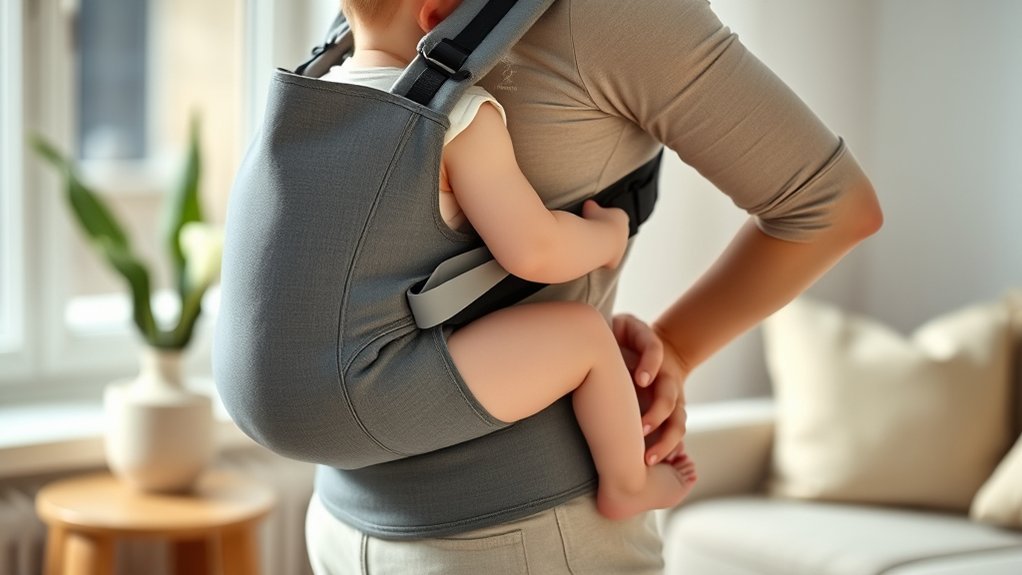
To carry your baby hip-healthy, use a carrier that supports the thighs knee-to-knee and keeps the hips flexed with knees higher than the bottom. That “M” position helps reduce hip strain and supports normal development. Make sure the fit is snug, not tight, and never forces the legs straight. Check head control and adjust by age. If your baby has hip dysplasia, choose a carrier with careful alignment and frequent position checks to protect their hips.
What Makes a Carrier Hip-Healthy?

A hip-healthy carrier supports your baby in the natural “M” position, with thighs supported, hips spread, and knees higher than the bottom to promote ideal hip joint development.
You should look for precise hip positioning that keeps the legs open, not compressed. The International Hip Dysplasia Institute certifies carriers that preserve this M position because wide leg spread helps reduce risk for hip dysplasia.
Look for hip-safe carriers that keep legs open in the M position to support healthy development.
Quality designs provide knee-to-knee support, so your baby’s weight rests across the thighs rather than loading the groin. That alignment helps you maintain healthy hip development while still carrying with freedom and flexibility.
Check the fit often: your baby’s legs shouldn’t be tightly swaddled, and movement should feel natural.
A carrier that mirrors how you hold your baby in arms supports liberation from strain and supports anatomical alignment. Choose one that lets you carry securely without sacrificing mobility or your baby’s developing joints.
Understanding variable relationships in hip positioning is essential for ensuring your baby’s comfort and health.
Why Does the M Position Support Baby Hips?
You support baby hips best when the carrier holds the thighs in the M position, with the knees higher than the bottom and the hips well aligned. This knee-to-knee support distributes pressure across the hip sockets and helps maintain normal joint development during early growth. It also mirrors the natural flexed posture of the womb, which can reduce the risk of hip dysplasia and related alignment problems. Additionally, ensuring proper tummy time can further enhance overall motor skill development and hip health in babies.
M Position Basics
The “M” position supports healthy hip development by keeping a baby’s thighs fully supported, hips abducted, and knees higher than the bottom. You can use baby carriers that hold the thighs knee-to-knee, so your baby’s hips spread naturally and stay aligned. This mirrors the Pavlik harness posture used for hip dysplasia management and helps reduce joint stress. The International Hip Dysplasia Institute recommends this setup because it’s stable, functional, and protective during early months.
| Feature | M position | Effect |
|---|---|---|
| Thigh support | Knee to knee | Maintains alignment |
| Hip angle | Hips spread | Promotes comfort |
| Knee level | Higher than bottom | Limits strain |
| Carrier fit | Properly fitted | Supports freedom |
Keep your baby’s legs free to move while you preserve healthy hip positioning.
Hip Development Support
Because a baby’s hips are still developing rapidly from birth to six months, the M position helps guide joint growth by keeping the thighs supported, the hips flexed and abducted, and the knees higher than the bottom.
You reduce uneven pressure on the hip joints and help promote healthy socket formation. This posture mirrors the flexed shape babies hold in the womb, so your baby’s body receives familiar, developmentally appropriate support.
A carrier can help when it maintains this alignment, and the International Hip Dysplasia Institute recommends it to lower hip dysplasia risk.
You also gain a practical, freeing way to hold your baby while preserving the same therapeutic geometry used in Pavlik harnesses for hip dysplasia treatment.
How Can You Tell if a Carrier Fits Safely?
Your baby’s knees should sit higher than the bottom, not level with it or below it; this alignment helps reduce hip dysplasia risk. The carrier shouldn’t force the legs straight or press them tightly together. Instead, it should allow natural leg movement while keeping your baby in a good position.
Adjust the straps until the fit feels snug and secure, but never restrictive. If the carrier shifts, gaps appear, or your baby slumps, refit it immediately. For added confidence, seek fit checks from babywearing educators who can confirm correct positioning for your baby’s growth stage.
When you follow this guidance, you carry with precision, freedom, and safety, ensuring that your baby can be comfortably carried while also encouraging proper digestive system function.
What BabyBjörn Features Encourage Movement?
You can use BabyBjörn’s adjustable leg support to keep your baby in a stable, hip-healthy position while still allowing natural leg movement. The carrier’s design gives your baby freedom to kick and shift, which matches the way infants move when held in your arms. As your child grows, the fit adjusts to preserve support and maintain comfortable, developmentally appropriate movement. Additionally, ensuring a firm mattress in the sleep environment is crucial for reducing the risk of SIDS during sleep.
Adjustable Leg Support
BabyBjörn carriers use adjustable leg support to keep your baby’s thighs spread in a natural, hip-friendly position. You get ergonomic support that mirrors being held in your arms, which helps promote healthy hip development.
The carrier maintains the “M” position: thighs supported, knees higher than the bottom, and hips aligned for stability. That configuration helps reduce risk factors associated with hip dysplasia. You can trust the design because the International Hip Dysplasia Institute recognizes these carriers as hip-healthy.
Each model supports proper leg spread while preserving comfort and safety, so you’re not forced to choose between freedom and clinical protection. With adjustable leg support, you keep your baby secure, aligned, and positioned for sound musculoskeletal development without restricting sensible movement.
Natural Movement Freedom
Beyond adjustable leg support, BabyBjörn carriers also encourage natural movement by letting your baby kick, shift, and reposition their legs with ease.
You support ergonomic positioning that mirrors being held in your arms, so your baby can move without restraint. This baby carrier promotes an M position, with thighs supported and knees bent higher than the bottom, which helps reduce hip dysplasia risk.
Because the design allows frequent posture changes, your baby doesn’t stay fixed; instead, they can reposition naturally throughout the day. That freedom matters when you want secure support without stiffness.
The carrier’s structure also aligns with WHO guidance for regular position changes, helping you maintain dynamic comfort. For parents seeking liberation, this is controlled mobility: stable, flexible, and clinically sound.
Growth-Friendly Fit
A growth-friendly BabyBjörn fit starts with the carrier’s ergonomic M position, which supports a natural leg spread with the knees bent higher than the hips to protect alignment during rapid hip development. You give your baby a hip-healthy position without restricting movement, and the carrier moves with you.
- Adjustable leg settings support growth.
- Inward-facing carry keeps posture stable until six months.
- The carrier lets your baby kick, flex, and self-adjust.
- The design mirrors being held in your arms, improving comfort and bonding.
This precise fit promotes a healthy hip foundation while preserving freedom. You don’t sacrifice liberation for safety; you combine both in one carrier.
How Should You Carry Baby by Age?
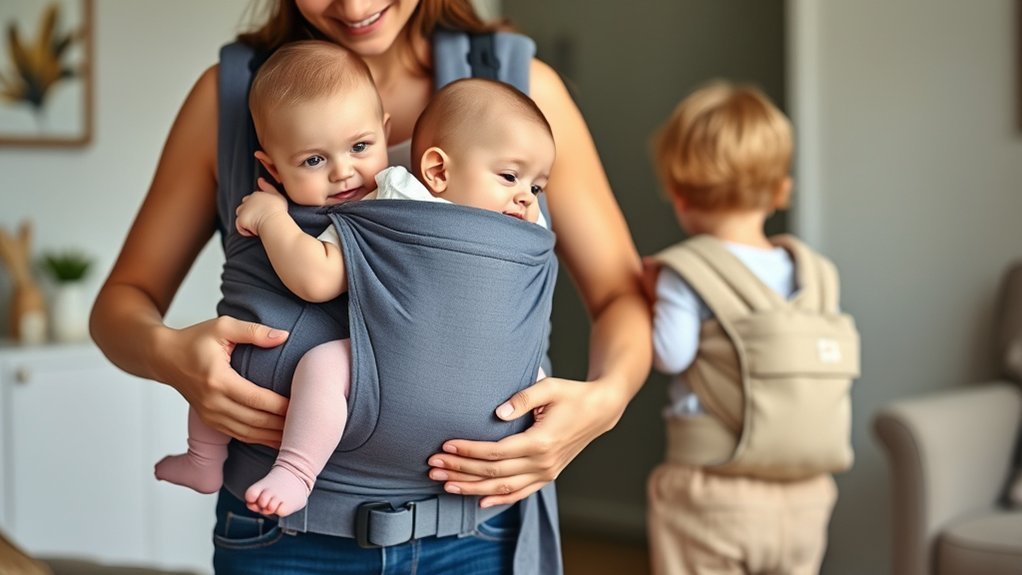
How you carry your baby should change as your baby grows: for newborns (0–2 months), support the head and neck with a cradle or tummy-to-tummy hold and keep the legs flexed to encourage healthy hip development; from 3–6 months, once head control improves, use upright carries with back support and keep the hips in an “M” position; after 6 months, you can vary carrying styles as hip and spine strength increase, but avoid positions that strain your posture or your baby’s hips. In baby carrying, these infant positions help protect the hip joint and reduce hip dysplasia risk while respecting your body’s autonomy. Choose inward-facing carriers until at least one year old to maintain alignment. Reassess your setup every hour and change position to restore circulation and reduce strain. If a carry feels unstable or forces twisting, adjust immediately. Head control milestones are essential for ensuring that your baby is ready for different carrying styles. Clear, age-based support lets you carry with confidence, comfort, and control, without sacrificing safety or mobility.
How Does Hip Dysplasia Affect Babywearing?
Developmental hip dysplasia (DDH) can affect how you babywear because misalignment of the hip joint makes proper positioning essential for healthy development. You need babywearing that protects the hips, not restricts them.
The IHDI recommends the M position, with thighs supported, hips spread, and knees higher than the bottom. This positioning reduces stress and supports natural alignment.
- Use carriers with knee-to-knee support.
- Avoid swaddling or carrying with legs straight.
- Check positioning often, especially in the first six months.
- Choose carriers certified hip-healthy by the IHDI.
If your carrier holds your baby tight with legs together, it can increase hip dysplasia risk. You deserve freedom without compromising anatomy. Additionally, swaddling techniques that allow for natural leg movement can further support hip health.
Frequently Asked Questions
Can Babywearing Help Soothe a Fussy Newborn?
Yes, you can use babywearing to soothe a fussy newborn. You’ll improve newborn positioning, increase skin contact, and pair calming sounds with soothing techniques; choose carrier types that support close, secure comfort and your freedom.
What Fabrics Are Best for Hot Weather Babywearing?
You’ll do best with breathable materials like cotton, linen, or mesh. Choose lightweight options and moisture wicking fabrics for temperature regulation. Add sun protection with UPF covers, and you’ll keep baby cool, secure, and free.
How Do You Clean and Maintain a Baby Carrier?
Like tending a tool, you clean your carrier with mild soap, cool water, and air-dry it. Check carrier materials, follow cleaning techniques, use maintenance tips, observe safety precautions, and choose dry storage solutions.
Can Both Parents Use the Same Carrier Comfortably?
Yes, you can if the carrier’s compatibility, adjustable features, and weight distribution suit both of you. You’ll match fit to parent preferences, while keeping safety standards intact, so each of you carries comfortably and confidently.
What Accessories Improve Comfort During Babywearing?
You’ll improve comfort with padding options, adjustable straps, lumbar support, and an ergonomic design that distributes carrier weight evenly. Choose breathable inserts and supportive waist belts so you stay mobile, liberated, and strain-free longer.
Conclusion
When you choose a hip-healthy carrier, you support your baby’s natural development and your own confidence. Check that your little one’s knees stay higher than the hips, the spine remains neutral, and the fit feels secure without restricting movement. By matching the carry to your baby’s age and any hip concerns, you don’t just wear your baby—you protect comfort, alignment, and growth. Safe carrying isn’t a detail; it’s the foundation.
