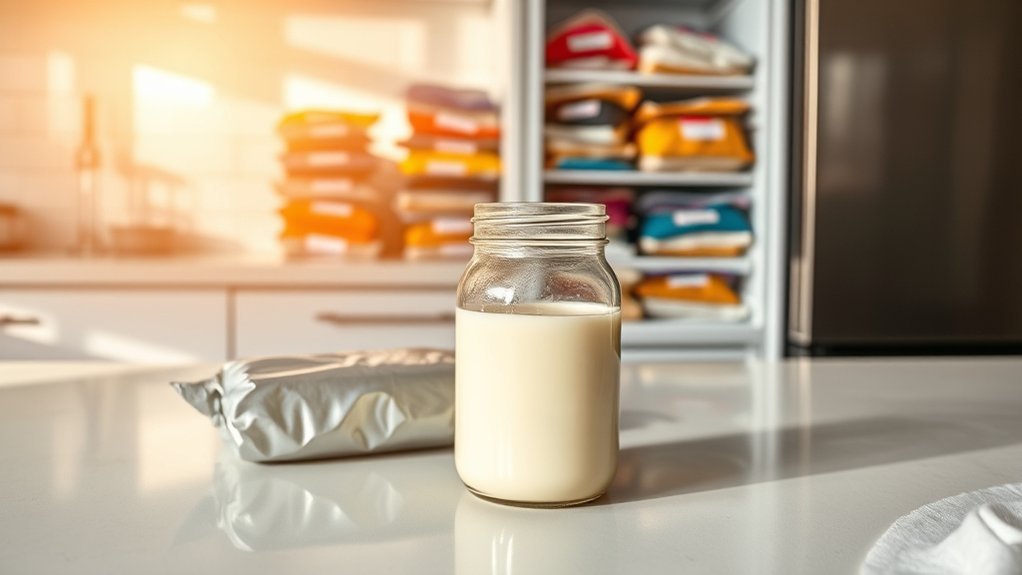
Freezing breast milk safely takes more than tossing a bag in the freezer. The right practices protect the quality of your milk and keep your baby safe. Knowing what to do — and what to avoid — makes the whole process less stressful.
Quick Answer
- Use BPA-free plastic bags or containers, or freezer-safe glass. Label each one with the date and volume.
- Store milk at 0°F (-18°C) or lower. Standard freezers are good for up to 6 months; deep freezers up to 12 months.
- Thaw in the fridge or warm water. Never refreeze thawed milk, and use it within 24 hours of thawing.
- Freeze milk in small 2–4 oz portions to reduce waste.
Understanding the Benefits of Freezing Breast Milk
Freezing breast milk lets you build a supply your baby can use even when you’re not around. That means more flexibility for running errands, returning to work, or simply getting a break.
Regular pumping and freezing can also help maintain your milk supply, since the body responds to demand. And having a stash on hand can ease a lot of the anxiety that comes with early parenthood.
Choosing the Right Containers for Storage
The container you choose affects both the quality of your milk and how easy storage will be. Focus on safe materials, the right size, and clear labeling.
Best Material Options
BPA-free plastic containers, breast milk storage bags, and freezer-safe glass bottles are all solid choices for long-term storage. Breast milk bags are space-efficient and help reduce freezer burn.
Whatever you choose, make sure the container has a tight-sealing lid to prevent leaks and contamination. Avoid regular plastic food containers — they may not hold up in freezing temperatures and can leach harmful chemicals.
Size and Measurement Tips
Smaller containers (2 to 4 oz) work well for individual feedings. Larger ones (6 to 8 oz) suit extended storage sessions. Base your choice on how much your baby drinks at one feeding.
Freezing in smaller portions cuts down on waste when you thaw. Always leave a little space at the top of each container — milk expands as it freezes.
Labeling for Organization
Good labeling keeps your stash organized and helps you track freshness. Include the date and time of pumping on every container so you can rotate your stock easily.
| Container Type | Features |
|---|---|
| Breast Milk Bags | Space-saving, pre-sterilized |
| Glass Jars | Reusable, non-toxic, freezer-safe |
| Plastic Containers | Lightweight, stackable, BPA-free |
Labeling and Dating Your Frozen Milk
Every time you pump, write the date and time on the container. Use a waterproof label or permanent marker so it doesn’t smudge in the freezer.
Noting the volume helps too, especially if you’re storing different batch sizes. Follow the “first in, first out” rule — use the oldest milk before newer batches.
Proper Freezing Techniques
Technique matters just as much as the container you use. These steps help preserve nutrients and avoid waste:
| Technique | Description | Tips |
|---|---|---|
| Use Freezer Bags | Choose BPA-free, breast milk storage bags. | Lay them flat for even freezing. |
| Fill Properly | Leave space for expansion. | Fill to the indicated line. |
| Avoid Thawing & Refreezing | Once thawed, don’t refreeze. | Use within 24 hours. |
| Organize Your Freezer | Store oldest milk at the front. | Rotate regularly. |
| Keep Milk Sealed | Make sure bags are tightly closed. | Check for leaks before freezing. |
The Ideal Freezing Temperature
Temperature is one of the most important factors in keeping breast milk safe. Set your freezer to 0°F (-18°C) or lower, and keep it there consistently.
Optimal Freezer Settings
Here’s a quick reference for different freezer types:
| Freezer Type | Recommended Temp | Notes |
|---|---|---|
| Standard Freezer | 0°F (-18°C) | Best for long-term storage. |
| Deep Freezer | -10°F (-23°C) | Maximum preservation. |
| Freezer Compartment | 0°F (-18°C) | Check for consistent temp. |
Temperature Monitoring Tips
A reliable freezer thermometer takes the guesswork out of monitoring. Check it regularly, especially if the freezer door gets opened often.
If you notice temperature swings, adjust your freezer settings or rearrange items to improve air circulation. Avoid storing milk near the door — that area experiences the most temperature fluctuation.
Duration of Frozen Breast Milk Storage
According to CDC guidelines, breast milk stored in a standard freezer stays safe for up to six months. In a deep freezer, you can extend that to about 12 months.
That said, quality can decline over time even within those windows. Using the oldest milk first keeps your baby getting the freshest nutrients from your stash.
Thawing Frozen Breast Milk Safely
How you thaw breast milk is just as important as how you freeze it. Here are the main methods:
| Method | Duration |
|---|---|
| Refrigerator | 12–24 hours |
| Warm water bath | 20–30 minutes |
| Running warm water | 5–10 minutes |
| Microwave (not recommended) | Not advised |
Don’t thaw breast milk at room temperature — it encourages bacterial growth. After thawing, gently swirl the milk rather than shaking it, and use it within 24 hours.
Signs of Spoilage in Frozen Milk
A sour or off smell is the clearest sign something is wrong. Fresh breast milk is typically creamy and yellowish; visible separation or clumping after swirling can also signal spoilage.
Keep track of storage time. Milk stored beyond six months in a standard freezer should be discarded. If anything about the milk looks or smells unusual, don’t use it.
Do’s of Freezing Breast Milk
These habits keep your milk safe and make the whole process more manageable:
| Do’s | Description | Benefits |
|---|---|---|
| Use clean containers | Sanitize before each use | Reduces contamination risk |
| Label & date | Note the date and amount | Keeps track of freshness |
| Freeze in small portions | Store milk in 2–4 oz servings | Eases thawing and reduces waste |
Don’ts to Avoid When Freezing Breast Milk
A few common mistakes can compromise your milk’s safety and quality. Here’s what to steer clear of.
Don’t use containers that aren’t designed for freezer use, such as regular plastic food storage containers. These can crack, leach chemicals, or fail to seal properly. Use BPA-free bags or containers specifically made for breast milk storage, or freezer-safe glass with enough headspace for expansion.
Don’t mix warm fresh milk directly with frozen or refrigerated milk. Cool fresh milk in the fridge first, then combine if needed.
Never refreeze thawed milk. Once it’s been thawed, bacteria can multiply quickly, so use it within 24 hours or discard it.
Don’t leave milk at room temperature for too long before freezing, as this speeds up spoilage. And always label each container with the date so you use older milk first.
Frequently Asked Questions
Can You Refreeze Thawed Breast Milk?
No. Once breast milk has been thawed, use it within 24 hours. Refreezing allows bacteria to grow and puts your baby at risk.
How Often Should I Clean My Breast Milk Storage Containers?
Clean your containers after every use. Washing them thoroughly after each session keeps your milk safe and free from contamination.
What Happens if Breast Milk Is Stored in a Regular Freezer?
A standard freezer at 0°F (-18°C) works well for storage up to six months. Quality may decline if stored longer. A deep freezer extends that to around 12 months.
Can I Mix Fresh and Frozen Breast Milk?
Yes, but cool the fresh milk in the refrigerator first. Adding warm milk directly to frozen milk can partially thaw it, which affects quality.
Is There a Limit to How Much Milk I Can Freeze at Once?
There’s no set limit beyond your available freezer space. Just make sure every container is sealed tightly and labeled with the date.
Conclusion
Freezing breast milk is one of the more practical things you can do in those early months. A clean container, the right temperature, and a clear label on every bag go a long way toward keeping your supply safe and your routine manageable. Each small step protects the nutritional value of what you’ve worked hard to produce — and that’s worth getting right.