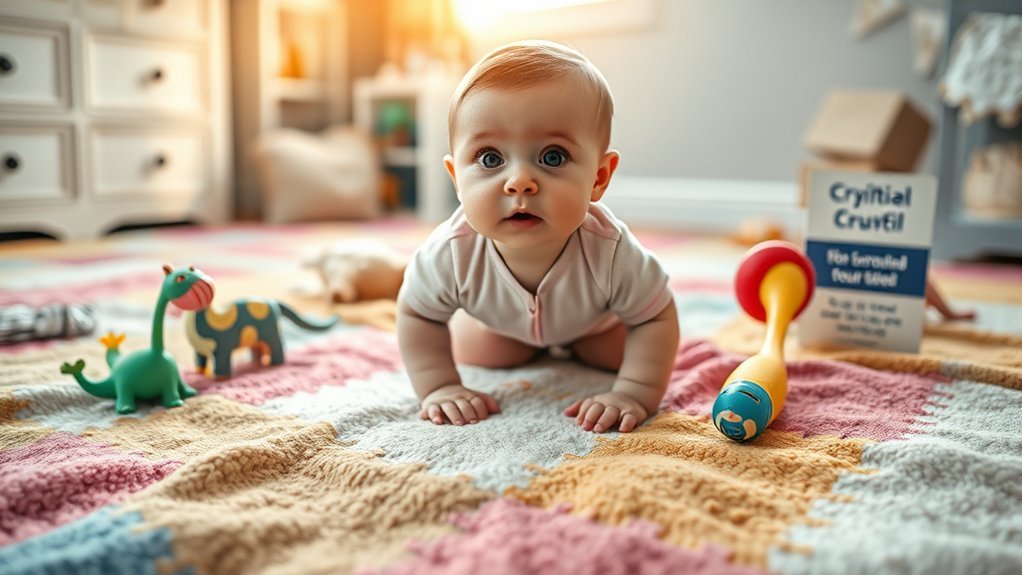
As a parent, it’s easy to feel overwhelmed by the myths surrounding crawling stages. You might believe that every baby must crawl before they walk, but that’s not necessarily true. Understanding the facts can ease your worries and help you support your child’s unique journey. Different crawling styles and developmental timelines add even more complexity. Here’s a clear look at what to expect during this important phase.
Quick Answer
- Most babies begin crawling between 6 and 10 months, but some start earlier or later.
- Not all babies crawl. Some skip it entirely and go straight to walking, which is normal.
- Crawling styles vary widely and all are considered healthy forms of development.
- Tummy time is the best way to build the muscles babies need for crawling.
- Crawling supports motor and cognitive development, but it is not a measure of intelligence.
The Timeline of Crawling Development
Most babies begin to crawl between 6 to 10 months, though some start as early as 5 months or as late as 11 months.
Each baby develops at their own pace. Factors like muscle strength, coordination, and even personality all play a role in when they’ll start moving.
Encourage tummy time and provide safe spaces for exploration to support their progress. If your baby isn’t crawling by 12 months, it’s a good idea to consult your pediatrician.
All Babies Crawl Before They Walk
Many parents assume that all babies crawl before they walk, but this isn’t always the case. Some infants skip the crawling stage altogether. Research shows that development varies greatly, and your baby might take a different route to walking.
| Development Stage | Typical Age Range | Notes |
|---|---|---|
| Crawling | 6-10 months | Not all babies crawl. |
| Cruising | 8-12 months | Walking while holding on. |
| Walking | 9-15 months | Some may walk without crawling. |
Every baby develops at their own pace, and that’s perfectly normal. Trust your child’s unique journey.
Different Crawling Styles: What They Mean
Crawling is more than just a means of getting around. It reflects your baby’s developing motor skills and coordination.
You might notice several different crawling styles, and each can tell you something about your baby’s growth. Traditional hands-and-knees crawling promotes strength and balance. Army crawling, where a baby drags their body along the floor, shows determination and adaptability.
Some babies prefer a bear crawl, which engages more muscles and helps prepare them for walking. If your little one scoots on their bottom, that’s simply another creative way of getting around.
The Role of Tummy Time in Crawling
Tummy time plays an essential role in developing the muscles your baby needs for crawling. When you place your baby on their tummy, they engage their neck, shoulder, and back muscles, all of which are vital for future crawling movements.
Research shows that consistent tummy time can enhance motor skills and coordination, helping your little one gain the strength to push up and eventually crawl.
Start tummy time early, even as a newborn, and gradually increase the duration as your baby grows. If your baby fusses, that’s completely normal.
Make it engaging with toys and your encouragement. By prioritizing tummy time, you’re setting the foundation for your baby’s crawling journey and overall physical development.
Crawling as a Sign of Intelligence
Crawling often sparks conversations about a baby’s intelligence, but it’s worth separating fact from myth.
Crawling does play a role in cognitive development, but it isn’t a definitive indicator of a child’s intellectual capabilities.
Understanding the difference between developmental milestones and true intelligence can help you set realistic expectations for your little one.
Crawling and Cognitive Development
Crawling enables your baby to explore their environment, which in turn enhances problem-solving skills and spatial awareness. As they navigate around obstacles, they also develop memory and start to learn cause-and-effect relationships.
| Crawling Benefits | Cognitive Skills Developed | Examples |
|---|---|---|
| Improves motor skills | Enhances memory | Remembering toy locations |
| Encourages exploration | Boosts problem-solving | Figuring out how to reach objects |
| Builds spatial awareness | Promotes curiosity | Investigating new spaces |
Each crawl is a real step in your child’s overall development, not just a means of getting from one spot to another.
Myth of Crawling Intelligence
Many parents believe that a child’s ability to crawl is directly tied to their intelligence, but this idea is more myth than fact. Crawling is a crucial developmental milestone, yet it doesn’t indicate cognitive capability.
A few key points to keep in mind:
- Crawling develops motor skills, not intelligence.
- Children show intelligence in many different ways, regardless of whether they crawl.
- Many babies skip crawling and still achieve strong cognitive development. According to the American Academy of Pediatrics, there is no scientific evidence linking skipped crawling to learning difficulties.
- Individual growth rates differ widely, and the age a child starts crawling varies greatly.
Intelligence is multifaceted, and crawling is just one piece of the puzzle. Supporting your child’s overall development is far more beneficial than worrying about crawling as an intelligence indicator. Celebrate each unique milestone.
Milestones vs. Intelligence Indicators
Parents often look for signs of intelligence in their child’s developmental milestones, but crawling is not a definitive indicator of cognitive ability.
Research shows that intelligence is multifaceted. Genetics, environment, and social interactions all play significant roles in cognitive development.
Crawling is primarily a physical milestone, reflecting motor skills and physical readiness rather than intellect. Every child develops at their own pace, and some may skip crawling altogether.
Rather than focusing solely on crawling, celebrate your child’s unique journey and encourage exploration through diverse activities. Each child’s strengths will emerge in their own time.
Avoiding Crawling: A Developmental Concern?
If your child skips crawling, it can raise questions about their development. Understanding the bigger picture helps put those concerns in perspective.
Crawling plays a real role in building motor skills and coordination, yet there are many misconceptions about just how essential it is.
Importance of Crawling Skills
Crawling is an important developmental milestone. It strengthens muscles, builds coordination, and develops spatial awareness.
When your child crawls, they gain skills that go beyond simple mobility:
- Muscle Development: Strengthens arms, legs, and core.
- Coordination: Improves hand-eye coordination and balance.
- Spatial Awareness: Helps them understand their environment and navigate spaces.
- Cognitive Skills: Encourages problem-solving and exploration.
If your child skips crawling, it may be worth providing more opportunities to practice. Building these physical skills early can set a strong foundation for later development.
Common Misconceptions Debunked
Many parents worry when their child skips crawling, fearing it signals a developmental issue. Research shows that not all children crawl, and many develop just fine without it. Variations in infant development are normal.
| Misconception | Reality | Impact on Development |
|---|---|---|
| Skipping crawling is harmful | Many kids skip crawling entirely | They may still meet milestones |
| Crawling is essential for all | Some children use alternative methods | Development varies by child |
| Skipping crawling means delays | Other skills can compensate | Each child develops uniquely |
| All children crawl the same way | Crawling patterns differ widely | Individual paths are normal |
Understanding these facts can ease concerns and help you support your child’s unique developmental journey.
Encouraging Movement Development
When a child skips crawling, movement development still covers a wide range of behaviors beyond that one milestone.
Encouraging your child to explore various movements fosters their overall growth. A few ways to support them:
- Tummy Time: Strengthens neck and shoulder muscles, preparing them for crawling.
- Reaching and Grasping: Encourage reaching for toys to develop coordination and balance.
- Rolling: Rolling over builds core strength.
- Safe Exploration: Create a safe space for them to move freely and experiment with different positions.
The Impact of Baby Gear on Crawling
Certain baby products can influence your child’s crawling development. Some gear supports movement; others may hinder it. Here’s a quick comparison of common items:
| Gear Type | Positive Impact | Negative Impact |
|---|---|---|
| Baby Walker | Encourages standing | Can delay crawling |
| Play Mat | Provides a safe space | May limit exploration |
| Exersaucer | Engages muscles | Reduces tummy time |
Choosing gear wisely can support your child’s natural instincts to crawl. Interaction and freedom to move are significant for their development, so opt for products that promote, rather than restrict, mobility.
Crawling and Physical Development Milestones
Crawling isn’t just about getting from point A to point B. It’s a significant phase that contributes to several areas of development.
Key milestones linked to crawling:
- Strengthening muscles: As your baby pushes and pulls, their core and limb muscles develop.
- Coordination: Crawling enhances hand-eye coordination, which matters for later skills like writing.
- Spatial awareness: Your child learns to navigate their environment, building independence.
- Cognitive development: Exploration during crawling promotes problem-solving skills and curiosity.
Encouraging Crawling: Tips for Parents
Creating a supportive environment is key to helping your baby develop crawling skills. Start by providing ample tummy time each day to strengthen their neck, back, and shoulder muscles.
Use colorful toys to encourage reaching and movement. Clear out safe spaces where your baby can explore freely and practice without obstacles.
Get down on the floor with them, demonstrate movement, and offer plenty of encouragement. Placing your baby on different surfaces, like carpet or hardwood, helps them adapt to new textures and terrain.
Celebrate their progress along the way. Every small achievement builds confidence and motivation. Every baby crawls at their own pace, so patience goes a long way.
Frequently Asked Questions
What Age Do Most Babies Start Crawling?
Most babies start crawling between 6 to 10 months. Every child develops at their own pace, so don’t worry if your little one takes a bit longer. Keep encouraging their movement.
Can Crawling Help With a Baby’s Social Skills?
Yes, crawling can enhance your baby’s social skills. As they explore their environment, they engage with others, learn to communicate, and develop confidence. These interactions foster important social connections that benefit their emotional growth.
Do All Babies Crawl in the Same Way?
No, not all babies crawl the same way. Each child develops unique crawling styles, like belly crawling or scooting. Variations are completely normal and healthy.
Is It Normal for Babies to Skip Crawling?
Yes, it’s normal for some babies to skip crawling altogether. Every child develops at their own pace, and some may go straight to walking. Trust your instincts and consult a pediatrician if you have concerns.
How Can I Tell if My Baby Is Ready to Crawl?
You’ll know your baby may be ready to crawl when they push up on their hands and knees, rock back and forth, and show excitement when reaching for toys. Encouragement and safe spaces support their exploration.
Wrapping Up
Understanding the crawling stages can ease a lot of parental worry. Studies suggest that somewhere between 4 and 15 percent of babies skip traditional hands-and-knees crawling and move on to walking in their own way, which is perfectly normal. Rather than focusing solely on milestones, celebrate your child’s unique journey. Encourage playtime and exploration, and trust that each baby develops at their own pace. Your support during this exciting phase makes a real difference.