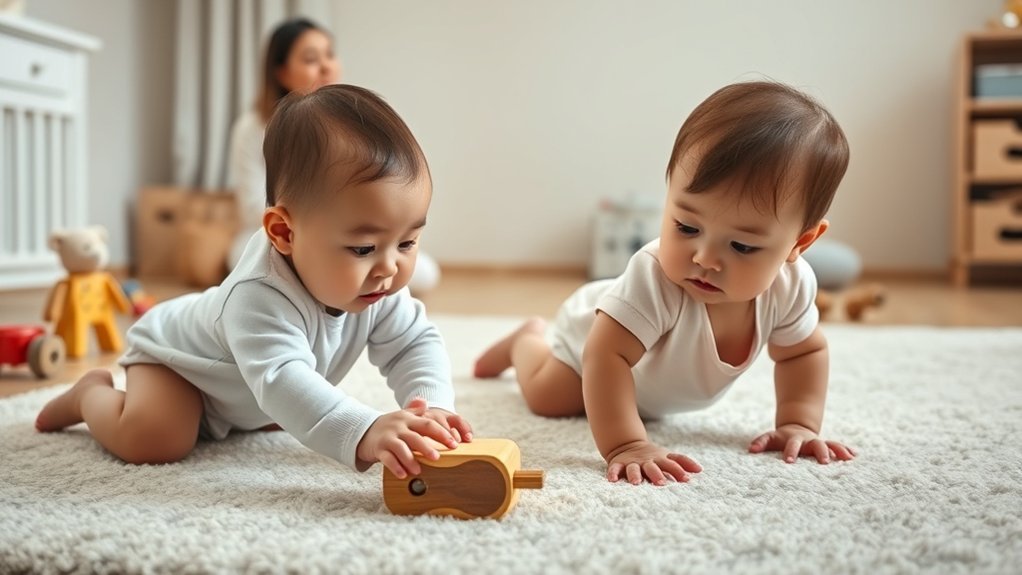
Most babies crawl between 6 and 10 months, and you may notice readiness signs like belly scooting, rocking on hands and knees, or reaching for toys by 7 to 9 months. Crawling can look different: army crawling, classic crawling, bum shuffling, or even moving backward. Some babies skip crawling and go straight to walking. If your baby shows no independent mobility by 9 to 12 months, talk with a pediatrician to learn more.
When Do Babies Crawl?
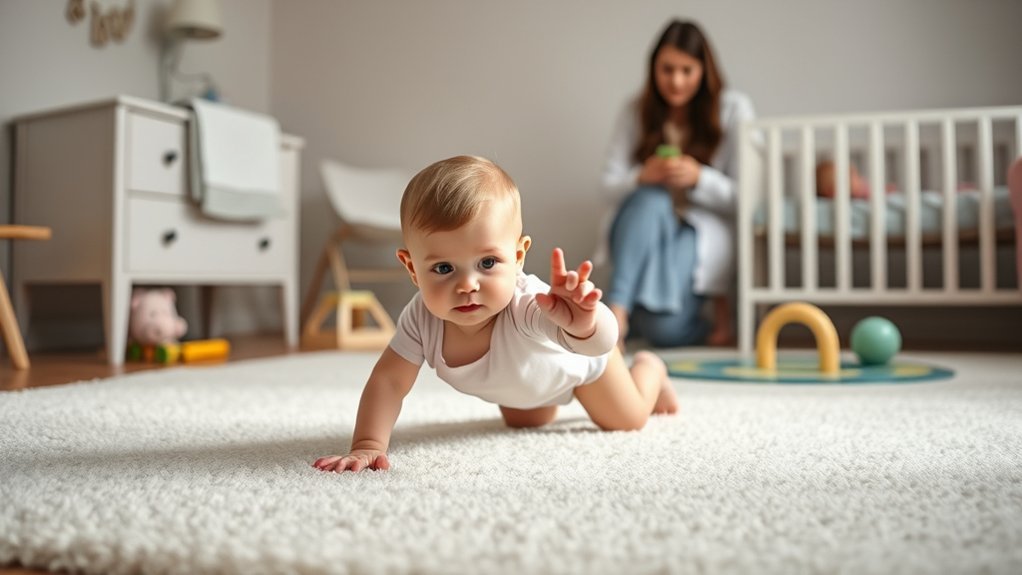
Babies usually start crawling between 6 and 10 months of age, and about half are crawling by 8 months. You may see some babies crawl at 6 months, while others don’t begin until after 11 months, and some skip crawling entirely.
Babies usually start crawling between 6 and 10 months, though some begin earlier, later, or skip crawling altogether.
This age range reflects normal variation in milestones and development, not a delay by itself. Crawling supports motor skills, but it isn’t the only path to healthy locomotion.
You can encourage progress with tummy time, which helps build strength and may support earlier crawling. Environmental factors also matter, so giving your baby safe floor time can help.
If your baby shows no signs of locomotion by 12 months, speak with a pediatrician for evaluation. Their guidance can help you understand whether your baby’s development fits the expected range and what next steps, if any, make sense.
Signs Your Baby Is Ready to Crawl
As your baby gets closer to crawling, you may start to notice specific readiness signs, often between 7 and 9 months. Your baby may scoot backward on the belly, rock back and forth on hands and knees, or begin to hold a hands-and-knees position, which often appears around 8 to 9 months.
These signs show growing strength, balance, and control during tummy time and play. You might also see your baby reach for toys placed just out of reach, a clear cue that movement is becoming purposeful and your baby wants to explore.
This emerging independence reflects the body’s preparation for crawling and later independent mobility. Each baby develops at a different pace, and these signs can appear gradually rather than all at once.
If you don’t see crawling progress or any signs of independent mobility by 12 months, talk with your pediatrician. They can assess development and guide next steps without judgment.
Crawling Milestones by Age
Most infants begin crawling between 6 and 10 months, and about half are crawling by 8 months. Your baby’s crawling milestones may show up as early pushing, rocking, or backward scooting around 7 to 9 months.
These signs of readiness to crawl reflect growing upper body strength and better control for movement. Classic crawling usually comes after these earlier patterns, when your baby balances on hands and knees and starts moving with more coordination.
You don’t need to worry if your baby chooses another path; some infants skip crawling and move straight to walking, and that variation is normal.
Focus on steady progress rather than comparison. If your baby isn’t crawling by 12 months, or you notice limited movement, talk with a pediatrician.
That check can help rule out motor delays or other developmental concerns. Early support can protect your child’s freedom to explore the world confidently.
Common Crawling Styles Babies Use
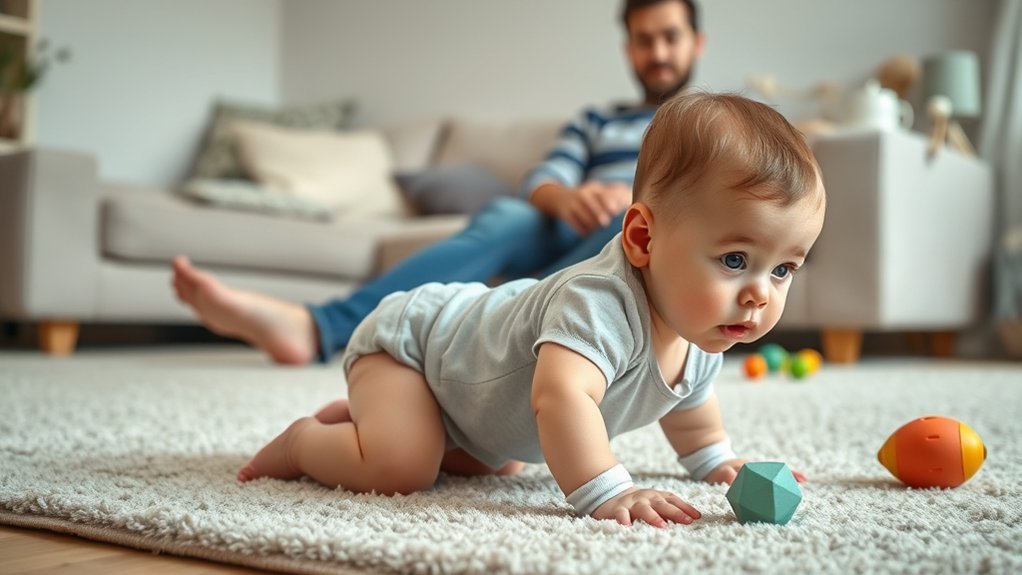
Infants often use several crawling patterns before settling into one that feels natural, and each style can support motor development in a different way.
You may see these crawling styles as your baby builds motor milestones and confidence:
- army crawl/commando crawl: your baby pulls forward on the belly with the arms, often early on.
- classic crawl: one arm and the opposite leg move together while the abdomen lifts; this often appears between 6 and 11 months.
- bum shuffle: your baby scoots on the bottom, using trunk muscles and developing core strength.
- crab crawl or backward crawling: your baby moves with one knee bent, or travels in reverse, showing coordination and mobility.
All of these patterns can be part of typical development.
All of these crawling patterns can be part of typical development.
You don’t need to force one style; instead, encourage movement with safe floor time, and let your baby explore at their own pace.
When Delayed Crawling Needs a Pediatrician
If your baby isn’t showing signs of independent mobility by around 9 months, such as rocking on hands and knees, or isn’t crawling by 12 months, it’s a good idea to check in with a pediatrician.
Most babies crawl between 6 to 10 months, and about half start by 8 months, so delayed crawling outside this range deserves attention. You should consult your pediatrician if you notice limited tummy time, weak pushing, or no attempts to move forward.
These signs can point to motor development delays, and early intervention can help your baby build strength and coordination.
Also mention asymmetrical crawling, especially if your baby consistently favors one side or drags one leg. That pattern can signal a developmental concern that needs evaluation.
A pediatrician can assess whether your baby’s pace is simply unique or whether support is needed. You don’t need to wait and wonder; timely guidance protects your child’s freedom to move and grow.
Frequently Asked Questions
What Are the 7 Stages of Crawling?
You’ll usually see seven stages: tummy time, rolling, pivoting, pushing up, army crawling, creeping, and hands-and-knees crawling. These baby milestones build motor skills; use baby exercises, safety tips, and parent involvement to support development.
How Long Does the Crawling Stage Last?
Crawling duration usually lasts 6-12 months; you’ll see milestone variations in your baby’s mobility. Your developmental timeline may include army crawling, scooting, then hands-and-knees crawling. Track physical development, offer crawling encouragement, follow safety considerations, and seek pediatric advice.
What Does Pre-Crawling Look Like?
Pre-crawling looks like a tiny engine revving: you’ll see pre crawling signs, tummy time lifts, reaching toys, and better hand coordination. Your baby builds leg strength, baby posture, floor play, sensory exploration, motor skills, developmental milestones.
How Does an Autistic Baby Crawl?
Your autistic baby may crawl in unique ways—scooting, rocking, or irregular movements—because autistic development, sensory experiences, and motor skills vary. You’ll notice communication cues, environment influence, and play interaction; parental support, therapy options, social engagement, and individual differences matter.
Conclusion
Most babies start crawling between 6 and 10 months, but plenty move a little earlier or later. In fact, about 10% of babies skip crawling altogether and go straight to standing or walking. If your baby is pushing up, rocking, or showing strong head and trunk control, they’re likely building the skills they need. Keep giving safe floor time, and talk with your pediatrician if you notice loss of skills, stiffness, or no progress by 12 months.
