
What Is Babbling?
Babbling can feel like random baby noise, but it tells you a lot about early speech growth. These sounds show how your baby is learning to use the mouth, breath, voice, and hearing together. This guide explains the main babbling stages, what you may hear at each age, how to support your baby, and when to ask for help.
What’s in This Article
Quick Answer
Babbling usually starts around 4 to 6 months with simple sounds like “ba” and “ma.” Canonical babbling often appears around 6 to 10 months, when your baby repeats sounds like “mamama.” Variegated babbling often follows around 10 to 12 months, when your baby mixes sounds in longer strings.
Key Takeaways
- Babbling helps your baby practice the sound patterns needed for later speech.
- Most babies start simple vocal play around 4 to 6 months.
- Repeated syllables often appear before mixed syllables and early word attempts.
- You can support babbling by talking, pausing, copying sounds, and responding warmly.
- Ask a pediatrician or speech-language pathologist if babbling is absent or does not progress.
What Babbling Means
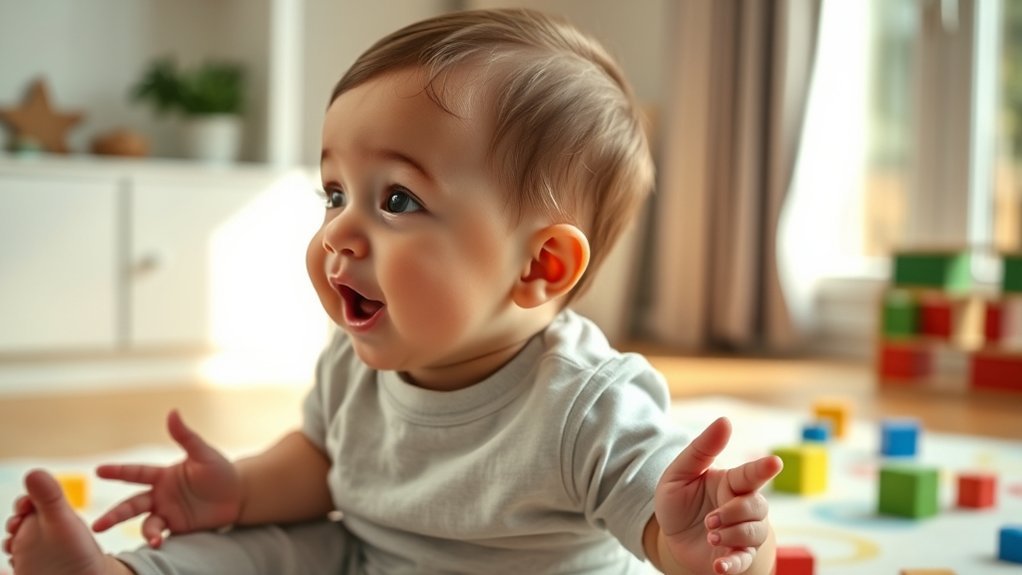
Babbling is an early language milestone. It usually begins between 4 and 6 months, when your baby starts making simple consonant-vowel sounds such as “ba” and “ma.”
You can see babbling as early practice for speech. Your baby learns to coordinate the mouth, breath, voice, and hearing during this stage.
In canonical babbling, your baby repeats syllables like “bababa.” This pattern shows better control and more speech practice.
Variegated babbling comes later. Your baby mixes sounds, such as “papadaba,” and starts using more complex sound patterns.
These communication milestones matter because they help your baby rehearse the rhythm and tone of adult speech. Meaning may not be clear yet, but the practice still matters.
Babbling does not just sound playful. It supports the path toward first words and clear communication.
As these sounds grow more varied, your baby builds the foundation for spoken language. You help that growth when you listen, respond, and give your baby chances to take a vocal turn.
When Do Babies Start Babbling?
Most babies start babbling between 4 and 6 months. You may hear early consonant-vowel sounds like “ba,” “ma,” and “da.”
This first stage, often called marginal babbling, marks an important speech milestone. It shows early coordination of breath, voice, and mouth movements.
You may hear simple, brief sounds before canonical babbling appears. Between 6 and 10 months, many babies repeat syllables like “mamama” or “dadada.”
Around 10 months, variegated babbling may emerge. Your baby may mix syllables, such as “papadaba,” with changing rhythm and tone.
These babbling milestones help you track how your baby’s vocal control becomes more flexible and intentional.
Marginal Babbling: 4 to 6 Months
Between 4 and 6 months, your baby may enter marginal babbling. This early stage often includes simple sounds like “ma,” “ba,” and “da.”
During this period, your baby makes consonant-vowel combinations while testing the lips, tongue, voice, and breath. You may also hear cooing and squealing.
These sounds help your baby get attention and practice sound production. They also invite social response from you.
These vocal sounds are not meaningless. They show growing control and give your baby a way to join early social exchanges.
By 6 months, marginal babbling often shows that your baby responds more actively to voices and sounds nearby.
Note: Babies develop at different speeds, so one missed sound does not prove a delay.
If early vocal sounds do not appear, watch closely and talk with your child’s healthcare provider. Early support can help if your baby needs more guidance.
Canonical Babbling: 6 to 10 Months

From 6 to 10 months, your baby may enter canonical babbling. This stage includes repeated consonant-vowel sounds, such as “mamama” or “bababa.”
During this stage, your baby gains better control over vocalizations and mouth movements. You may hear clearer sound patterns in repeated strings.
These vocal sounds help your baby practice rhythm and intonation. The flow may begin to sound more like adult speech.
This phase is not random noise. It reflects active learning and growing motor control.
As your baby keeps testing sound patterns, the repetitions may become more varied. That practice builds the groundwork for first words.
You support this stage when you talk, pause, listen, and respond to your baby’s sounds.
Variegated Babbling: 10 to 12 Months
As your baby moves past repeated syllable strings, you may notice variegated babbling. This stage often starts around 10 months.
In this stage, your baby combines different consonant-vowel sounds, such as “papadaba” or “mamalata.” These mixed sounds show more complex speech practice than simple repetition.
The pattern may include pauses and changing tone. For that reason, the babbling can sound like a small conversation.
You may also see your baby pair sounds with gestures, such as pointing or reaching. This shows growing awareness that communication has purpose.
This phase supports important language development. Your baby learns how sounds, rhythm, gestures, and attention work together.
Babbling and First Words
Babbling builds the sound patterns your baby uses to form first words. Many babies move from marginal babbling to canonical babbling, then to variegated babbling.
Around 12 months, you may hear early word attempts that sound clearer and more intentional than earlier babble. You can spot early words by their repeated use and link to familiar people, objects, or routines.
Babbling Builds First Words
During the 6- to 10-month period, canonical babbling often appears as repeated syllables such as “mamama.” This practice helps your baby build sound patterns for later speech.
When your baby babbles, you see the nervous system preparing for sounds and words.
By 10 to 12 months, variegated babbling adds mixed syllables. These sound combinations can later shape first words.
You can strengthen speech and language development by answering, pausing, and copying your baby’s sounds. This back-and-forth teaches simple turn-taking.
If babbling does not move toward words near 12 months, ask about early intervention. Support at the right time can protect your baby’s access to expressive language.
Your response helps your child build voice, connection, and the freedom to communicate.
Recognizing Early Word Attempts
Early word attempts are more consistent than casual babble. Your baby may use the same sound for the same person, toy, pet, or routine.
For example, “mama” may count as an early word when your baby uses it often for the same caregiver. A sound does not need perfect pronunciation to carry meaning.
By 6 to 10 months, canonical babbling often appears as repeated strings such as “babababa” and “mamama.” Around 10 months, variegated babbling adds varied syllables like “papadaba.”
These early attempts matter because they prepare the shift to recognizable words near 12 months. Support progress with responsive interactions: answer, pause, and let your baby take a turn.
This two-way exchange strengthens language learning and helps you notice purposeful vocal sounds sooner.
How to Encourage Babbling
You can encourage babbling through warm, daily interaction. Simple routines give your baby many chances to hear and practice speech sounds.
Narrate diaper changes, feeding, dressing, and play. Your baby starts linking words with actions and learns that communication goes both ways.
Face-to-face talk matters. Watch your baby’s eyes, pause after sounds, and answer as if you are taking turns.
This back-and-forth helps babbling grow into intentional communication. Copy your baby’s sounds, then add a simple word to model the next step.
You can also use toys, rattles, songs, and sound games to draw attention. Repeated exposure to clear language strengthens sound recognition and production.
Simple Ways to Support Babbling
- Talk during daily routines, such as feeding, bath time, and diaper changes.
- Pause after your baby makes a sound, so your baby gets a turn.
- Copy your baby’s sound, then add one simple word.
- Use songs, rhymes, and playful facial expressions.
- Limit background noise when you want your baby to focus on your voice.
Pro tip: Treat your baby’s babble like real conversation, because your response teaches turn-taking.
Signs of a Speech Delay

If you encourage babbling but notice little or no vocal play by 6 to 7 months, your baby may need closer observation. You may also notice fewer sound imitations or fewer back-and-forth vocal exchanges.
Little or no vocal play by 6 to 7 months, plus no sound imitation or gesture use, may signal a speech delay.
Watch for gestures too. If your baby does not wave, point, reach, or share attention, mention it to your pediatrician.
These patterns can point to communication challenges in early language development. By 12 months, no first words or meaningful gestures deserves attention.
A quiet baby does not always have a speech delay. But a long-lasting lack of vocal variety can show that your baby needs support.
You can watch social engagement, sound imitation, gesture use, and vocal variety together. These signs give a fuller picture than one sound alone.
A speech-language pathologist can assess these signs and explain whether your baby’s communication is developing as expected. Early recognition supports timely, focused help.
When to Ask for Help
If your baby is not babbling by 6 to 7 months, ask for a professional evaluation. You should also ask for help if your baby has no first words or meaningful gestures by 12 months.
You should also seek help if your baby struggles to imitate sounds or seems very frustrated during communication attempts.
A pediatrician or speech-language pathologist can check hearing, development, and early communication skills. Early support can guide daily practice and improve your child’s communication path.
Red Flags by Age
By 4 to 6 months, many babies begin babbling. A lack of babbling by 6 to 7 months can suggest a possible developmental delay.
Track these red flags by age:
- 6 to 7 months: Your baby makes little or no babbling sounds.
- 12 months: Your baby has no first words or has trouble imitating sounds, waving, or pointing.
- Any age: Your baby often cries, gets frustrated, or melts down when trying to communicate.
These patterns do not define your child. But they do deserve attention.
If you notice them, speak with a pediatrician or a speech-language pathologist. Early intervention can support your child’s communication skills.
You are not overreacting by asking questions. You are helping your child get timely support and clearer ways to express needs.
When to Seek Help
If your baby is not babbling by 6 to 7 months, check in with a healthcare provider. Delayed babbling can sometimes signal later speech or language difficulties.
You should also seek help if your baby has no first words by 12 months, cannot imitate sounds, or does not use gestures like waving or pointing.
These missed milestones can signal speech delays that affect communication. If your baby seems frustrated while trying to connect, trust that signal too.
You do not need to wait and wonder. A pediatrician or speech therapist can assess development and explain whether early intervention may help.
Acting early protects your baby’s ability to communicate and supports stronger language growth.
Early Intervention Options
Early support can make a real difference in your baby’s communication development. Ask for help as soon as concerns arise.
If you notice little or no babbling by 6 to 7 months, contact your pediatrician for an assessment.
Tracking language milestones helps you act before speech delays widen. You can start with these steps:
- Get a hearing check and developmental evaluation.
- Ask about speech therapy tips and early intervention options.
- Build a daily plan that supports communication practice.
Pediatricians and speech therapists can look for hearing impairments, oral-motor issues, and developmental differences. They can also tailor support to your baby’s needs.
If your baby does not imitate sounds or gestures, or has no first words by 12 months, do not wait. The earlier you ask for help, the sooner your baby can get support.
Warning: If your baby loses speech sounds, gestures, or social skills, contact a healthcare provider promptly.
Frequently Asked Questions
What is the difference between canonical babbling and variegated babbling?
Canonical babbling repeats one syllable, such as “bababa” or “mamama.” Variegated babbling mixes different syllables, such as “papadaba,” and often sounds more like a real conversation.
At what age does variegated babbling typically emerge?
Variegated babbling often appears around 10 to 12 months. Your baby may start mixing sounds, changing tone, and using gestures with vocal sounds during this stage.
What are the main stages of babbling?
The main stages include marginal babbling, canonical babbling, variegated babbling, and early word attempts. Some babies also use conversational-sounding babble before clear words appear.
When should canonical babbling start?
Canonical babbling often starts around 6 to 10 months. You may hear repeated sounds like “mamama,” “bababa,” or “dadada” as your baby gains better vocal control.
Should I worry if my baby is quiet?
A quiet baby does not always have a delay. But you should ask your pediatrician if your baby rarely makes sounds, does not respond to voices, or does not babble by 6 to 7 months.
Medical Disclaimer: This article is for informational purposes only and does not constitute professional medical advice. Always consult a qualified doctor or speech-language pathologist before making decisions based on this information.
Conclusion
Babbling gives you an early view of your baby’s path toward speech. You may notice marginal babbling at 4 to 6 months, canonical babbling at 6 to 10 months, and variegated babbling by 10 to 12 months.
These vocal milestones help you track early language development, but every baby grows at a different pace. If babbling is limited, absent, or does not progress, ask your pediatrician for guidance.
Early support can give your baby more chances to practice, connect, and communicate with confidence.

