Car seats save lives during travel. But many parents assume that means they’re also safe for babies to sleep in outside the car. That assumption can put your baby’s health at risk. The facts behind car seat use and infant sleep are worth understanding clearly.
Quick Answer
- Car seats are designed for travel safety, not sleep.
- Prolonged sleep in a car seat raises the risk of positional asphyxia, where a baby’s head slumps forward and blocks the airway.
- Always move your baby to a firm, flat surface (crib or bassinet) for sleep.
- If your baby falls asleep in the car seat, transfer them to a safe sleep environment as soon as possible.
Understanding Car Seat Safety Standards
Car seat safety standards, set by organizations like the National Highway Traffic Safety Administration (NHTSA), are built around one goal: protecting children in crashes. They are not designed with sleep in mind.
There are three main types of car seats: rear-facing, forward-facing, and booster seats. Each has age and weight requirements designed to keep your child secure as they grow. Always look for labels confirming compliance with federal safety standards.
Check your car seat regularly for recalls and confirm the installation is correct. A properly installed seat makes a significant difference in crash protection.
Common Myths About Sleeping in Car Seats
Many parents believe it’s fine for babies to sleep in car seats during long journeys. Here are some common myths worth clearing up:
| Myth | Fact |
|---|---|
| Babies are safe sleeping in car seats. | Car seats aren’t designed for sleep. |
| A car seat can replace a crib. | Cribs provide a safer sleep environment. |
| Babies will always wake up if uncomfortable. | They may not, leading to dangerous positions. |
| It’s okay for short naps in car seats. | Even short naps can pose risks. |
Understanding these myths helps you make better choices for your child’s safety. A proper sleep environment is key to your baby’s well-being.
The Risks of Prolonged Sleep in Car Seats
Prolonged sleep in car seats poses real risks for infants, even when parents think their baby is resting safely.
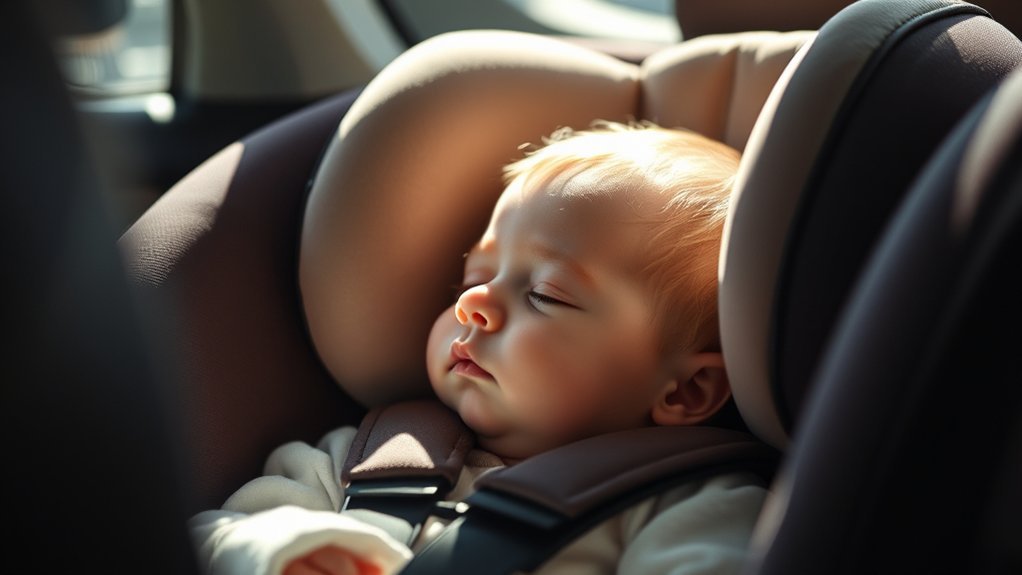
Car seats are engineered for crash protection during travel, not as a sleep solution. When infants sleep in them for extended periods, they can be at risk of positional asphyxia, a condition where the head slumps forward and obstructs the airway.
The confined, semi-reclined position can also disrupt sleep cycles and cause general discomfort. Long-term pressure on specific areas of the skull may contribute to flat head syndrome as well. Protecting your child means prioritizing appropriate sleep environments over the convenience of car seat sleeping.
How Long Can a Baby Stay in a Car Seat?
The American Academy of Pediatrics (AAP) advises that infants should not remain in a car seat for more than two hours at a time. This applies during travel, not just at home.
Newborns are especially vulnerable. Their neck muscles are weak, and their airways are smaller and more flexible than those of older children. If a baby’s head falls forward in a semi-reclined seat, the airway can become partially blocked even when the harness is properly adjusted.
On long road trips, plan regular breaks so your baby can lie flat and stretch. If your baby falls asleep in the car, monitor them closely and transfer them to a crib or bassinet as soon as you arrive at your destination. Car seats should be used for transportation, not as a substitute for a flat sleep surface.
Safe Sleep Practices for Infants
Following established sleep practices significantly reduces risk for your baby.
Always place your baby on their back to sleep. This position greatly reduces the risk of Sudden Infant Death Syndrome (SIDS). Use a firm mattress and keep the crib free from soft bedding, pillows, and toys.
Keep the sleep environment at a comfortable temperature to prevent overheating. Avoid co-sleeping on couches or soft surfaces. A separate sleep space, like a crib or bassinet in your room, is the safest option. For more detailed guidance, the AAP’s safe sleep guidelines are a reliable resource.
The Importance of Proper Car Seat Installation
A properly installed car seat is essential for your child’s safety during travel. A correctly secured seat significantly reduces the risk of injury in a crash.
Make sure the seat is tightly fitted, with minimal movement at the belt path. Follow the manufacturer’s instructions carefully, as each model has specific requirements. The harness should sit snug against your child’s body without any slack.
The rear-facing position is safest for infants and toddlers. Inspect the installation regularly, especially after long trips or adjustments.
Signs Your Baby Is Uncomfortable in Their Car Seat
When your baby fidgets or squirms in their car seat, it could signal discomfort.
Signs like crying, whining, or a flushed face indicate your baby may not be happy with their current position. Recognizing these cues helps you act quickly to keep your baby safe and comfortable during travel.
Fidgeting and Squirming
Car rides can be soothing for many babies, but fidgeting and squirming often signals discomfort in the seat. Your baby may be too hot, too cold, or the harness might not be adjusted correctly.
Pay attention to how your baby is positioned. Slumping or leaning can lead to discomfort, and legs kicking against the seat are a clear sign something is off. Adjust their positioning and check that their clothing isn’t too tight or restrictive.
Also check for any pinching or irritation from the harness. Catching these signals early makes for a more peaceful and safer trip.
Crying or Whining
Babies cry during car rides for many reasons, but consistent crying can point to discomfort in the seat. A steady, high-pitched wail may signal a real problem, while intermittent whining could suggest minor irritation.
Check for tight straps, lack of support, or uncomfortable positioning. Adjust the seat angle if needed, making sure your baby’s head and neck are adequately supported.
Red Face or Flushing
A red or flushed face during a car ride is a clear sign your baby may be uncomfortable. This redness can point to overheating, restricted circulation, or stress, all of which can affect your child’s safety and comfort.
Check the harness to make sure it’s snug but not too tight, and confirm the seat isn’t too warm. Adjust the air conditioning or crack a window if it’s safe to do so.
If flushing continues, pull over safely to assess your baby’s comfort and make any necessary adjustments. Your baby’s well-being always comes first.
Alternatives to Car Seat Sleeping
When your baby needs to sleep, there are safer options than leaving them in the car seat.
Portable cribs and sleep sacks can provide a secure place for your baby to rest. These alternatives promote safety and better sleep quality overall.
Safe Sleep Environments
A safe sleep environment starts with a firm, flat surface like a crib or bassinet, free from soft bedding, pillows, or toys.
Dress your baby in a sleep sack or swaddle for warmth without extra layers. Make sure the crib meets current safety standards and position it away from windows and cords.
Room-sharing can enhance safety while promoting bonding, but always avoid bed-sharing. Monitor room temperature to prevent overheating. These steps give your baby a safe space to rest and develop healthily.
Portable Sleep Solutions
Car seat sleeping might seem convenient on the go, but better portable options exist that prioritize your baby’s safety and comfort.
A travel crib or portable bassinet designed for safe sleep provides a flat surface, reducing the risk of positional asphyxia. They’re lightweight and easy to set up, and most fit into a standard car trunk.
Baby slings or wraps can work for short naps, as they offer closeness and support. Always verify that any portable sleep solution meets current safety standards before use.
When to Transition From Car Seat to Crib
There comes a point when your baby should move from sleeping in the car seat to sleeping in a crib.
Ideally, this happens when your baby can hold their head up steadily, usually around 4 to 6 months. At this age, babies are more capable of self-soothing and establishing a consistent sleep routine.
If your baby has outgrown their infant car seat, that’s another clear signal. Prolonged car seat sleeping raises the risk of positional asphyxia. Once you move your baby to a crib, make sure it’s a safe sleep environment, free from soft bedding and toys. This supports your baby’s growth and sleep safety.
Expert Recommendations on Car Seat Use and Sleep
Experts advise against letting infants sleep in car seats for extended periods. The semi-reclined position can restrict the airway and increase the risk of suffocation.
Transfer your baby to a flat, safe sleeping surface like a crib or bassinet whenever possible. If your baby falls asleep in the car seat, move them to their crib as soon as you can after arriving.
Use the car seat for travel only, making sure it’s correctly installed and your baby is secured each time. Prioritizing safe sleep helps create a healthy environment for your baby’s growth.
Frequently Asked Questions
Can My Baby Sleep in a Car Seat During Long Road Trips?
Your baby may fall asleep in the car seat during long trips, and that’s hard to avoid entirely. Take regular breaks so your baby can lie flat, and monitor them closely while they’re in the seat. The goal is to transfer them to a safe flat surface as soon as possible.
What Should I Do if My Baby Falls Asleep in Their Car Seat?
Keep an eye on your baby while they’re sleeping in the seat. Once you reach your destination, transfer them to a firm, flat sleeping surface as soon as you can.
Are There Any Age Restrictions for Sleeping in Car Seats?
The AAP advises against routine car seat sleep at any age, but infants under one year are especially vulnerable. Younger babies lack the neck strength to keep their heads in a safe position, which raises the risk of positional asphyxia. Always prioritize a flat sleep surface appropriate for your child’s age and size.
How Do I Know if My Baby Is Safe While Sleeping in a Car Seat?
Check that your baby’s head is upright, their airway is clear, and the harness is snug. Watch them closely and don’t rely on the car seat as a substitute for a proper sleep surface.
Can I Use a Stroller With a Car Seat for Sleep Purposes?
Using a stroller with a car seat as a sleep setup isn’t recommended. Prolonged sleep in that position carries the same risks as sleeping in the car seat alone. Safer alternatives for your baby’s rest are worth the extra effort.
Conclusion
Car seats are essential for travel, but they’re not a safe place for prolonged sleep. About 3,500 infants die each year in the U.S. from sleep-related causes, many linked to unsafe sleep environments. Moving your baby to a crib or bassinet for sleep, following safe sleep practices, and keeping your car seat correctly installed for travel are the most effective steps you can take to protect them.