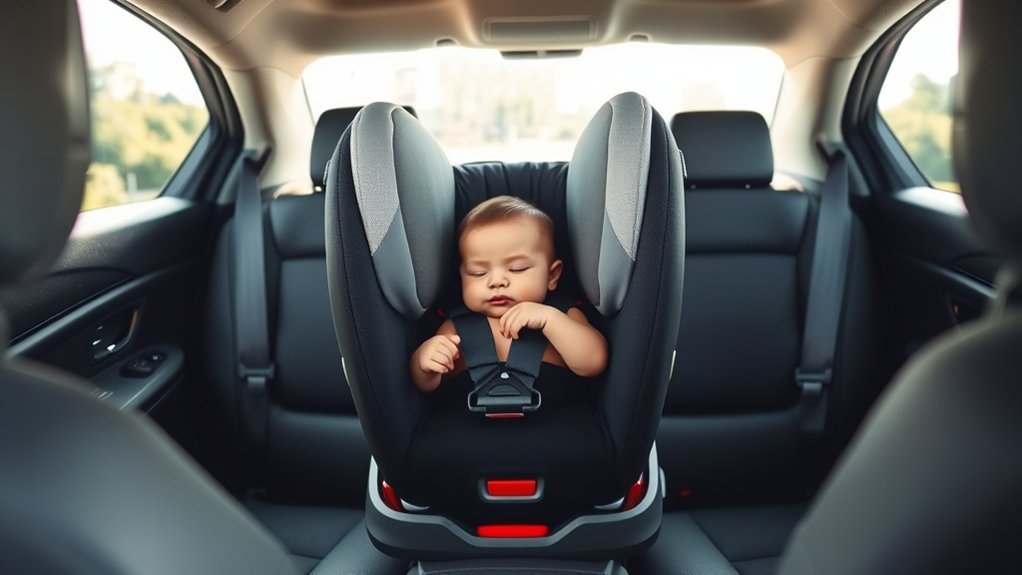
LATCH and seat belts can both be safe for your baby; the safer choice is the one that gives you the tightest, correct installation in your specific car and seat. A properly installed seat should move less than 1 inch at the belt path. Rear-facing seats and correct use matter more than the attachment method. Check your seat’s weight limits, then keep going to learn how to choose and install the best option.
Is LATCH Safer Than a Seat Belt?
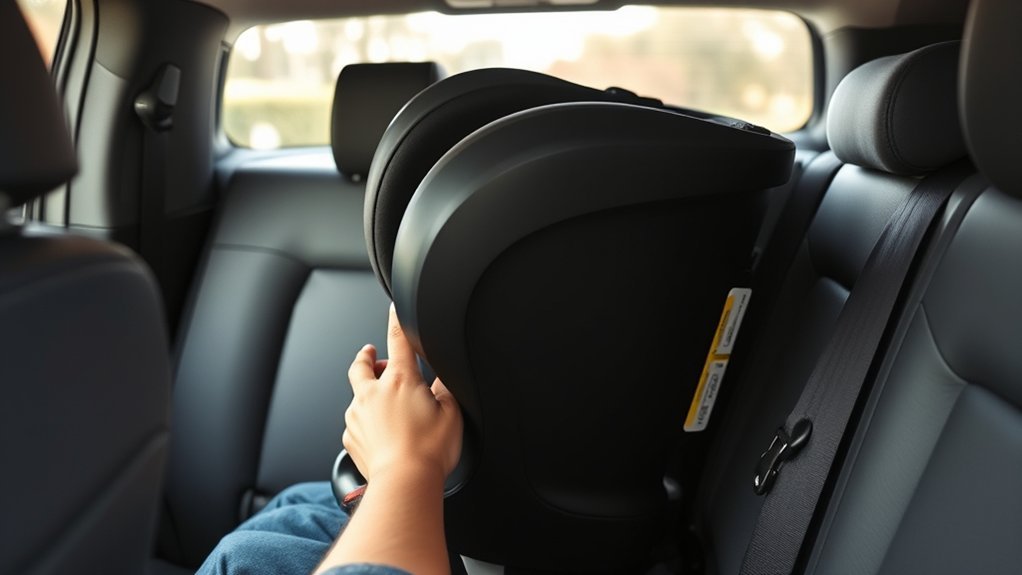
Not necessarily—LATCH isn’t inherently safer than a seat belt. You should judge the installation, not the label.
In one study, LATCH produced higher HIC15 values than both ELR and ALR lap/shoulder belt installs in rear impacts, which signals a possible increase in head injury risk. For the Graco SnugRide®, HIC15 rose to 394 with LATCH, versus 218 with ELR and 194 with ALR. The Britax Chaperone also showed higher HIC15 with LATCH, at 133, compared with 65 and 78.
But not every seat followed that pattern: the Evenflo Tribute® showed no significant HIC differences across methods. That variability means you can’t assume one system always wins.
Your safest choice is the method you can install correctly and tightly every time. When you secure the seat properly, both LATCH and seat belt systems can protect your child effectively, and that’s what matters most for your freedom to travel with confidence.
How LATCH Works in Rear-Facing Seats
In rear-facing seats, LATCH simplifies installation by letting you attach the car seat directly to the vehicle’s lower anchors in the rear seating positions, rather than threading and tightening a seat belt. You clip the connectors from your LATCH-equipped rear-facing car seats to those anchors, then tighten until the seat is firm.
This direct connection can save time and reduce installation errors, but you still need to check the fit carefully. At the belt path, the seat shouldn’t move more than 1 inch side-to-side or front-to-back. That tight limit helps the restraint manage crash forces instead of shifting in a collision.
Check the fit carefully—at the belt path, the seat should move no more than 1 inch.
You also have to respect the seat’s LATCH weight limit, which combines your child’s weight and the seat, usually capped at 65 pounds. If you exceed that limit, you’ll need a different installation method.
LATCH gives you a more straightforward setup, but precision is nonnegotiable.
When Seat Belts Are Just as Safe
When a seat belt is installed correctly, it can be just as safe as LATCH for securing a child restraint. You’re choosing an installation method that can meet the same safety goal: holding the seat firmly in place.
NHTSA says correct installation matters most, and a properly secured seat shouldn’t move more than 1 inch at the belt path.
- Use the seat belt exactly as the manual directs.
- Lock it, tighten it, and verify minimal movement.
- Recheck fit after every trip and every change.
Research shows seat belt installations can perform as well as LATCH, and some tests even found lower HIC values in certain rear-facing systems. Additionally, awareness of nutritional needs during pregnancy highlights the importance of informed choices in various safety contexts.
Don’t assume one method is automatically safer; user error can weaken either system. If you install carefully, you keep your child protected and maintain the freedom to use the setup that fits your vehicle best.
What Rear-Impact Research Shows
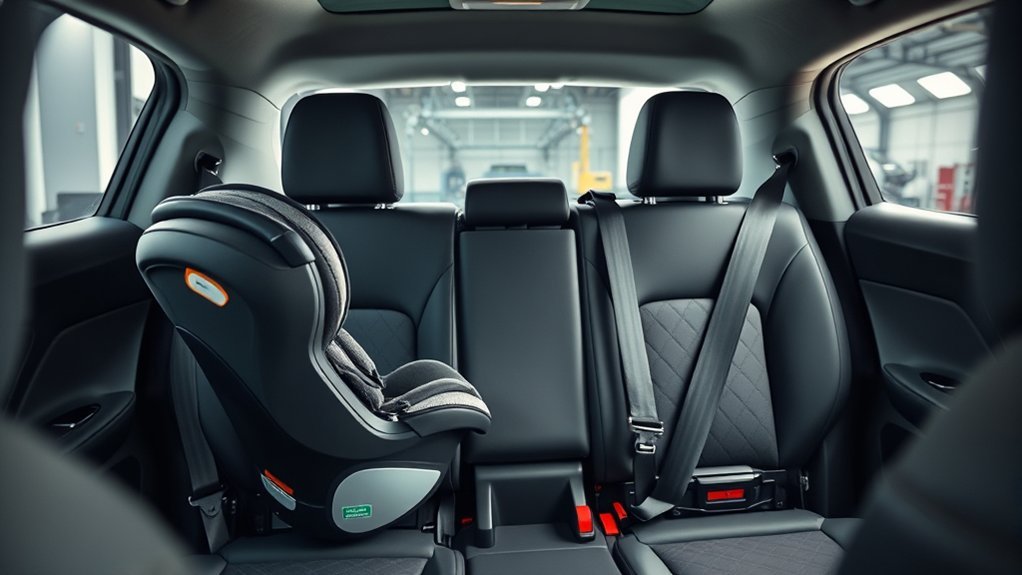
Rear-impact test data show that LATCH can produce higher head injury criteria (HIC) values than seatbelt installations in some child restraints.
For example, you’ll see much higher HIC with the Graco SnugRide® and Britax Chaperone when they’re installed with LATCH, while some models, like the Evenflo Tribute®, don’t show a clear difference.
Head strikes against the vehicle seatback can raise HIC15 scores, so you should treat rear-impact performance as a key safety factor when comparing installation methods.
Rear-Impact Test Results
Recent rear-impact sled tests raise a caution flag for LATCH: Jamie R. Williams et al. found that you can see higher HIC15 with LATCH than with seat belt installs in some seats.
In technical terms, that means your baby may face more head-loading risk in certain rear-end crashes.
Key results:
- Graco SnugRide®: 394 with LATCH vs 218 ELR and 194 ALR.
- Britax Chaperone: 133 with LATCH vs 65 ELR and 78 ALR.
- Evenflo Tribute®: no significant HIC15 difference across methods.
Seatback head strikes helped drive the higher values, so your install choice matters.
Check your manual, test the fit, and choose the method that gives your child the most secure, free, and protected ride.
Higher HIC With LATCH
Those rear-impact sled results point to a key concern: LATCH can produce higher HIC15 values than seatbelt installs in some infant seats, which means more head-loading risk in certain rear-end crashes. When you compare configurations, the gap is clear:
| Install method | HIC15 |
|---|---|
| Graco SnugRide LATCH | 394 |
| Graco SnugRide ELR seat belt | 218 |
| Britax Chaperone LATCH | 133 |
| Britax Chaperone ALR seat belt | 78 |
You can see that LATCH doesn’t always give you the same rear-impact protection as a seat belt. In these tests, the restraint moved differently and raised injury metrics. That doesn’t prove every LATCH install is worse, but it does show you should check crash data, verify fit, and demand child-seat designs that protect your baby’s freedom from preventable risk.
Head Strikes Increase Risk
When an infant’s head strikes the interior of the vehicle in a rear-end crash, HIC15 rises sharply, and that increase reflects a real head-injury risk in rear-facing child restraint systems.
You can’t treat head strikes as minor contact; they drive injury metrics upward. In rear-impact testing, LATCH often showed higher HIC15 than seatbelt installs, so your choice matters.
- Graco SnugRide®: LATCH 394 vs ELR 218 vs ALR 194
- Britax Chaperone: LATCH 133 vs ELR 65 vs ALR 78
- Higher HIC15 signals greater head-loading risk
These data show that secure installation alone isn’t enough; you need the setup that best limits head motion and contact.
If you want safer transport, compare install methods, not just convenience.
Why Rear-Facing Seats Change the Risk
When you install a rear-facing seat, it changes crash dynamics by spreading deceleration forces across the seat shell and supporting your child’s head and neck.
If the seat isn’t positioned securely, the head can strike the seatback, which raises injury risk and HIC scores.
Because installation method can affect that outcome, you need to verify a tight, stable fit every time.
Rear-Facing Crash Dynamics
Rear-facing child restraint systems change crash dynamics by spreading crash forces across the child’s back, head, and neck instead of concentrating them on the head and cervical spine.
In your rear-facing car, the seat cradles your baby and lets the shell absorb motion, which reduces dangerous loading in a crash.
- It supports the head and spine together.
- It lowers force peaks in rear-end impacts.
- It works best when you’re installing a car seat correctly with LATCH or a seatbelt.
You should keep your child rear-facing until at least age two, or until they exceed the seat’s limits.
That position gives you the strongest safety margin and can make infants about five times safer in collisions.
Head Injury Exposure
Even with a rear-facing seat distributing crash forces across your child’s back, head, and neck, the installation method can change how much head injury risk remains in a rear-end collision.
In Jamie R. Williams et al.’s study, LATCH produced higher HIC15 scores than seatbelt installs, signaling greater head injury exposure for infants. For the Graco SnugRide®, HIC15 reached 394 with LATCH, versus 218 with ELR seatbelts and 194 with ALR seatbelts.
In the Britax Chaperone, LATCH measured 133, while ELR scored 65 and ALR 78. These differences suggest lap/shoulder belts can better limit head strikes against seatbacks.
You deserve restraint choices that maximize protection, so review how your car seat behaves in rear impacts and treat installation method as a real safety factor, not an afterthought.
Installation Impact Differences
Installation method can change how a rear-facing seat manages crash energy, and that can alter head injury risk in a rear impact. When you use LATCH, some seats show higher HIC15 than with belt installation, so you shouldn’t assume it’s always safer.
In sled tests:
- Graco SnugRide®: LATCH 394 vs ELR 218 and ALR 194.
- Britax Chaperone: LATCH 133 vs ELR 65 and ALR 78.
- Evenflo Tribute®: little change across methods.
That spread tells you the seat design matters as much as the attachment path. Head strikes on vehicle seatbacks can raise HIC15, so a secure installation that controls rotation is critical.
Check your seat’s manual, confirm tightness, and choose the method that gives the best rear-facing fit, not just the easiest path to freedom.
How to Install a Rear-Facing Car Seat
Start by placing the rear-facing car seat in the back seat of your vehicle, where it offers the best protection for an infant.
You can use either LATCH or the seat belt, but don’t combine them; one secure system is enough for a precise installation.
Follow the seat maker’s instructions exactly, routing the belt or LATCH straps through the correct belt path.
Tighten the system until the seat stays firm.
Then test the base at the belt path: it shouldn’t shift more than 1 inch side-to-side or front-to-back.
If it moves more, reinstall and retighten.
Keep the seat rear-facing and level as directed by the manual.
After every adjustment, and anytime you remove and reinstall the seat, recheck the fit.
A correct setup gives your child safer, more independent travel, while reducing avoidable crash movement.
LATCH Weight Limits You Should Know
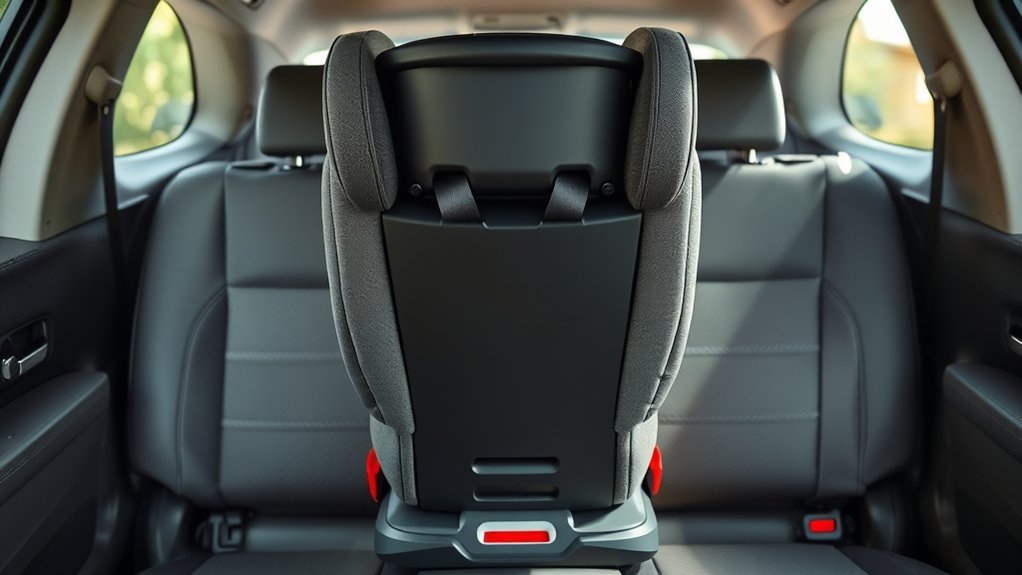
LATCH has a weight limit you need to watch closely: once the combined weight of your child and the car seat reaches 65 pounds, you should switch to seat belt installation. This rule protects you from overload and keeps your setup compliant.
Check the car seat label, because weight limits can vary by model, and your freedom to choose the safest method depends on reading those specs.
Check the car seat label, because weight limits vary by model, and reading the specs keeps you choosing safely.
- Verify the child-plus-seat weight before every trip.
- Confirm the car seat’s stated LATCH weight limits.
- Stop using LATCH once you hit the limit and change methods.
When you follow weight limits, you lower the risk of improper installation and improve crash protection.
Review the numbers regularly, especially as your child grows. Staying informed lets you move with confidence, knowing your vehicle system supports safety without guesswork or unnecessary restraint.
Seat Belt Installation Tips That Matter
When you install a car seat with the vehicle seat belt, read both the car seat manual and the vehicle owner’s manual first, since routing and locking steps can vary by model.
For precise seat belt installation, thread the belt through the correct belt path with no twists, then buckle it and tighten until the seat sits firmly against the vehicle seat. Use the car seat’s weight on the base as you tighten; that pressure helps remove slack and improves stability.
Lock the belt according to your vehicle’s method so the seat won’t shift more than 1 inch side-to-side or front-to-back at the belt path. This isn’t a compromise on freedom; it’s how you claim safer travel for your child.
Check the installation every ride, because movement, rebuckling, or a changed seat angle can weaken protection.
When you’re confident in the setup, seat belt installation gives you a secure alternative to using LATCH in vehicles where belt routing is the better fit.
When to Choose Seat Belt Over LATCH
You should choose seat belt installation when the combined weight of your child and car seat exceeds 65 pounds, because LATCH may no longer provide the safest attachment.
You should also use the seat belt if you need a better center-seat fit, since many vehicles don’t have LATCH anchors in that position.
After installation, check that the seat moves less than 1 inch at the belt path to confirm a secure fit.
Weight Limit Reached
Once the combined weight of the child and car seat reaches 65 pounds, the LATCH system is no longer appropriate and a seat belt installation is required.
You must verify the label on your car seat, because the manufacturer’s limit governs safe use. When you hit that threshold, switch immediately to the seat belt to keep the restraint secure and compliant.
- Check the combined weight often.
- Stop using LATCH at 65 pounds.
- Reinstall with the seat belt.
This rule protects you from improper installation and lowers crash injury risk.
If you want freedom on the road, pair it with discipline: review weights routinely, confirm the manual, and never assume LATCH still fits once the limit is reached.
Better Center Fit
If the combined weight has pushed you past the LATCH limit, the center seat is often the better place to install with a seat belt. You can gain improved protection from side impacts there, and a secure seat belt fit often makes the install more stable.
In vehicles without center LATCH anchors, the seat belt gives you freedom to choose the safest available position. Tighten the belt until the car seat moves less than 1 inch at the belt path; that snug fit is critical.
For heavier children or larger seats, choosing the center seat with the seat belt can keep you within safe limits and support effective restraint without relying on unavailable anchors.
How to Check a Tight Car Seat Install
A properly tightened car seat should stay firmly in place when you grasp it at the belt path and try to wiggle it side to side; it shouldn’t move more than 1 inch.
During your car seat install, check the restraint at that exact point, not at the top. Whether you’re using the LATCH or a seatbelt, follow your model’s instructions and verify that every connection locks correctly.
Then confirm the seat sits snug against the vehicle seat and doesn’t shift under force.
- Grasp the belt path and test for side-to-side movement.
- If you’re using a seatbelt, lock it fully and remove every twist.
- If you’re using the LATCH, confirm both lower anchors are fully engaged.
Recheck after long trips and anytime someone adjusts the seat. A tight install protects your child’s freedom to ride safely, with no slack, no guesswork, and no compromise.
Frequently Asked Questions
Is a Car Seat Base Safer Than a Seatbelt?
No, a car seat base isn’t inherently safer than a seatbelt. Your Car seat installation matters most; Safety comparisons show correct, tight installation with either method can protect your baby equally well.
Do I Need to Install My Newborn Car Seat With the Seat Belt or LATCH or Both?
Use either the seat belt or LATCH, not both, for your newborn car seat. Follow safety guidelines, check installation tips, and verify it moves less than 1 inch at the belt path for secure, liberated travel.
What Is Statistically the Safest Seat in a Car?
You’re safest in the rear middle seat, your shield against side impacts. It’s statistically best, but only if your car’s safety ratings and installation guidelines support secure seat placement and proper restraint.
Is Better to Use Both LATCH and Seatbelt Whenever You Can?
Usually, no—you shouldn’t use both unless your seat manual allows it. You’ll get LATCH benefits or seatbelt advantages, but combining them can exceed limits. You must check installation, maintain under 1 inch movement, and follow the manufacturer.
Conclusion
Whether you click into LATCH or thread in the seat belt, your goal is the same: a car seat that barely moves, like a locked cradle in a storm. LATCH can make installation simpler, but it isn’t always safer than a seat belt. Once you reach the weight limit, the belt becomes the better choice. Check your seat’s manual, tug at the base, and keep your baby rear-facing for the best protection.
