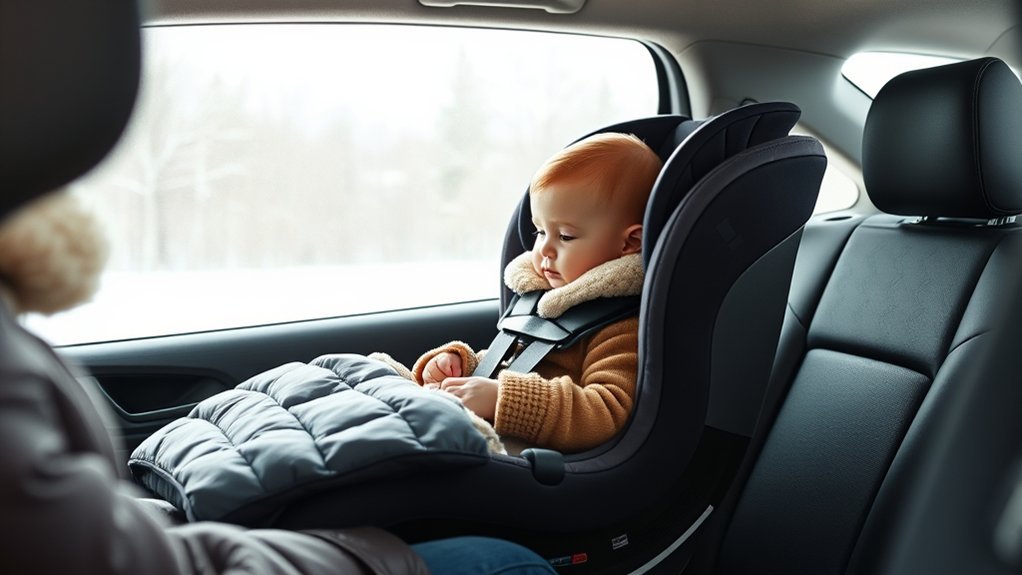
No, you shouldn’t buckle a baby in a winter coat in a car seat. The coat’s bulk can compress in a crash, leaving the harness too loose and increasing the risk of sliding or ejection. Dress your baby in thin layers, remove bulky outerwear, and tighten the straps so they lie flat. Use a blanket over the buckled harness for warmth, and check the pinch test. There’s more to safer cold-weather setup ahead.
Why Winter Coats Are Unsafe in Car Seats
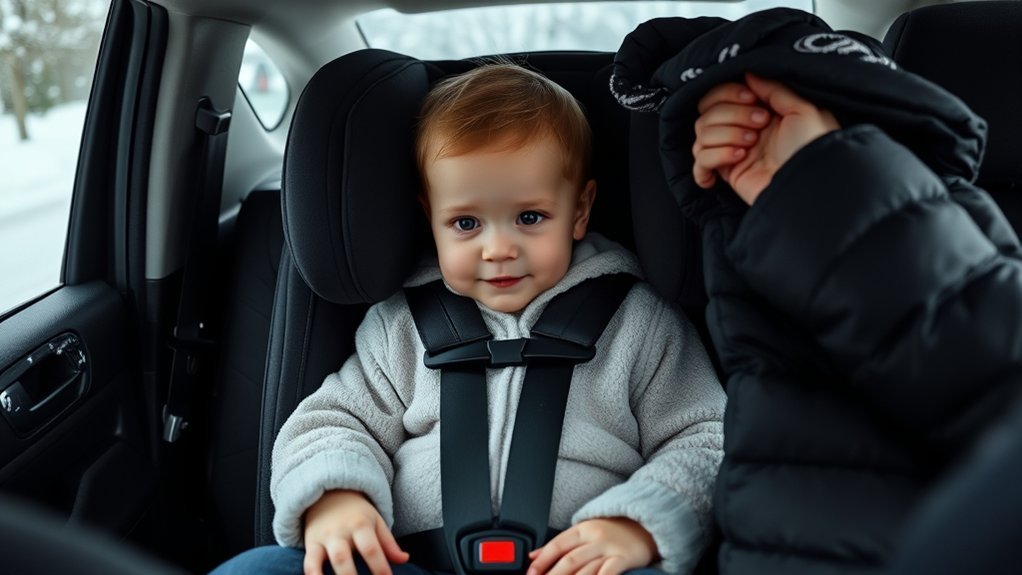
Winter coats are unsafe in car seats because their bulk can compress in a crash, leaving harness straps dangerously loose—sometimes by as much as 4 inches.
When you place a bulky winter coat under the car seat harness, you block a proper fit and weaken safety. Puffy insulation crushes instantly, so the straps that seemed snug with the coat on your child can become too loose to restrain them. That slack increases the dangers of winter coats: sliding, chest movement, and possible ejection.
Car seat manufacturers advise you to use no more than a sweatshirt layer under the straps. To check readiness, buckle your child tightly, then pinch the webbing at the shoulder; if you can gather slack, the fit isn’t secure.
You deserve a restraint that protects freedom, and that means removing extra layers before travel.
How to Tell If a Coat Is Too Bulky
How can you tell if a coat is too bulky? Start with the pinch test. Buckle your child in their coat, then feel the harness straps at the shoulder. If you can pinch webbing between your fingers, the fit isn’t secure.
Next, remove the child’s coat and repeat the pinch test. If the harness feels loose or you find slack after the coat comes off, that child’s coat was too thick. Bulky coats can hide up to 4 inches of slack in car seat straps during a crash, which raises injury risk fast.
Remove the coat and test again—any looseness or slack means the coat was too thick.
As a rule, anything thicker than a sweatshirt shouldn’t sit under harness straps. Check tightness every time, because bulky coats can change fit without warning. These safety tips help you judge whether your child is safe in their car without guessing, so you can choose freedom from avoidable danger and keep the restraint system working as designed. Additionally, ensuring that your child receives adequate nutritional support can promote overall health during winter months.
How to Buckle Babies Safely in Winter
To buckle your baby safely in winter, dress them in thin layers and remove any bulky coat before fastening the harness.
Tighten the straps so they lie flat against the body, then use the pinch test to confirm you can’t grab any slack at the shoulder.
If you need extra warmth, place a blanket over the buckled harness or use a car seat-approved cover that won’t affect fit.
Safe Winter Layering
When you buckle your baby into a car seat in cold weather, skip bulky winter coats, because the extra padding can compress in a crash and leave dangerous slack in the harness.
For car seat safety, dress your baby in thin layers, such as long underwear and a thin fleece jacket, so the harness fit stays snug without bulky clothing. Buckle the straps first, then add warmth with a blanket or poncho-style cover that you can remove quickly.
Use the pinch test at the shoulder; if you can pinch webbing, the fit isn’t secure.
If you want winter coats, choose car seat-friendly outerwear made for restrained travel, like the Buckle Me Baby Coat. This keeps your child warm while preserving control, comfort, and freedom on every winter ride.
Harness Fit Check
Is the harness snug enough? Remove the coat, then buckle your child in thin layers. Bulky winter gear can block a secure fit and reduce safety in a crash. Use this quick check:
| Step | Action |
|---|---|
| 1 | Buckle the harness flat against the body |
| 2 | Tighten until no slack remains |
| 3 | Do the pinch test at the collarbone |
| 4 | If you can pinch webbing, tighten more |
If you can pinch any slack after removing the coat, the harness is too loose. After buckling, you can place a blanket or thin fleece over the child, but keep it clear of the harness and face. Anything thicker than a sweatshirt can compromise fit. Check the harness often, because winter layers shift.
Safe Ways to Keep Babies Warm in the Car Seat
Keeping a baby warm in the car seat means balancing insulation with a secure harness fit. You should remove bulky winter coats before buckling, because extra loft prevents a safe, snug fit in car seats.
Dress your baby in one more thin layer than you’d wear, then tighten the harness so you can’t pinch the strap. If you can pinch it, the coat was too bulky. Choose warm alternatives like fleece jackets, footed pajamas, or other thin layers that don’t interfere with restraint.
After buckling, you can drape a blanket over the harness for added warmth; keep it above the straps, not underneath them. For a more engineered option, use car-seat-friendly outerwear such as the Buckle Me Baby Coat, which is designed to work with the harness.
These choices let you keep your baby warm while preserving the safety your car seats are built to provide.
Winter Car Seat Safety for Toddlers and Older Kids
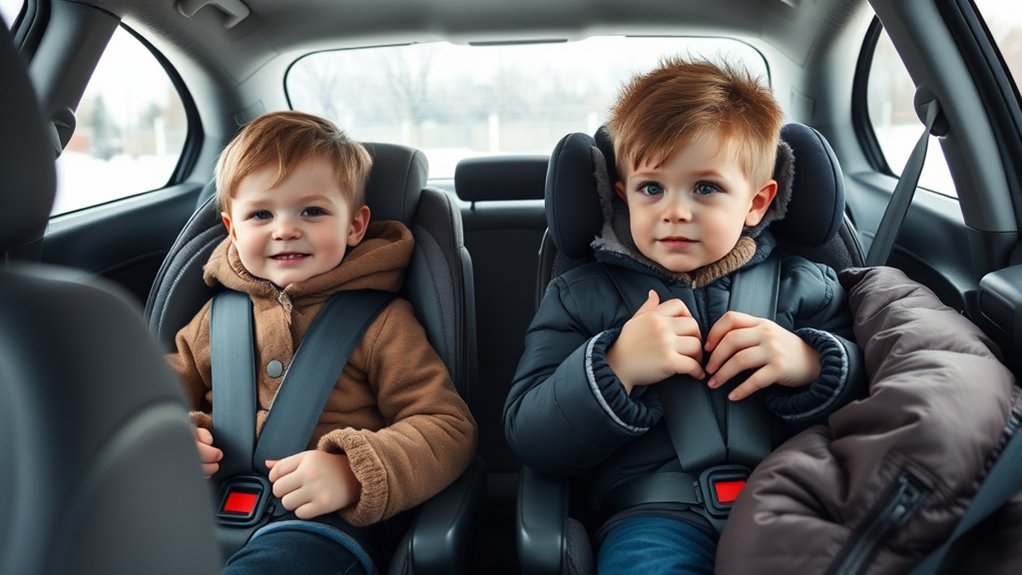
For toddlers and older kids, you shouldn’t use bulky winter coats in a car seat because they can create slack in the harness and reduce crash protection.
Instead, dress your child in thin layers like a base layer, T-shirt, and light fleece so the harness stays snug.
If you need extra warmth, secure the harness first and then use the backward coat trick to keep the coat from interfering with restraint fit.
Backward Coat Trick
To keep your child warm without compromising harness safety, secure them in the car seat first, then put the coat on backward over the harness.
This backward coat trick lets you use a winter coat without creating bulky gaps under the straps. You keep the harness snug against your child’s body, reducing slack that could increase crash injury risk.
After buckling, pull the coat sleeves over your child’s arms and fasten the front behind them. Check that straps lie flat and that you can’t pinch webbing at the shoulders or chest.
If you need extra warmth, add thin layers under the coat, not thick padding. This safety method gives you control, preserves fit, and helps you move through winter travel with confidence and freedom.
Thin Layer Clothing
Thin layers help you keep toddlers and older kids warm in a car seat without adding the bulk that can loosen the harness.
Dress your child in thin layers, like a thermal shirt, fleece, and a light sweatshirt, so you preserve a snug fit and protect safety.
After buckling, check for pinchable slack at the harness; if you can pinch webbing, tighten it.
You can also use the backward coat trick: secure your child first, then place winter coats over them backwards for extra warmth.
This layering method keeps the car seat harness close to the body and reduces crash risk.
If you want more coverage, choose car seat-friendly designs made for safe harness use, but skip bulky winter coats inside the car seat.
Which Car Seat Covers Are Safe to Use?
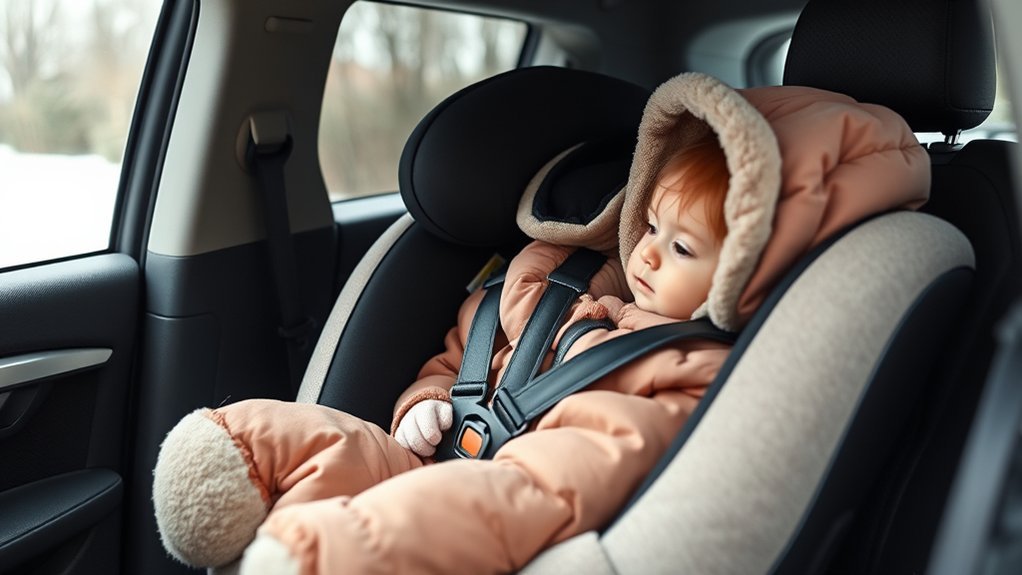
Use only car seat covers that the manufacturer specifically approves, because unapproved covers may not have been crash tested and can interfere with the seat’s safety performance.
You should choose car seat covers approved by the manufacturer and matched to your exact model. Check that they fit snugly, add no bulk under the harness, and let you tighten the straps directly against your child’s body.
Fitted covers are the safest option because they preserve the seat’s safety features while giving warmth without changing harness geometry.
Fitted covers are safest, preserving seat protection and warmth without altering harness geometry.
Never use sleeping bag inserts or stroller accessories in a car seat; they can block proper restraint and weaken protection in a crash.
Keep your child’s face uncovered at all times so breathing stays clear and visibility stays open.
If a cover shifts, bunches, or limits movement, remove it.
Your goal is simple: keep the seat free, the harness true, and your child protected from cold without sacrificing liberation or safety.
What to Pack for Cold-Weather Travel
Before you head out, pack a cold-weather emergency bag with extra blankets, dry clothes, snacks, and non-perishable food so you’re ready for delays or sudden weather changes.
Add hats and gloves, because a child to wear them while walking to the car stays warmer without relying on bulky winter coats and car seat use.
Keep mittens, warm pajamas for infants, a flashlight, and a first aid kit in the bag, too.
Monitor weather conditions before every trip so you can adjust plans before roads get risky.
- Extra blankets and dry clothes
- Snacks, water, and non-perishable food
- Hats, gloves, and mittens
- Flashlight and first aid kit
Your emergency bag supports Kids Safe travel by helping you respond fast if the car warms slowly or you face an unexpected stop.
Pack light, pack smart, and keep freedom of movement without sacrificing protection.
When to Check the Car Seat Manual
Check the car seat manual whenever you add winter layers, accessories, or anything that could change how the harness fits, since manufacturers give specific guidance on clothing, weight limits, and approved add-ons.
You should treat the car seat manual as your first safety standard, not an afterthought. If it says winter coats or bulky clothing interfere with harness adjustments, remove them before buckling your child in.
You want a snug fit: the harness should lie flat, with no slack at the shoulders or chest. Check for approved accessories, such as fitted covers, that keep your baby warm without compromising restraint performance.
Revisit the manual after each growth spurt, seat move, or seasonal change, because guidance can shift with recalls or updates.
When you follow the manual, you make safer choices, protect your child’s freedom of movement, and keep the seat working as designed for every ride.
Frequently Asked Questions
Can Babies Wear Winter Coats in Car Seats?
No, babies shouldn’t wear winter coats in car seats. For car seat safety, use proper layering techniques, harness adjustments, winter coat alternatives, travel blanket options, or insulated car seat covers to reduce hypothermia risks safely.
How to Keep Baby Warm in Car Seat in Winter?
Like armor against cold, you can keep baby cozy by using layered clothing tips, then add car seat blankets or approved infant car seat covers after buckling. Check car seat safety, avoid bulk, and do temperature checks.
Can My Baby Wear a Fleece Onesie in the Car Seat?
Yes, your baby can wear a fleece onesie in the car seat if it fits snugly; it supports car seat safety. Use layering options, smart fabric choices, and baby warmth strategies for winter travel tips and outdoor adventures.
Conclusion
So, no—you shouldn’t zip your baby into a puffy winter coat and call it “protected.” The irony is that the fluffier the coat looks, the more it can sabotage the harness’s grip in a crash. Instead, you’ll keep your baby safer by buckling snugly first, then adding a blanket or approved cover over the top. Check fit, read your car seat manual, and choose warmth that doesn’t steal safety.
