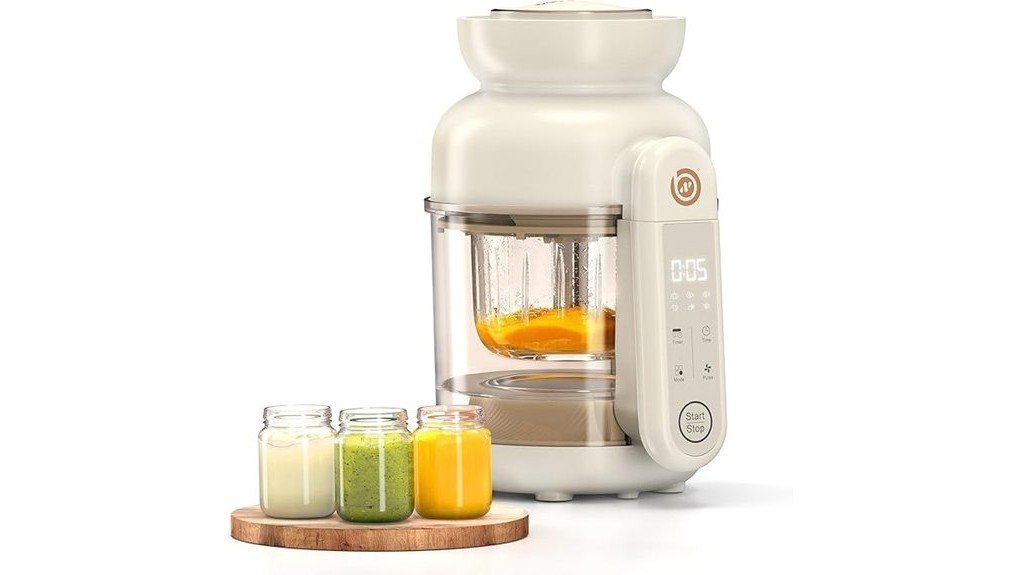
The Auto Baby Food Maker presents a compact approach to home meal prep, combining steaming and blending in one unit. Its glass bowl and secure-lid design suggest a focus on safety, while dishwasher-safe parts may reduce cleanup time. Compared with manual methods, it offers greater consistency and less effort, though value depends on daily use and expectations. The real question is whether its convenience justifies the cost, and that is where the details become more revealing.
Key Takeaways
- It combines steaming, blending, chopping, auto cooking, scheduling, and keep-warm functions for convenient baby meal prep.
- The touchscreen and automatic cycle reduce guesswork and simplify making smooth, consistent purees.
- The glass bowl and secure-lid safety design improve visibility, durability, and confidence during use.
- Detachable, dishwasher-safe parts and the included brush make cleaning and maintenance easier.
- It is a strong buy for families wanting compact convenience, though cheaper basic blenders may suit tighter budgets.
Auto Baby Food Maker Features
The Auto Baby Food Maker combines steaming, blending, chopping, auto cooking, scheduling, and keep-warm functions in a single corded electric unit, making it more versatile than basic baby blenders or manual food mills.
Its user friendly interface relies on a touch screen that reduces guesswork and supports controlled preparation.
Precision technology appears in the glass-and-steel construction, heat-focus ring, and mixing cup geometry, which together reflect a more engineered approach than common plastic alternatives.
Detachable parts simplify cleanup, while dishwasher-safe components lessen domestic labor.
The compact 350 milliliter capacity suits measured portions, offering practical independence without unnecessary complexity or dependence.
How It Steams and Blends
Steam enters the process through the unit’s built-in cooking cycle, softening ingredients before the blades engage, which helps preserve a smoother texture than manual mills that require separate heating and mashing steps.
Its steaming techniques distribute heat evenly, reducing guesswork and supporting consistent results across vegetables, fruits, and grains.
Once softened, the precision blades engage automatically, improving blending efficiency by turning cooked pieces into fine purees with limited effort.
Compared with stovetop-and-blender routines, this integrated sequence saves time and reduces handling.
For households seeking practical freedom, the combined cycle offers a controlled, repeatable path from raw produce to ready meals.
Why the Glass Bowl and Safety Design Matter
Beyond the steaming-and-blending sequence, the glass bowl and safety-focused construction add another layer of practical value.
Compared with plastic alternatives, glass offers clearer visibility, stronger resistance to odor retention, and fewer concerns about surface wear, delivering tangible material benefits for families seeking control over what enters the bowl.
The design also supports safety standards through a secure-lid activation system, so the blade does not engage unless components are properly locked. That restraint reduces accidental operation and reinforces confidence.
For households valuing autonomy, the result is a cleaner, more reliable, and more transparent feeding process.
Cleaning, Dishwasher Safety, and Maintenance
Cleanup is one of the machine’s clearer strengths, especially for families that want less post-cooking labor and fewer lingering food odors. Detachable glass and stainless-steel parts simplify rinsing, and the dishwasher-safe design reduces manual scrubbing compared with many plastic-bodied rivals.
The included cleaning brush helps clear blade edges and tight seams. Practical cleaning tips include washing promptly after use and drying components fully to limit residue buildup. A modest maintenance schedule, centered on checking seals, lid fit, and blade movement, supports consistent performance.
Compared with bulkier processors, this setup feels more efficient and less burdensome, preserving household autonomy.
Is It Worth Buying?
Whether the Auto Baby Food Maker is worth buying depends largely on how much value a household places on convenience, compact design, and easy cleanup.
Compared with manual steaming and blending, it offers scheduling, keep-warm support, and a secure, single-unit workflow that can reduce daily labor. Its glass-and-steel build, dishwasher-safe parts, and limited lifetime warranty strengthen the case for buyers seeking reliability.
Budget considerations remain important, since simpler blenders cost less. Yet user testimonials often praise the silky texture, safety lock, and time savings, suggesting it suits families prioritizing autonomy and efficiency over low upfront price.
Frequently Asked Questions
What Is the Baby Food Maker’s Capacity?
It holds 350 milliliters, or 12 ounces. That capacity suits small batches, while baby food safety remains supported by stainless steel and glass. Its blending techniques favor smooth purees without unnecessary complexity.
Does It Have a Keep-Warm Function?
Yes, it includes a keep-warm function, a small revolution for busy caregivers. Its keep warm benefits preserve meal readiness, while temperature settings add control, offering more flexibility than basic blenders or steamers for liberated routines.
Is the Blending Cup Made of Glass?
Yes, the blending cup materials include glass, paired with stainless steel for durability. Its safety features require secure lid placement before activation, making it a comparatively reassuring option for users seeking practical kitchen independence.
What Accessories Come in the Box?
The box includes a bowl, lid, and cleaning brush. With 3 included accessories, it offers accessory benefits through simple prep and cleanup tips. Compared objectively, this corded electric set supports liberated, efficient baby-food making.
What Warranty Does It Include?
It includes lifetime service support and a limited lifetime warranty. The warranty duration is effectively long-term, while warranty coverage appears focused on defects and support, offering reassuring protection compared with many shorter, restrictive appliance warranties.
Conclusion
Ultimately, the auto baby food maker appears to validate the theory that convenience-driven appliances can also support healthier feeding habits. Its combined steaming and blending functions, glass bowl, and safety-focused lid mechanism distinguish it from simpler manual methods and many plastic alternatives. While compact design and dishwasher-safe parts improve usability, its real strength is consistency. Based on user reports and functional design, it seems less a luxury than a practical tool for busy households.