
Anti-colic bottle parts usually include the bottle base, nipple, screw ring, venting tube, and silicone valve. You assemble them tightly, fill below the line, and keep the vent path clear so air stays separate from milk. During feeding, hold the bottle at a slight angle and let your baby pace it. Clean each part after use, then sterilize by boiling or approved methods. If you keep going, you’ll see how to fix common issues too.
Anti-Colic Bottle Parts and What They Do

An anti-colic bottle works as a simple team: the bottle base holds the milk, the nipple delivers it, the screw ring secures everything, and the venting tube and silicone valve help manage airflow.
During bottle feeding, you use each part together so your baby can drink more comfortably and you can feel more confident. The venting tube lets air enter without mixing into the milk, which helps reduce gas and fussiness.
During bottle feeding, each part works together to help your baby drink more comfortably and with less fuss.
The silicone valve keeps the nipple from collapsing, so milk flows steadily. When you assemble the bottle, make sure every piece sits properly and the valve stays open. That small check can help prevent leaks and keep the bottle working as it should.
You’ll also want to inspect and clean the nipple and vent parts regularly. A well-kept bottle supports easier feeding and gives you one less thing to wrestle with. Additionally, understanding nipple flow rates can further enhance the feeding experience for your baby.
How the Vent System Works
The vent system works by letting air move through the bottle without mixing into the milk, so your baby takes in less air while feeding.
In an anti-colic bottle, the internal vent system channels air through a venting tube and silicone valve, keeping the milk flow smooth and steady. That means you can help reduce colic, spit-up, burping, and gas without constant worry.
Your baby can feed at their own pace, and the nipple stays stable instead of collapsing. The design supports a calmer, freer feeding experience for both of you.
To keep it working well, make sure the silicone valve stays open so air can pass through and no blockages form.
When the vent system functions as intended, it helps protect comfort and lets feeding feel easier, more natural, and less stressful. Additionally, the venting system is crucial for minimizing discomfort during feedings.
How to Assemble the Bottle
Start by gathering all the bottle parts and checking that each one’s clean and undamaged.
Next, align the vent components by snugly connecting the reservoir tube to the insert before placing it in the bottle, and make sure the vent lid is fully closed.
Then snap the nipple into the collar, attach it to the bottle without over-tightening, and confirm the silicone valve slit is open so the bottle works properly. This assembly process is crucial for minimized air intake, which helps reduce discomfort and fussiness after feeding.
Gather Bottle Parts
Bottle in hand, gather all the parts before you begin: the bottle base, nipple, screw ring, venting tube, and silicone valve.
Lay each piece on a clean surface so you can see what you’re working with and move through the bottle assembly without stress.
Snap the nipple securely into the collar, then check that it sits snugly on the bottle.
Next, place the venting tube inside the bottle and keep the lid fully closed so you don’t invite leaks.
Fill the bottle with your chosen liquid, staying below the fill line to prevent overflow.
Finally, tighten the collar over the vent system firmly, but don’t overdo it. A secure fit helps your bottle work as intended.
Align Vent Components
Before you assemble the bottle, connect the reservoir tube snugly to the insert so the Internal Vent System is set up correctly.
Then align vent components with care: place the Infant-Paced Feeding Valve into the back of the nipple/teat, and snap it firmly into the collar.
Check that the silicone valve slit stays open, so the nipple won’t collapse during feeding.
Next, set the collar on the bottle and screw ring it closed until it feels secure, but don’t over-tighten; the vent needs room to work.
Make sure the venting tube lid is fully closed, too, so you keep leaks from taking over your feed.
With these steps, you create a smooth, reliable setup that supports freer, calmer feeding.
Secure Nipple Assembly
Snap the nipple into the collar first, making sure it sits evenly with no gaps, and check that the silicone valve is open so the nipple won’t collapse during feeding.
This secure nipple assembly keeps the bottle working as designed. During warming, leave the collar loosely on the bottle so liquid can’t enter the vent system.
Once you’ve filled the bottle to the right level, attach the reservoir for the internal vent system. Then tighten the collar around the nipple and vent parts snugly, but don’t over-tighten it.
You want a firm seal, not pressure that blocks airflow. When everything’s aligned and secure, your bottle supports smoother feeding, less air intake, and more peace for you and your baby.
How to Feed With the Anti-Colic Bottle

Hold the anti-colic bottle at a slight angle so the vent stays aligned and milk flows smoothly without pulling in extra air. Keep an eye on your baby’s cues and let them set the pace, adjusting the nipple if feeding seems rushed or uncomfortable. When the bottle’s set up and positioned well, you’ll help make each feeding calmer and more comfortable. Additionally, holding the baby upright during feeding can minimize air intake and enhance comfort.
Proper Bottle Positioning
A slight angle makes a big difference when you feed with an anti-colic bottle: keep the nipple filled with milk so air doesn’t enter, and make sure the AirFree vent lines up with the icon on top for the best flow.
This proper bottle positioning helps you feed with confidence and less fuss. Hold the bottle nearly horizontal, then tilt just enough to keep milk in the nipple while your baby feeds.
Check that the nipple flow matches your baby’s needs; if it seems too fast or too slow, switch sizes. Watch for comfort cues, and adjust the angle if you notice gas or strain.
With a steady setup, you support easier feeding, better air control, and a calmer experience for both of you.
Baby-Led Feeding Pace
Once you’ve set the right angle, let your baby take the lead with the anti-colic bottle. This baby-led feeding pace supports a calmer, more natural rhythm, much like breastfeeding, so you don’t have to force a schedule.
The Zero-Resistance™ system lets the nipple fill as your baby lifts their tongue, and the venting system helps keep air out, easing gas and colic discomfort.
- Watch for steady sucking and relaxed pauses
- Tilt just enough to keep milk flowing, not trapping air
- Adjust the bottle if your baby seems rushed or unsettled
Stay attentive to your baby’s cues and trust them to guide the session. When you follow their comfort, you create space for independent feeding habits and a freer, more soothing experience.
How to Clean and Sterilize Bottle Parts
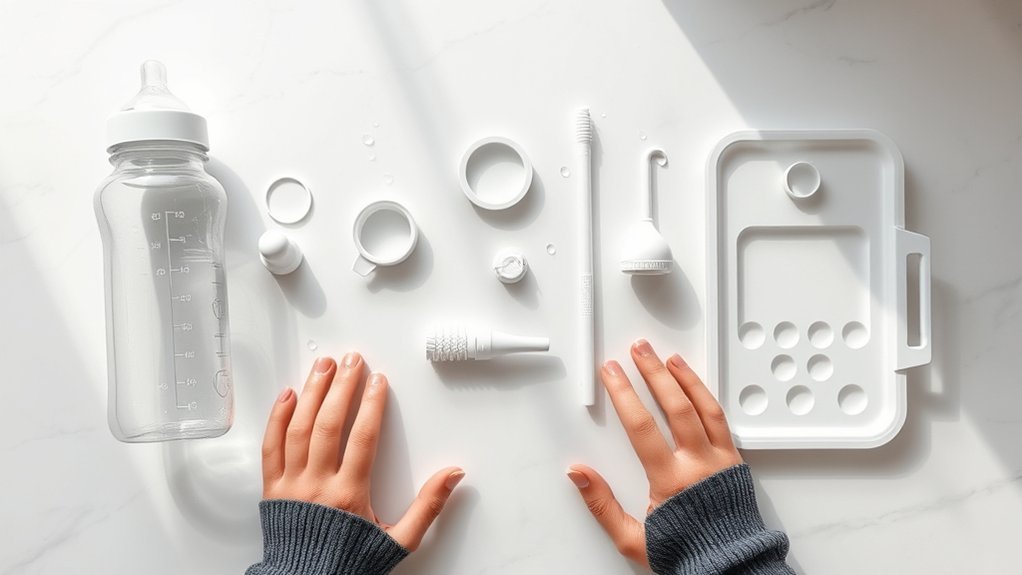
To keep anti-colic bottle parts hygienic and safe, disassemble every component, including the nipple, collar, and venting system, before cleaning.
When you clean and sterilize each piece separately, you give yourself peace of mind and better protection for your baby. Wash the parts in warm, soapy water, or place them on the top dishwasher shelf for a thorough clean.
Then sterilize them by boiling for 5 minutes, or use an approved UV, steam, or cold-water solution. If your bottle supports self-sterilizing, add 50 ml of water to the base, loosely assemble the parts, and microwave for 3 minutes.
Then sterilize them by boiling for 5 minutes, or use an approved UV, steam, or cold-water solution.
Let everything cool for at least 5 minutes before handling. Finally, inspect each part regularly and replace any worn or damaged pieces, especially the nipple, so you can keep feeding simple, safe, and free. Proper sterilization is crucial for preventing infections and ensuring your baby’s health.
Common Problems and How to Fix Them
Even with proper cleaning and sterilizing, anti-colic bottles can sometimes leak, clog, or cause feeding discomfort, but most issues are easy to fix. When you’re troubleshooting common problems and how to fix them, start by checking that every piece of your Anti-Colic Bottles fits together tightly and that the venting path isn’t blocked.
If the nipple collapses, make sure the silicone valve slit is open and the venting tube lid is closed.
- Leaking bottle: reassemble all parts and clear any vent clogs.
- Collapsing nipple: open the slit, then secure the lid.
- Fussy feeding: keep milk under 98°F and watch for air bubbles.
If you use formula, stir gently instead of shaking; that helps prevent clogs and keeps the flow steady. Additionally, ensure you are using the correct nipple size to avoid overwhelming the baby and promote a smoother feeding experience.
Also inspect the nipple, valves, and seals often. If you spot wear, cracks, or stretching, replace the part right away so feeding stays safe, smooth, and free.
Frequently Asked Questions
How to Put an Anti-Colic Bottle Together?
You connect the vent parts, close the lid, and keep the silicone valve open. Snap the nipple into the collar, fill below the line, then screw on gently. Check Bottle Benefits and inspect everything first.
Do You Have to Use the Green Part in Dr. Brown Bottles?
No, you don’t have to use the green part. Dr. Brown’s bottles work without it, but you’ll lose some Green Necessity benefits, so you may see more air bubbles. Seal tightly and watch your baby’s comfort.
How to Put Together Dr. Brown Anti-Colic Bottles?
Fill the bottle to the line, snap the nipple into the collar, add the vent insert and tube, then tighten the top snugly. You’ll get Bottle Benefits, and your baby’s feed should stay comfortable.
How to Assemble Herobility Bottle?
Insert the anti-colic vent into the base, place the nipple in the collar, twist it snugly, fill below the line, then cap it. You’ll enjoy Bottle Benefits: better airflow, fewer leaks, easier feeding, and simple cleaning.
Conclusion
With the right assembly, you can help your anti-colic bottle do its job and make feeding feel a whole lot smoother for your baby. Keep the vent system aligned, watch for steady flow, and clean each part carefully after every use. If something seems off, check the nipple, ring, and valve first. A little routine goes a long way here—it can feel like a tiny miracle for calmer feeds, less gas, and easier cleanup.
