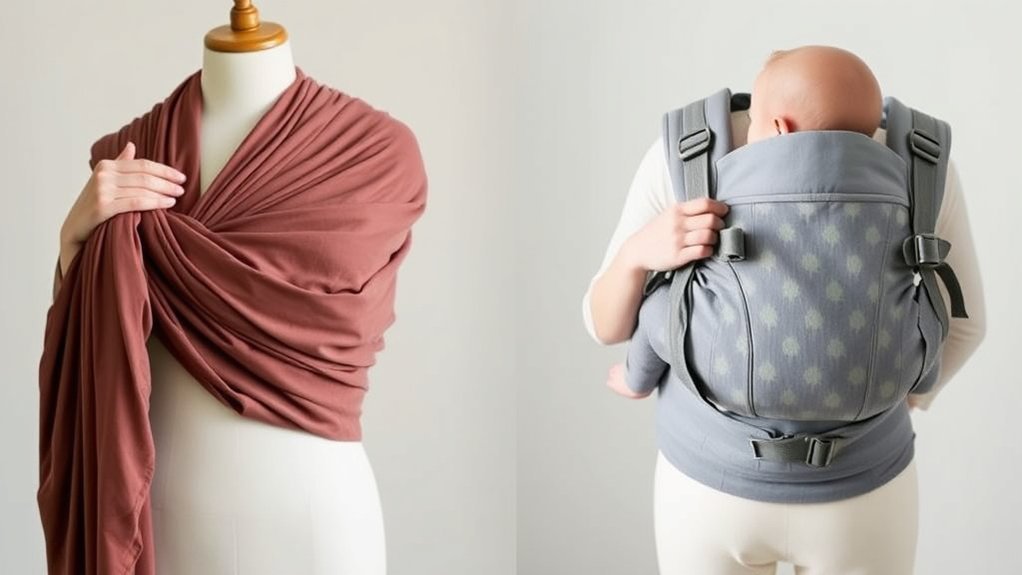
Choosing between babywearing wraps and carriers can feel overwhelming. Each option offers distinct advantages, but the right choice often depends on your lifestyle and preferences. Wraps provide a snug, customizable fit, while carriers offer ease of use and structured support. Understanding their differences will help you make an informed decision.
Quick Answer
- Wraps suit parents who want a close, customizable fit and don’t mind a short learning curve for tying.
- Carriers are better for parents who want something quick to put on with built-in structure and support.
- For newborns, wraps often provide the snuggest fit. As babies grow, structured carriers become easier to manage.
- Both options support bonding, keep your hands free, and can be used safely with the right technique.
Understanding Baby Wraps
Baby wraps offer a unique blend of comfort and versatility for both parent and baby. Learning a few basic wrap techniques goes a long way toward getting the most out of them.
You can choose from several holds, like the front wrap cross carry or the hip carry, each offering different levels of support and accessibility. The front wrap cross carry works well for newborns; hip carries suit older babies who have more head control.
Fabric choice matters too. Natural fibers like cotton or linen breathe well and work in warmer weather, while stretchy blends give a snug, forgiving fit that’s easier to learn on.
Exploring Baby Carriers
Baby carriers come in several styles, and picking the right one means understanding what each type offers and how safety factors into the decision.
Types of Baby Carriers
Soft structured carriers are the most popular style. They combine comfort and support with adjustable straps and an ergonomic design that distributes your baby’s weight evenly across your hips and shoulders. Many include extras like pockets and removable hoods.
Mei tais and ring slings are other options worth exploring. They sit between a wrap and a structured carrier in terms of flexibility, offering some customization without as steep a learning curve as a full wrap.
Benefits of Using Carriers
A baby carrier lets you stay hands-free while keeping your baby close, which makes everyday tasks much easier. The skin-to-skin contact this creates supports your baby’s development and strengthens your bond.
Physically, wearing your baby can help strengthen your core and improve posture over time. Carriers are also more compact than strollers, making outings simpler and more spontaneous.
Safety Considerations for Carriers
Safety should always come first. Make sure your carrier meets recognized safety standards and check it regularly for wear and tear. The Babywearing International organization offers free and low-cost help from trained volunteers if you want guidance on fit and positioning.
Key safety checks:
- Confirm the carrier meets current safety standards.
- Inspect it regularly for fraying, broken buckles, or worn fabric.
- Make sure your baby’s position supports their hips and spine (the “M” position is ideal).
- Adjust straps for a snug, secure fit without restricting breathing.
- Follow the manufacturer’s instructions for use and cleaning.
Pros and Cons of Wraps
Wraps have real strengths, but they also come with some trade-offs. Here’s a quick breakdown:
| Pros | Cons |
|---|---|
| Highly customizable fit for different body types | Learning curve for tying correctly |
| Multiple carrying positions available | Takes more time to put on |
| Affordable, especially stretchy wraps | Less structured support as baby grows heavier |
| Close skin-to-skin contact for newborns | Can feel warm in hot weather |
| Lightweight and easy to pack | Long fabric can be tricky to manage in public |
Pros and Cons of Carriers
Structured carriers suit parents who want convenience and support. Here are the main points to weigh:
- Pros:
- Quick and easy to put on and take off.
- Built-in structure keeps babies in an ergonomic position.
- Better weight distribution for heavier babies and toddlers.
- Many models have wide adjustability for different body types.
- Good for longer outings or more active use.
- Cons:
- Generally more expensive than wraps.
- Bulkier to store or pack.
- Less flexibility in carrying positions compared to wraps.
- Fit can still be tricky for very petite or plus-size parents with some models.
Choosing the Right Option for You
The best choice between wraps and carriers comes down to your lifestyle and your baby’s age and size. Think about how often you’ll be on the move and what feels comfortable for both of you.
Lifestyle Considerations
Your daily routine matters a lot here. A few factors to think through:
- Comfort: How does each option feel during extended wear?
- Activity level: Are you hiking, running errands, or mostly at home?
- Ease of use: Do you want something quick to put on and take off?
- Style: Does one option align better with your preferences?
- Storage: How much space do you have for babywearing gear?
Baby’s Age and Size
Your baby’s age and size should guide your choice at every stage. For younger infants, wraps often provide the snug support newborns need, and they accommodate small size variations well.
As babies grow and become more active, carriers tend to be more practical. They allow for quicker adjustments and give older babies a bit more freedom to look around. Always check that the carrier or wrap fits your baby’s current weight and height for the best support.
Tips for Safe and Comfortable Babywearing
Babywearing is a great way to bond with your child while keeping your hands free. A few simple habits keep it safe and comfortable for both of you:
- Choose a carrier or wrap that suits your body type and your baby’s age.
- Make sure your baby’s airway stays clear. Their chin should never press against their chest.
- Use padded straps and adjustable settings to dial in a comfortable fit.
- Switch carrying positions periodically to prevent discomfort for you and your baby.
- Take breaks to stretch and check your baby’s position throughout the day.
Frequently Asked Questions
Can I Use a Wrap or Carrier for Newborns?
Yes. Both wraps and carriers can work for newborns. They offer close bonding and hands-free convenience. Follow positioning guidelines carefully to keep your newborn safe and well-supported.
How Do I Clean My Baby Wrap or Carrier?
Machine wash on a gentle cycle with mild detergent and air dry. Regular cleaning keeps your carrier safe and fresh for your baby.
Are Wraps or Carriers Better for Breastfeeding?
Wraps often give more breastfeeding comfort. Their snug, adjustable fit makes it easier to nurse discreetly. Carriers can work too, but wraps tend to offer more flexibility for positioning.
Can I Wear My Baby While Exercising?
Yes, but keep safety in mind. Use a supportive carrier, adjust your workout to suit your baby’s comfort, and listen to your body. Avoid high-impact activities that could jostle your baby.
What Materials Are Best for Wraps and Carriers?
For wraps, breathable cotton or linen works well. For structured carriers, look for soft, durable fabrics like canvas or mesh. Both keep you and your baby comfortable during longer wear sessions.
Conclusion
Both wraps and carriers can deepen your bond with your baby while keeping your hands free. Wraps give you a close, customizable fit. Carriers give you speed and structure. The right pick depends on your lifestyle, your baby’s age, and what feels good for both of you. Try options out if you can, and don’t be afraid to switch as your baby grows.

