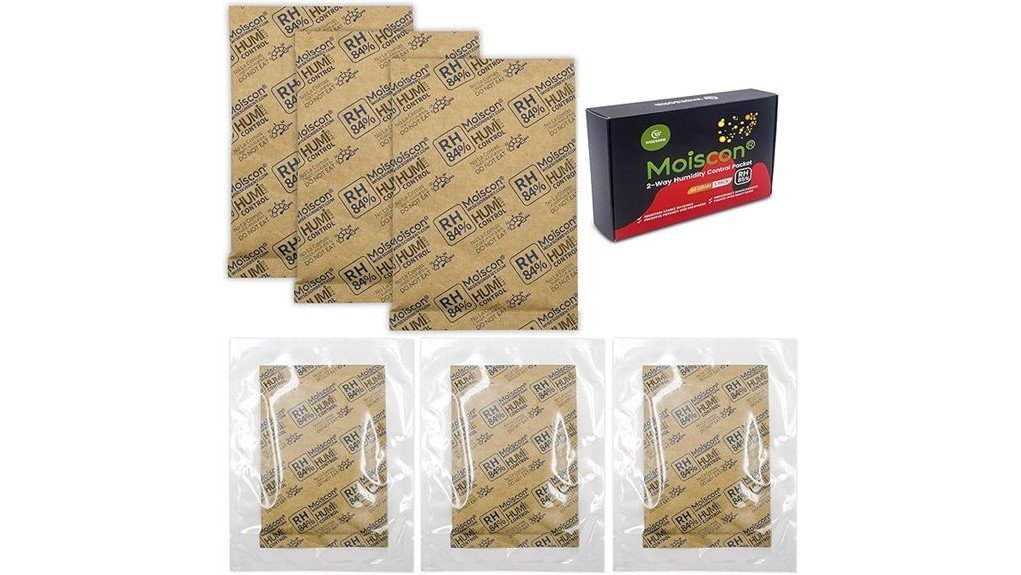
Wisesorb Two-Way Humidity Control Packs are designed to stabilize moisture in sealed containers by either absorbing excess humidity or releasing it when conditions become too dry. That balance can matter for spices, coffee, and instruments, where consistency affects quality. The kraft paper packaging adds a practical, sustainable touch. The real question is how well the packs perform across different storage needs, and that is where the details begin to matter.
Key Takeaways
- Wisesorb packs regulate humidity by both absorbing excess moisture and releasing it when conditions become too dry.
- They help protect spices, coffee, wood, and musical instruments from spoilage, hardening, and dryness.
- The packs work passively in sealed containers, requiring no electricity, water, or manual adjustments.
- Kraft paper packaging adds breathability, tear resistance, and biodegradability while supporting controlled vapor exchange.
- They are best used in airtight jars or bags, with packet size matched to container volume for reliable humidity control.
What Wisesorb 85% Humidity Packs Do
Wisesorb 85% humidity packs regulate the environment inside sealed containers by either absorbing excess moisture or releasing moisture when conditions become too dry.
Their function centers on moisture absorption and humidity regulation, keeping stored goods near a stable relative humidity. This helps protect spices, coffee, wood, and other sensitive items from spoilage or distortion.
The packs operate passively, requiring no electricity or added water. For users seeking practical control without dependency on devices, they offer a simple means of maintaining material conditions and preserving autonomy over storage environments inside jars, bags, or other airtight containers.
How Two-Way Humidity Control Works
Two-way humidity control works by shifting moisture in both directions to keep the surrounding air near a target relative humidity. It supports humidity regulation through moisture absorption when air is wet and release when air is dry, reducing swings that constrain stored goods.
Two-way humidity control shifts moisture both ways, keeping air near target relative humidity and reducing harmful swings.
- It absorbs excess vapor, limiting damage.
- It gives back moisture, preventing desiccation.
- It stabilizes conditions, allowing users more control.
The mechanism is passive, requiring no adjustment, and it helps maintain predictable storage without dependence on constant monitoring.
For people seeking liberation from guesswork, this steady exchange offers practical environmental autonomy and consistent protection.
Why Kraft Paper Packaging Matters
Kraft paper packaging contributes directly to the packs’ performance by combining breathability, tear resistance, and biodegradability. Its porous structure supports controlled vapor exchange without weakening the enclosure, which helps preserve stable humidity regulation.
The material also adds packaging durability, reducing damage during handling and storage. From an analytical standpoint, this design aligns with sustainability benefits because it relies on a renewable, lower-impact medium rather than plastic-heavy alternatives.
For users seeking practical autonomy, the result is a functional package that protects contents while minimizing waste, supporting both performance and environmental responsibility in a single material choice.
Best Uses for Wisesorb Packs
Beyond packaging quality, the practical value of these packs becomes most apparent in their storage applications. They support spice preservation by stabilizing ambient humidity, limiting clumping and aroma loss. Their moisture absorption capacity also benefits dry goods and sensitive materials that degrade under fluctuating conditions.
- Spices and seasonings: steadier freshness, less waste.
- Brown sugar and coffee beans: reduced hardening, clearer flavor.
- Musical instruments and reeds: controlled dryness, fewer distortions.
The result is measured protection without dependence on elaborate equipment. For users seeking liberation from spoilage and uncertainty, the packs offer a simple, disciplined safeguard.
How to Use Them in Sealed Containers
To use Wisesorb packs in sealed containers, the packet is simply placed inside an airtight environment such as a Mason jar, storage bag, or small canister, where it can begin regulating humidity immediately.
The method depends on sound sealing techniques that limit air exchange and preserve the target RH. Different container types require matching packet size to volume; larger spaces may need multiple packs for stable results.
Once enclosed, the pack absorbs excess moisture or releases it as needed, reducing dependence on external controls. This supports practical storage autonomy for spices, coffee, wood items, and other sensitive goods.
Frequently Asked Questions
How Long Do Wisesorb Packs Typically Last Before Replacement?
They typically last several months, sometimes longer, depending on usage frequency and container seal. Pack effectiveness declines as they saturate or dry out, so replacement usually follows visible humidity drift rather than a fixed schedule.
Can These Packs Be Reused After Drying Out?
No, not reliably; once saturated and dried, pack efficiency drops. About 85% RH control is the key statistic. Repeated humidity absorption and release may continue, but performance becomes less predictable, so replacement is usually wiser.
Are Wisesorb Packs Safe for Direct Contact With Food?
They are generally intended for indirect food safety use, not direct contact with food. For moisture control in sealed containers, separation by a barrier is prudent. Users should verify manufacturer guidance before relying on direct contact.
What Happens if a Pack Gets Punctured or Torn?
A puncture can release powder, reduce humidity balance, and weaken puncture effects; a tear can do the same, causing localized moisture loss or gain. The packet should be removed, replaced, and contents checked carefully.
Do Wisesorb Packs Work in Very Cold Storage Conditions?
In very cold storage, Wisesorb packs may still function, though cold storage performance can slow and humidity regulation effectiveness may weaken slightly. Their two-way design remains useful, but sealed conditions and temperature stability matter most.
Conclusion
Wisesorb two-way humidity control packs offer a simple, passive way to stabilize storage conditions in sealed containers. Their ability to absorb excess moisture and release it when air becomes too dry makes them useful for spices, coffee, and musical instruments. In one small test, a jar of dried herbs stayed noticeably fresher after weeks of fluctuating room humidity, like a steady hand keeping a compass needle from wandering. The kraft paper packaging adds durability and a lighter environmental footprint.

