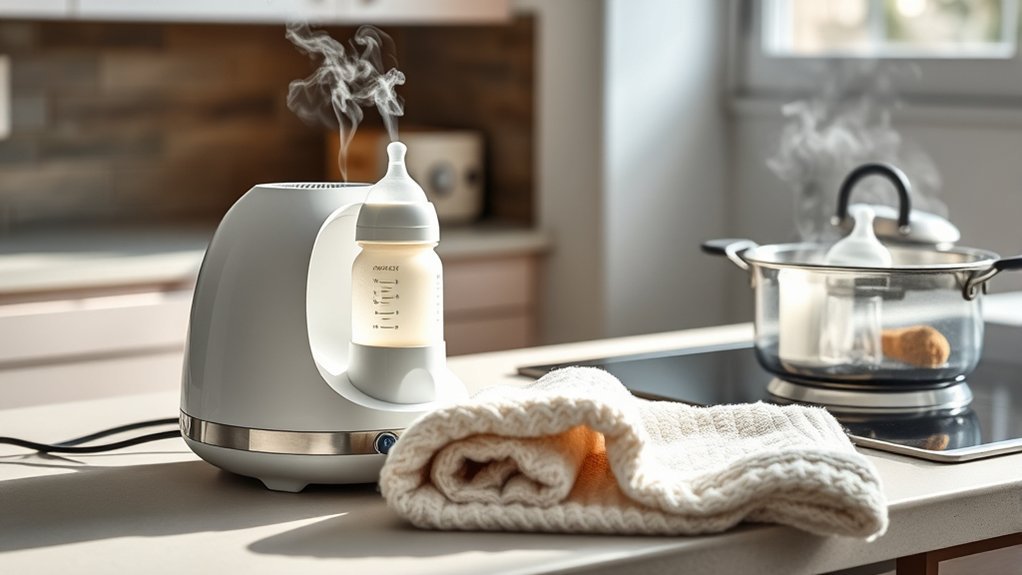
Do’s and Don’ts of Warming Baby Bottles Safely
What’s in This Article
- Understanding the Importance of Proper Bottle Warming
- Do: Use Warm Water Baths
- Don’t: Microwave the Bottle
- Do: Check the Temperature Before Feeding
- Don’t: Leave the Bottle Unattended While Warming
- Do: Use a Bottle Warmer
- Don’t: Shake the Bottle to Mix
- Do: Store Milk Safely
- Don’t: Reheat Milk Multiple Times
- Safe Bottle Warming Checklist
- Frequently Asked Questions
- Medical Disclaimer
- Conclusion
A bottle that feels only a little too warm to you can feel too hot for your baby. Safe bottle warming helps you avoid hot spots, protect milk quality, and make feeding more comfortable. This guide explains the main do’s and don’ts so you can warm breast milk or formula with more confidence.
Quick Answer
Warm baby bottles with a warm water bath or a bottle warmer, not a microwave. Gently swirl the bottle, test a few drops on your wrist, and feed only when the milk feels warm, not hot. Discard leftover warmed milk after feeding instead of reheating it again.
Key Takeaways
- Use warm water or a bottle warmer to heat milk gently and evenly.
- Avoid microwaves because they can create hot spots inside the bottle.
- Test the milk on your wrist before every feeding.
- Gently swirl the bottle instead of shaking it hard.
- Store milk safely and avoid reheating the same milk more than once.
Understanding the Importance of Proper Bottle Warming
When you warm a bottle for your little one, you need a safe and gentle method. Proper bottle warming helps prevent hot spots that can scald your baby’s mouth during feeding.
Safe warming can also help protect the quality of breast milk or formula. Babies can react quickly to heat, so you need to warm the milk evenly and test it before feeding.
Warm milk evenly to protect your baby’s comfort and reduce the risk of mouth burns.
Avoid the microwave because it can heat milk unevenly and make some spots much hotter than others. Choose slow, steady warming methods that help keep feeding safe and calm.
These basics give you more peace of mind at feeding time. They also help you build a simple routine you can repeat each day.
Do: Use Warm Water Baths
A warm water bath gives you one of the simplest ways to warm a bottle. This gentle method helps spread heat through the milk without making one area too hot.
Fill a bowl or sink with warm water, not boiling water. Place the bottle in the water, keep the cap secure, and let it sit for a few minutes.
Swirl the bottle gently, then place a few drops on your wrist. The milk should feel warm or neutral, not hot.
Pro tip: Use a small portion when possible, so you warm only what your baby may finish.
Don’t: Microwave the Bottle
Microwaving bottles may seem fast, but it can make feeding less safe. Microwaves can heat milk unevenly and create hot spots that may burn your baby’s mouth.
A microwave can also overheat the bottle or nipple. That heat can surprise you when the outside feels fine but the milk inside feels too hot.
Use a warm water bath or a bottle warmer instead. These methods help you control the temperature and warm the milk more evenly.
Warning: Never feed from a bottle until you test the milk temperature on your wrist.
Do: Check the Temperature Before Feeding
You can help your baby stay comfortable by checking the bottle before every feed. The milk should feel warm, not hot, when you test it.
Testing the bottle before feeding helps you catch hot milk before it reaches your baby.
Use these quick steps before feeding:
- Swirl the bottle gently: Move the bottle in small circles to spread the heat.
- Test on your wrist: Place a few drops on your inner wrist.
- Check for gentle warmth: The milk should feel warm or close to body temperature.
- Wait if needed: Let the bottle cool for a short time if it feels hot.
You can use a clean food thermometer if you prefer a more exact check. Many parents aim for a temperature close to body temperature, about 98.6°F (37°C).
Don’t: Leave the Bottle Unattended While Warming
It may feel easy to step away while a bottle warms. But an unattended bottle can overheat before you notice.
Bottles can also heat unevenly, especially if the warmer or water bath runs too hot. Hot spots may not show until your baby reacts during feeding.
Stay near the bottle and watch the warming process. If you need to leave, stop the warmer or remove the bottle from the water first.
Your baby’s safety comes first. A short pause can prevent overheating and help you test the bottle with care.
Do: Use a Bottle Warmer
A bottle warmer can help you warm milk with steady heat. It can save time and reduce guesswork during busy feeding moments.
Use the warmer correctly so it does not overheat the milk. Each model works a little differently, so follow the instructions that came with your warmer.
Keep these tips in mind:
- Read the manual: Follow the settings and timing for your specific warmer.
- Use compatible bottles: Make sure your bottle fits the warmer safely.
- Test after warming: Place a few drops on your wrist before feeding.
- Clean it often: Wash and dry the warmer as the manual recommends.
A bottle warmer still needs your attention. Never assume the milk is safe just because the timer ends.
Don’t: Shake the Bottle to Mix
Shaking a warmed bottle may seem like the fastest way to mix the milk. But hard shaking can make bubbles and may not solve uneven heating.
Choose gentle swirling instead. This helps mix the milk without adding too much air.
Risk of Hot Spots
A warmed bottle can hold hot spots even when the outside feels comfortable. Shaking may spread some heat, but it can also make the bottle foamy.
Use these safer habits:
- Swirl gently: Rotate the bottle in small circles.
- Stir if needed: Use a clean spoon only when the bottle design allows it.
- Test every time: Place a few drops on your wrist.
- Warm slowly: Check often instead of rushing the process.
Better Mixing Methods
Gentle swirling helps spread heat through the bottle without rough movement. It also helps reduce extra air that may bother some babies.
If you use a bottle warmer, follow the manufacturer’s instructions and let the bottle warm gradually. After warming, test the milk before feeding.
This small habit protects your baby and gives you more confidence during each feed.
Do: Store Milk Safely
Safe storage helps protect your baby’s health before you even warm the bottle. Clean containers, clear labels, and prompt chilling all matter.
Use these simple storage habits:
- Use clean containers: Choose bottles or milk storage bags made for baby feeding.
- Label and date: Mark each container so you know which milk to use first.
- Chill milk promptly: Place expressed milk in the fridge soon after pumping.
- Freeze small portions: Store smaller amounts to make thawing and warming easier.
Keep storage areas clean and follow the guidance from your pediatrician or lactation consultant. Ask for help if you feel unsure about safe storage times.
Don’t: Reheat Milk Multiple Times
Reheating milk more than once can affect safety and quality. Each warming cycle gives bacteria more chance to grow if the milk sits too long.
Repeated warming can also change the smell, texture, or taste of the milk. Your baby may reject it, and you may not know whether it stayed safe.
Warm only the amount your baby may drink at that feed. If milk remains after feeding, discard it instead of reheating it again.
Smaller portions help reduce waste. They also make bottle warming faster and easier to control.
Safe Bottle Warming Checklist
A short checklist can help you avoid mistakes when you feel tired or rushed. Use it before each feeding until the routine feels natural.
- Wash your hands before handling bottles or nipples.
- Warm the bottle with warm water or a bottle warmer.
- Swirl the bottle gently after warming.
- Test a few drops on your wrist before feeding.
- Discard leftover warmed milk after the feeding window ends.
Keep your feeding area simple and clean. A repeatable setup helps you work faster without skipping safety steps.
Frequently Asked Questions
Can I Use Tap Water for Warming Bottles?
Yes, you can use tap water outside the bottle for warming if your water supply is clean. The water should touch only the outside of the bottle, not the milk.
If you worry about water quality, use filtered or bottled water for the warming bath. Keep the bottle cap tight so water does not enter the nipple or bottle.
How Long Can I Store Warmed Milk?
Do not leave warmed milk sitting out for long periods. If your baby starts feeding, discard leftover milk after the feeding window instead of saving it for later.
If you warm milk and your baby does not drink from it, follow the storage guidance from your pediatrician or milk storage instructions. When in doubt, throw it out.
Do I Need a Specific Bottle Warmer Brand?
You do not need one specific brand to warm bottles safely. Choose a warmer that fits your bottles, has clear instructions, and lets you control warming time.
Read the manual before first use. Always test the milk after warming, even when the warmer has an automatic shutoff.
What Should I Do if the Bottle Is Too Hot?
If the bottle feels too hot, remove it from the heat source right away. Hold the bottle under cool running water or let it sit until the milk cools.
Swirl it gently and test it again on your wrist. Feed only when the milk feels warm, not hot.
Can I Warm Formula and Breast Milk the Same Way?
You can warm formula and breast milk with the same gentle methods, such as a warm water bath. Avoid high heat and never use the microwave.
Always follow the formula label, bottle instructions, and your baby’s care team’s advice. Breast milk and formula can have different storage needs.
Medical Disclaimer: This article is for informational purposes only and does not replace professional medical advice. Always consult a qualified doctor, pediatrician, or lactation consultant before making feeding decisions for your baby.
Conclusion
Safe bottle warming comes down to gentle heat, close attention, and a quick temperature check. Use a warm water bath or bottle warmer, avoid the microwave, and swirl the milk before testing it.
Your next step is simple: build a small feeding routine you can repeat each time. With steady habits, you can make bottle feeding safer, calmer, and more comfortable for your baby.