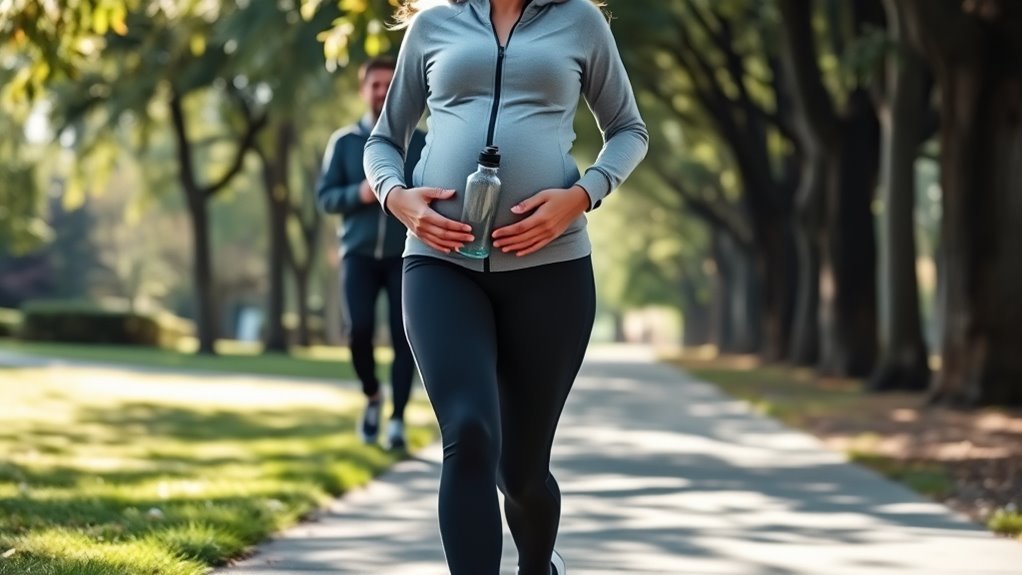
Walking during pregnancy is usually safe if you keep it moderate and comfortable, aiming for about 150 minutes a week, or 30 minutes on most days. Start with shorter walks, then increase gradually as you feel able. A brisk but still conversational pace supports your heart, circulation, mood, and baby’s development. Stay on flat ground, hydrate well, and stop if you feel dizzy, bleed, or develop chest pain. More trimester-specific tips can help you walk with confidence.
How Long Should You Walk During Pregnancy?

Aim for at least 150 minutes of moderate-intensity walking each week, which works out to about 30 minutes a day, five days a week. During pregnancy, you can build toward this goal gradually.
If you’re just starting, begin with 5-minute walks in the first trimester and increase as your stamina improves. In the second trimester, keep a pace that feels brisk but still lets you talk comfortably; that signals safe moderate activity.
In the third trimester, choose flat paths and consider a support belt if pelvic pain shows up. You don’t need to push through discomfort to prove anything. Your body deserves respect, and you can adjust your walking plan to match it.
If symptoms worsen, or you notice anything concerning, reduce activity and contact your healthcare provider. Consistent walking can stay flexible, empowering, and medically sound throughout pregnancy.
Walking Benefits for Mother and Baby
Walking during pregnancy can lower your risk of gestational diabetes and preeclampsia while also improving your cardiovascular fitness and easing back pain.
You’ll often feel stronger and more comfortable as your muscles adapt to the changes of pregnancy. These benefits support healthy oxygen delivery and overall development for your baby, too.
Maternal Health Benefits
Regular walking during pregnancy can lower your risk of gestational diabetes and preeclampsia, supporting a healthier pregnancy for both you and your baby.
Aim for at least 150 minutes of moderate walking each week to support healthy weight gain and keep your body strong. Walking strengthens your muscles, eases back pain, and improves cardiovascular health, all of which help you move with more confidence and less strain.
It can also lift your mood and support mental well-being, which matters when you’re protecting your energy and autonomy.
By staying active and hydrated, you give yourself practical, evidence-based care that can make postpartum recovery smoother.
You’re not just staying fit—you’re actively supporting your body’s resilience throughout pregnancy.
Baby Development Support
By keeping up with moderate walking during pregnancy, you support your body’s ability to nourish and protect your baby while also lowering your own risk of gestational diabetes through better weight management and improved insulin sensitivity.
This simple exercise helps you maintain a healthy weight, reduce risk from excess strain, and promote steady circulation that supports placental function.
When you’re pregnant, walking also eases back pain, encourages regular bowel movement, and can improve mood, which matters for maternal health and recovery after birth.
The CDC recommends at least 150 minutes of moderate weekly activity, and walking meets that goal with flexibility and freedom.
You don’t need intense workouts to support fetal development; consistent, moderate walking can help your body adapt safely while honoring your autonomy.
How Fast and How Often to Walk
You should walk at a brisk but comfortable pace that lets you talk while still raising your heart rate, since that supports cardiovascular health during pregnancy.
Aim for at least 150 minutes of moderate-intensity aerobic activity each week, which usually means about 30 minutes a day, five days a week.
If you’re just starting out, begin with shorter walks and increase your time and frequency gradually as you feel comfortable.
Walking Pace Guidelines
Aim for a brisk, moderate pace that elevates your heart rate while still letting you pass the “talk test” — you should be able to hold a conversation without gasping.
During pregnancy, this walking style supports safe physical activity and fits moderate-intensity goals without pushing you too hard. If you’re new to exercise, begin with 5 to 10 minutes, then build up as you feel stronger.
- Keep a brisk pace, not a race.
- Use the talk test to stay within comfort.
- Choose flat routes later in pregnancy, and use support if pelvic pain appears.
You can also aim for 30-minute walks on several days to reach 150 minutes weekly.
This approach protects your mobility, honors your body’s changes, and keeps you moving with confidence and freedom.
Weekly Walking Goals
A good weekly target during pregnancy is at least 150 minutes of moderate-intensity walking, which usually means about 30 minutes on five days.
You can stay active by walking each day or splitting your minutes into shorter sessions that fit your life. Keep your pace brisk enough to raise your heart rate, yet gentle enough that you can talk comfortably.
If you’re starting out, begin with 5-minute walks and build gradually as your strength improves. Choose level ground to reduce fall risk, especially in the third trimester.
Support your body with hydration and a light snack when needed. These habits help you protect your health while preserving freedom of movement and confidence throughout pregnancy.
Adjusting Walk Frequency
Once you’ve settled into a weekly walking target, the next step is finding the right pace and schedule for your body. For most pregnant women, physical activity guidelines support 150 minutes of moderate-intensity walking each week, but you can break that into 30-minute sessions, five days a week, or adjust walk frequency to 3-5 days based on energy and comfort.
- Start with 5-minute walks, then build gradually.
- Use the talk test: you should breathe harder, yet still speak.
- Choose practical moments, like lunch breaks or errands.
This flexible approach helps you keep walking without overtaxing joints or pelvic tissues. If you feel pain, dizziness, bleeding, or contractions, stop and contact your clinician.
Your schedule should serve your body, not control it.
First Trimester Walking Tips for Pregnancy
During the first trimester, start with short walks of about 5 minutes and build up gradually as you feel more comfortable. This gentle walking routine helps you stay active without overtaxing your body.
Keep a brisk but talkable pace; you should be able to speak in full sentences while you move. Choose comfortable shoes with good support, since they can reduce strain and keep you steady. Hydration matters, so drink water before and after each walk to support healthy fluid balance.
Move briskly, but stay able to talk—comfortable shoes and water keep each walk steady and supported.
As you continue this activity, pay close attention to how you feel. Listen to your body and slow down, rest, or stop if you notice unusual pain, dizziness, cramping, or shortness of breath.
Your first trimester doesn’t require intensity; it calls for consistency, awareness, and self-trust. Walking on your own terms can protect your health while honoring your need for freedom and movement.
Second Trimester Walking Tips for Pregnancy
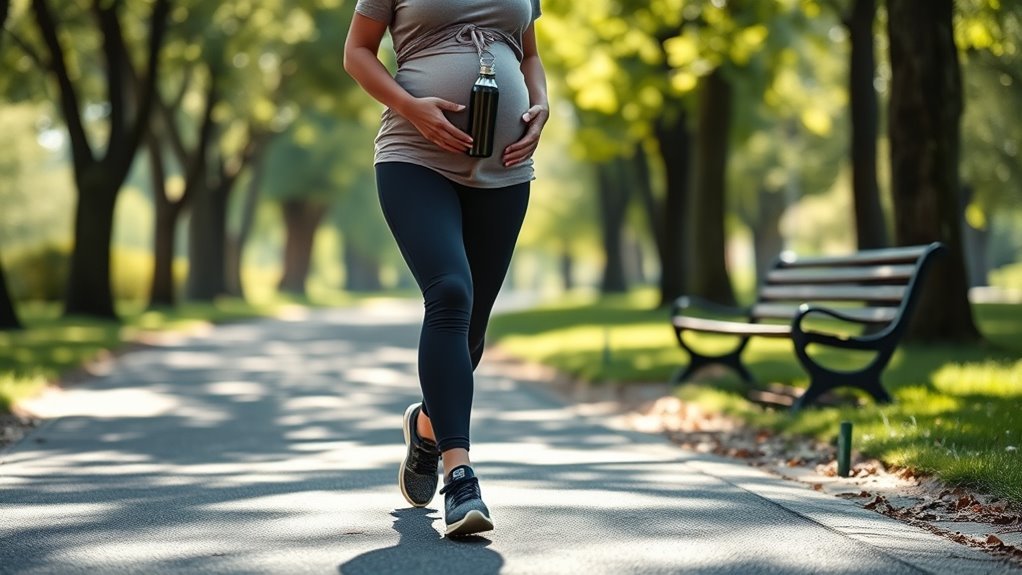
- Walk on flat, even paths to lower the risk of falls and protect your mobility.
- Hydrate before and after each walk, and carry a snack if you’ll be out longer.
- Stay active with physical activity throughout the week, and include pelvic floor exercises to support core control and body autonomy.
If you feel pain, dizziness, bleeding, or unusual shortness of breath, slow down and contact your healthcare provider.
You deserve movement that feels freeing, steady, and supported.
Third Trimester Walking and Pelvic Pain
As your body enters the third trimester, walking can still be safe and beneficial, but flat, even surfaces are best to reduce fall risk as balance shifts and pelvic pain may increase.
You can keep physical activity supportive by choosing a brisk, manageable pace that lets you talk comfortably. This helps you work within a safe intensity while respecting your changing body.
Choose a brisk, manageable pace that lets you talk comfortably and supports your changing body.
If pelvic pain bothers you, a support belt may improve stability and ease strain during walking. Stay hydrated, and rest when you need to preserve energy and reduce fatigue.
Pay attention to how your body responds; if walking makes discomfort noticeably worse, scale back and reassess your routine. Your goal is freedom with safety: movement that supports circulation, mood, and strength without pushing through pain.
With thoughtful pacing and the right support, you can continue walking confidently through the third trimester.
Warning Signs to Stop Walking
If you notice bleeding, dizziness, shortness of breath, chest pain, swelling, or feeling overheated while walking, stop right away and contact your healthcare provider. Your body deserves respect, and these symptoms need prompt medical advice.
If pelvic or abdominal pain grows, lingers, or returns after activity, reduce your pace and ask for guidance. Fatigue, weakness, or low motivation can mean your walking routine is too demanding today.
- Stop if symptoms feel new, severe, or unusual.
- Choose shorter activity sessions when exhaustion shows up.
- Prioritize hydration and comfort, then rest.
You don’t have to push through discomfort to prove strength. Pregnancy walking should support your freedom, not drain it.
Listen closely to your body’s signals, because they’re valid and informative. If something feels off, pause, recover, and reach out for medical advice. Getting help early protects both you and your baby while keeping your movement practice safe, steady, and empowering.
How to Walk Safely in Pregnancy

A safe walking routine during pregnancy starts with moderate, consistent movement and a few simple precautions. Aim for at least 150 minutes of moderate-intensity walking each week, which supports cardiovascular health and helps you stay active without overdoing it.
Keep your pace brisk enough that you can still talk—the talk test is a reliable way to check that your effort stays safe. Choose level ground and wear supportive shoes to lower your risk of falls and reduce strain on your joints and pelvic floor muscles.
Hydration matters, so drink water before and after walking, especially in warm weather. You should also listen to your body: if you notice dizziness, increased pelvic pain, or other concerning symptoms, slow down or stop and rest.
Frequently Asked Questions
How Long Should I Walk While Pregnant?
You can walk about 30 minutes most days, aiming for 150 weekly minutes. Adjust walking intensity by trimester, wear proper footwear, hydrate well, and keep listening body for pregnancy benefits and safety.
Is It Safe to Walk 10,000 Steps a Day While Pregnant?
Yes, it’s generally safe if you’re active and feel strong; keep at the benefits of walking, follow pregnancy exercise guidelines, monitor heart rate, respect hydration needs, use footwear recommendations, and follow walking safety tips.
Is It Okay to Walk for 2 Hours When Pregnant?
Yes, you can often walk 2 hours pregnant if you’re used to exercise. Pregnancy benefits include fitness; use Walking techniques, Comfortable footwear, Hydration importance, Warm up stretches, and Listening body—stop if symptoms arise.
Can Too Much Walking Be Bad During Pregnancy?
Yes, too much walking can be bad during pregnancy if you ignore monitoring fatigue and listening body. You’ll keep exercise benefits safer by pacing yourself, choosing proper footwear, respecting hydration importance, and considering environmental considerations.
Conclusion
Walking during pregnancy can be a steady, nourishing rhythm for you and your baby—like a gentle pulse that supports strength, circulation, and mood. Most people can walk safely throughout pregnancy, but you should listen to your body and adjust your pace as your belly grows. If you notice pain, dizziness, bleeding, or contractions, stop and contact your healthcare provider. With smart precautions, every step can help you move through pregnancy with confidence.
