
If you’re planning a VBAC, you should confirm that your prior cesarean used a low transverse incision, review your full surgical history, and wait at least 12 to 18 months before trying again. You’ll also need continuous labor monitoring in a hospital prepared for emergency cesarean delivery. Avoid VBAC if you’ve had a prior uterine rupture, placenta previa, or multiple uterine scars. The key rules can help you choose the safest path forward.
What Is VBAC and TOLAC?

VBAC, or vaginal birth after cesarean, is the option of delivering vaginally after you’ve had a previous C-section. You pursue a vaginal delivery while your healthcare provider monitors labor closely.
TOLAC, or trial of labor after cesarean, means you’re attempting VBAC under medical supervision, not guaranteeing a successful VBAC. Your team reviews the risks and benefits with you before labor begins, because safety and informed choice matter.
A cesarean leaves a scar on your uterus, and the uterine incision type affects how your team plans care. During labor, continuous monitoring helps detect problems early, including uterine rupture, so you can respond quickly if needed.
Many people who attempt TOLAC do achieve VBAC, but outcomes vary. By understanding VBAC and TOLAC, you claim more agency in birth decisions while staying grounded in precise medical guidance.
Who Is a Good Candidate for VBAC?
You may be a good VBAC candidate if your prior cesarean used a low transverse uterine incision and you’re in otherwise good health.
Your chances improve if you’ve had one or two uncomplicated cesareans and especially if you’ve previously delivered vaginally.
You may not be a candidate if you have placenta previa, multiple uterine scars, or you’re trying too soon after your last cesarean, since most experts recommend waiting 12 to 18 months.
[Products Worth Considering]

Stay Cooling All Night - Momcozy new pregnancy pillows come with a special Cooling Cover that has excellent heat dissipation. Perfect for the summer or hot sleepers during pregnancy, stay cool and comfy all night! Tips: Allow it to expand at least 48~72 hours to make it fluffy enough to use before the first time.

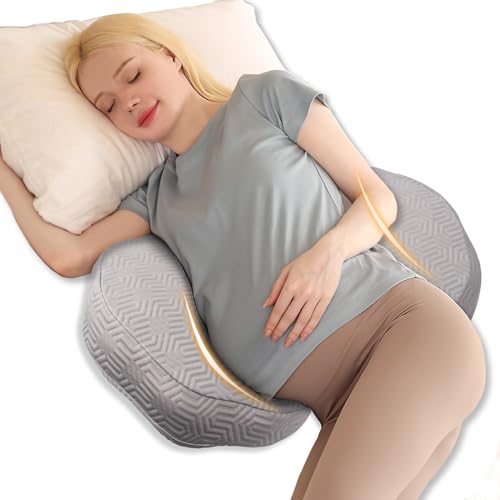
Our New W Shaped Pregnancy Pillow is expertly crafted to embrace the unique curves of pregnant women, ensuring a snug fit with zero gaps. This design offers optimal support for your growing belly, back, and hips while promoting a comfortable side-sleeping position for enhanced rest and relief

[Superior Support for Mom and Baby] Experience the ultimate support with our exceptional breastfeeding pillow. It is expertly designed to promote better posture during nursing as it effectively takes the pressure off your shoulders, back, and neck, reducing strain and allowing for a more comfortable and enjoyable breast feeding experience. By relieving these areas of tension, you can fully focus on the precious moments of bonding with your newborn without any discomfort or worries about body aches.
Ideal Medical Candidates
Good VBAC candidates usually have a prior low transverse uterine incision, since this scar type carries the lowest risk of uterine rupture. For your VBAC, your health history should show you’re medically stable and free of placenta previa.
- You may be a strong candidate for VBAC after one or two uncomplicated previous cesareans.
- If you’ve had a successful vaginal delivery, your odds of another successful vaginal delivery rise.
- Your clinician should confirm ideal timing, usually 12 to 18 months after the previous cesarean, to lower risks of VBAC.
- You should avoid VBAC if you’ve had a prior uterine rupture or another major contraindication.
When you meet these criteria, you can pursue birth with more freedom and informed control, while still respecting safety and precision.
Prior Birth History
A prior birth history plays a major role in VBAC eligibility, and a single previous cesarean with a low transverse incision generally offers the best profile because it carries the lowest risk of uterine rupture. Your medical history matters.
| Factor | Effect | Notes |
|---|---|---|
| Prior cesarean | Baseline VBAC evaluation | One low transverse scar is favorable |
| Vaginal delivery | Raises success rates | Often reaches 80% |
| Uncomplicated pregnancies | Improves outlook | Supports safer labor planning |
| Timing for VBAC | Affects health risks | 12–18 months after prior cesarean |
| Overall health | Strengthens candidacy | Best when stable and well |
You’re among ideal candidates when you’ve had a prior vaginal delivery, good recovery, and uncomplicated pregnancies. Discuss VBAC timing with your clinician to protect your freedom and reduce risk.
Key Eligibility Limits
Eligibility for VBAC is strongest when you’ve had one prior cesarean with a low transverse uterine incision, since that scar type carries the lowest rupture risk. Your eligibility rises when your previous cesarean was uncomplicated, and your healthcare provider confirms no contraindications.
- A low transverse uterine incision supports safer labor.
- One or two prior cesareans may still allow VBAC.
- A history of vaginal deliveries makes a successful outcome more likely.
- Wait at least 12 to 18 months after cesarean to lower the risk of uterine rupture.
Placenta previa, multiple uterine scars, or a previous uterine rupture usually rule out VBAC.
Discuss your goals, records, and timing with your healthcare provider so you can pursue birth with informed freedom and medical safety.
Does C-Section Incision Type Matter?
Yes—the type of uterine incision from your prior C-section matters a great deal when considering VBAC. Your C-section incision directly affects uterine rupture risk and your eligibility for VBAC.
If your medical records show a low transverse incision, you usually have the lowest rupture risk, about 0.9%, and that supports a more favorable risk assessment. A low vertical incision carries a moderate risk, while a high vertical incision, also called classical, raises concern considerably and often rules out VBAC.
You should confirm your previous C-section details with your healthcare provider, because the exact scar type guides safe planning. If you’ve had multiple cesarean scars or another incision pattern, your risk may increase and you’ll need individualized counseling.
Clear documentation lets you make informed choices and protects your autonomy. Liberation comes from knowing the facts, asking precise questions, and refusing guesswork in your care.
What Are the Benefits of VBAC?

You may recover more quickly after VBAC than after a cesarean, which can help you return to normal activities sooner.
VBAC also avoids the risks of abdominal surgery, including excessive bleeding and infection.
For many patients, this option offers a safer postpartum course with fewer procedure-related complications.
Faster Recovery Time
One major benefit of VBAC is a faster recovery time than a repeat C-section, which can help you return to daily activities sooner.
With vaginal delivery, you often regain mobility sooner, so you can lift, walk, and care for your newborn earlier after birth after cesarean. Your hospital stays are usually shorter too, often 1-2 days instead of 3-4 days after a C-section.
- You may resume self-care faster.
- You can respond to your baby’s needs sooner.
- Your healthcare provider may monitor you with fewer immediate restrictions.
- Many women report psychological benefits from an empowered birth experience.
Because VBAC avoids abdominal surgery, you may also face fewer complications related to recovery.
Discuss your goals and risks with your healthcare provider to decide whether VBAC fits your body and your freedom.
Fewer Surgical Risks
Another major advantage of VBAC is that it avoids abdominal surgery, which can lower the risk of surgical complications such as infection and heavy blood loss compared with a repeat C-section.
You also may face fewer surgical complications from fewer repeat operations, including less uterine scarring and fewer placental issues in future pregnancies.
Because VBAC is a vaginal delivery, your baby can clear amniotic fluid from the lungs more effectively, which may reduce neonatal breathing problems.
Successful VBAC often means shorter hospital stays, so you can regain control of your recovery sooner.
Research also suggests an immune boost during birth, supporting better health outcomes for your newborn.
For many women, VBAC offers a safer, more liberated path when you and your clinician judge the option appropriate.
What Are the Risks of VBAC?

VBAC can be a safe option for many people, but it does carry some important risks that need close medical review. Your VBAC plan should account for uterine rupture, a rare event that occurs in about 0.9% of low transverse scars and can require immediate intervention.
- Uterine rupture can threaten you and your baby, especially with higher uterine incision types.
- Complications such as heavy bleeding and infection may occur, though they’re generally less common than after repeat cesarean deliveries.
- An unsuccessful VBAC can end in an emergency cesarean, which may raise health risks for both you and your baby.
- Your healthcare provider should review added risks from maternal obesity, advanced age, or prior uterine surgeries before you choose your delivery method.
You deserve informed, liberated decision-making, but that freedom works best when you understand the medical trade-offs clearly and fully.
How Can You Prepare for a Safer VBAC?
Preparing for a safer VBAC starts with planning early and staying closely connected with your healthcare team.
Tell your healthcare provider about your VBAC goals in early pregnancy so they can review your incision type, prior birth history, and uterine scar. This helps them assess the risks of VBAC and guide your individualized care.
Aim for a pregnancy interval of at least 12 to 18 months after your cesarean, since more healing time may lower rupture risk.
Choose a hospital with strong hospital capabilities, experienced staff, and immediate emergency C-section access.
Enroll in childbirth classes focused on VBAC so you understand labor, pain management, and warning signs.
Keep open communication throughout pregnancy and labor, and update your birth plan as your condition changes.
When you stay informed, flexible, and supported, you protect your safety while preserving your right to make clear, evidence-based choices about your birth.
[Products Worth Considering]


WORKBOOKS - Writing in workbook pages, as opposed to typing on a computer, can help kids to focus and to learn. Writing by hand fires up specific areas of a child's brain, improving a child's ability to not only remember what he or she learns but to think of new ideas

When Should You Avoid VBAC?
You should avoid attempting VBAC if you’ve had a prior uterine rupture, because the risk of another rupture can be dangerous for both you and your baby.
Your health care provider should also steer you away from VBAC if you have multiple cesareans, especially with a classical incision, since the risks of attempting labor rise sharply.
- Placenta previa: This condition usually requires repeat cesarean delivery.
- History of uterine surgeries: Prior myomectomy or other uterine surgery can weaken the wall.
- Less than 18 months: A short pregnancy interval can limit healing and increase complications.
- Fetal concerns: Major abnormalities may make VBAC unsafe.
You deserve informed choice, but liberation includes knowing when safety comes first.
If your history suggests elevated rupture risk, repeat cesarean may better protect you and support a safe birth.
[Products Worth Considering]

SOFT OR FIRM… YOU DECIDE: 2-sided design to suit moms during all 3 trimesters. Deluxe, soft memory foam on side 1, and firmer support foam on side 2. As your needs and desires shift from moment to moment, simply flip it over to regain maximum comfort. IDEAL SOLUTION FOR PREGNANCY DISCOMFORT. 35D density comparable to a foam seat cushion.

Designed for Your Comfort -- Sleep quality is crucial for the mother-to-be! Designed for pregnant women's curves, our maternity pillows can fit the body with zero gaps, perfect support for growing belly, back, and hips, and keep you in a doctor-recommended side sleeping position.The pregnancy belly pillow can be used from the first trimester all the way until the very last days before the big event.
100% Premium MEMORY FOAM Support:Made with high-density memory foam that holds to your body shape, providing optimal pressure relief and spinal alignment for pregnant women. Ideal for back, hip, and belly support during sleep or relaxation.
Frequently Asked Questions
How Long After a C-Section Is It Safe to Have a VBAC?
You’re usually safest waiting 12–18 months after a C-section before VBAC timing. Your Recovery period, Uterine integrity, and Personal health guide Risk assessment. Discuss Birth preferences, Emotional readiness, Support systems, and Informed consent with your Healthcare provider.
What Is the 5 5 5 Rule After C-Section?
You follow 5 hours, 5 days, and 5 weeks—because healing matters. Your healthcare provider can align VBAC benefits, VBAC risks, labor progression, monitoring techniques, birth plans, emotional support, informed consent, recovery tips, postpartum care.
What Is the 3 3 3 Rule for Postpartum?
You use the 3 3 3 rule for postpartum: rest three hours, drink three liters, and eat three balanced meals daily. It supports postpartum recovery, pain management, breastfeeding challenges, mental health, baby bonding, and nutrition tips.
Why Don’t Doctors Like to Do VBAC?
You’ll hear caution because VBAC risks can include rare rupture, emergency surgery, and slower recovery time; doctor concerns, hospital policies, and variable success rates shape practice, though VBAC benefits, patient preferences, birth plans, emotional support, informed consent matter.
Conclusion
VBAC can be a safe option when you meet the right criteria and work closely with your care team. You should review your incision type, pregnancy history, and current health before deciding. By preparing well, choosing an appropriate birth setting, and understanding the warning signs, you can improve your chances of a successful vaginal birth after cesarean. Isn’t careful planning the key to lowering risk and protecting both you and your baby?
